Mobile stage rental in Orlando comes down to one question more than any other: how fast can you get it done? Venue load-in windows are tight, vendor schedules stack up, and the stage has to be standing before anything else can fall into place.
At Stages Plus, we field this question constantly, especially in spring when graduation ceremonies, corporate luncheons, and outdoor festivals all compete for the same weekends. This post covers how quick-setup staging actually works, what affects your timeline at different venue types, and what we've learned from recent builds across Central Florida.
What Makes a Stage Quick to Set Up
The foundation of any fast installation is modular staging equipment. Our decks arrive in pre-engineered sections, typically 4×4 or 4×8 panels, that connect without specialized tools. The configuration can be adjusted to fit different floor plans without starting from scratch.
Modular systems aren't just faster to assemble. They're also faster to load, because each section has a logical place on the truck and comes off in the order it goes together. An experienced crew that has run the same system hundreds of times doesn't need to figure anything out on site. They execute.
For most standard configurations, a two-person crew can have a 16×24 speaking stage standing, skirted, and staired in 90 minutes or less on a level concrete or hardwood floor with clear load-in access. Larger builds take longer, but the modular design still removes hours compared to traditional staging.
Realistic Setup Times by Stage Type
Setup time depends on what you're building, not just how big it is. Here's an honest look at what the field actually looks like:
A speaking stage in the 16×20 to 20×24 range with stairs, skirting, and a podium typically runs 60 to 90 minutes for our crew on a clean site. A concert stage rental with guard rails, trussing, and audio rigging points runs 3 to 5 hours depending on complexity. A runway setup for a fashion show or awards presentation moves quickly since there is no elevated platform to level, usually under two hours for a standard 6×40 run.
Teardown is generally faster than setup, roughly half the time on modular systems. We factor that into every quote, because if your venue has a hard out at 11 PM, you need to know we can make it before we ever show up.
When comparing quotes from different companies, ask how many crew members are included. A lower price can sometimes mean fewer hands on site and a longer setup window. If your venue charges by the hour or has a strict load-out, that difference matters.
A speaking stage rental for a corporate event usually has fewer structural requirements and a faster strike time compared to a full performance rig. That gap becomes significant when a venue has a hard stop for load-out.
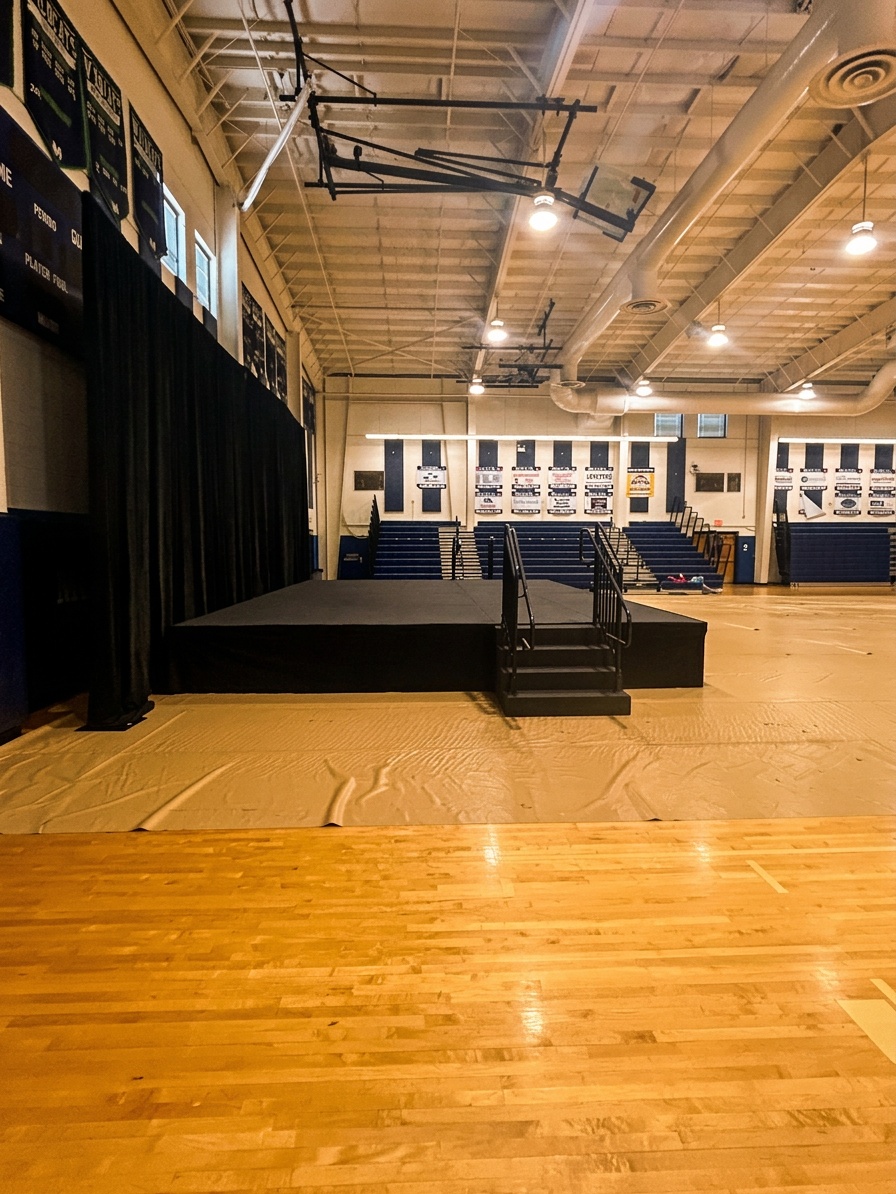
Venue-Specific Logistics: Winter Park Events Center
The Winter Park Events Center is one of the more frequently requested venues in our rotation, and it comes with real logistical constraints. Load-in access is limited to specific windows, and multiple vendors often share the same door at the same time. If you've ever watched a setup fall behind because of a late truck and a crowded loading dock, you know exactly why prep work matters here.
For the Cuervo event on March 7, 2026, our crew preloaded the truck the evening before with the configuration already sorted and ready to come off in sequence. We arrived at the venue's first available access time and had the stage standing and skirted before the first other vendor came through the door.
Venue familiarity speeds everything up. When a staging company has worked inside a specific venue before, the discovery phase is already done. We know where the tight corners are, which elevators handle equipment, and how early to arrive to avoid the morning vendor traffic jam. That knowledge doesn't come from a first visit.
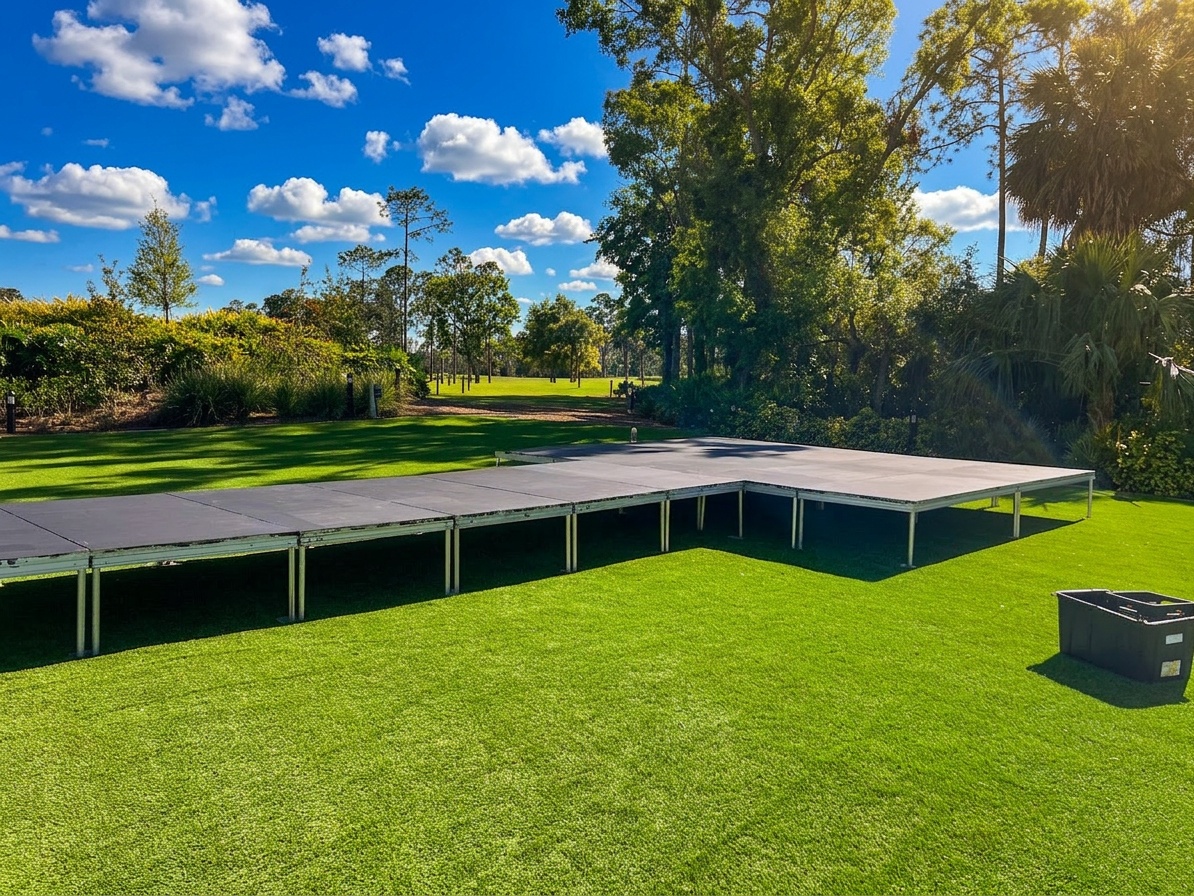
High-Traffic Areas: Disney Springs Logistics
Working in high-traffic tourist corridors requires a different kind of preparation. For the Schmiege event at Disney Springs on March 12, 2026, vendor credentialing had to be confirmed 48 hours before arrival. Parking and load-in access followed strict protocols, and the window to work was narrow.
We built extra buffer time into the schedule and coordinated arrival around the venue's requirements rather than treating it like a standard Central Florida delivery. During assembly, we kept the footprint compact so pedestrian flow in the surrounding area wasn't disrupted.
The stage was fully assembled and ready before guests arrived. Events in areas like this test every part of the logistics process, and there's no margin for a slow morning. Preparation has to be done before the truck leaves our facility.
The broader lesson for planners: in any high-traffic or permission-heavy environment, the timeline conversation needs to happen earlier than it does for a standard venue. The physical setup may be fast, but the coordination window leading up to it is not.
Campus Events and Multi-Location Builds
University campuses add a distinct layer of coordination. For the Folks event at UCF on March 11, 2026, our team worked through campus parking permits, pedestrian zone restrictions, and event services approval timelines before we ever loaded the truck.
Campus events often require the stage in place earlier than commercial venues because setup windows close sooner and there's less flexibility around them. If an event starts at 2 PM and venue access ends at 10 AM, we arrive at the site's first available moment.
For multi-location events where the same equipment moves between two sites in a single day, our modular systems make that practical. The panels break down cleanly, load fast, and go back together at the next site without any custom adjustments. That kind of flexibility simply isn't possible with heavier traditional staging.
Factors That Affect Your Setup Timeline
Even with fast equipment and a prepared crew, specific conditions always influence how long a setup takes.
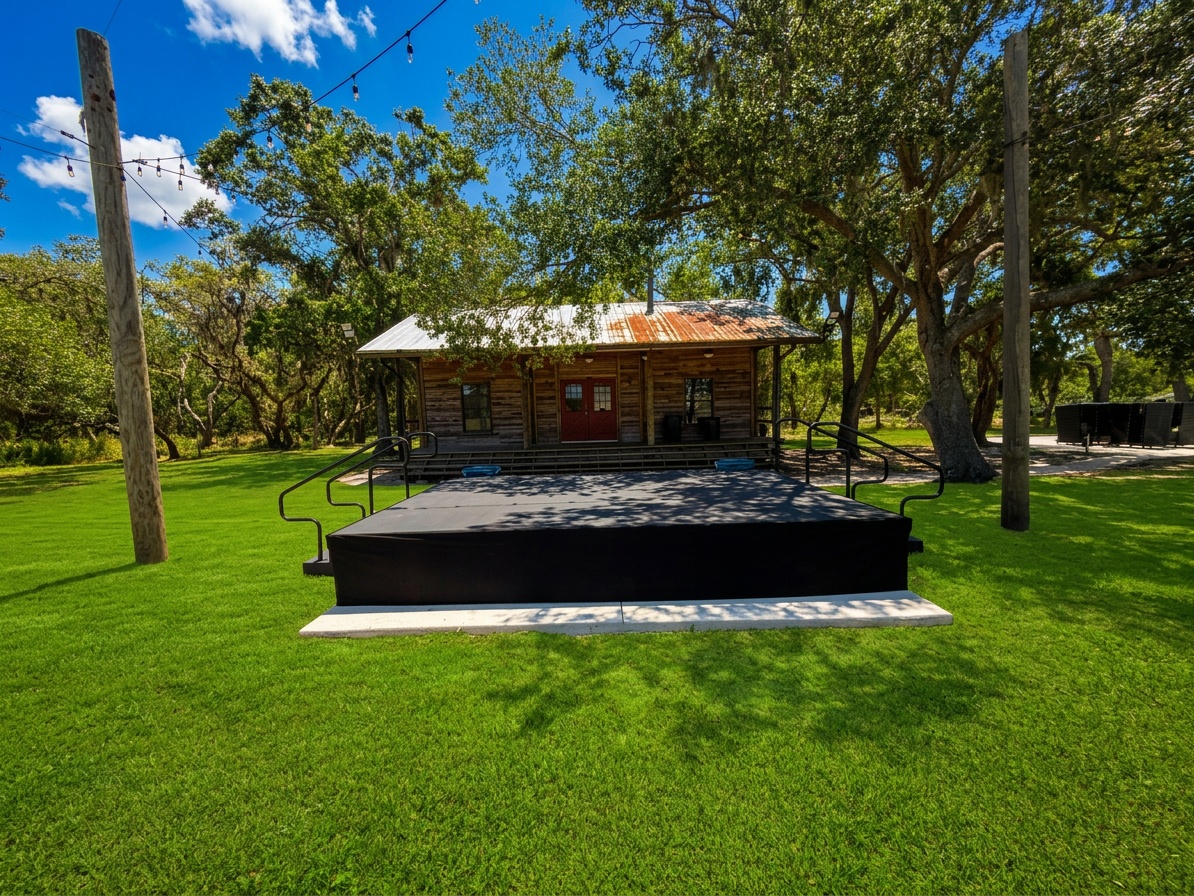
Site accessibility is the biggest variable. A ground-floor ballroom with a loading dock is a very different situation from a rooftop terrace with a freight elevator and a 45-minute parking process. Outdoor sites with soft ground, slopes, or limited drive access add time too.
Weather plays a role in outdoor builds. Central Florida afternoon storms can interrupt work from April through September, and we build contingency time into every outdoor schedule. We watch forecasts closely and communicate early if conditions are likely to affect the timeline.
Permit and venue approval timing affects everything before we arrive. The Miller event at the Alfond Inn on March 14, 2026 is a good example of a boutique venue where the physical setup went smoothly, but pre-event coordination required extra lead time. And honestly, that's true of most smaller venues with in-house event staff. The faster you want the setup on event day, the earlier the planning conversation needs to start.
Venue contact availability on your side matters too. If access requires someone to meet us and that person is running late, the setup window shrinks before we touch a single panel.
Same-Day and Short-Notice Requests
Tight-turnaround requests come in regularly. Availability depends on what equipment is already scheduled and what crew is on the calendar. For smaller configurations with an open slot, it happens more often than most people expect. The key is having all the information ready when you call: site address, indoor ceiling height or outdoor surface type, access time, and event start time.
Our performance staging team can move quickly when the logistics picture is clear. Uncertainty about site conditions or access is what slows things down, not the equipment.
During busy spring weekends, we route trucks across Central Florida to minimize dead time between jobs. Multi-event days are common from April through June, and the modular system is built for exactly that kind of rotation.
When Mobile Staging Is the Right Choice
Quick-setup modular staging is the practical choice for most Orlando events. It protects your load-in timeline, adapts if something changes the morning of the event, and gets our crew in and out without disrupting the rest of your vendor schedule.
Heavier traditional structures make sense for multi-day festivals where the stage stays up and absorbs a lot of daily use, or for permanent installations in a performing arts setting. For one-day and two-day events at venues across Central Florida, modular systems are the more efficient path. One thing worth flagging if you're planning a performance with a full backline, truss, or overhead lighting rig: our modular systems are engineered to specific load ratings, and we'll ask you to share those weight requirements upfront so we can confirm the configuration before we quote. That's not a formality. It's how we make sure what we build can handle what you're putting on it.
If you are not sure which configuration fits your timeline and venue, the fastest starting point is to get a quote with your event date, location, and a rough stage size. We will tell you what is realistic for your window.
Protecting Your Event's Critical Path
The stage is almost always on the critical path of an event setup. If it's late, lights can't be rigged, speakers can't be positioned, and the podium has nowhere to go. Everything else that depends on the stage being in place gets pushed, and the timeline pressure transfers to every other vendor on site.
Our approach to mobile stage rental in Orlando is built around protecting that critical path: arrive when we say we will, build efficiently without compromising structural safety, and clear our equipment footprint so the rest of your setup can proceed on schedule.
If you've seen the Winter Park Events Center loading dock on a busy spring morning, you already know what happens when one vendor runs late. We've worked hard not to be that vendor.
Call us at 407-442-0254 or visit our Reserve page to walk through your event date and access window. We'll let you know exactly what to expect.