A shade stage cover has to be treated as part of the stage structure itself, not a separate rental bolted on later, because the frame, anchoring, and wind rating all change once you add fabric overhead. At Stages Plus, we engineer the Shade Stage Cover into the stage order from day one, then reposition the panel angle between morning load-in and evening headliner sets to track the sun across a full Orlando event day.
Key takeaways
-
A shade cover changes a stage's wind and load rating, so it should be ordered as part of the stage package, not added after the fact.
-
Sun angle shifts dramatically between a 9am load-in and a 9pm load-out, and the shade panel often needs repositioning mid-event to protect performers and gear.
-
Unshaded pavement and deck surfaces can exceed 50°C (about 122°F) in Florida summer sun, while shade structures can lower heat-stress readings by 7 to 15°C compared to unshaded areas (NCBI/PMC pavement study; ScienceDirect shade study).
-
OSHA advises water, rest, and shade as the core prevention strategy for heat illness, and notes that heat stress degrades fine motor skills even in workers used to the heat.
-
A shade cover alone often is not enough for a nine-hour Florida festival day; pairing it with fans or misting keeps performers and crew functional through the afternoon peak.
Why shade and staging need to be engineered as one system
A shade stage cover is not a pop-up tent set next to a stage. It's a load-bearing structure attached to the stage deck itself, and that changes the engineering math. Once fabric goes overhead, wind catches it, and that wind load transfers straight into the stage frame and its ground anchoring or ballast.
This is exactly why the ANSI/ESTA standard for temporary outdoor stage structures, ANSI E1.21, sets the design wind speed for these structures at 0.75 times the basic wind speed defined in ASCE 7, with exceptions for hurricane-prone regions like ours. A shade panel added without checking that math can turn a stable deck into a sail. We do not treat shade as an accessory. We size the Concert Stage Rental or speaking stage first with the shade panel already in the load calculation, so the ballast, guardrails, and anchoring points are correct from the first walkthrough.
For planners comparing quotes, this is the single biggest tell of an amateur setup: separate vendors for the tent and the stage, with nobody responsible for how the two interact in 20 mph gusts off a Central Florida afternoon storm.
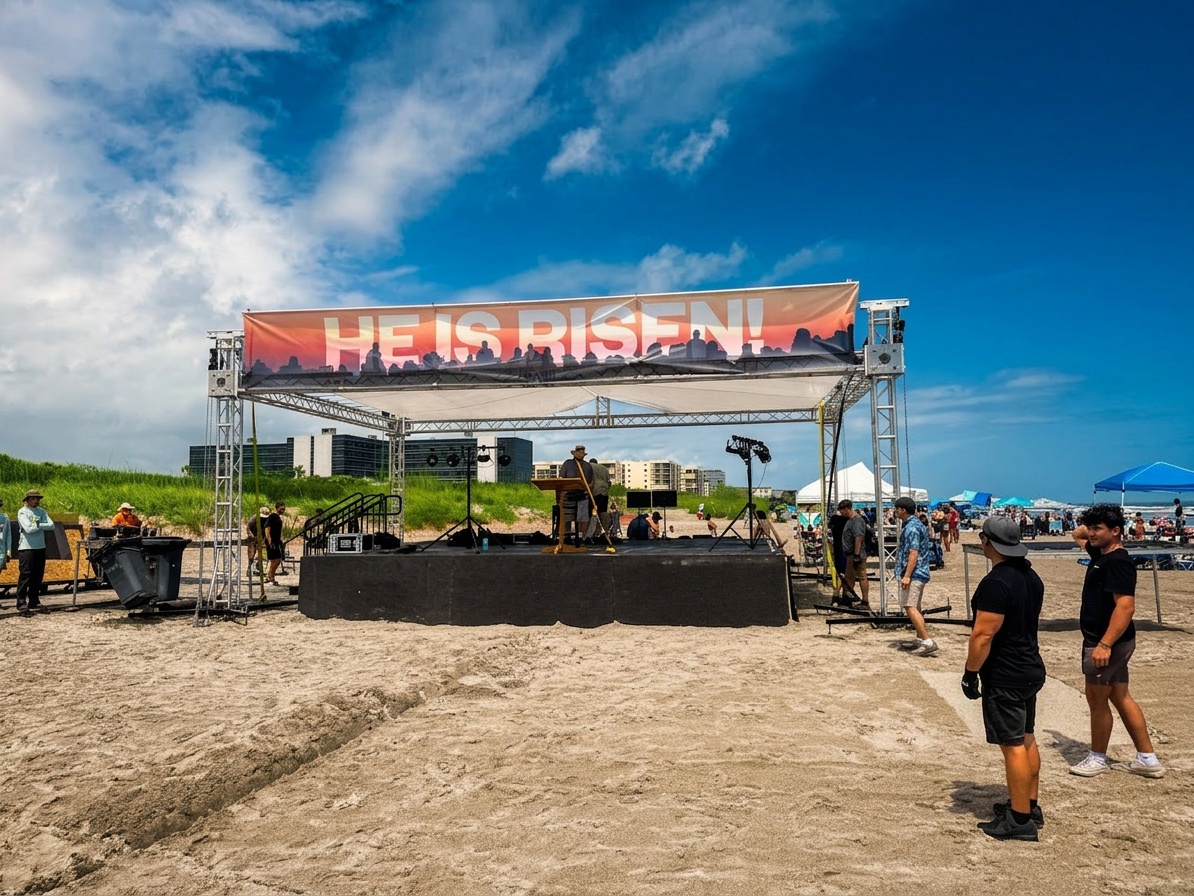
How sun angle shifts across a full Orlando event day
The sun's angle relative to a stage changes by roughly 90 degrees between a 9am load-in and a 6pm headliner set, and a shade panel that protects the deck in the morning can leave performers fully exposed by evening. Most planners never think to ask about this until it happens to them.
We saw this play out at a full-day outdoor festival near Lake Eola in downtown Orlando. Our crew built the shade-covered stage during morning soundcheck with the panel angled to block the low eastern sun off the front-of-house area. By early afternoon that same angle was fine. But we mapped the sun path forward to the 6pm headliner set and realized the low western sun would hit the drum riser directly, right in the drummer's eyes for the entire final act. We repositioned the shade cover's angle between soundcheck and the evening set, shifting coverage to the west side of the deck exactly when it mattered.
That kind of mid-day adjustment is standard practice for us on any all-day booking. It's why we walk every full-day event with a sun-path plan attached to the site diagram, not just a shade cover dropped in the middle of the stage and left alone for nine hours.
Wind rating and load capacity questions every planner should ask
Before adding shade to any stage deck, ask the vendor for a written wind and load rating specific to that shade-plus-stage combination, not a generic stage spec sheet. This single question separates a properly engineered setup from a liability.
The 2024 edition of ANSI E1.21 requires engineering documentation with "definitive statements about the operating limits of the temporary structure including environmental conditions and physical forces," which is exactly the paperwork you should expect any reputable stage vendor to produce (ANSI Blog). Larger stage roof and truss systems covered under this standard can be built to support 30 to 50 tons of rigging, using 10-foot truss sticks bolted into a full roof frame, so the engineering behind these structures is not casual guesswork.
For an event planner, the practical checklist looks like this:
- Ask for the combined wind rating of the stage deck plus the shade panel together, not two separate ratings quoted in isolation.
- Confirm the ballast or anchoring method matches the venue surface (grass, asphalt, or a park lawn near a downtown lake all behave differently).
- Get the rating in writing before the event, not verbally on setup day.
If a vendor cannot answer these questions clearly, that's a sign the shade and the stage were never engineered together in the first place.
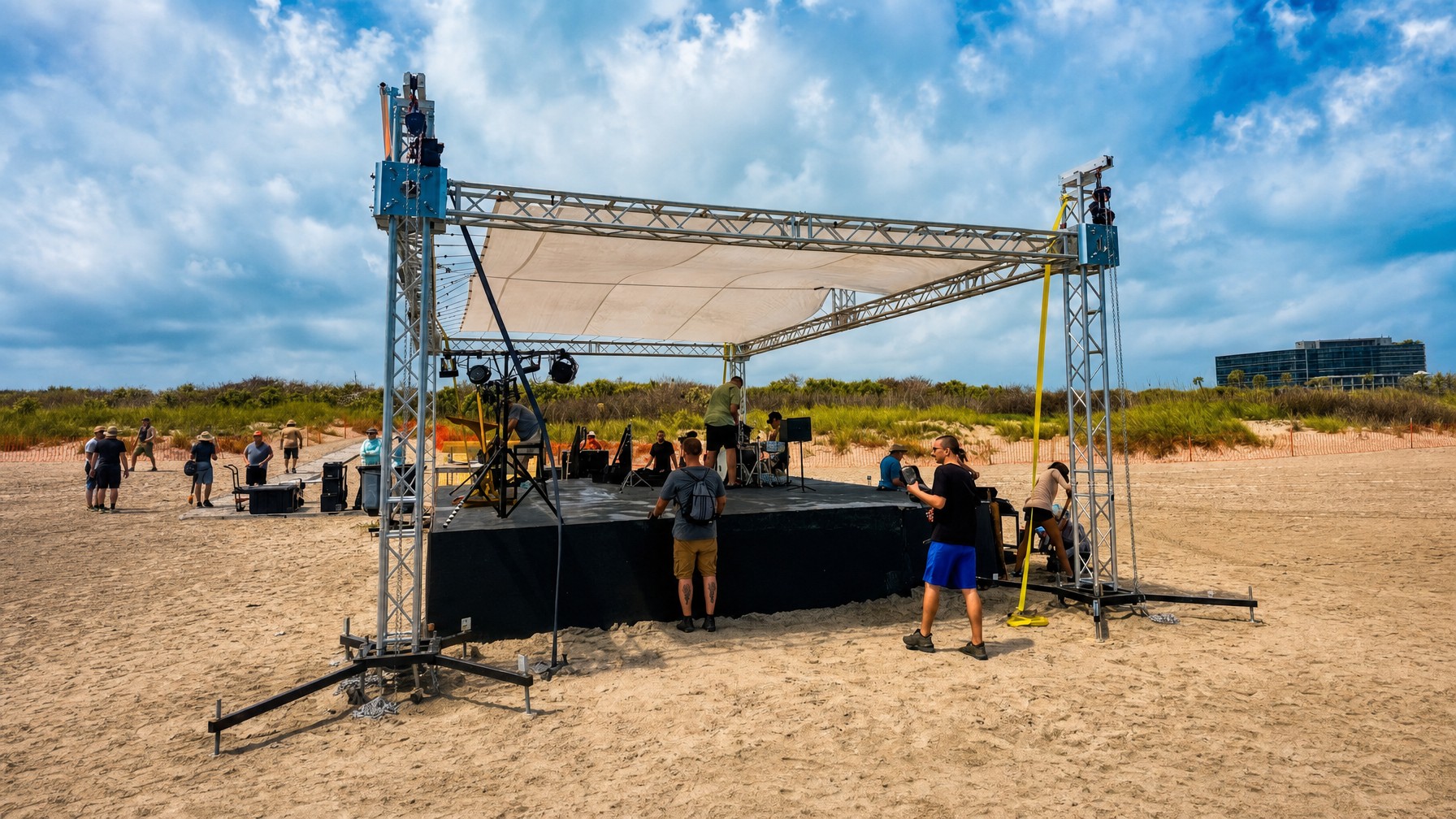
Adding a shade cover to your stage rental and what it costs
A shade stage cover can be added to most stage sizes we build, but it works best when ordered as part of the original stage package rather than requested after the deck is already reserved. Ordering it together lets us confirm the frame, anchoring, and coverage angle match the stage footprint before anything ships.
Pricing depends on the stage footprint, the shade coverage area needed, and how much of the deck (performers only, or performers plus front-of-house and monitor positions) needs protection. Smaller speaking stages and single-performer setups add shade at a modest bump over the base rental, while a full concert deck with wing coverage for a band or dance crew costs more because the panel and frame scale with the stage size. The most reliable way to get an accurate number is to tell us your stage size and the hours your event runs, since a four-hour ceremony and a nine-hour festival need very different coverage plans. Start that conversation through our How To Get A Quote page and we'll size the shade to the actual event, not a generic template.
When shade alone is not enough for a full-day event
A shade stage cover blocks direct sun, but it does not lower ambient air temperature, so a nine-hour Florida festival day usually needs fans or misting paired with the shade to keep performers and crew functional. Shade solves the sunburn and radiant heat problem. It does not solve the humidity problem.
OSHA's heat-exposure guidance is direct on this point: "OSHA encourages water, rest, and shade as prevention as well as treatment for heat-related illness," and the agency notes that heat stress can degrade fine motor performance, like operating a soundboard or playing an instrument, even in people acclimated to the heat (OSHA: Heat Overview). That is a real concern for a sound tech running a board for eight hours straight, or a keynote speaker doing three sessions back to back.
The EPA's UV Index Scale advises staying in shade near midday once the index hits 3 to 5, and NOAA recommends scheduling outdoor activity for early morning or late afternoon when the sun is less intense (EPA: UV Index Scale; NOAA: Check the UV Index First). In Central Florida, that midday window falls right in the middle of most all-day festival schedules, which is exactly why we recommend pairing the shade cover with fans or misting for anything running past four or five hours. We cover the full cooling lineup, including where fans and misting fit against shade alone, in our post on Heat Management for Summer Events. For cooler-weather evening events that run into a chilly Central Florida night, the opposite problem shows up, and that's where Outdoor Heaters come into the planning conversation instead.
Frequently asked questions
What's the difference between a shade stage cover and a standard stage roof or truss cover?
A standard truss roof is a heavier rigging structure built mainly to hang lighting and sound, often engineered for tens of tons of equipment. A shade stage cover is a lighter fabric panel system focused specifically on blocking sun exposure, sized and angled around the sun path rather than around rigging weight.
Can a shade cover be added to any stage size, or does it need to be ordered as a package?
Most stage sizes we build can accommodate a shade cover, but it needs to be part of the original order so the frame, anchoring, and wind rating account for the added panel. Requesting shade after a bare stage is already reserved often means a redesign of the anchoring plan.
Does UV exposure actually damage sound equipment, lighting rigs, or instruments left onstage all day?
Yes. Direct sun raises the surface temperature of gear well above ambient air temperature, and prolonged heat exposure accelerates wear on speaker components, cabling, and instrument finishes. Manufacturers of outdoor electronic enclosures specifically flag solar heat load as a factor that compounds a device's own operating heat.
What wind rating or load capacity should I ask about before adding shade to a stage?
Ask for the combined wind rating of the stage deck plus the shade panel as one system, in writing, along with the anchoring method for your specific venue surface. Structures covered under ANSI E1.21 are required to document their operating limits under real environmental conditions, and any vendor should be able to produce that documentation.
How far in advance should I book a shade and stage combo for festival season?
Spring and fall festival season books up fast in Central Florida, and shade-plus-stage combinations take more coordination than a bare deck because of the wind and anchoring engineering involved. We recommend locking in your date and stage size at least six to eight weeks out for festival-scale events, earlier if your date falls on a peak weekend.
The bottom line
For any all-day outdoor event in Orlando, the shade cover and the stage deck need to be ordered, engineered, and positioned as one system, with a sun-path plan for the day and a cooling backup for the afternoon heat. Reach out through our How To Get A Quote page and tell us your stage size and event hours, and our crew will build a shade and stage plan that holds up from the 9am load-in to the last note of your headliner set.