Key takeaways
-
A 16ft depth stage typically needs 3 to 4 hours of build time based on our crew's typical builds, while a 24ft depth stage with trussing and skirting needs 5 to 7 hours.
-
At the Orange County Convention Center, outside contractors must submit stamped engineered plans at least 21 days before move-in and a certificate of insurance at least 30 days ahead, or they are not permitted on site (OCCC Event Planning Guide).
-
Breakdown generally runs 1.5 to 3 hours depending on stage size and whether lighting, audio, or pipe and drape need to come down too.
-
Outdoor builds near residential zones must respect Orange County's noise ordinance cutoffs, which can push early-morning load-in later than planners expect.
-
The client, venue, and rental company all share scheduling responsibility, but confirming load-in windows falls on whoever books the room first.
How stage size changes your build and strike schedule
A 16ft depth stage usually takes our crew 3 to 4 hours to build, while a 24ft depth stage with trussing, skirting, and guard rails runs closer to 5 to 7 hours. The difference comes down to decking count, structural bracing, and how much add-on equipment rides on top of the platform.
For a typical corporate general session with a 16ft deep stage and a podium, we plan crew call around 7am for a 1pm guest arrival, which leaves time for a walkthrough before doors open. For a 24ft deep concert stage carrying trussing, lighting, and a full audio package, we push crew call earlier, often 6am or the night before if the venue allows it, because rigging and cabling eat hours a speaking stage never needs.
Stage depth isn't the only variable. A round stage, a runway, or a build with risers stacked alongside the main platform adds separate crews working in parallel, which shortens total time but takes more coordination on site. If you're still deciding on dimensions, our 16ft stage sizes page breaks down what fits each build.
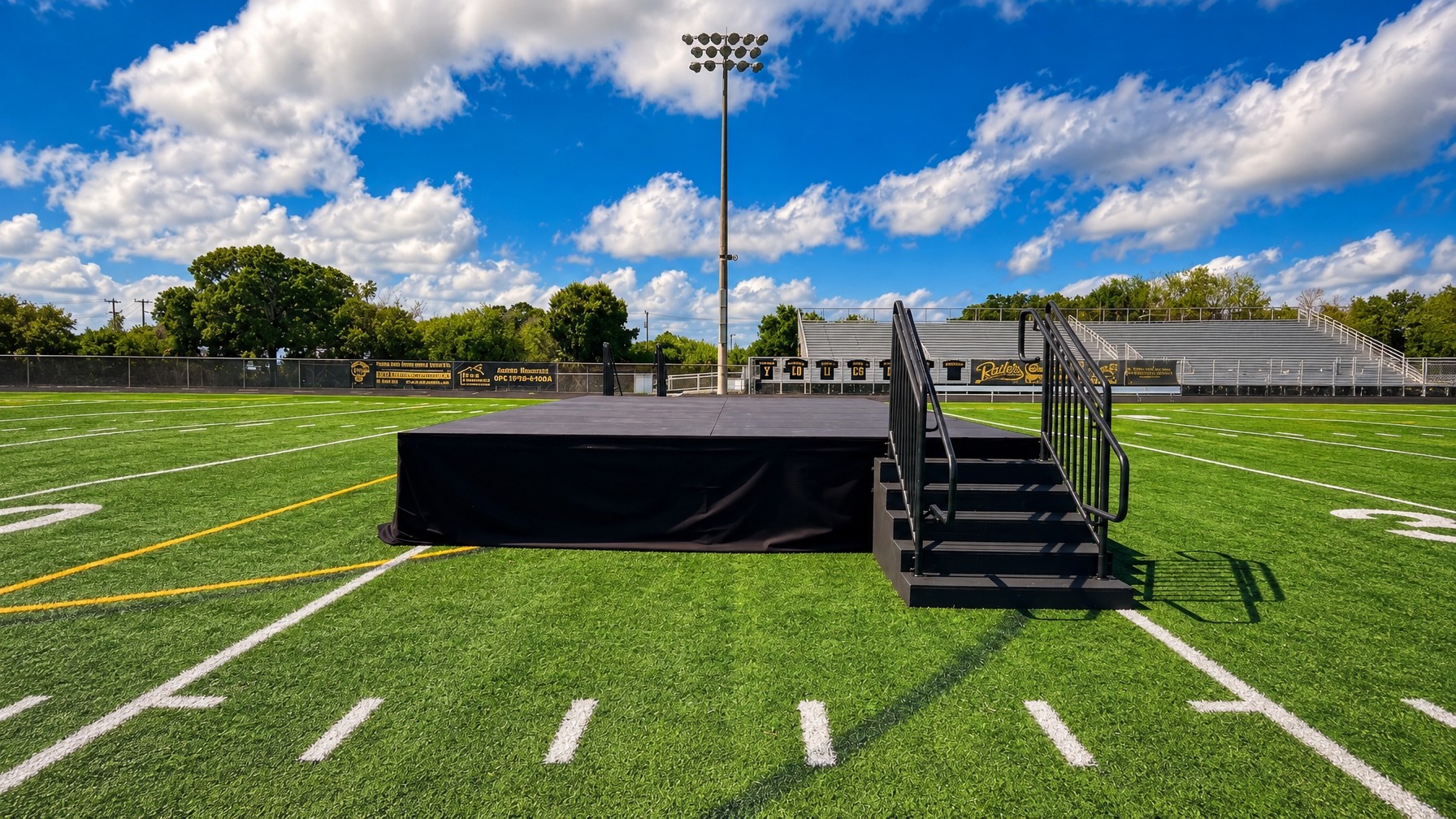
Overnight and day-before builds are possible when venues allow it
Yes, overnight or day-before builds are possible and often preferable, but only when the venue's contract and security policy allow equipment to sit unattended overnight. Convention centers and hotel ballrooms with back-to-back bookings rarely offer this option, while standalone venues, private estates, and multi-day festival grounds usually do.
When we can build a day ahead, it removes almost all same-day pressure. The crew sets the platform, skirting, and stairs the afternoon before, then returns the morning of the event for a final safety check, lighting focus, and sound check instead of a full build, the difference between a relaxed morning and a sprint.
If overnight staging isn't possible, same-day build is the only path, and that's exactly when hour-by-hour planning matters most. A 24ft stage built same-day for a 6pm event means crew call well before sunrise, not a leisurely midday start. Ask early whether your venue allows overnight equipment storage. It's one of the simplest questions that saves an entire morning of stress.
Breakdown and strike timelines after the event ends
Breakdown typically takes about half the time of the original build, so a stage that took 6 hours to build usually strikes in 2.5 to 3 hours. A simple 16ft speaking stage with a podium and no lighting rig can come down in under an hour and a half.
Strike time grows with more to disconnect and pack. Pulling down trussing, coiling cable, removing pipe and drape, and breaking apart guard rails all add time a bare platform strike doesn't need. We plan breakdown around everything that has to leave the building, not just the stage.
Venue turnover windows can be tighter than clients expect. At Gaylord Palms, one conference's exhibitor move-out schedule ran from 2:30pm to 5:00pm sharp, with materials not cleared by 5:00pm rerouted or returned to a warehouse at the exhibitor's expense (Gaylord Palms exhibitor service manual). Gaylord also staffs dedicated Event Experience Managers, called Teal Coats, specifically to coordinate load-in and load-out timing with vendors (Marriott, Gaylord Palms Meetings & Events).
That kind of hard deadline is why we confirm strike windows with the venue, not just the client, before the event ever starts.
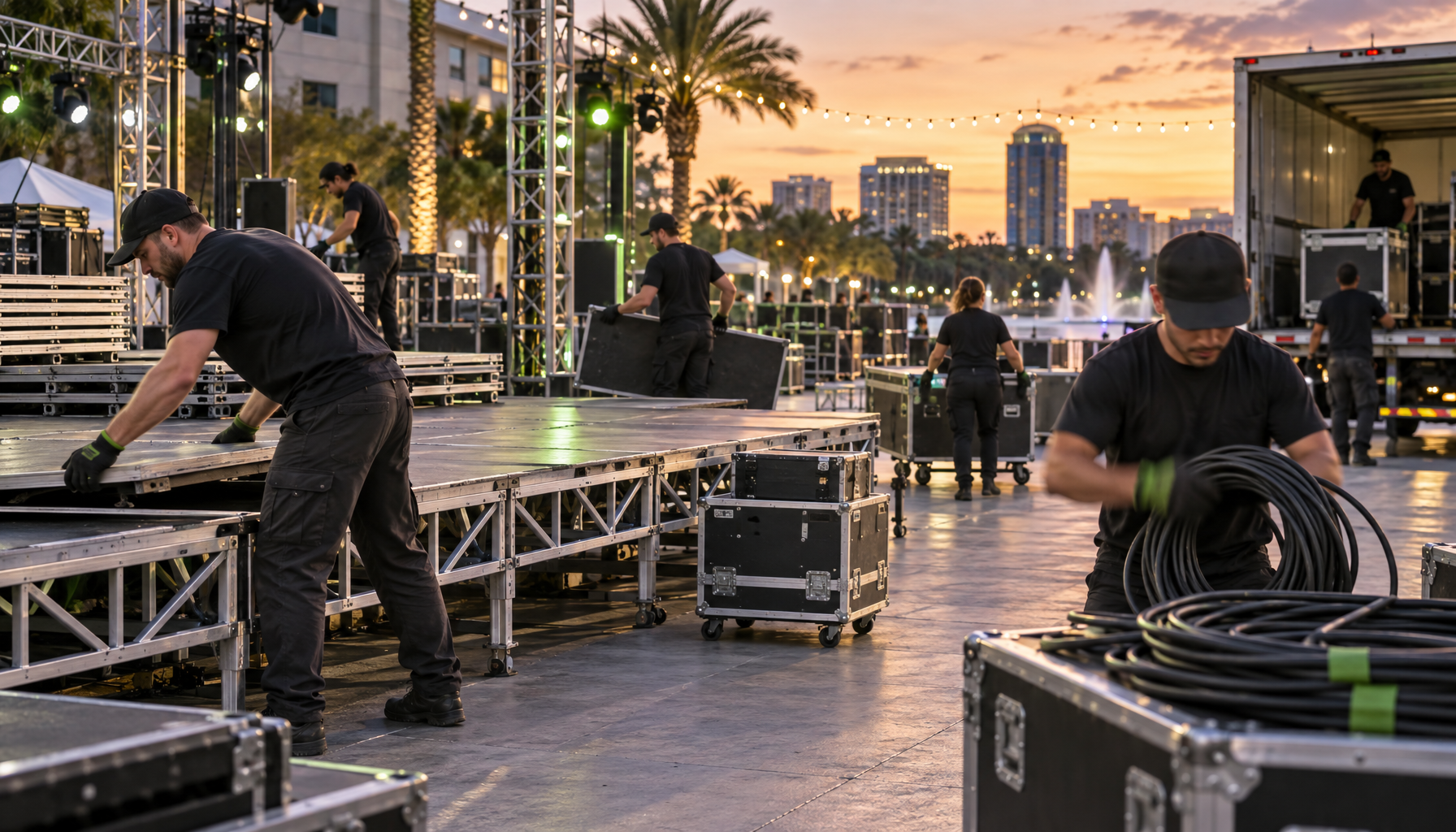
Venue curfews and load-in windows that collide with Orlando staging schedules
The most common timeline conflict in Orlando is a mismatch between a venue's paperwork deadlines and a client's assumption that crews can just show up and build. This catches planners off guard more than any other scheduling issue we see.
We've learned this the hard way at the Orange County Convention Center, where an unscheduled crew simply does not get waved onto the dock. Our production team now builds the OCCC's paperwork deadlines straight into the proposal calendar the day a client signs, because missing either submission date can bump a planned load-in back by a full day, not just a few hours.
This lines up with the OCCC's own published requirements: exhibit contractors must submit a complete certificate of insurance at least 30 days before the first move-in day or they will not be permitted to work in the building, and engineered plans for staging are due at least 21 days ahead (Central Florida International Auto Show Exhibitor Manual; OCCC Event Planning Guide). Overnight parking is not allowed in OCCC lots or loading docks, and dock access is restricted during show hours, so crews have to work within whatever window Show Management assigns that day (OCCC Loading Dock Map).
Hotel ballrooms create a different kind of conflict: back-to-back bookings mean your morning build might start the moment the prior night's event cleared, not whenever you'd like. Outdoor venues add a third wrinkle, which we cover next.
Indoor builds versus outdoor builds change your whole clock
Outdoor stage builds carry noise ordinance restrictions and structural inspection requirements that indoor ballroom builds never face. This is the single biggest planning difference between the two environments.
Orange County's noise ordinance sets distance-based time limits that can affect early-morning or late-night outdoor work: in nonresidential areas, the limit is 200 feet or more from 7am to 10pm, tightening to 100 feet or more overnight, while residential zones drop to 100 feet from 7am to 10pm and just 50 feet overnight. The ordinance exempts events that have been issued a special outdoor event permit from the county (Orange County Noise Control Ordinance).
That exemption matters: file the permit, and early load-in with equipment and generators gets much easier to schedule. Skip it, and a 5am build near homes can draw a complaint before sunrise.
Outdoor ground-supported stage structures also fall under their own engineering standard, ANSI E1.21-2024, which sets minimum design and performance parameters for temporary outdoor entertainment structures and serves as a guide for the municipal authorities who sign off on public safety at outdoor events (ANSI Blog summary of E1.21-2024).
In practice, that means outdoor builds need extra time for anchoring, wind-rating checks, and weighted ballast on top of whatever the stage size alone requires. Indoor ballroom builds skip all of that and focus on floor protection and load distribution.
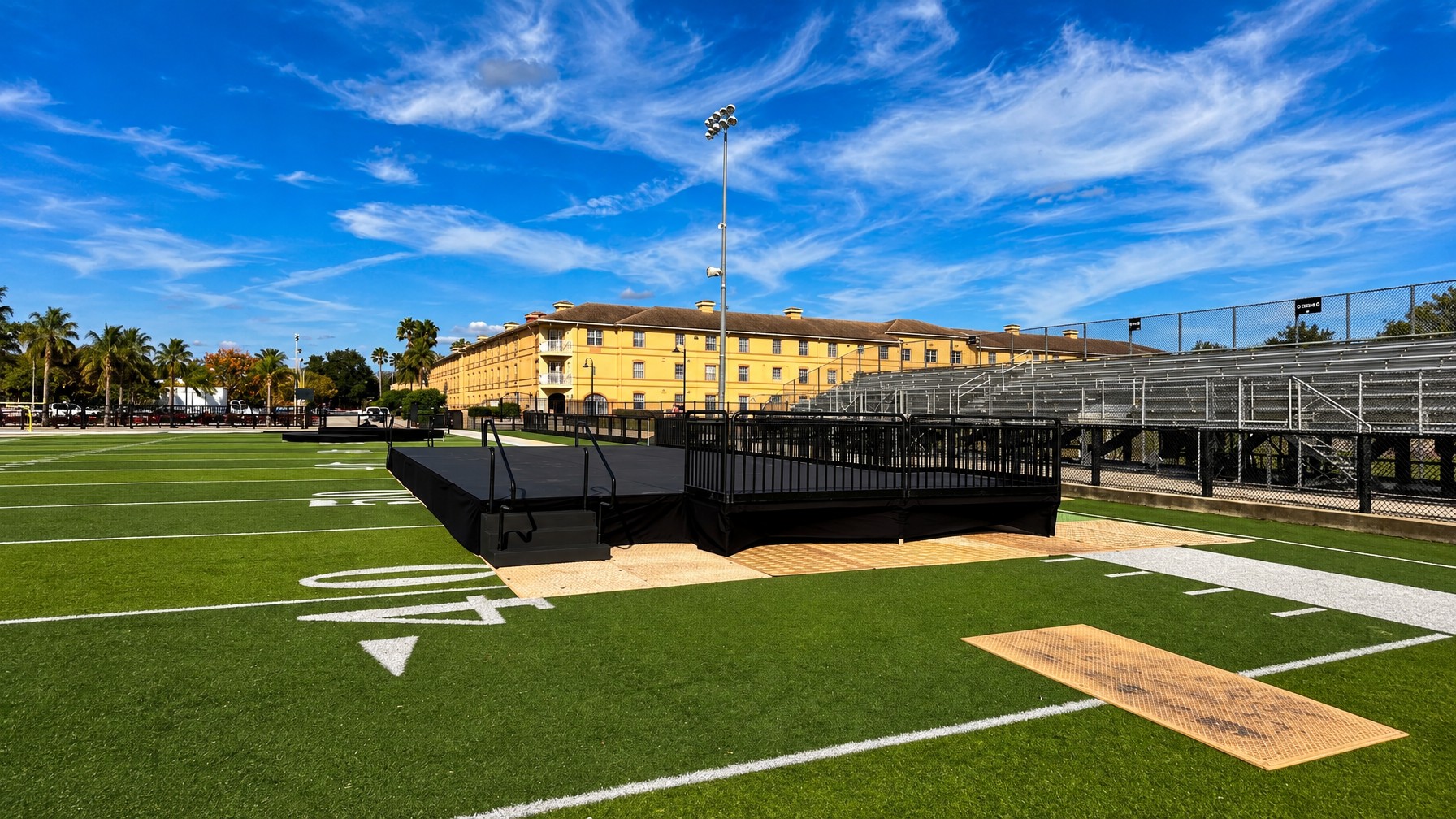
Late-running events push breakdown back minute for minute
When an event runs past its scheduled end time, breakdown gets pushed back minute for minute, and whoever controls the venue's next booking decides how much flexibility exists. A wedding reception running 30 minutes late on an estate with no event after it is a non-issue. The same 30 minutes at a hotel ballroom with a 6am load-in scheduled for the next conference is a real problem.
We build buffer into every schedule, but buffer only goes so far if a venue has zero flex after your contracted end time. That's why we ask clients upfront what happens after their event ends, who else has the room booked, and whether overtime labor is even an option at that venue.
Coordinating crew arrival and departure times is a three-way responsibility. The client knows the program schedule, the venue controls access and curfews, and we know how long the build and strike actually take. The breakdowns that go smoothly are the ones where all three parties confirmed the same numbers before the event, not after.
Frequently asked questions
How many hours before guest arrival does a stage crew need to start load-in?
Most standard builds need 4 to 6 hours of lead time before guests arrive. A simple 16ft speaking stage can start as little as 3 hours ahead, while a 24ft concert stage with trussing and full audio needs 6 or more hours, sometimes starting the night before if the venue allows it.
Does stage size change the build and strike time?
Yes. A 16ft depth stage typically builds in 3 to 4 hours and strikes in under 2. A 24ft depth stage with lighting, trussing, and skirting can take 5 to 7 hours to build and 2.5 to 3 hours to strike, mainly because of cabling and rigging.
Who is responsible for coordinating crew arrival with the venue?
It is shared. The client sets the program schedule, the venue controls access windows and curfews, and the rental company knows the real build time needed. The smoothest events are the ones where all three confirm the same arrival and departure times well before event day.
How far in advance should load-in times be confirmed with the venue?
At facilities like the Orange County Convention Center, confirm insurance and engineered plan paperwork 30 and 21 days out respectively, since missing those deadlines can block access entirely. For hotels and private venues, confirming the load-in window 2 to 4 weeks ahead is usually enough, earlier for peak-season bookings.
What happens to the breakdown schedule if the event runs long?
Breakdown shifts back by however long the event overruns. Whether that is a problem depends entirely on what the venue has booked next. Venues with back-to-back bookings and strict turnover deadlines, like exhibit halls, have little to no flexibility, so confirming the real end time in advance matters more there than anywhere else.
Plan backward from your venue's hardest deadline
Plan backward from your venue's hardest deadline, not forward from when you'd like the crew to show up. Ready to lock in your exact build and strike times? Request a quote and we'll map your schedule against your venue's actual load-in window before you sign anything.