You have a 30×50 hotel ballroom, a garden space at a Lake Mary banquet hall, or a fellowship room at a Winter Garden venue, and the stage rental quote shows two options sitting right next to each other in the size chart. Twelve feet of depth or sixteen. Four feet doesn't sound like much until you build it out and realize half your audience is standing behind a column.
We get this question constantly, and it is one of the most useful ones to answer well, so here is a full breakdown of the 12ft vs 16ft stage rental Orlando decision for smaller venues where every square foot matters.
What the Depth Numbers Actually Mean on the Ground
When we say a stage is 12ft or 16ft, we're talking about depth, meaning the distance from the front edge of the stage to the back wall of the stage deck. Width is a separate measurement and is fully customizable based on your room.
So a "16ft stage" might actually be configured as 20×16 or 24×16, just like a "12ft stage" might be 16×12 or 20×12. Both numbers refer to how far a performer can move toward the back before they run out of floor.
That distinction matters more than most planners realize. A 20×12 stage gives you 240 square feet of performance area. Step up to 20×16 and you're at 320 square feet. That 80 square foot difference is roughly the size of a small home office, and on a stage, it's the difference between a DJ having room to spread out their gear versus having cables dangling off the back edge.
Before we go any further, our Stage Size Calculator lets you plug in your room dimensions and get a recommended footprint in about two minutes. Worth running your numbers there alongside this post.
How Many Performers Fit on Each Size
This is the most practical question, so we want to give you real numbers rather than vague ranges.
On a 12ft-deep stage (using a 16×12 or 20×12 configuration):
- Solo speaker or emcee: plenty of room, even with a podium and monitor
- Wedding couple plus officiant plus two floral arrangements: fits cleanly on a 16×12
- DJ with a standard setup and two speakers on stands: workable, but tight on anything under 20ft wide
- Three-piece acoustic band with no backline: possible, but the drummer will be close to the back edge
On a 16ft-deep stage (using a 16×16 or 20×16 configuration):
- Five-piece band with a full backline, drum kit, and floor monitors: 20×16 handles this comfortably
- Dance performance requiring Marley flooring: 16ft of depth gives dancers room to move without stepping off the front
- Multi-presenter corporate event with a panel table plus podium: 16ft of depth is the minimum we recommend
The rule of thumb we use internally is about 15 to 20 square feet per performer for a static performance (speaking, presenting), and 25 to 35 square feet per performer for anything involving movement, instruments, or gear. Run that math against your performer count and the depth difference becomes very clear.
Room Clearance: The Number Most Planners Overlook
This is where small-venue events get into trouble. Everyone focuses on the stage footprint and forgets to account for what has to happen around it.
You need at least 6 to 8 feet of clear space between the front edge of the stage and the first row of guests. That's not a preference, it's a sightline and safety requirement. People seated directly under a 30-inch or taller stage can't see the performance well, and that front clearance zone also gives performers a safe dismount path if something goes wrong.
You also need at least 3 to 4 feet behind the stage for cable runs, power connections, and crew access during the event.
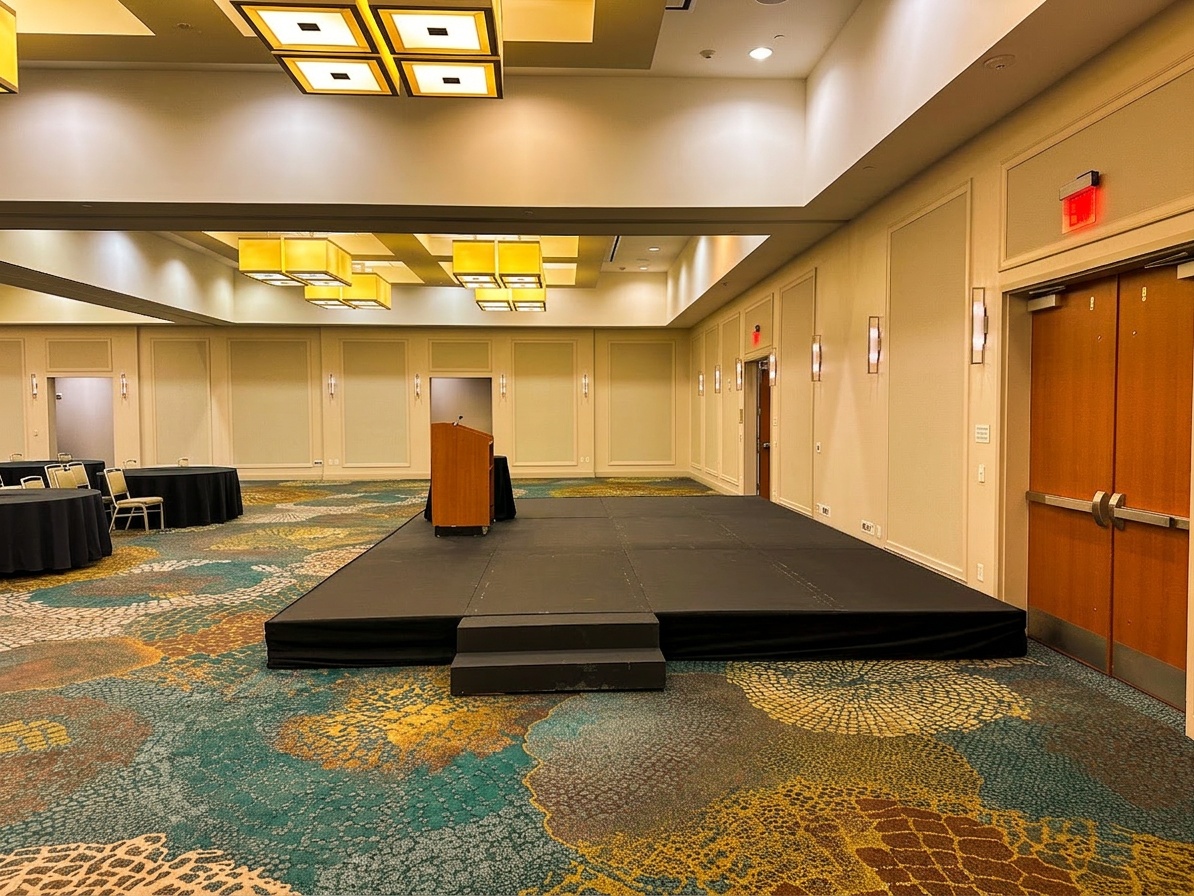
Now run the math on a typical hotel ballroom. In a room like the one we worked at the Celeste Hotel in February 2026, take a standard 30-foot-deep space. A 16ft-deep stage, plus 8 feet of front clearance, plus 4 feet of rear access leaves you with exactly 2 feet of buffer. That's not a usable audience zone.
A 12ft-deep stage in that same 30ft room gives you 8 feet of front clearance, 4 feet of rear access, and 6 feet of actual breathing room to spare.
Switching to the 12ft configuration didn't mean the client got a lesser experience. It meant the audience could actually see the stage without pressing against the front edge. That's a win.
Events That Work Best with a 12ft Stage
Not every event needs depth. Some of the cleanest, most polished stages we've set up were 12ft-deep configurations where the client knew exactly what they needed and didn't overbuy.
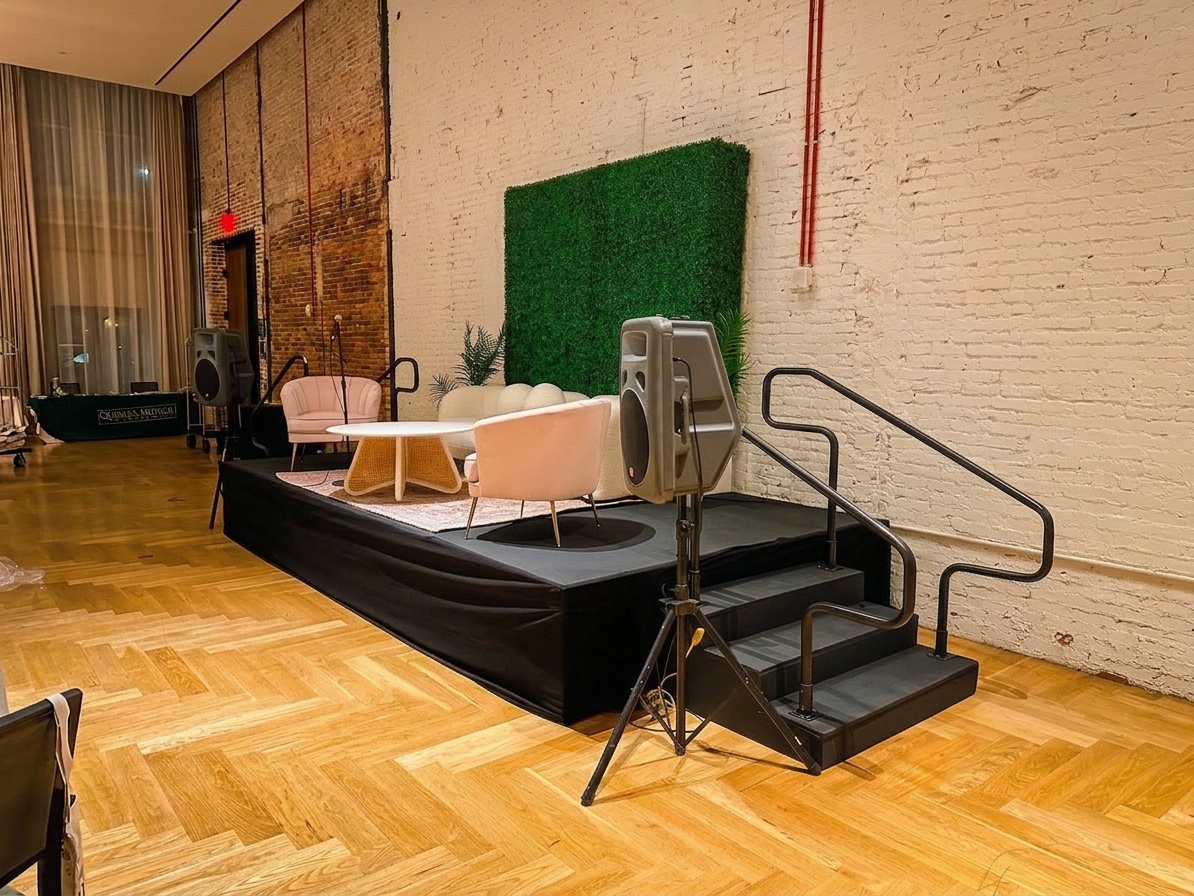
Wedding ceremonies are the classic example. A couple, an officiant, and some floral arrangements on a 16×12 stage at 24 inches of height looks proportional and elegant. Our wedding stages page covers the full range of configurations we build for ceremonies, but 12ft of depth handles the vast majority of them.
Speaking events and award presentations are another strong fit. A single presenter with a podium doesn't need 16ft of depth behind them. The extra depth creates dead space that can actually look awkward on camera, especially for livestreamed events.
Small graduation ceremonies, panels with two to three speakers, and DJ setups for parties under 100 guests all land in this category too. One note on DJ setups: if your DJ runs two subwoofers that sit on the stage deck, make sure your configuration accounts for those footprints at the sides. We've seen clients try to run 12×12 stages for DJ events and regret the width choice, not the depth.
One accessory item worth noting: guard rails are required on any stage 30 inches or taller. Guard rails add about 8 to 12 inches to the effective side clearance you need to leave between the stage edge and the nearest wall or chair. Keep that in mind when you're calculating your room fit for a 12ft stage at higher elevations.
Events That Work Better with a 16ft Stage
When we set up for a client in Lake Mary in late February 2026, the event involved live performance elements that genuinely needed the extra depth. That job illustrated exactly when 16ft earns its floor space.
Live bands with backline gear are the clearest case. A drum kit alone can run 5 to 6 feet deep from kick pedal to back of the throne. Add floor monitors in front of the kit and a guitarist's amp behind the drummer, and a 12ft stage is already spoken for before the lead singer steps up to the mic.
Dance performances requiring Marley flooring need depth for the same reason. Dancers need runway to build momentum, and a 12ft run with Marley is functional but limiting. Sixteen feet gives choreographers real flexibility.
Multi-presenter corporate events often land here too. A stage holding a podium, a full panel table for four presenters, and a confidence monitor in front of the table is a tight squeeze on 12ft. Our Winter Garden setup from early March 2026 was a good example of a smaller Central Florida venue where the client initially requested 12ft, we walked through the panel table configuration together, and we moved to 16ft before the contract was signed.
For full band or performance configurations, check our performance staging rental page to see how width and depth pair together to create the total footprint.
Our speaking stage rental page is also useful here if your 16ft setup is primarily for presentations rather than live performance, since the configurations differ.
Access, Stairs, and Skirting: How Size Changes Your Accessories Budget
This section matters if you're working with a tight budget and want to know exactly where the cost difference between 12ft and 16ft shows up beyond the stage deck itself.
Skirting runs along the front and sides of the stage to give it a finished look and hide the frame underneath. A 20×16 stage has more linear footage to cover than a 20×12 stage. On a 20ft-wide stage, the 16ft configuration adds 8 extra feet of skirting on the two side panels compared to the 12ft version. Real, but not dramatic on its own.
Guard rails scale the same way. Longer back and side perimeters on a deeper stage mean more rail sections. If your stage is elevated at 24 inches or under, rails are optional. At 30 inches and above, they're required, and a 16ft-deep stage will need more rail footage than its 12ft counterpart.
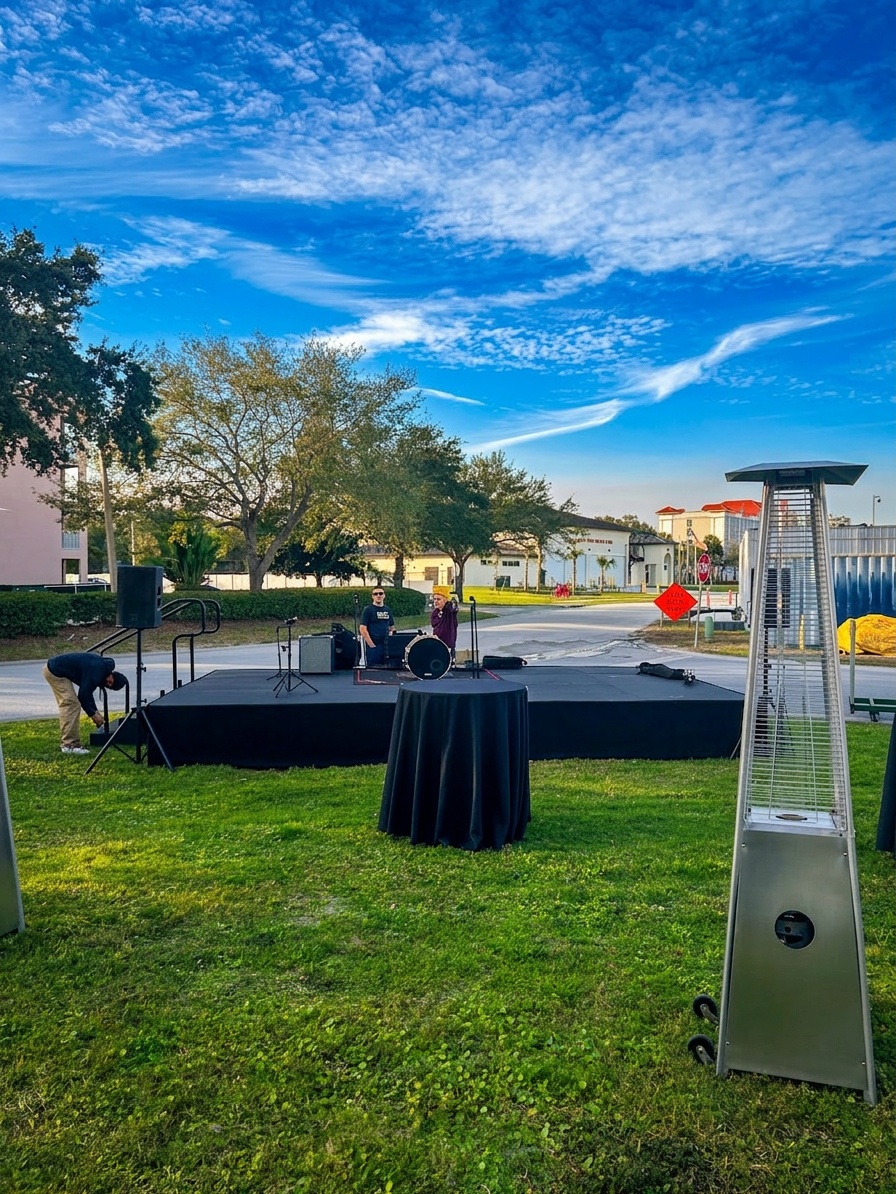
Stairs are where the math can shift more noticeably. Most single-stair setups cover the front or one side of the stage. But for larger casts, dance competitions, or any event where performers need to enter and exit quickly, you may want a second stair unit at the 16ft configuration. A 12ft stage almost never requires two stair units for a small-venue event. Our stair rental options include several configurations that integrate cleanly with both depths, so your planner can price those out at the same time as the stage itself.
The short version: expect a modest but real increase in accessory costs when you move from 12ft to 16ft, mostly in skirting and rails. The stair difference depends on your event's flow needs.
Quick Decision Framework
We walk clients through this exact checklist when they call us, and it usually takes about three minutes to land on the right answer.
- Room depth under 32 feet: Start with 12ft and only go to 16ft if your performer list requires it
- Room depth 32 to 45 feet: Either works; let your performer count and gear make the call
- Solo speaker, ceremony couple, or small DJ: 12ft is almost always right
- Live band with backline, full dance performance, or panel of four or more: 16ft is the minimum
- Elevated stage at 30 inches or taller: Budget for guard rails on both options and account for rail clearance from walls
For a more detailed walkthrough of all the variables, our post on how to choose the right stage size for your Orlando event covers the full framework from room measurement to height selection.
The decision is straightforward once you have your room dimensions and your performer list confirmed. What makes it feel complicated is trying to decide without those two pieces of information in hand.
Not sure which size fits your venue? Use our Stage Size Calculator to run your room dimensions, or call us at 407-442-0254 and we'll walk through it with you before you book. May and June are our busiest months for weddings and graduations across Central Florida, so the earlier you lock in your configuration, the more flexibility you'll have on dates and setup windows.