Event staging in Orlando for a 150-200 person corporate event realistically runs an estimated $2,500-$6,000 total once you add delivery, setup and strike labor, guard rails, stairs, skirting, and permits on top of the base rental. These are illustrative planning estimates built by combining our itemized base rates with the delivery/labor markup and permit and insurance costs outlined below, not a fixed quote. A mid-size outdoor reception for 300-400 guests typically lands between $5,000-$12,000 using the same math, and a large outdoor concert or festival for 500+ can reach $20,000-$40,000 or more depending on stage size, roofing, audio, lighting, and venue surcharges. The base stage quote you receive is almost never the final number.
Key takeaways
- Base stage rental is only one piece. Delivery, setup labor, strike labor, guard rails, stairs, and skirting commonly add roughly 30% or more on top of the equipment line item.
- Permits are required and vary by municipality. The City of Orlando requires a temporary stage permit with engineer-stamped drawings; Orange County and Osceola County each have their own outdoor assembly permit processes with separate fee schedules.
- Labor is frequently underestimated. A typical single-day event involves 8 hours of setup and 4 hours of strike, and same-day strike scheduling carries a surcharge.
- Venue-imposed fees are invisible until you ask. Hotel load-in windows, freight elevator fees, and Disney-area staging code requirements are real line items that rarely appear in a competitor's base quote.
- Book early in peak season. Central Florida's wedding season (February-May) and holiday event season (October-December) drive price increases and limited crew availability for clients who wait.
What does a base stage rental include in Orlando?
A base stage rental from Stages Plus covers the deck, frame, and legs in your chosen configuration. Skirting, guard rails, stairs, and delivery are separate line items on most quotes.
Portable stage packages start in the $430-$1,250/day range for smaller configurations. A 12×16 stage with setup, strike, skirt, and steps came to $1,557.89 on a recent invoice from another Central Florida provider, according to Centric Events and Rentals, a useful reference point for smaller setups. Larger outdoor stage kits with roofing start considerably higher.
At Stages Plus, our quotes are itemized so you can see exactly what each component costs before you sign anything. That transparency is intentional. The number one complaint we hear from clients who have used other vendors is that the base quote looked great until the final invoice arrived.
Our Orlando stage rental pricing guide walks through the specific factors that move your quote up or down.
See our stage rental packages – what's included vs. add-on services for a full breakdown of what comes standard and what gets added on.
What delivery and labor fees get added to the stage price?
Delivery, setup, and strike labor typically add roughly 30% of the equipment cost to your total. That percentage climbs when the venue has restricted access, long walks from the truck to the setup area, or a same-day strike requirement.
According to Centric Events and Rentals, expect roughly 30% of equipment cost to cover delivery windows, setup, strike, and logistics – and that scales with distance, access, and crew size.
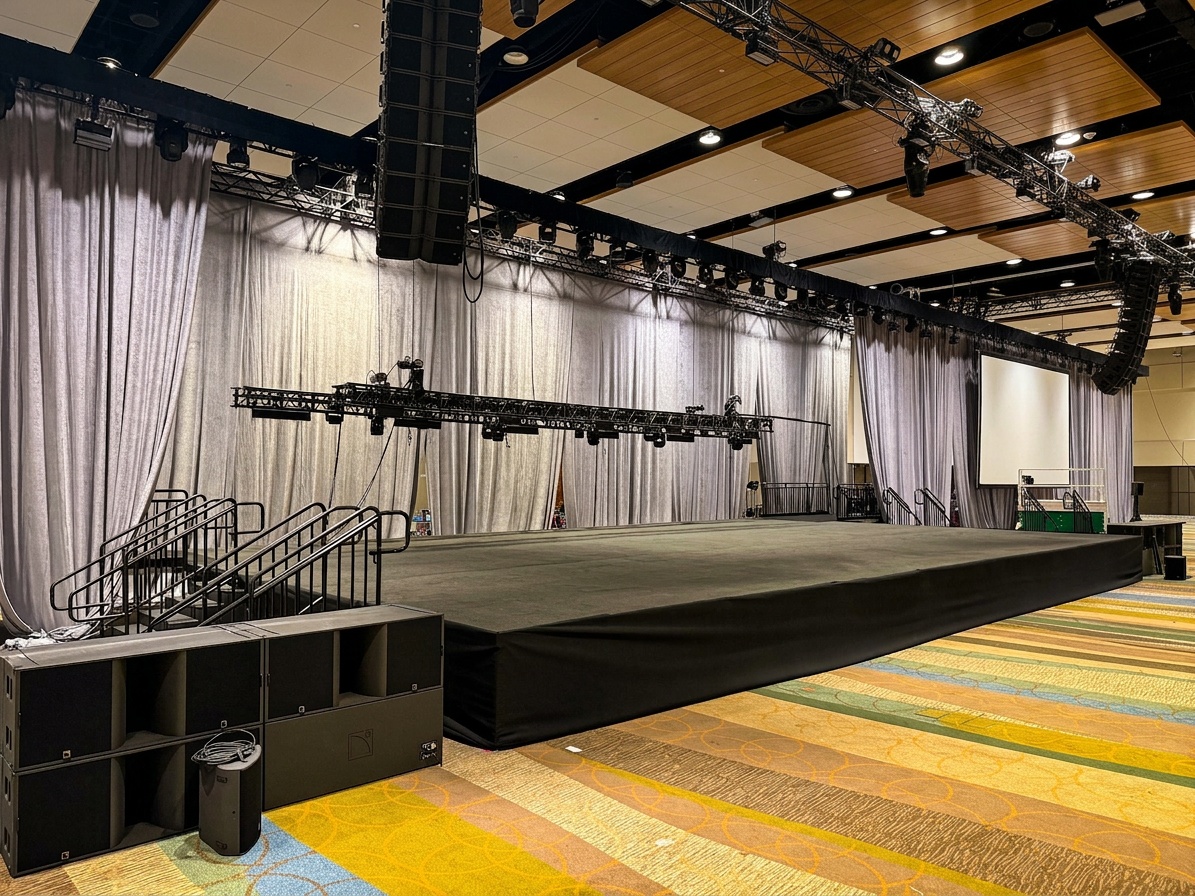
A hotel ballroom install shows how this plays out in practice. Hotel and resort properties often schedule vendor access in specific load-in windows, and missing that window means overtime. A same-day strike surcharge applies when the crew has to turn around immediately after the event ends, and guard rail requirements kick in whenever the stage height crosses the 30-inch threshold. We walk clients through each of these line items before the event so the final invoice never surprises them.
Distance from our Winter Park shop matters too. Any venue outside the immediate Orlando metro, from the Space Coast to Lakeland, should factor in an extended delivery fee for added mileage and drive time.
Plato Media Co. notes that a typical single event involves roughly 8 hours of "Set" and 4 hours of "Strike," and that these labor blocks, not just event hours, are what drive the labor line on your invoice.
Do I need a permit for a stage in Orange County or the City of Orlando?
Yes. Permits are required for temporary stages in both the City of Orlando and Orange County, and each municipality has its own application process, fee schedule, and timeline.
The City of Orlando requires a temporary stage permit for any structural stage, and that permit requires signed and sealed drawings from a licensed engineer and a general contractor before it will be issued.
Separately, a Special Events Permit from the City of Orlando is required for any event on city property with more than 100 attendees, or for smaller events that involve temporary structures, vending, or alcohol.
Orange County requires an Outdoor Public Assembly Permit by county ordinance, and separately a Special Outdoor Event Permit under the Florida Fire Prevention Code for outdoor events expected to draw 100 or more people, per the Orange County Outdoor Public Assembly application.
Osceola County (which covers Kissimmee and much of the theme park corridor) carries its own fire prevention fee schedule for special events, tents, and temporary structures, and requires fees paid before the permit issues. If your event needs off-duty law enforcement for traffic control, Osceola County passes that cost directly to the event operator.
Disney-adjacent venues carry their own staging code requirements that add line items most planners do not anticipate. Our Disney stage code requirements article covers exactly what those are and why they exist. Small-market venues outside Orlando, like those in Lake or Volusia counties, are not simpler on the permit side. They are just less familiar to planners.
Budget line item to include: permit application fees plus the cost of engineer-stamped drawings if your municipality requires them. In the City of Orlando, structural stages always require that engineering documentation.
How much do guard rails, stairs, skirting, and ADA ramps add?
Guard rails become a required, non-optional cost the moment your stage height exceeds 30 inches, and an ADA-compliant ramp adds even more depending on how high the stage sits.
Our post on ADA-compliant staging and accessibility requirements in Florida explains the full ramp-length math, but the short version is that ADA ramp slope requirements mean a taller stage needs a physically longer ramp, which takes more equipment and more setup time.
OSHA 29 CFR 1910.23 establishes guardrail requirements for elevated platforms in general industry settings. Guardrail best practices for temporary event stages commonly follow those same elevated-platform standards, even though the regulation is not written specifically for temporary staging.
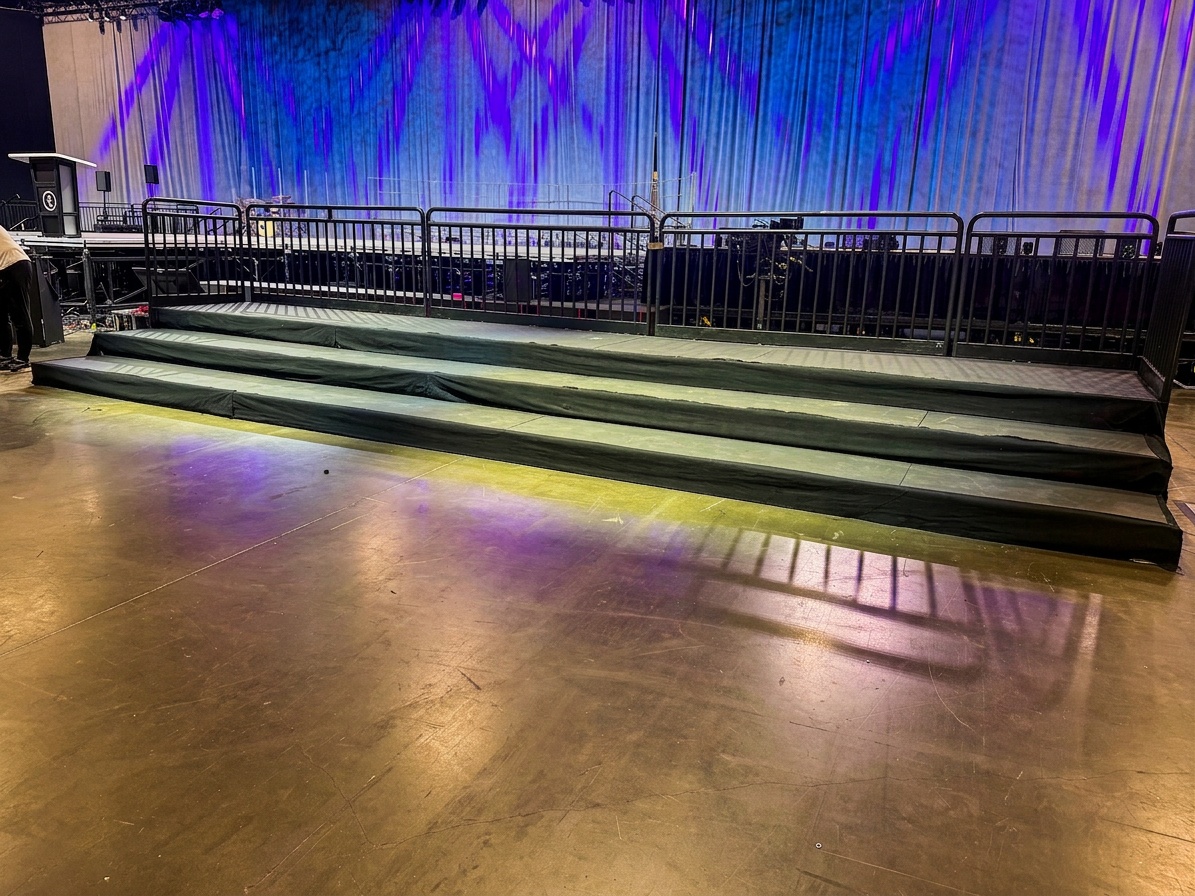
Guard rails are not optional once a stage height crosses that 30-inch threshold, regardless of venue or event type. Stairs are similarly non-negotiable from a safety standpoint, and one or two sets are typically a line item separate from the stage deck.
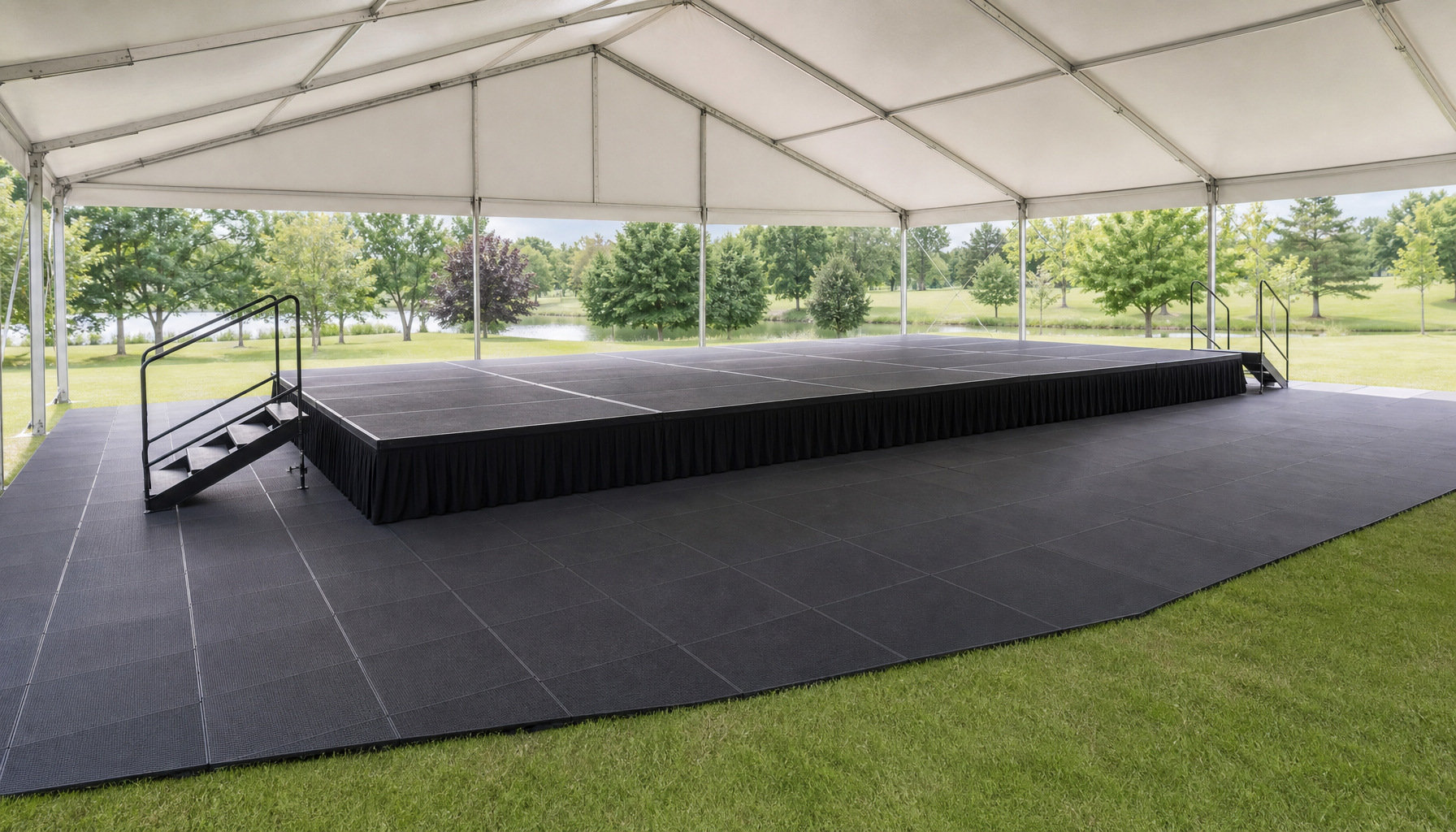
Skirting is technically optional but almost universally recommended. The underside of a stage frame isn't something you want visible at a corporate event or wedding. At Stages Plus, skirting comes in black or white and finishes the look completely.
As a rough budgeting guide for add-ons on a mid-size stage:
- Guard rails on all open sides of a 20×24 stage add meaningful cost, especially when a same-day install timeline compresses the setup window
- Stairs (one or two sets) are typically priced separately from the stage deck
- Skirting for a full perimeter adds a fabric and labor cost that varies with the stage footprint
- ADA ramp length (and therefore cost) scales directly with stage height, so a 24-inch stage needs a shorter run than a 48-inch stage
Is event liability insurance required, and how much should I budget?
Most Central Florida venues require event liability insurance naming them as an additional insured. The policy itself typically costs $75-$285 for a single-day event depending on coverage limits and event type.
Insureon reports that its small business customers pay an average of $278 for one-day special event insurance coverage, while multi-day coverage averages $250.
For festivals, concerts, and stadium events with 500 or more attendees, coverage limits of $5M or higher may be required, per RVNA Special Event Insurance Florida.
The City of Orlando's Office of Special Events coordinates insurance requirements alongside permitting and public safety for the more than 1,200 permitted events the city handles each year. Many venues set a minimum of $1,000,000 per occurrence and $2,000,000 aggregate, with a certificate naming the venue as an additional insured submitted two weeks before the event.
Disney and Universal properties require specific Additional Insured policy language that differs from standard certificates. If your event is near any theme park property, confirm the exact wording requirement before you purchase coverage.
As BellKen Insurance notes, Florida's hurricane and tropical storm exposure makes event insurance in the state not just advisable but a practical necessity for outdoor events, particularly during the June through November hurricane season.
Budget line: $250-$350 for a small to mid-size single-day event, scaled up significantly for large outdoor festivals or theme-park-adjacent venues.
How do venue surcharges affect the total staging budget?
Hotel and convention-center venues add load-in window restrictions, freight elevator fees, and sometimes union-labor minimums that can add hundreds to thousands of dollars to a staging budget that looks clean on paper.
Resort and convention-center venues are the clearest example we see in the field. Many resort properties control vendor access through scheduled load-in windows. If a truck arrives outside that window, or the strike crew needs to clear after a hard cutoff, overtime labor charges follow automatically.
Convention center events may trigger union-labor minimums depending on the facility and the type of work performed. This isn't universal in Orlando, but it's common enough at larger properties that any corporate event planner should ask the venue directly before finalizing the staging budget.
Parking for crew vehicles is a smaller but real cost that accumulates over a full setup and strike day. At urban venues or resort properties, crew parking is often metered, validated for a fee, or restricted to a remote lot that adds walk time.
For Disney-adjacent venues, specific staging code requirements add line items that a planner unfamiliar with that corridor would not anticipate.