What's Actually in Your Concert Stage Quote?
Most event organizers request a concert stage rental quote expecting a single number. What they get back is a list of line items they weren't expecting, and suddenly the budget conversation gets complicated. We've had this talk with hundreds of clients at Stages Plus, and the honest answer is that a base stage package and a fully production-ready stage are two very different things.
If you are planning concert stage rental in Orlando, knowing what is bundled versus what costs extra before you talk to any vendor will save you time, budget surprises, and a lot of back-and-forth emails.
This post gives you a straight breakdown of what a standard package typically covers, what you'll likely need to add on, and how to build a realistic budget for your music event.
What a Base Concert Stage Package Typically Covers
Our concert stage rental options start with the platform itself. That means modular deck sections that lock together to form a custom footprint, the structural framework beneath them, and the vertical posts that set your stage height. Typical configurations run from 16 feet deep to 24 feet deep, with width options that scale up or down based on your performer count and venue footprint.
A standard stage height puts the deck surface at 24 to 36 inches above ground level, which gives audiences a clear sightline while keeping the structural load within normal venue requirements.
The modular deck system is one of the things we genuinely like about how we build. Because each section locks independently, we can hit dimensions that fit tight venue footprints without forcing a one-size-fits-all platform on a space it doesn't suit.
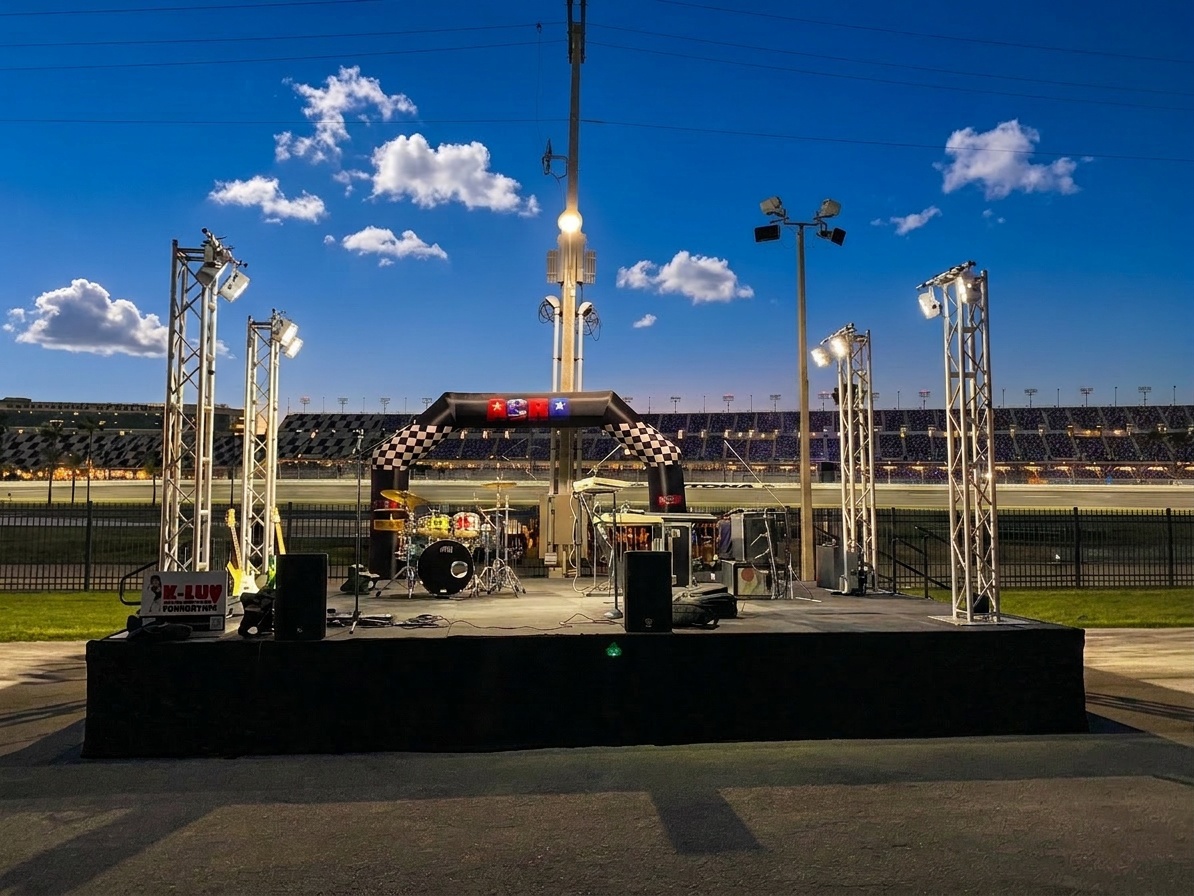
Think of a recent outdoor build we did: decking going down, frame locked in, legs set. That sequence is a good visual for what a base package looks like when it lands at a venue. The decking, the frame, the legs, all in place before a single accessory goes on. Clean, solid, and ready for the next layer of decisions.
When you see a base package price, it almost always means platform structure only. Everything that attaches to or surrounds that structure is typically a separate line item.
Standard Inclusions You Should Confirm Before Signing
Beyond the platform itself, a few things should be included in any professional stage rental, but they're worth confirming in writing before you sign anything.
Delivery and pickup within the service area, crew setup, and crew strike are standard practice for us at Stages Plus. Our team drives out, builds the stage, and comes back to tear it down. You're not renting gear and figuring out assembly yourself. That said, delivery zones matter. If your venue is in our service area (Orlando, Winter Park, Kissimmee, and across Central Florida), you're covered. Events outside that footprint may carry an additional mileage fee.
Florida building standards require guard rails on any stage surface that sits higher than 30 inches above the surrounding grade.
That 30-inch rule is where a lot of organizers get caught off guard. If your stage sits at 24 inches, you're under the threshold. At 36 inches or above, guard rails are required, and they're almost always quoted as a separate item. Ask your rental company directly: "Are guard rails included at the height I need, and what's the cost if they're not?"
Also worth confirming: whether the quote includes a basic structural safety review or whether that's an additional service for larger builds.
Common Add-On Services for Concert Staging
This is where stage rental packages get personal. Every event is different, and the add-ons you need depend on your performer lineup, your venue, and your audience setup. Here are the ones we quote most often for music events.
Stairs and ramps. Performers need to get on and off the stage. Side stairs for artists are standard. If your event requires ADA-accessible access, a ramp is required alongside any stairway entry. Both are priced separately from the platform.
Guard rails. Required above 30 inches, as mentioned. We price these per linear foot of rail, so the cost scales with your stage perimeter.
Stage skirting. This fabric panel wraps the exposed understructure and gives the stage a finished, professional look from the audience. It comes in multiple colors and makes a significant visual difference, especially if cameras or video screens are part of your setup.
Marley flooring. If your concert includes dancers or a choreographed stage show, Marley is the surface to ask about. It lays over the deck and gives performers the traction and slip resistance they need. Visit our Marley flooring rental page for details.
Pipe and drape. Pipe and drape rental handles backstage separation, wing masking, and green room dividers. For concerts with multiple acts or any kind of stage-left and stage-right wing management, drape makes the production look intentional rather than improvised.
Audience risers. Camera platforms, VIP viewing sections, and elevated general admission areas all fall under audience riser rental. These are quoted separately and require their own setup time.
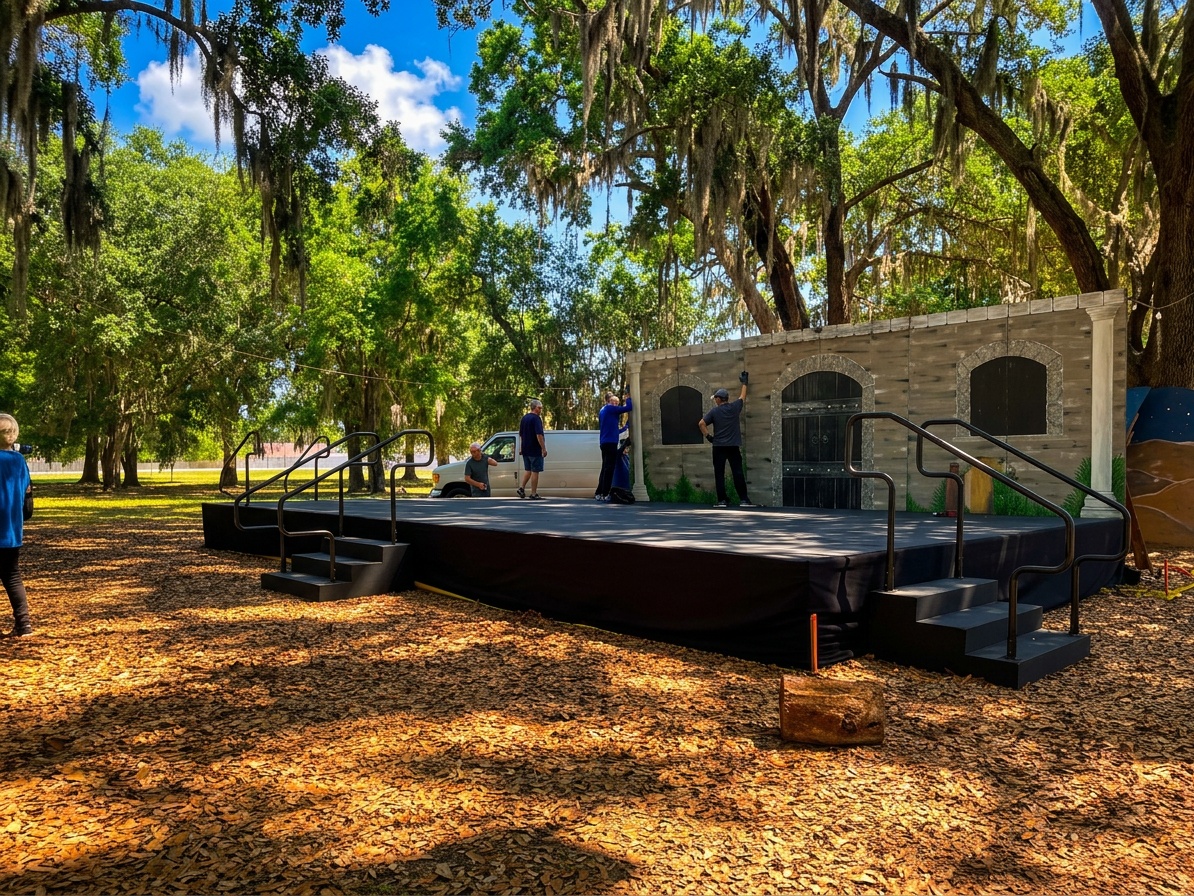
A hotel venue build is a good example of how add-ons stack up in practice. Indoor hotel events often add skirting and drape for aesthetic reasons even when safety items like guard rails aren't required at lower stage heights. The venue has its own visual standards, and the full accessory package is what makes a stage feel like it actually belongs there.
Audio and Lighting: Where They Fit in the Budget
Here's the part that surprises a lot of first-time concert organizers: the stage platform and the production gear that powers your show are entirely separate budget categories.
For music event staging in Orlando, the typical quote sequence is platform first, then production layers.
Our audio packages range from basic PA setups suited to smaller stages with one or two performers to full production packages with front-of-house mixing, monitor systems, and subwoofers for larger crowds. What you need depends heavily on your expected attendance, the acoustic environment of your venue, and whether you have your own audio engineer or need one provided.
Stage lighting follows the same logic. A minimal setup might include wash lights to make the stage visible and the performers legible to the audience. A full rig adds moving heads, color effects, and programming that matches your show's energy. Both options exist, and both are quoted as separate line items from the platform.
The practical way to approach this: lock in your platform footprint first, then build the production budget on top of it. Trying to price everything simultaneously before you know your stage size tends to create estimates that drift significantly from the final quote.
How to Build a Realistic Concert Stage Budget
Start with the platform. Work out the footprint you actually need based on your performer count, any gear (amplifiers, drum risers, backline) that will live on stage, and the sight lines from your audience area. Getting this number right first prevents you from over-ordering or, more commonly, under-ordering and scrambling to expand the day of the event.
From there, layer in the required safety items. If your stage is at 36 inches, budget for guard rails along the front and sides. Budget for stairs (at minimum one set, two if you have multiple wings). If ADA access is required, add a ramp.
Then add the production elements: audio, lighting, and any video or LED wall components if your show calls for them. These are typically the largest cost variables in a music event budget because they scale significantly with event size.
Finally, add the aesthetic layer: skirting, drape, Marley if applicable. These items aren't safety-critical, but they're what separate a professional-looking show from a bare platform sitting in the middle of a venue.
For outdoor events, factor in that structural requirements can shift based on surface type, wind load, and venue permitting. Our team will walk through any venue-specific considerations when we put your quote together. Check our stage rental pricing page for ballpark ranges to help set your initial budget.
A clear budget has four layers: Platform. Safety. Production. Aesthetics. Price each layer separately and you'll almost never be surprised by your final quote.
Questions to Ask Before You Book
No matter which company you call, these are the questions worth asking before you commit. And honestly, most people skip at least two of them.
Is crew setup and strike included? Some companies charge setup labor separately. Know before you sign.
What is the delivery zone and are there fees outside it? If your venue isn't in the standard service area, get that cost in writing upfront.
What is the load capacity of the stage? For concert stages with heavy backline gear, knowing the pounds-per-square-foot rating matters. A drum kit plus amplifiers plus a touring keyboard rig adds up fast.
What is the cancellation and weather policy for outdoor events? Florida weather is unpredictable, especially in summer and fall. Understand what happens to your deposit if a storm forces a postponement.
Are permits required for your venue or stage size? Some venues and municipalities require structural permits for temporary stages above a certain height or square footage. Ask whether your rental company can provide engineering documentation if the venue or city requests it.
What is the booking and payment timeline? Peak concert season in Central Florida moves fast. Knowing the deposit structure and final payment deadline keeps your calendar on track.
Get a Custom Quote for Your Concert or Music Event
Ready to plan your concert or music event in Orlando? Start with our stage size calculator to nail down the right footprint, then get a quote from our team. We will send you a line-by-line breakdown showing exactly what is included in the base package and what is optional, so you know what you are committing to before you sign anything.
Every music event is different, and the best quote is one that's built around your specific show, your venue, and your audience. Our team at Stages Plus has set up concert stages from small club-style platforms to full festival builds across Central Florida. We're happy to talk through the options before you commit to anything. Call us at 407-442-0254 or use the quote form to get started.