Orlando Stage Rental

Bands, Runways, Speaking Engagements, Award Ceremonies, Schools

Call Now! 407-442-0254

  • About
    • Blog
  • Pricing
  • Packages
    • Audio Packages
    • Stage Lighting
  • Contact
  • Reserve
  • Stage Sizes
    • 8ft Stage Sizes
    • 12ft Stage Sizes
    • 16ft Stage Sizes
    • 20ft Stage Sizes
    • 24ft Stage Sizes
  • Stage Rentals
    • Speaking Stage Rental
    • Single Performer Stage Rental
    • Concert Stage Rental
    • Round Stage Rental
    • Performance Staging Rental
    • Graduation Stage Rental
    • Wedding Stages
  • Runway
  • Pipe / Drape
  • Audience Riser
  • Pool Cover
  • Tent Floor
  • Camera Riser
  • Stage Accessories
    • Stair Rental
    • Ramp Rental
    • Dancefloor Rentals
    • Barricade Crowd Control Rental
    • Podium Rental

Concert Stage Rental Packages: What’s Included vs. Add-On Services in Orlando

June 11, 2026 by admin

What's Actually in Your Concert Stage Quote?

Most event organizers request a concert stage rental quote expecting a single number. What they get back is a list of line items they weren't expecting, and suddenly the budget conversation gets complicated. We've had this talk with hundreds of clients at Stages Plus, and the honest answer is that a base stage package and a fully production-ready stage are two very different things.

If you are planning concert stage rental in Orlando, knowing what is bundled versus what costs extra before you talk to any vendor will save you time, budget surprises, and a lot of back-and-forth emails.

This post gives you a straight breakdown of what a standard package typically covers, what you'll likely need to add on, and how to build a realistic budget for your music event.

What a Base Concert Stage Package Typically Covers

Our concert stage rental options start with the platform itself. That means modular deck sections that lock together to form a custom footprint, the structural framework beneath them, and the vertical posts that set your stage height. Typical configurations run from 16 feet deep to 24 feet deep, with width options that scale up or down based on your performer count and venue footprint.

A standard stage height puts the deck surface at 24 to 36 inches above ground level, which gives audiences a clear sightline while keeping the structural load within normal venue requirements.

The modular deck system is one of the things we genuinely like about how we build. Because each section locks independently, we can hit dimensions that fit tight venue footprints without forcing a one-size-fits-all platform on a space it doesn't suit.

Stage installation in progress at an outdoor venue showing modular deck sections being assembled by crew

Think of a recent outdoor build we did: decking going down, frame locked in, legs set. That sequence is a good visual for what a base package looks like when it lands at a venue. The decking, the frame, the legs, all in place before a single accessory goes on. Clean, solid, and ready for the next layer of decisions.

When you see a base package price, it almost always means platform structure only. Everything that attaches to or surrounds that structure is typically a separate line item.

Standard Inclusions You Should Confirm Before Signing

Beyond the platform itself, a few things should be included in any professional stage rental, but they're worth confirming in writing before you sign anything.

Delivery and pickup within the service area, crew setup, and crew strike are standard practice for us at Stages Plus. Our team drives out, builds the stage, and comes back to tear it down. You're not renting gear and figuring out assembly yourself. That said, delivery zones matter. If your venue is in our service area (Orlando, Winter Park, Kissimmee, and across Central Florida), you're covered. Events outside that footprint may carry an additional mileage fee.

Florida building standards require guard rails on any stage surface that sits higher than 30 inches above the surrounding grade.

That 30-inch rule is where a lot of organizers get caught off guard. If your stage sits at 24 inches, you're under the threshold. At 36 inches or above, guard rails are required, and they're almost always quoted as a separate item. Ask your rental company directly: "Are guard rails included at the height I need, and what's the cost if they're not?"

Also worth confirming: whether the quote includes a basic structural safety review or whether that's an additional service for larger builds.

Common Add-On Services for Concert Staging

This is where stage rental packages get personal. Every event is different, and the add-ons you need depend on your performer lineup, your venue, and your audience setup. Here are the ones we quote most often for music events.

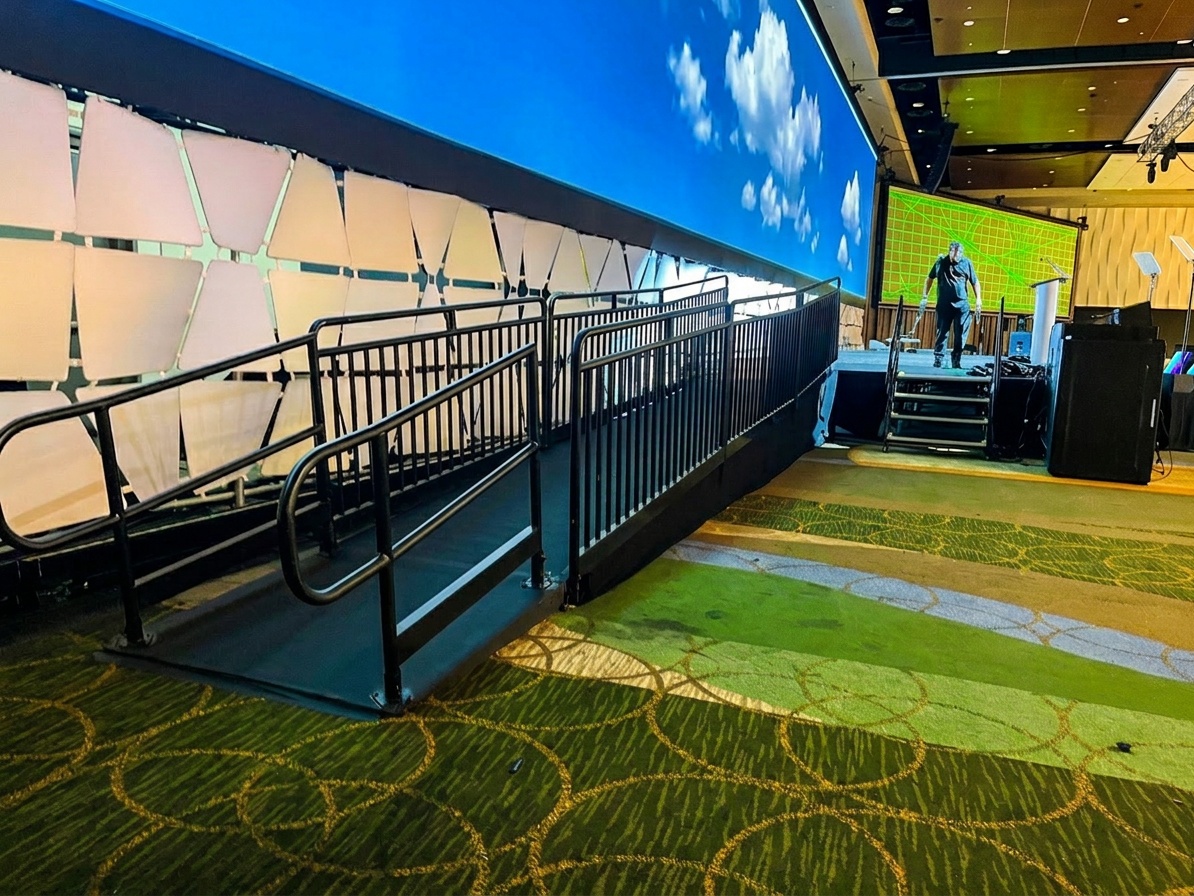
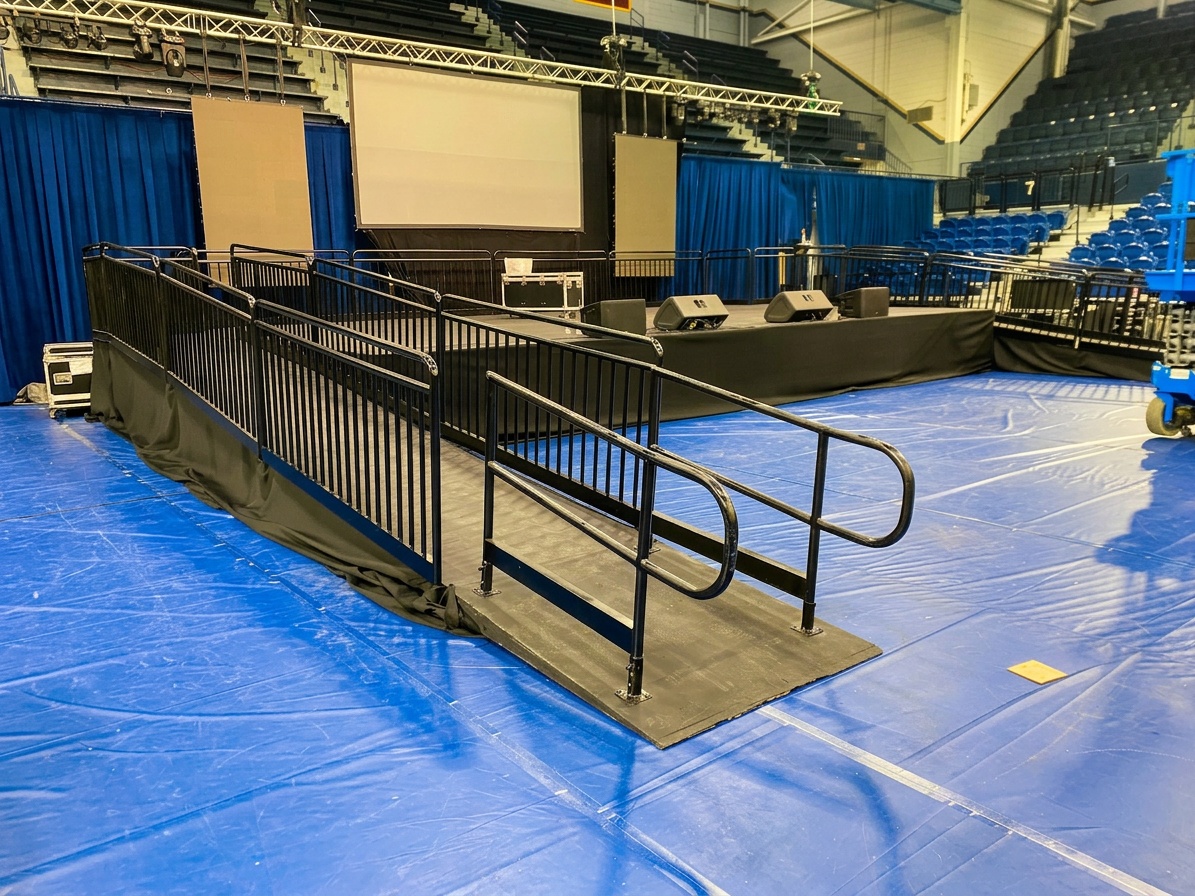
Stairs and ramps. Performers need to get on and off the stage. Side stairs for artists are standard. If your event requires ADA-accessible access, a ramp is required alongside any stairway entry. Both are priced separately from the platform.

Guard rails. Required above 30 inches, as mentioned. We price these per linear foot of rail, so the cost scales with your stage perimeter.

Stage skirting. This fabric panel wraps the exposed understructure and gives the stage a finished, professional look from the audience. It comes in multiple colors and makes a significant visual difference, especially if cameras or video screens are part of your setup.

Marley flooring. If your concert includes dancers or a choreographed stage show, Marley is the surface to ask about. It lays over the deck and gives performers the traction and slip resistance they need. Visit our Marley flooring rental page for details.

Pipe and drape. Pipe and drape rental handles backstage separation, wing masking, and green room dividers. For concerts with multiple acts or any kind of stage-left and stage-right wing management, drape makes the production look intentional rather than improvised.

Audience risers. Camera platforms, VIP viewing sections, and elevated general admission areas all fall under audience riser rental. These are quoted separately and require their own setup time.

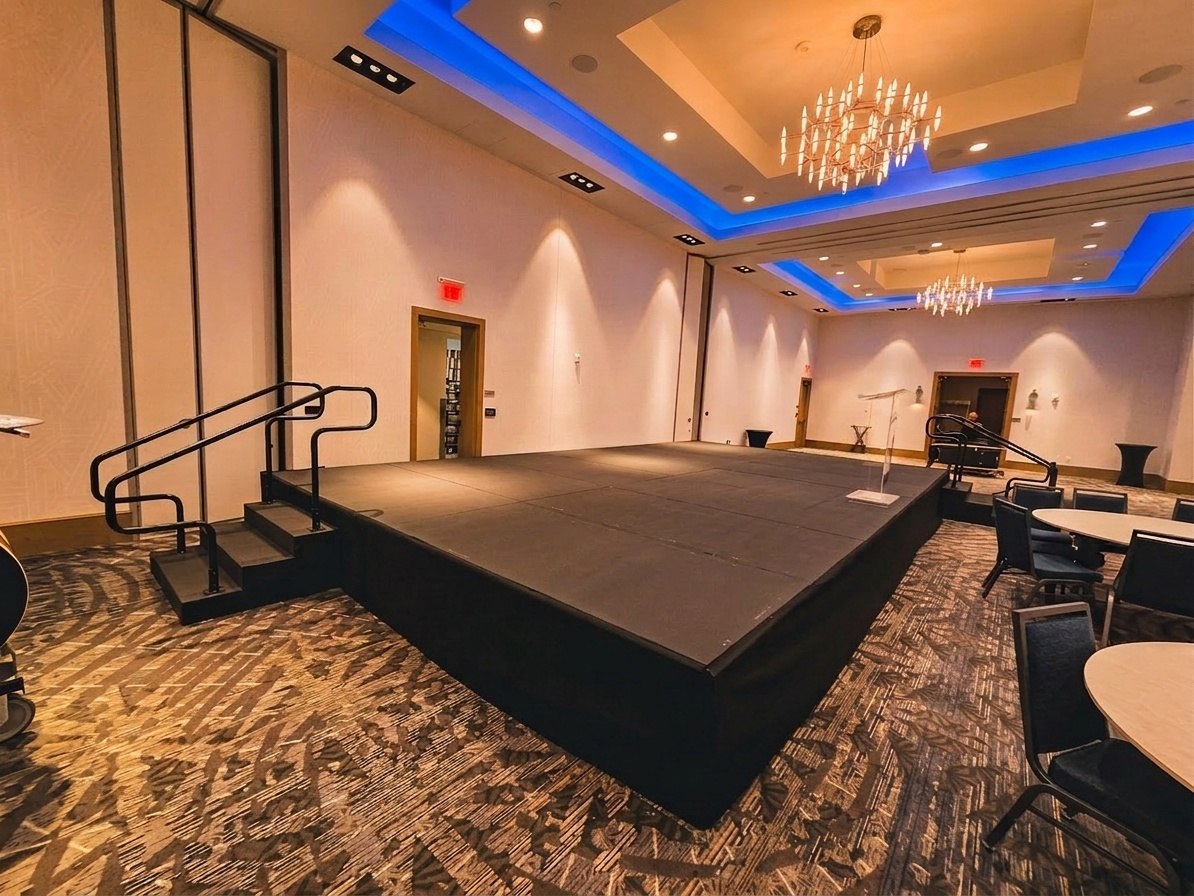
Full concert stage build at the Gaylord Palms resort showing stage skirting, guard rails, and stairs in place

A hotel venue build is a good example of how add-ons stack up in practice. Indoor hotel events often add skirting and drape for aesthetic reasons even when safety items like guard rails aren't required at lower stage heights. The venue has its own visual standards, and the full accessory package is what makes a stage feel like it actually belongs there.

Audio and Lighting: Where They Fit in the Budget

Here's the part that surprises a lot of first-time concert organizers: the stage platform and the production gear that powers your show are entirely separate budget categories.

For music event staging in Orlando, the typical quote sequence is platform first, then production layers.

Our audio packages range from basic PA setups suited to smaller stages with one or two performers to full production packages with front-of-house mixing, monitor systems, and subwoofers for larger crowds. What you need depends heavily on your expected attendance, the acoustic environment of your venue, and whether you have your own audio engineer or need one provided.

Stage lighting follows the same logic. A minimal setup might include wash lights to make the stage visible and the performers legible to the audience. A full rig adds moving heads, color effects, and programming that matches your show's energy. Both options exist, and both are quoted as separate line items from the platform.

The practical way to approach this: lock in your platform footprint first, then build the production budget on top of it. Trying to price everything simultaneously before you know your stage size tends to create estimates that drift significantly from the final quote.

How to Build a Realistic Concert Stage Budget

Start with the platform. Work out the footprint you actually need based on your performer count, any gear (amplifiers, drum risers, backline) that will live on stage, and the sight lines from your audience area. Getting this number right first prevents you from over-ordering or, more commonly, under-ordering and scrambling to expand the day of the event.

From there, layer in the required safety items. If your stage is at 36 inches, budget for guard rails along the front and sides. Budget for stairs (at minimum one set, two if you have multiple wings). If ADA access is required, add a ramp.

Then add the production elements: audio, lighting, and any video or LED wall components if your show calls for them. These are typically the largest cost variables in a music event budget because they scale significantly with event size.

Finally, add the aesthetic layer: skirting, drape, Marley if applicable. These items aren't safety-critical, but they're what separate a professional-looking show from a bare platform sitting in the middle of a venue.

For outdoor events, factor in that structural requirements can shift based on surface type, wind load, and venue permitting. Our team will walk through any venue-specific considerations when we put your quote together. Check our stage rental pricing page for ballpark ranges to help set your initial budget.

A clear budget has four layers: Platform. Safety. Production. Aesthetics. Price each layer separately and you'll almost never be surprised by your final quote.

Questions to Ask Before You Book

No matter which company you call, these are the questions worth asking before you commit. And honestly, most people skip at least two of them.

Is crew setup and strike included? Some companies charge setup labor separately. Know before you sign.

What is the delivery zone and are there fees outside it? If your venue isn't in the standard service area, get that cost in writing upfront.

What is the load capacity of the stage? For concert stages with heavy backline gear, knowing the pounds-per-square-foot rating matters. A drum kit plus amplifiers plus a touring keyboard rig adds up fast.

What is the cancellation and weather policy for outdoor events? Florida weather is unpredictable, especially in summer and fall. Understand what happens to your deposit if a storm forces a postponement.

Are permits required for your venue or stage size? Some venues and municipalities require structural permits for temporary stages above a certain height or square footage. Ask whether your rental company can provide engineering documentation if the venue or city requests it.

What is the booking and payment timeline? Peak concert season in Central Florida moves fast. Knowing the deposit structure and final payment deadline keeps your calendar on track.

Get a Custom Quote for Your Concert or Music Event

Ready to plan your concert or music event in Orlando? Start with our stage size calculator to nail down the right footprint, then get a quote from our team. We will send you a line-by-line breakdown showing exactly what is included in the base package and what is optional, so you know what you are committing to before you sign anything.

Every music event is different, and the best quote is one that's built around your specific show, your venue, and your audience. Our team at Stages Plus has set up concert stages from small club-style platforms to full festival builds across Central Florida. We're happy to talk through the options before you commit to anything. Call us at 407-442-0254 or use the quote form to get started.

Filed Under: Blog

Florida’s Rainy Season: Why a Covered Stage Rental Is Non-Negotiable

June 8, 2026 by admin

Florida's rainy season has a way of humbling even the most experienced event planners. You can have the perfect venue, the perfect lineup, and the perfect guest list, and then 3:45pm rolls around and the sky opens up. We've been setting up stages across Central Florida long enough to know that the question is never whether it will rain in July. The question is whether your stage is ready for it.

Planning ahead with a covered stage rental in Florida is the single most important decision you will make for any outdoor event scheduled between June and September.

Here's what we've learned from years of setups, and what your planning checklist needs to include before you book any outdoor stage this summer.

Why Florida's Rainy Season Demands a Different Approach

Florida is not like other states when it comes to afternoon weather. From June through September, convective storms build over the peninsula almost daily, usually peaking between 3pm and 5pm. These are not slow-moving fronts you can track on a weather app two days out. They develop fast, drop heavy rain for 20 to 45 minutes, and move on.

The problem for outdoor events is timing. A 4pm ceremony, a 4:30pm performer set, or a community gathering that runs through dinner all land squarely in the peak storm window. Without a covered structure over your stage, a fast-moving cell can shut down your entire event, damage equipment, and create serious safety concerns for performers and guests alike.

We put together a detailed breakdown of what this looks like at the product level in our guide to weatherproofing your outdoor event stage in Florida's climate, but this post focuses specifically on the covered stage solutions and drainage planning that make the difference during rainy season.

outdoor stage setup under a shade cover structure at a Florida venue, afternoon clouds visible in background

What a Covered Stage Setup Actually Includes

A lot of clients come to us thinking "covered stage" just means throwing a tent over the deck. The reality is more layered than that, and getting each piece right matters.

The Stage Deck and Frame Determine More Than You'd Think

The foundation of any covered outdoor stage starts with a properly engineered deck. For rainy season events, we size stages based on the full performance and production footprint, not just the minimum. A 24×32 or larger configuration gives you room to keep sensitive equipment away from the exposed edges where wind-driven rain can still reach under a cover.

We also pay close attention to leg height and leveling when we're setting up at outdoor venues. Water needs somewhere to go. A stage sitting flat on low ground with no drainage plan around the base is going to create problems regardless of what you put over it.

Shade and Rain Covers: Two Problems, One Solution

Our shade cover for outdoor stages is designed specifically for the Florida heat-and-rain combination. It attaches directly to the stage structure, so there are no separate poles competing for footprint space on your event grounds.

The cover handles two jobs at once: it keeps direct sun off performers during afternoon load-in, and it sheds rain fast when a storm moves through. For events where the stage is inside a tent perimeter, we coordinate the cover height with the tent rigging to make sure everything integrates cleanly.

Tent Flooring Around the Stage Is Part of the Weather Plan

If your event uses a tent, the flooring inside that tent matters just as much as the stage cover above it. Standing water under a tent floor creates slip hazards, damages subfloor equipment, and makes a generally miserable experience for guests.

We covered the specifics of how tent flooring and stage combinations for Florida outdoor venues work together in a previous post. Short version: the flooring needs to be elevated or channeled so that water that gets in has a clear path out.

stage installed inside a large tent at an outdoor Central Florida event venue, showing tent flooring around the stage perimeter

Real Setups That Inform How We Plan for Weather

We built a lot of stages in early 2026 that gave us good reference points for outdoor and transitional venue setups. Each one added something to how we think about rainy season prep.

In February, our team installed a stage for the Ralph event in Tampa. It was a multi-photo outdoor configuration at an open-air venue, and we ran a 20×24 covered setup that required us to think carefully about sightlines, surface drainage around the stage perimeter, and how the structure would behave if conditions shifted fast. Even in February, Florida does not give you guarantees. We positioned the stage on the higher end of the site grade specifically to keep runoff moving away from the base.

The Mastoris install at the Celeste Hotel that same week was a different challenge entirely. The Celeste bridges indoor and outdoor production, and getting our covered structure to serve both zones cleanly took more coordination than a straightforward outdoor job. What we figured out there was that the transition point between protected and exposed space is where most weather problems actually start. We've carried that lesson into every similar project since.

For the Perry install in Apopka, the terrain told us everything we needed to know. Apopka sits in a part of Orange County where site drainage can be genuinely unpredictable, and the natural grade of the property pushed us to adjust the stage position before we ran a single leg. Local knowledge matters here. What works at one Central Florida venue does not automatically transfer to the next, even when they're 15 minutes apart.

The Patel event at the Gaylord Palms in April was a different kind of challenge. The Gaylord's outdoor event spaces are expansive, and they come with strict requirements around how temporary structures integrate with the existing infrastructure. We set up on the Emerald Bay lawn using a covered configuration that had to clear venue specifications while still giving the production team full weather protection. High-profile properties like that don't leave much room for improvisation, so the planning work happens well before load-in day.

stage installation at a large outdoor event property in Central Florida, showing covered stage structure with surrounding grounds

Drainage Planning: The Part Most Planners Miss

You can have the best cover on the market and still end up with a flooded stage if you haven't thought about where the water goes once it hits the ground.

For rainy season events, we walk the site before finalizing a setup plan. We look for low points around the stage footprint, note whether the venue has existing drainage infrastructure, and adjust the stage position or elevation accordingly. In our experience, a grade difference of even 6 inches between one side of the stage and the other can mean the difference between a dry setup and a puddle problem by intermission. It's a small thing that gets ignored until it isn't.

Stage drainage considerations include:

  • Ground slope relative to the stage base
  • Proximity to existing drainage inlets or channels
  • Surface material (grass, pavers, and asphalt all shed water differently)
  • Whether a tent perimeter will concentrate runoff in specific directions

For events near water features, this is even more critical. Our pool stage cover rental work gives us a strong background in engineered load and water management, and those same principles apply when we're planning drainage around a temporary outdoor platform.

Building Your Outdoor Event Contingency Plan

A covered stage handles the physical protection side. But a complete rainy season event plan also includes operational decisions about what happens when a storm rolls in mid-event.

Work with your production team to identify a weather hold protocol before the event day. This means knowing at what point the emcee pauses the program, where guests move to if you need to clear the main stage area, and how quickly your audio and lighting team can cover or power down if conditions escalate.

We've watched an emcee hold a crowd of 400 under a tent for nearly 30 minutes and bring them right back when the storm passed, because the organizer had rehearsed that exact scenario. On the other hand, we've also seen events fall apart because no one had talked through the plan in advance. The difference wasn't the weather. It was the preparation.

Florida's afternoon convective storms typically move through in 20 to 45 minutes, which means a well-prepared event can resume with minimal disruption if the structure is right and the team is ready.

If you're planning a large outdoor concert stage rental for summer, factor in an extra 30 minutes of weather buffer in your run-of-show. That padding has saved more events than any other single planning decision we've seen.

stage crew preparing a covered stage structure at an outdoor Florida event, stage skirting visible and guard rails installed

Timing Your Booking for Summer Events

May is when most summer event decisions get made. Venues book fast for July and August, especially for weekend dates that fall outside the worst of the storm window (morning events and evening events after 7pm tend to have lower storm exposure than mid-afternoon setups).

When you reach out for a covered stage quote, the most useful information you can give us is your venue, your event date, your estimated guest count, and your start time. Start time actually matters more than most people expect. A 6pm outdoor reception has a very different risk profile than a 3pm outdoor graduation ceremony, and we configure the cover and the contingency advice differently depending on which window you're in.

Use our stage size calculator to get a rough sense of the footprint you need, then contact us so we can layer in the weather protection components and give you a complete picture of what a covered setup costs for your specific event.

Get Your Summer Stage Covered Before the Season Starts

Florida rainy season doesn't negotiate. The storms are coming, and the events on your calendar in June, July, August, and September are counting on you to have a plan that keeps them running.

We've set up covered stages at open-air venues in Tampa, at transitional spaces like the Celeste Hotel, at outdoor sites across Orange and Seminole County, and at large-footprint properties like the Gaylord Palms. Every one of those jobs reinforced the same thing: a great summer event isn't luck. It's a well-built covered structure, a drainage-aware site plan, and a contingency protocol the whole team understands before anyone shows up on event day.

Planning an outdoor event between June and September? Tell us your venue, guest count, and date. We'll spec a covered stage solution that keeps your event running no matter what the afternoon sky does. Call us at 407-442-0254 or get a quote for your event and we'll get back to you fast.

Filed Under: Blog

Why Orlando Businesses Choose Mobile Stages for Product Launches in 2026

June 4, 2026 by admin

Your brand team has 200 people showing up to a hotel plaza or ballroom, a new product to reveal, and a tight window to make it feel polished. The venue has a stage, technically, but it sits in the wrong corner, faces the wrong direction, and carries no trace of your brand identity. That's the moment most Orlando corporate planners call us.

Mobile stage rental in Orlando gives product launch teams something a fixed house stage cannot: total control over placement, size, height, and the branded environment around it.

We've set up corporate stages at hotel properties from Kissimmee to Lake Mary, and the same story plays out every time. The right modular stage transforms an ordinary ballroom corner or outdoor plaza into a focal point that puts the product front and center. Here's what we've learned about why this setup works so well for product launches specifically.

What Makes a Stage "Mobile" for Corporate Use

The term "mobile stage" sometimes conjures images of a flatbed truck pulling up to a fairground. For corporate events, it means something more refined: a modular deck system where individual panels lock together to form any footprint you need.

Our decks configure in straight runs, L-shapes, thrust formats, and extended platform layouts. Depth options range from 8 feet to 24 feet depending on presenter count and whether you need product display space alongside the speaking area. Height is adjustable too, which matters when you're working in a room with fixed sight lines or a lower ceiling on one side of the venue.

The real advantage for corporate clients is that the stage exists only for your event. It goes up the morning of your load-in and comes down after strike, leaving the venue exactly as you found it. No permanent footprint, no venue surcharge for modified fixtures.

modular stage deck panels being assembled indoors at a hotel venue with corporate event setup in progress

Why Product Launches Specifically Benefit from Staging

A stage does more than lift your presenter off the ground. At 24 to 30 inches of elevation, even a mid-size audience of 150 to 200 people can see the presenter and the product clearly from the back rows. That sight line problem is one of the most common complaints we hear from clients who tried their first product reveal without a stage.

Camera angles improve dramatically once a presenter is elevated. If your team is live-streaming the reveal or capturing B-roll for social, a stage gives the video crew a clean horizon line and separates the presenter from the crowd background. We often pair a stage setup with a camera riser positioned 30 to 40 feet back, which gives videographers the elevated angle that makes a reveal feel cinematic. Our post on camera riser setup for live streaming and video production goes deeper on that specific pairing.

Pipe and drape behind the stage creates a branded backdrop that fills the frame in every photo. White or black velour at 8 to 18 feet tall, and a client's logo or product graphic rolls right onto it. That one addition makes every image from the event look intentional.

Real Orlando Setups: Hotel and Corporate Venue Installs

We handled three corporate installs in early 2026 that show how differently each venue presents its own set of logistical challenges.

In February, our team completed a two-phase build at the Celeste Hotel for the Mastoris event, a regional training rollout that needed a clean speaking platform for a packed general session. We installed on February 23rd and returned for strike on February 25th. Hotel properties like Celeste require careful coordination with venue staff on load-in routes, elevator access for equipment, and floor protection in ballroom spaces. The two-day turnaround (install one day, event the next, strike the day after) is something we refer to internally as a T5-to-T4 schedule, and it gives clients the full event day without our crew underfoot.

stage setup inside a hotel ballroom with pipe and drape backdrop and corporate event lighting

The Lake Mary install for the Ramjit event came two days later, on February 26th. Lake Mary sits in one of the more active corporate corridors in the greater Orlando area, with a concentration of regional offices and training facilities. Outdoor plaza setups in that area often involve uneven paved surfaces, which is where adjustable leg systems on modular decks earn their keep. We level each section individually so the finished platform is dead flat regardless of what the ground is doing underneath it.

In April, we completed an install at Gaylord Palms for the Patel event. Gaylord is a different animal entirely. The property's event spaces are large-scale, and the challenge there is less about physical constraints and more about proportion: making sure the stage footprint is sized correctly so the setup doesn't look undersized in a 10,000-square-foot ballroom. For a room that big, we typically recommend a wider stage format rather than a deeper one, so the product has room to breathe visually even from the far end of the space.

Stage Size and Configuration for Product Launches

Choosing the right footprint is where most corporate clients need the most guidance. So here's how we typically think through it.

A 16×24 stage works well for a single presenter with a product display table or riser alongside them. It is compact enough to fit in most hotel ballrooms without overwhelming the room, but substantial enough to register as a real stage rather than a riser.

A 20×32 configuration fits a panel-format reveal with three to four speakers, or a single presenter who needs to move around a larger product display. It also gives you room to add a podium at stage left without crowding the main presentation area.

For walkable product displays where attendees step onto the stage after the reveal, wider formats make more sense than deeper ones. We've built stages as wide as 36 feet for that kind of format.

Any stage above 30 inches in height requires guard rails on the exposed edges. That's not optional, and any rental company operating legally in Florida will include them. Factor that into your visual planning, since the rails are visible in photos. We use clean-profile aluminum rails that photograph well without drawing attention.

Use our stage size calculator to plug in your headcount, presenter count, and venue dimensions. It takes about two minutes and gives you a solid starting point before we get on the phone to finalize the configuration.

Add-Ons That Elevate a Corporate Product Launch

A bare stage works, but a dressed stage converts. These are the add-ons our corporate clients use most consistently for product launches.

Pipe and drape is the most impactful single addition. Our black and white velour is 15oz IFR-rated material, adjustable from 8 to 18 feet tall. It hides anything behind the stage, creates a clean visual boundary, and gives your graphics team a surface to work with. See our full pipe and drape rental options for sizing and color details.

Stage lighting makes the presenter pop even in well-lit ballrooms. Wash lighting in your brand colors, a follow spot for the reveal moment, and front-fill to eliminate shadows under the presenter's face are the three elements we recommend at minimum. Our stage lighting packages are sized for corporate events, not just concerts.

A podium handles the ceremonial opening and closing remarks. Stairs on both sides of the stage let presenters exit smoothly after the reveal without doing an awkward side-shuffle to the single stair unit. If any of your presenters or attendees require accessible entry, we add an ADA-compliant ramp at the same time we set the stairs.

Audio is the piece that most corporate teams already have covered through their AV vendor, but if you need it, we offer full audio packages that integrate cleanly with what we build.

corporate product launch stage with pipe and drape backdrop, stage lighting, and podium setup at Orlando hotel venue

The ROI of Renting Instead of Building In-House

We hear this question from corporate event managers every year: would it make more sense to buy our own stage equipment? The math almost always favors renting, and our post on stage rental ROI vs. buying breaks down the numbers in detail.

The short version: rental includes delivery, professional installation, and post-event strike. Your internal team doesn't spend the day managing a loading dock, assembling decks, or figuring out where to store 40 steel panels after the event. That labor cost alone, calculated honestly, typically exceeds the rental fee for events that happen fewer than 10 times per year.

For companies that run multiple product launches or corporate events annually, the same rental budget can cover different configurations each time. A February training event might call for a 16×20 speaking platform. A June product reveal might need a 24×32 stage with full pipe and drape treatment. Renting gives you the right tool for each event rather than one compromised solution that doesn't quite fit any of them.

How to Book a Mobile Stage for Your Orlando Product Launch

The process is straightforward. Reach out through our contact page or reserve form with your venue, event date, and approximate headcount. If the venue is one we've worked at before (and after years of setups across Central Florida, that list is long), we can often sketch a configuration recommendation before we even schedule a site visit.

For most hotel-based corporate setups, we ask for at least two to three weeks of lead time. Major product launches with full pipe and drape, lighting, and audio run smoother with four to six weeks. The earlier you're in, the more flexibility you have on dates and configuration options.

For venues we haven't visited, a quick site survey handles the load-in route, floor surface, ceiling height, and any venue restrictions before we finalize the quote. That step saves everyone from surprises on install day.

Our speaking stage rental options page covers configurations built specifically for corporate presentations, and our performance staging rental page covers larger-format builds when your product reveal needs a bigger footprint.

Planning a product launch in Orlando or the surrounding area? Tell us your venue, headcount, and date at orlandostagerental.com/reserve and we'll put together a stage configuration that fits your space and your brand.

Filed Under: Blog

Step-by-Step Guide to Setting Up a 20ft Stage for Corporate Presentations

June 1, 2026 by admin

Corporate planners often ask us what separates a smooth presentation from a chaotic one. Honestly, a lot of it comes down to what happens in the hours before anyone walks through the ballroom doors. A well-executed 20ft stage setup gives your speakers a polished platform, keeps your A/V team happy, and makes the whole room feel intentional.

Whether you are booking a Q3 leadership summit at the Gaylord Palms or a sales kickoff at a Lake Mary conference center, the 20ft stage setup process follows the same core sequence, and knowing that sequence helps you plan timelines, coordinate with your venue, and avoid last-minute surprises.

A 20×24 or 20×32 configuration is our most common request for corporate presentations in Central Florida hotel ballrooms and conference centers. It fits comfortably in most venues, gives a panel of three or four speakers room to breathe, and leaves enough depth behind the podium for backdrops, displays, or pipe and drape. Here is exactly how our crew builds it.

Why the 20ft Stage Works for Corporate Presentations

Most hotel ballrooms in the Orlando area run between 5,000 and 15,000 square feet. A 20ft wide stage occupies enough of the front wall to read as a real focal point without swallowing the room. You get 480 to 640 square feet of performance surface depending on depth, which is plenty for a single keynote speaker, a moderated panel, or a hybrid setup with a live audience and remote video presentation.

If you are still working out the right footprint for your event, our how to choose the right stage size guide walks through the math based on audience count and room dimensions.

The other reason corporate planners default to 20ft is flexibility. We can dress the same platform with speaking stage rental options that range from a clean minimal look to a fully skirted, lit, draped executive setup depending on your brand requirements.

corporate stage setup inside a hotel ballroom with a clean skirted platform, podium, and stage lighting overhead

Phase 1: Delivery and Site Prep

Our crew arrives at least two hours before doors open, sometimes earlier depending on venue load-in requirements. For our April 2026 install at the Gaylord Palms, we coordinated with the hotel's event services team to confirm freight elevator access and a dedicated load-in window. Large convention hotels like Gaylord often have strict move-in protocols, so we build that coordination time into every quote.

Floor protection comes first. Hotel ballrooms have hardwood or specialty flooring that venues take seriously. We lay down protection before any equipment touches the ground. Then we measure and mark the stage footprint using the venue floor plan dimensions we confirmed before the install date.

The marking step matters more than people expect. Getting the footprint centered and square relative to the room saves time on every phase that follows. A stage that is off-center by six inches looks wrong from the back row, and correcting it after the frame is up costs you an hour you don't have.

Practical takeaway: Share your venue's CAD drawing or floor plan with us when you book. We use it to pre-cut measurements and stage the equipment in unload order, which cuts delivery-to-frame time significantly.

Phase 2: Frame and Leg Assembly

With the footprint marked, we start on the frame. Our legs are height-adjustable, which matters in Central Florida venues where ballroom floors are rarely perfectly level. We set height first, lock each leg at the target elevation, then work across the frame checking level at every connection point.

Cross-bracing goes on before any deck panels. This is where stage load capacity for the corporate event gets established. A properly braced frame distributes weight evenly across all contact points. Skipping or loosening braces to speed up the install is how stages develop soft spots, and soft spots are something we simply don't allow.

For our February 2026 install at the Celeste Hotel in Orlando, the crew was working in a ballroom with a slight gradient toward the dance floor. We caught it during the leveling step and adjusted leg heights across the upstage row before any decks were placed. That kind of catch during frame assembly is invisible to your attendees, but it's what makes the stage feel rock solid when your CEO steps to the podium.

Practical takeaway: Every solo-crew situation we've walked into has cost the client time. Two people minimum on frame assembly, no exceptions.

Phase 3: Deck Installation

Once the frame is level and fully braced, we start laying deck panels. Our interlocking decks seat into the frame and lock so they can't shift under foot traffic. We always walk the full deck surface before adding any accessories or equipment, pressing down on every panel edge to confirm seating and listening for any movement or hollow sound that indicates an unseated connection.

Stage deck assembly goes faster with two people working from opposite corners toward the center. It keeps the panels square and prevents the frame from racking as weight gets added asymmetrically.

stage crew placing interlocking deck panels on a corporate stage frame inside a conference venue

We finished the deck phase on the Celeste Hotel job in under 45 minutes. The Lake Mary install for a corporate client in late February 2026 ran similarly, with the entire frame and deck sequence wrapping before the venue's catering team needed access to the same entrance corridor. Timing those phases around venue activity is something our crew has gotten very good at.

Practical takeaway: Walk the full deck before calling it done. If any panel moves under your foot, reseat it and check the connection point on the frame below it.

Phase 4: Accessories, Stairs, and Skirting

This is where the stage goes from a functional platform to a finished presentation environment. The order we follow: stairs first, guard rails second, skirting third, podium last.

Stairs get positioned based on where presenters will enter from. Most corporate setups use stair rental for stage access at stage right, but we sometimes add a second set at stage left when a panel has multiple speakers rotating on and off during a long session.

Guard rails are required on any stage surface above 30 inches. For corporate presentations, we often set stages at 24 to 32 inches of height depending on audience sightlines and room depth. When height pushes above 30 inches, rails go on the back and sides of the platform. Front rails are a conversation we have with each client depending on the visual aesthetic and presenter movement requirements.

Skirting goes on before the podium and A/V setup begins. We carry black velour skirting as our standard, which reads cleanly under stage lighting and doesn't distract from the presentation surface. One thing worth knowing: cable runs need to be finalized before skirting goes on, because pulling skirting back to route a cable you missed is nobody's favorite way to spend twenty minutes.

Podium placement depends on the presentation format. A single keynote speaker typically centers the podium rental for corporate events about one-third of the way back from the downstage edge. Panel formats usually push the podium offstage entirely and bring in a moderator's chair or a smaller lectern at the edge.

Practical takeaway: Confirm stair position with your A/V team before we lock it in. Cable runs from the stage to the front-of-house position often travel under or beside the stairs, and moving stairs after cables are laid is a hassle for everyone.

finished corporate stage with podium, black skirting, guard rails, and stair access at stage right inside a hotel ballroom

Phase 5: A/V and Lighting Prep

Our crew coordinates with your A/V vendor on power routing and cable management. The stage deck has to stay clean at the surface, which means any power runs for wireless receivers, confidence monitors, or stage lighting heads need to be routed through the frame interior or along the perimeter before skirting goes on.

Stage lighting for presentations typically means front wash, backlight for separation from the backdrop, and spot positions over the podium. We talk through power draw with A/V vendors before the install so there are no surprises when everything powers up during tech check.

If your event includes live streaming or video recording, camera riser placement relative to the stage matters a lot. As a starting point for a standard 75 to 100ft ballroom depth, the typical position is centered on the main aisle at roughly two-thirds of the room depth. That gives a clean sightline to the full stage width without a steep vertical angle. For tighter ballrooms, we sometimes run a secondary camera position at stage level or to the side.

Practical takeaway: Share your A/V vendor contact information with us before the install date. A five-minute call between our crew lead and their team lead before load-in prevents 90 percent of day-of coordination issues.

Phase 6: Final Safety Walkthrough

Before we hand the stage off to you and your A/V team, our crew runs a complete safety walkthrough. This is not a formality. It's a structured check of every connection point, rail torque, deck seating, and egress path.

Our checklist hits these points on every corporate install:

  • Load test by walking the full deck perimeter and center under normal foot pressure
  • Rail torque check at every connection point
  • Stair stability confirmation at both top and bottom attachment points
  • Egress path clear on both sides of the stage
  • No exposed cable runs or trip hazards on the deck surface
  • Skirting secured and not creating a trip hazard at stair access points

For a full breakdown of what a professional pre-event inspection covers, our stage safety inspection checklist for Orlando events goes through each phase in detail.

The Gaylord Palms install in April 2026 wrapped the safety walkthrough with time to spare before the hotel's event coordinator did their own venue inspection. Having that buffer built into the timeline is something we plan for intentionally, because venue coordinators at major convention hotels often have their own checklists, and you want your stage to sail through without a single flag.

Practical takeaway: Add 30 minutes of buffer between the end of stage setup and the start of your A/V tech rehearsal. That window covers the safety walkthrough and any minor adjustments before your production team takes over the room.

Setup Timeline: What to Expect

For a 20ft wide corporate stage in a hotel ballroom, here is a realistic phase-by-phase breakdown with a two to three person crew:

Phase Estimated Time
Delivery and site prep 20-30 minutes
Frame and leg assembly 30-45 minutes
Deck installation 30-45 minutes
Accessories (stairs, rails, skirting) 20-30 minutes
A/V and lighting coordination 15-30 minutes
Safety walkthrough 15-20 minutes
Total 2 to 3 hours

Book your load-in window with the venue to cover at least three hours before your first attendee arrives. For large convention venues or union house venues, add extra time for elevator and load dock coordination.

For summer and fall 2026 corporate conferences in Orlando, we're currently booking out four to six weeks in advance for hotel venue installs. Q3 is one of our busiest windows with sales kickoffs, leadership summits, and association conferences all stacking up through September.

Planning a corporate presentation in Orlando or Central Florida? Get a quote for your corporate stage and our crew handles the rest. We bring the equipment, the experience, and the crew that has set up hundreds of stages in Central Florida venues exactly like yours.

Filed Under: Blog

Wedding Reception Stage Ideas: Creating Memorable Moments in Central Florida

May 28, 2026 by admin

Most couples spend six months obsessing over centerpieces and catering menus, then treat the stage as something the venue will just "figure out." We see it every spring season, and the regret almost always shows up in the photos first.

The stage is the visual anchor for your entire reception, and getting your wedding stage rental Orlando setup right means every photo, every first dance, and every band set lands exactly the way you imagined it.

Central Florida weddings span a wild range of venues: resort ballrooms at Gaylord Palms, intimate boutique hotels like the Celeste, outdoor lakefront tents in Apopka and Winter Garden. Each one brings a different footprint and a different set of staging decisions. Here is what we have learned setting up receptions across the region this spring.

Band and DJ Stage: Sizing It Right for the Room

The single most common mistake we see is couples sizing the stage for the band they booked, not the band plus their equipment. A three-piece acoustic set can work on a 16×12 stage. A full band with a horn section needs closer to 24×16 to keep musicians from stepping on each other's cables.

DJ setups are more forgiving. A 12×8 or 16×8 works well for most DJ rigs, and it leaves more floor space for guests. Stage decks lock together in modular configurations, so you're not stuck with a predetermined shape if your room has an odd footprint.

Our post on how to choose the right stage size walks through the math in detail, but the short version is: measure your room, subtract the dancefloor footprint, then size the stage from what is left.

When our team set up for the Patel wedding at Gaylord Palms in April 2026, the ballroom ceiling height and the room's existing lighting grid shaped our depth choices more than anything else. Resort ballrooms look stunning, but they come with fixed overhead infrastructure that affects how high you can go with trussing or backdrop uprights. Planning around those constraints early saves a lot of stress on install day.

band stage setup inside a large resort ballroom with stage skirting and professional lighting

Ceremony Backdrops: Pipe and Drape vs. Twinkle Drape

A stage without a backdrop is like a frame without a painting. The backdrop gives the stage a finished, intentional look in photos, and it doesn't have to cost a fortune.

Our pipe and drape rental uses 15oz IFR (inherently flame retardant) velour in black or white, adjustable from 8 to 18 feet tall. That height range matters because hotel ballrooms and outdoor tent peaks vary significantly across Central Florida venues.

IFR material isn't just a nice detail. Most hotel and resort venues in Orlando require it, and Gaylord Palms is one of many properties that will ask for documentation before your event. Having your rental vendor supply certified IFR material takes that headache off your plate entirely.

For couples who want something with more sparkle, our twinkle drape rental adds a warm shimmer behind the head table or officiant stage that reads beautifully in both photo and video.

We set up the Mastoris wedding at the Celeste Hotel in February 2026 over two days, with install on the 23rd and strike on the 25th. Hotel ballroom backdrops in a space like the Celeste reward clean, flowing fabric over elaborate floral walls because the architecture is already doing a lot of visual work. The twinkle drape gave the couple that warmth without competing with the room itself. Honestly, it's one of the smarter combinations we've done.

white pipe and drape backdrop with twinkle lights behind a head table at an indoor wedding reception

Round Stages for 360-Degree Reception Moments

Most stages are rectangular, and most receptions are designed around that assumption. But when a couple wants their sweetheart table, their first dance, and their cake cutting to all feel like a unified moment, a round stage changes the whole dynamic.

We offer round stage rental in three diameters: 11ft, 17ft, and 29ft. The 17ft round works exceptionally well as a head table focal point in a circular seating layout. Guests on every side have a clear sightline.

The 29ft round stage suits large ballrooms or outdoor tent receptions where the couple wants the stage and dancefloor to read as one unified space. That configuration photographs particularly well from upper levels or balconies, which Central Florida resort properties often have.

If your venue has a second-floor overlook or a mezzanine, ask your photographer about getting a bird's-eye shot of the round stage setup. It looks genuinely different from every other wedding album. That shot is almost impossible to get with a standard rectangular stage.

Reception Focal Points: Head Table Stage vs. Sweetheart Table Stage

These two setups serve different goals, and the choice shapes your whole room layout.

A head table stage elevates the entire wedding party together. For a party of eight or ten, a 16×8 or 20×8 stage at 24 inches height gives everyone room to sit comfortably without the table feeling cramped. It makes a strong visual statement and gives the photographer a clear focal point for the whole party.

A sweetheart table stage keeps just the couple slightly elevated on a smaller footprint, typically 8×8 or 12×8. This works well when the couple wants to be visible without pulling all the sightlines away from other areas of the room.

One safety note worth flagging: guard rails are required for any stage surface above 30 inches, and we always recommend discussing this with your planner and venue coordinator before finalizing stage height. Skirting handles the finish on all exposed stage edges and keeps the understructure clean in photos.

If you're considering a stage that guests will access directly (not just the couple), ask us about ADA-compliant ramps alongside your stair rental. Venue coordinators at resort properties like Gaylord Palms ask about this often, and we'd rather sort it out during the quote call than on install day.

We worked two setups in February and March 2026 that showed this flexibility in action. For the Perry wedding in Apopka (installed February 27) and the DeCresie reception in Winter Garden (struck March 1), both venues were residential-adjacent properties where room dimensions were tighter than a traditional hotel ballroom. In spaces like those, the ability to configure a smaller sweetheart stage without sacrificing visual impact matters a lot.

Dancefloor Integration: Making the Stage and Floor Flow Together

The stage and dancefloor are one visual unit. Placing them adjacent, or flush when the layout allows, gives the reception a clean focal zone that guests naturally move toward.

Our dancefloor rentals come in classic black and white tile configurations that pair well with both light and dark stage skirting.

One planning rule we share with almost every couple: use at least 2.5 square feet of dancefloor per expected dancing guest. If you anticipate 100 people on the floor, that's 250 square feet minimum. Most couples undersize this, and the result is a crowd that looks packed rather than celebratory.

Stage height plays into this too. A 12 to 18 inch stage height keeps the transition from stage to dancefloor manageable for guests in formal footwear, and it doesn't require guard rails. If you want more visual elevation, 24 inches works well with a single step and proper skirting to cover the riser.

white dancefloor adjacent to a skirted rectangular stage at an evening wedding reception with uplighting

Stage Lighting: The Detail That Changes Everything in Photos

Lighting is almost always the last thing added to a staging budget and the first thing that determines how the setup reads in photos and video.

Our stage lighting options include uplighting along the stage skirting perimeter, overhead wash, and pinspot configurations that highlight centerpieces or specific focal points.

Venue-provided lighting rarely covers the stage perimeter the way a couple imagines it will. Ballroom house lights are designed for the room, not for a raised performance surface. Adding even a basic wash across the stage front and uplighting along the skirting base changes the entire character of how the stage reads, especially during speeches and the first dance when every camera in the room is pointed at it.

Our install for the Patel wedding at Gaylord Palms is a good example of this. Even in a venue with high-end house lighting, targeted stage lighting made the couple's focal point pop in a way the ballroom fixtures alone simply couldn't do. That difference is almost impossible to convey in a quote call, but couples see it immediately in the first photos.

Budget Considerations for 2026 Central Florida Weddings

We try to be honest with couples about where staging fits in the overall event budget. The range varies based on stage size, backdrop style, dancefloor square footage, and whether lighting is included.

A basic band stage with skirting and stairs sits at the entry point. Add a pipe and drape backdrop and you're adding a meaningful visual upgrade at a fraction of what a full floral wall costs. A complete setup with dancefloor, stage lighting, and twinkle drape backdrop represents the upper tier, and that's what most couples in peak spring season are booking.

Our wedding stages page covers the configurations we offer, and the how to get a quote form is the fastest way to get pricing specific to your venue and date.

One logistics note that venues appreciate: when you source your stage, backdrop, dancefloor, and lighting from a single vendor, load-in is simpler, strike is simpler, and coordination calls drop significantly. That matters more than couples often realize, especially at resort properties like Gaylord Palms where vendor access windows are tightly managed.

Peak season in Central Florida runs February through May, and dates fill up fast. If your wedding is fall 2026 or early 2027, the couples getting the best availability right now are the ones who started the conversation in spring.

Putting It All Together

So what does it actually come down to? Five decisions:

  • Stage size, driven by your band or DJ setup
  • Stage height, which shapes guard rail requirements and dancefloor transitions
  • Backdrop style, pipe and drape for clean and elegant, twinkle drape for warmth and sparkle
  • Dancefloor integration, sized correctly for the crowd you're expecting
  • Lighting, which determines how everything reads in photos and video

Every wedding stage rental Orlando setup we deliver is built around those five decisions, and getting all five right is what turns a stage from background furniture into the visual heart of your reception.

Planning a wedding reception in Central Florida in 2026? Use our Stage Size Calculator to find the right fit for your venue, then get a quote and we'll handle delivery, setup, and strike so you can focus entirely on the day itself.

Filed Under: Blog

  • 1
  • 2
  • 3
  • …
  • 5
  • Next Page »

Get Quote / Contact

Popular Stage Sizes

  • 8ft Stage Sizes
  • 12ft Stage Sizes
  • 16ft Stage Sizes
  • 20ft Stage Sizes
  • 24ft Stage Sizes

Blog

  • Concert Stage Rental Packages: What’s Included vs. Add-On Services in Orlando
  • Florida’s Rainy Season: Why a Covered Stage Rental Is Non-Negotiable
  • Why Orlando Businesses Choose Mobile Stages for Product Launches in 2026

Search


Privacy Policy

Warehouse / Office

6848 Stapoint Ct.
Winter Park, FL 32792
407-442-0254

Located in the Eastpoint Industrial Park
Map

Delivery, Setup, Tear Down

Orlando, DeLand, Deltona, Kissimmee, Sanford, Altamonte Springs, Apopka, Ocoee, Oviedo, St. Cloud, Winter Garden, Winter Park, Winter Springs, Titusville, Melbourne, Palm Bay, Winter Haven, Lakeland, Seminole, Orange, Osceola, Lake, Polk, Volusia, Brevard.

Copyright © 2026 · Modern Portfolio Pro Theme on Genesis Framework · WordPress · Log in