Why Florida Sun Is a Staging Problem Nobody Talks About Enough
Most outdoor event checklists cover rain and wind. Fewer of them address the thing that will actually derail your summer event in Central Florida: the sun. We’ve clocked deck surface temps past 150°F on black aluminum by midmorning, and that’s before a performer steps onto it in dress clothes or a presenter grabs a mic that’s been baking in the open.
Shade stage covers are one of the most practical investments a planner can make for any outdoor event running between May and September in Florida, and honestly, even spring installs are starting to require serious sun planning.
We noticed the shift clearly across our 2026 spring install schedule. By late February, our crews working outdoor setups in Tampa and at large resort venues were already factoring sun exposure into setup positioning. By April, planners booking summer events were asking about shade options at the point of inquiry, not as an afterthought. This post covers what we’ve learned from those setups and what every outdoor event planner in Central Florida should know before booking a stage this summer.
What the Heat Actually Does to Your Stage and Your People
Shade is not just about comfort. It’s a safety and equipment issue.
A black aluminum stage deck sitting in direct Central Florida sun from 9 a.m. onward can reach temperatures that cause burns on contact. We’re talking about a surface that holds heat the way asphalt does, and performers standing on it for 30 to 45 minutes feel that heat radiating up through their shoes. Crew members setting up in those conditions face the same risk, plus longer exposure time during load-in.
Equipment takes a hit too. Wireless transmitters, battery packs, and audio processors left on an exposed stage deck can overheat and fail. Laptops and tablets used by presenters are rated for indoor ambient temperatures, not full Florida sun. Even stage skirting fades faster when it bakes for hours without any cover.
The audience comfort radius is worth thinking about as well. Guests standing near an uncovered stage feel radiant heat coming off the deck surface in addition to ambient air temperature. That narrows the comfortable viewing zone and pushes people back, which is exactly the opposite of what you want.
On Florida UV index days (which regularly hit 10 or 11 from June through August), unprotected performers and crew are looking at sunburn risk within 15 to 25 minutes, depending on skin type. If your event runs from noon to 4 p.m., that’s a real operational problem.
Shade Stage Covers vs. Canopies vs. Tent Integration
Not all overhead shade is the same, and the differences matter for load capacity, rigging, and aesthetics.
Purpose-Built Covers Integrate with the Stage Frame
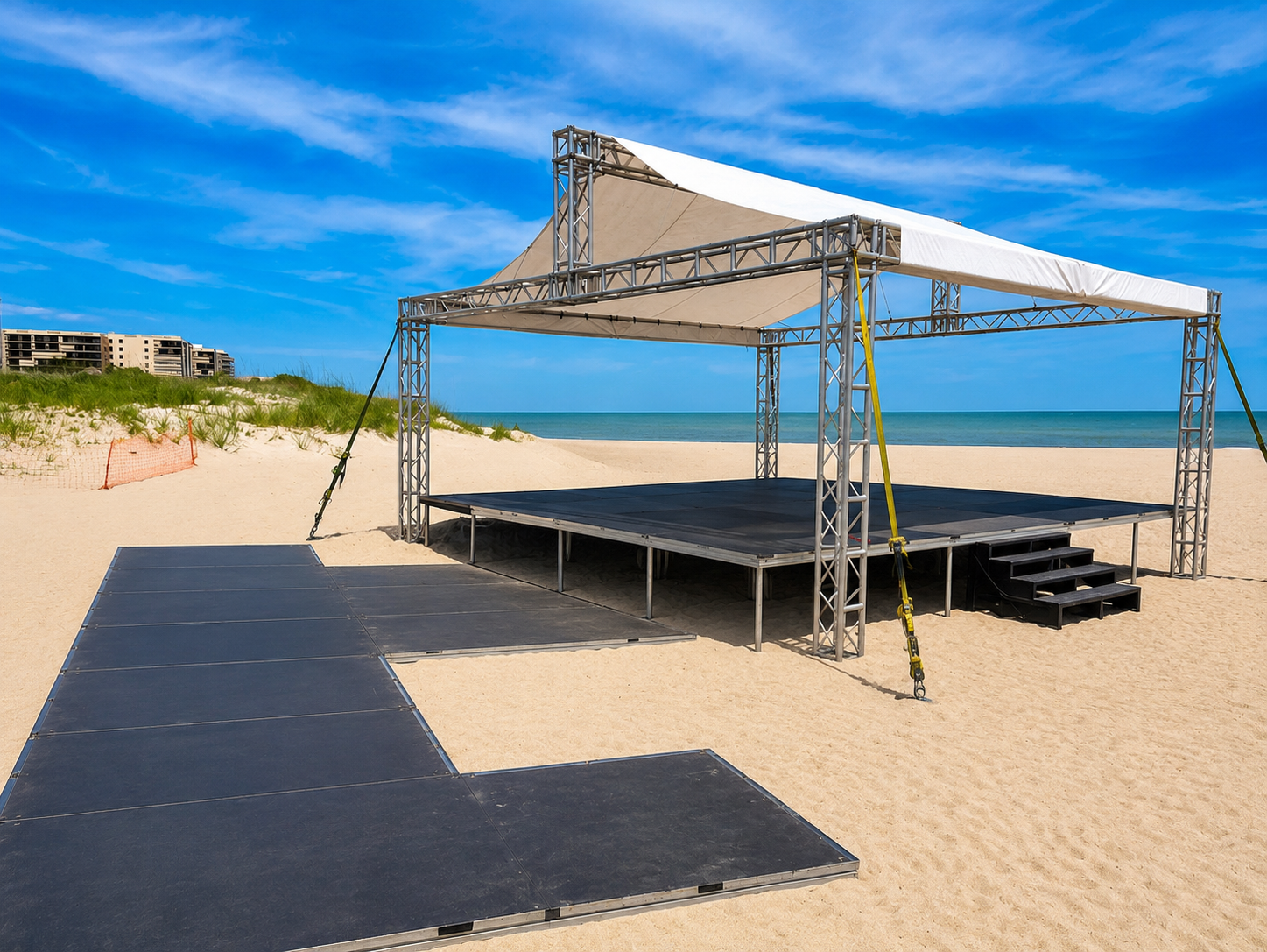
Our shade stage cover rental is a purpose-built overhead structure that attaches to the stage frame itself. Because it integrates with the stage, it accounts for the stage’s load ratings and does not require separate anchoring into grass or pavers. It also means you’re not working around a separate structure during load-in.
This approach is similar to what we do with pool covers: the cover is engineered to handle the overhead load without compromising what’s happening on the deck below. For larger stages running truss or lighting overhead, we plan the shade cover integration early so there’s no conflict between the shade structure and rigging points.
Canopy Attachments Work Well for Smaller Setups but Need Careful Wind Planning
Some stages accommodate fabric canopy panels that attach to the stage uprights or to a separate lightweight frame. These work well for smaller setups where a full engineered cover is more than the footprint needs. The tradeoff is wind sensitivity. A canopy that isn’t properly secured becomes a liability in Central Florida’s afternoon storm windows, which start earlier in summer than most out-of-state planners expect.
Tent Integration Is a Good Option for Speaking Stages with a Smaller Footprint
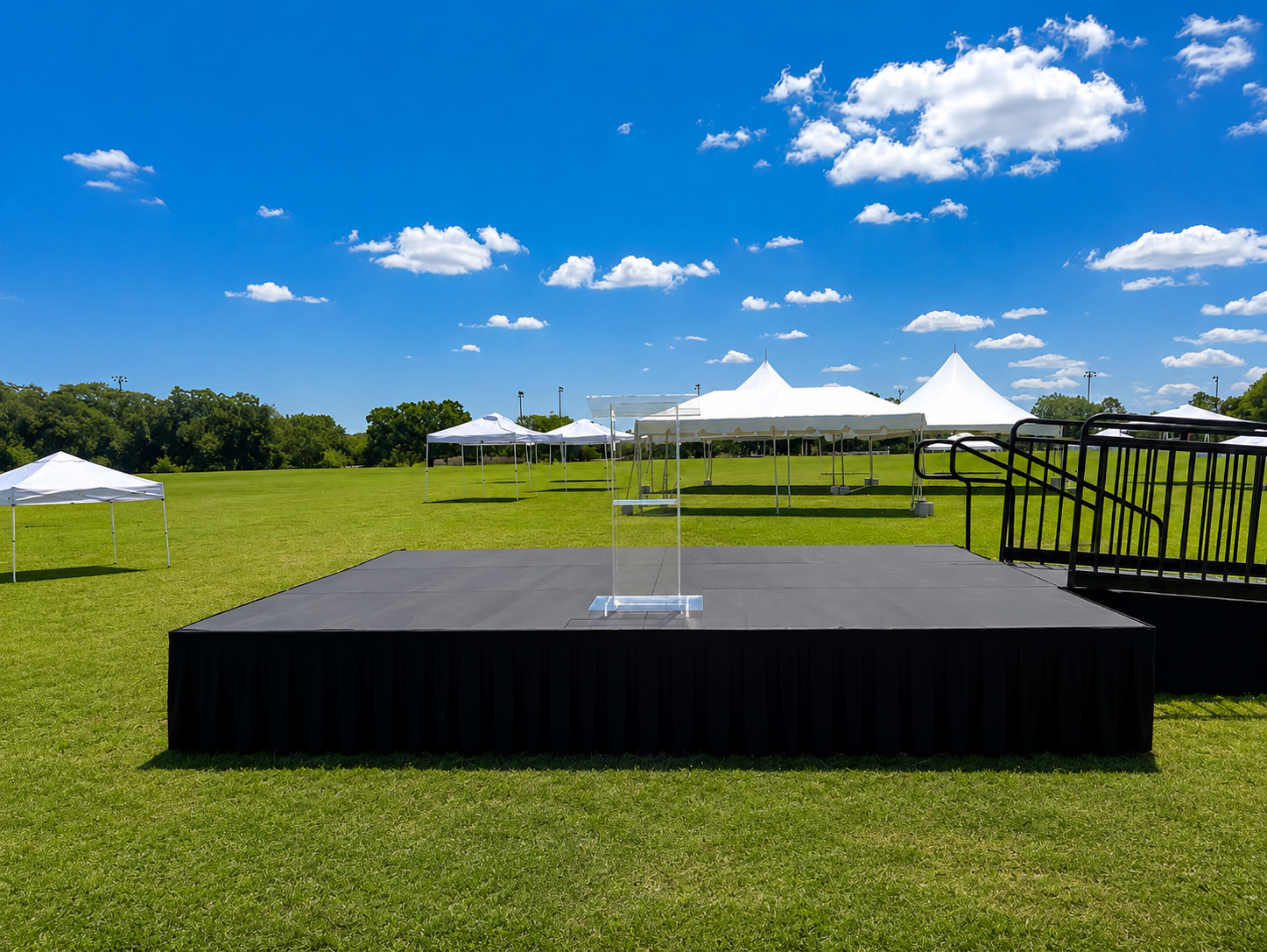
When a client is already renting a tent for the surrounding event space, we can position the stage at or near the tent perimeter so the tent extends overhead coverage to part of the stage. This works best for speaking stages and presentation setups where the stage footprint is smaller. For concert stages running full PA wings and monitor setups, a tent integration usually can’t cover the full deck.
We’ve written more about how tents and stages work together in our guide to tent flooring and stage combinations for Florida outdoor venues.
Clearance, Rigging, and the Lighting Problem
One of the most common questions we get when clients start asking about shade stage covers is whether the cover interferes with overhead lighting. The short answer is: it depends on how you plan it.
Lighting rigs and truss need clearance. A shade cover that sits too low blocks beam angles and creates hotspots or dead zones in your light design. The solution is coordinating the shade cover height with your lighting vendor during the planning phase, not on install day. At Stages Plus, when a client books a shade cover alongside a lighting package, we work through the vertical clearance requirements before the crew arrives. That’s a conversation that takes ten minutes upfront and saves half a day of frustration on site.
For events that include video screens or projection, the shade cover actually helps. Reducing ambient light on the stage face improves screen visibility dramatically, especially for afternoon events where direct sun washes out displays. So a cover does double duty there.
Audio equipment generally benefits from shade too. Amplifiers and signal processors in direct sun run hotter than their rated operating temperatures, which shortens their lifespan and increases failure risk mid-event. Keeping those components shaded or inside a covered front-of-house position is good practice regardless of stage size.
Cooling Strategies Beyond the Cover
A shade cover handles overhead sun, but there are additional steps that make a real difference for performer comfort and equipment reliability in Florida heat.
Schedule load-in early. Our team often arrives at 5 or 6 a.m. for outdoor summer events. The difference in air temperature between 6 a.m. and 10 a.m. in Orlando can be 15 to 20 degrees. Stage hardware set in the early morning is starting cool. That gap matters more than people expect.
Deck surface color is something most planners overlook. White or light-colored Marley flooring over a black deck dramatically reduces surface temperature for performers. The difference in how long performers can stand comfortably in one spot is noticeable when the deck has a light-colored surface rather than bare black aluminum.
Our concert stage rental configurations can include Marley flooring, skirting, and shade covers as part of a full package. Planning these together from the start is always easier than adding them as afterthoughts.
Airflow behind the stage matters too. Pipe and drape backdrops installed in direct sun trap heat in the performance area. If the stage has a backdrop, leaving a gap between the bottom of the drape and the stage deck surface allows air to move through. It’s a small adjustment, but performers notice it during multi-act events.
And provide water access at stage level. This sounds obvious, but when performers have to walk off stage and 30 feet to a water station between sets, they often skip it. A small cooler at the base of the stairs keeps everyone hydrated without requiring a special trip.
What Our 2026 Spring Install Schedule Taught Us
The spring season gave our team a clear preview of what summer will look like, and the heat conversation came up on nearly every outdoor install.
In late February, our crew handled an outdoor stage setup in Tampa where the open southern exposure of the site meant that by late morning, the deck was already warm enough to affect setup sequence. Hardware staging on the deck got moved to shaded staging areas until it was needed. It’s the kind of small operational adjustment that adds up over a full day.
Around the same time, our team set up at the Celeste Hotel for an outdoor event on a layout that put the stage in a position with minimal natural shade from the building or surrounding trees. That kind of open-sky positioning is common at hotel outdoor spaces throughout Central Florida, and it’s exactly where a purpose-built shade structure earns its value. No trees, no adjacent building overhang, nothing except clear sky above the deck from 10 a.m. on.
The Gaylord Palms install was one of the larger outdoor setups of the spring. Large resort venues often have expansive outdoor event lawns with little overhead protection, and with a bigger stage footprint, getting shade coverage right requires planning the structure alongside the stage dimensions from the start. Sizing a cover for a stage that was already specced independently creates problems. The two need to be designed together.
By April, it was clear that Central Florida’s heat season ramp-up is well underway before summer officially arrives. Spring events in April and May are already operating in conditions that warrant the same shade and cooling planning we apply to July events. If you’re booking for May or June, treat it like August.

Booking Checklist for Outdoor Summer Events in Central Florida
Before you finalize an outdoor event contract, run through these shade and heat planning items.
Site assessment: Where does the sun track across your stage position from load-in through the end of the event? A site that’s shaded at 8 a.m. may be in full sun by 2 p.m.
Stage footprint and cover sizing: Your shade cover needs to match your actual stage dimensions. Use the Stage Size Calculator to confirm your stage footprint before requesting a shade cover quote.
Rigging coordination: Confirm overhead clearance needs with your lighting vendor before booking a shade structure. This is a 10-minute conversation that prevents a half-day problem on install day.
Load-in timing: Plan for early morning arrival. If your venue has access restrictions that prevent pre-dawn setup, discuss that with your rental provider before booking.
Deck surface treatment: Ask about Marley or light-colored deck options if performers will be on stage for extended periods.
Shade cover lead time: Shade covers for peak summer weekends (late June through August) book out quickly. We recommend confirming your shade package at least 4 to 6 weeks out.
Weather window: Florida’s afternoon storm pattern runs roughly 2 to 5 p.m. from June through September. Plan your event timeline around it. A shade cover addresses sun, but it’s not a substitute for a full weather plan. Our post on hurricane season stage planning covers the full picture on storm readiness.
Plan the Shade Before the Stage Gets Hot
Florida outdoor events are worth it. The venues are beautiful, the open-air atmosphere is hard to replicate indoors, and our clients keep booking them because guests love them. But the heat is real, and the planning has to match the conditions.
Shade stage covers are a straightforward solution to a problem that derails more outdoor events than most planners want to admit, and the earlier you build them into your package, the smoother the whole setup goes.
If you’re planning an outdoor event in Central Florida this summer, reach out to us and we’ll size the right shade solution for your stage footprint and venue layout. Start with the Stage Size Calculator to get your dimensions, then contact us and we’ll build out the full package from there.