Most lineups of 3 to 5 acts run fine on a single stage with a well-planned changeover process, but lineups of 6 or more acts, or shows on a tight run-of-show clock, usually need two stages to avoid long dead air between sets. At Stages Plus, a single 16×12 stage with a rotating backline swap gets bands on and off in 10-12 minutes, while a two-stage "leapfrog" layout drops effective turnover to under 3 minutes between sets.
Key takeaways
- A single stage handles 3-5 acts comfortably if you budget 10-12 minutes per changeover and use a rolling backline strategy.
- A second stage becomes cost-justified once you're running 6 or more acts, or once your venue rental hours can't absorb the accumulated changeover time.
- At a recent 6-band battle-of-the-bands style show in Central Florida, our two-stage leapfrog setup cut turnover from an estimated 25 minutes per changeover down to under 8, letting the promoter add two extra acts to the same night.
- Orlando requires a permit for temporary concert staging, and structural stages need engineer-sealed drawings, so multi-stage layouts need extra lead time.
- Each additional stage needs its own power drop, dedicated crew, and physical distance from the other stage to control sound bleed.
How many stages a lineup actually needs
A lineup of 3 to 5 acts almost always runs fine on one stage. With a single 16×12 or 20×16 stage and a disciplined changeover process (drums pre-set on a side riser, amps and monitors staged and ready), you can move from the end of one set to the start of the next in 10 to 12 minutes. That matches the industry benchmark: FestivalPro's changeover guidance recommends no more than 10 minutes per changeover.
Once you cross into 6 to 8 acts, the math starts working against you. Five changeovers at 10-12 minutes each adds up to nearly an hour of dead air on top of your actual performance time, and that's before soundcheck overruns or a band running long. At that act count, a second stage isn't a luxury, it's how you keep your run of show inside the hours your venue and permit actually allow.
For 8+ acts, especially in a festival-style format where fans are moving between areas anyway, two stages running staggered sets is close to standard practice. It also gives your crew breathing room between builds instead of racing the clock on every swap. If you're weighing a single main stage against a main-plus-secondary layout, our Festival Main Stage vs. Secondary Stages guide breaks down that decision in more depth.
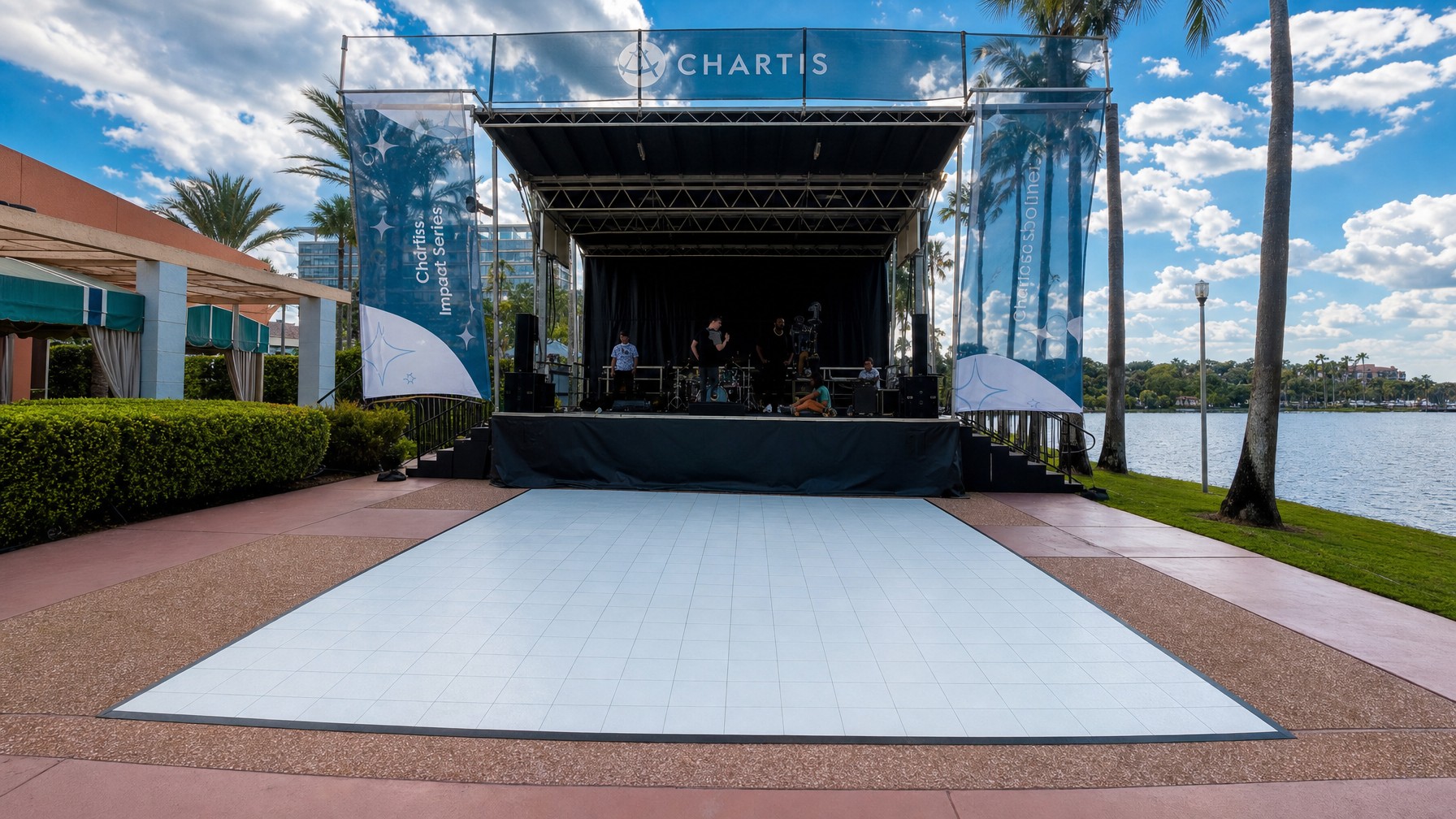
Realistic turnover time between bands
Turnover time is the single biggest hidden cost in a multi-act show, and it's measurable, not a guess. On a single stage with a rolling backline setup (one drummer performing while the next kit is fully assembled on a side riser), our crews consistently see 10-12 minute changeovers. That matches what Ticket Fairy's promoter guide recommends: drums take the longest to swap, so festivals keep a second kit staged and ready.
On a two-stage leapfrog layout, where one band performs on stage A while stage B is being reset, we've measured effective dead air drop to under 3 minutes between sets. At a recent 6-band show we staged in Central Florida, that leapfrog approach cut total turnover time across the night from an estimated 25 minutes per changeover down to under 8, which gave the promoter room to add two extra acts without extending the event's end time.
The difference matters most when you're locked into a hard end time, whether that's a venue curfew, a permit window, or a noise ordinance cutoff. Every minute of changeover you eliminate is a minute you can give back to the bands or the audience.
When a second stage saves money instead of adding cost
A second stage pays for itself once your act count or your changeover math forces you to either cut acts or extend expensive rental hours. Adding a stage isn't free: it means a second rental fee, a second power drop, and a dedicated crew for that stage. But running long on a single-stage show costs money too, in extended venue time, overtime crew rates, and lost bar or ticket revenue if guests leave early.
The break-even point in our experience sits around 6 acts. Below that, the added cost of a second stage rarely beats just tightening your single-stage changeover process. Above that, the math flips: the labor and equipment cost of a second stage is usually smaller than the cost of extending your event by 30-45 minutes of pure dead air. If you're not sure which side of that line your lineup falls on, our team can run the numbers for your specific act count and set lengths through our Stage Size Calculator or a direct quote conversation.
One more factor: staggered set times only help if you have the stage count to support them. Ticket Fairy's guidance on multi-stage scheduling notes that staggering sets across concurrent stages gives crews breathing room, but warns against letting two major acts end at the same moment if it strains shared power or stage crew. That's a real constraint we plan around on every two-stage build.
Sizing and placing two stages for a multi-act show
When you run two stages at once, each one should be sized for the acts assigned to it, not identical by default. A main stage carrying your headliners might run 20×16 or larger to accommodate a full backline, monitors, and lighting truss, while a secondary stage handling shorter opener sets can often work fine at 16×12.
Placement matters as much as size. Sound bleed between two live stages running near-simultaneous sets is one of the fastest ways to wreck the audio quality on both. The fix is physical: put real distance between the stages and angle them so they're not pointed at each other. That's consistent with how experienced festival producers plan stage layout, spacing stages as far apart as the site allows and avoiding head-on orientation to cut down bleed.
In practice, that means walking the venue footprint before you commit to a layout, not after. A ballroom or fairground building has hard walls that bounce sound differently than an open field, and that changes where two stages can realistically sit without fighting each other. Our Concert Stage Rental page covers the size and configuration options we build most often for Central Florida rooms and outdoor sites.
Crew, power, and permitting for each additional stage
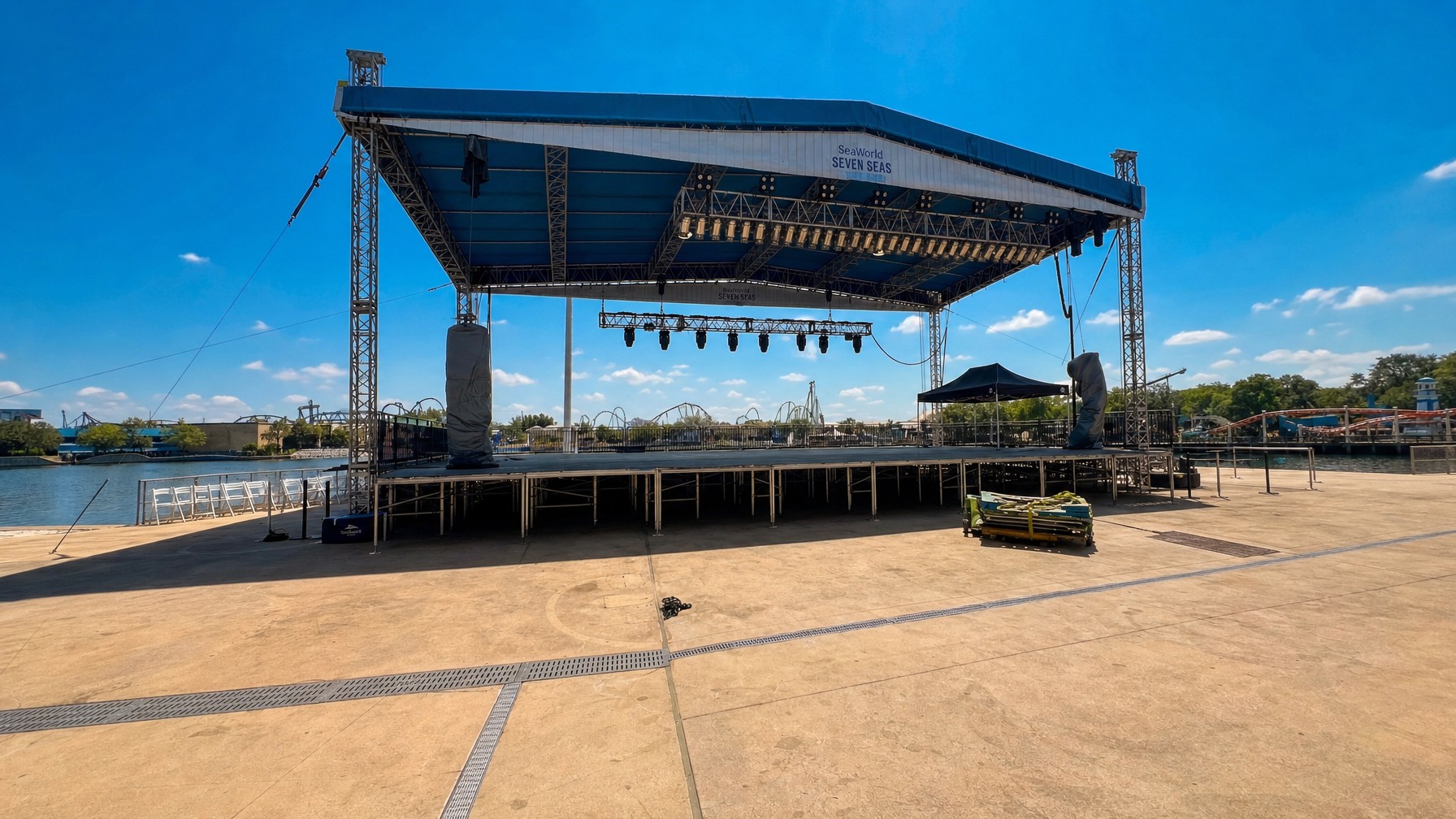
Every stage you add needs its own power drop, its own dedicated crew, and its own permitting paperwork, not a shared allocation from the main stage. On the power side, a good rule of thumb is sizing your generator to your actual wattage draw plus a safety margin: United Rentals' generator planning guide notes that a show pulling 15,000 watts needs at least a 15kW generator, with a recommended 20% safety margin for equipment startup surges. A full two-stage concert draws meaningfully more power than a single-stage show, and heavier gear like line-array sound systems or high-intensity lighting may push you toward multiple generators or a three-phase setup.
On the crew side, load-in and load-out for each stage runs on its own clock. Union crew call minimums in this market commonly run four to five hours per load-in and per load-out period, per IATSE Local 470's published work rules, and that's per crew call, not per stage split across the same window. Budget crew time accordingly if you're building two stages instead of one.
Permitting is the piece organizers underestimate most. In the City of Orlando, a permit is required for any temporary stage, and structural stages require signed and sealed drawings from a licensed engineer plus a general contractor before the permit gets issued. Two stages generally means two sets of drawings and two permit line items, so build that lead time into your booking timeline from day one.
Common mistakes when under-planning stage count
The single biggest mistake organizers make is booking their venue hours and their band lineup before doing the changeover math. By the time they realize five 12-minute changeovers plus soundcheck overruns won't fit inside their permitted hours, the lineup and the venue contract are already locked.
A close second: assuming a second stage automatically fixes the problem without planning power and crew for it separately. We've walked into setups where a promoter added a secondary stage for turnover speed but only budgeted power and crew for one stage total, which just moves the bottleneck instead of solving it.
The third common gap is skipping the permit conversation until a few weeks out. Between engineer-sealed drawings for structural stages and standard municipal lead times, waiting until the last month to start permitting is one of the fastest ways to lose your date entirely.
Frequently asked questions
How far in advance should I book multiple stages for a Central Florida concert?
Start the permitting and booking conversation at least 60-90 days out for a two-stage show. Structural stages in Orlando need engineer-sealed drawings before permit issuance, and nearby jurisdictions like Tampa require permit applications a minimum of ten business days ahead, so build in margin beyond that minimum.
What's the real difference in load-in and load-out between one stage and two?
Each stage runs its own load-in and load-out clock, typically a four to five hour minimum crew call per period under common union work rules. Running two stages doesn't double your event time, but it does mean planning two separate crew calls instead of stretching one crew across both builds.
Do local Orlando venues limit how many stages I can set up?
Yes, it varies by venue and depends on available square footage, power capacity, and fire code clearance paths. Fairgrounds and parks tend to allow more flexibility for multi-stage layouts than indoor ballrooms, but every site needs its layout reviewed against local permitting rules before you finalize placement.
How much extra power does a second stage really need?
Plan on a separate generator or power drop sized to that stage's specific gear, not a shared feed. A rough planning rule is sizing your generator to your wattage draw plus a 20% safety margin for equipment startup, and larger AV or lighting rigs may need a three-phase generator setup.
Is a second stage ever the wrong call?
Yes. For lineups of 5 acts or fewer, adding a second stage often costs more in rental fees, power, and crew than it saves in turnover time. A tightened single-stage changeover process using a rolling backline setup usually gets you the same result for less money.
The bottom line
For most 3 to 5 act shows, one well-run stage with a fast backline swap keeps your night moving. Once you're staging 6 or more acts, or racing a hard curfew, a two-stage leapfrog layout is the setup that actually protects your run of show. If you're not sure which side of that line your lineup falls on, our team at Stages Plus can walk through your act count, set lengths, and venue constraints and put together a custom multi-stage plan. Request a quote and we'll help you build a stage count that matches your lineup, not the other way around.