Orlando Stage Rental

Bands, Runways, Speaking Engagements, Award Ceremonies, Schools

Call Now! 407-442-0254

  • About
    • Blog
  • Pricing
  • Packages
    • Audio Packages
    • Stage Lighting
  • Contact
  • Reserve
  • Stage Sizes
    • 8ft Stage Sizes
    • 12ft Stage Sizes
    • 16ft Stage Sizes
    • 20ft Stage Sizes
    • 24ft Stage Sizes
  • Stage Rentals
    • Speaking Stage Rental
    • Single Performer Stage Rental
    • Concert Stage Rental
    • Round Stage Rental
    • Performance Staging Rental
    • Graduation Stage Rental
    • Wedding Stages
  • Runway
  • Pipe / Drape
  • Audience Riser
  • Pool Cover
  • Tent Floor
  • Camera Riser
  • Stage Accessories
    • Stair Rental
    • Ramp Rental
    • Dancefloor Rentals
    • Barricade Crowd Control Rental
    • Podium Rental

Stage Rental ROI: When Renting vs. Buying Makes Sense

April 13, 2026 by ravivziv@gmail.com

If you run an event venue in Orlando, you’ve probably asked yourself whether it makes more sense to rent stages for every event or buy your own equipment outright. We get this question all the time at Stages Plus, and honestly, there’s no one-size-fits-all answer. It depends on how often you’re booking events, what kinds of setups your clients need, and whether you have the space and crew to maintain staging equipment year-round.

We’re going to walk through the real numbers based on what we see working with venues across Central Florida. Not abstract theory. Actual rental costs, purchase prices, and the hidden factors that tip the decision one way or the other.

The True Cost of Renting: What You’re Really Paying For
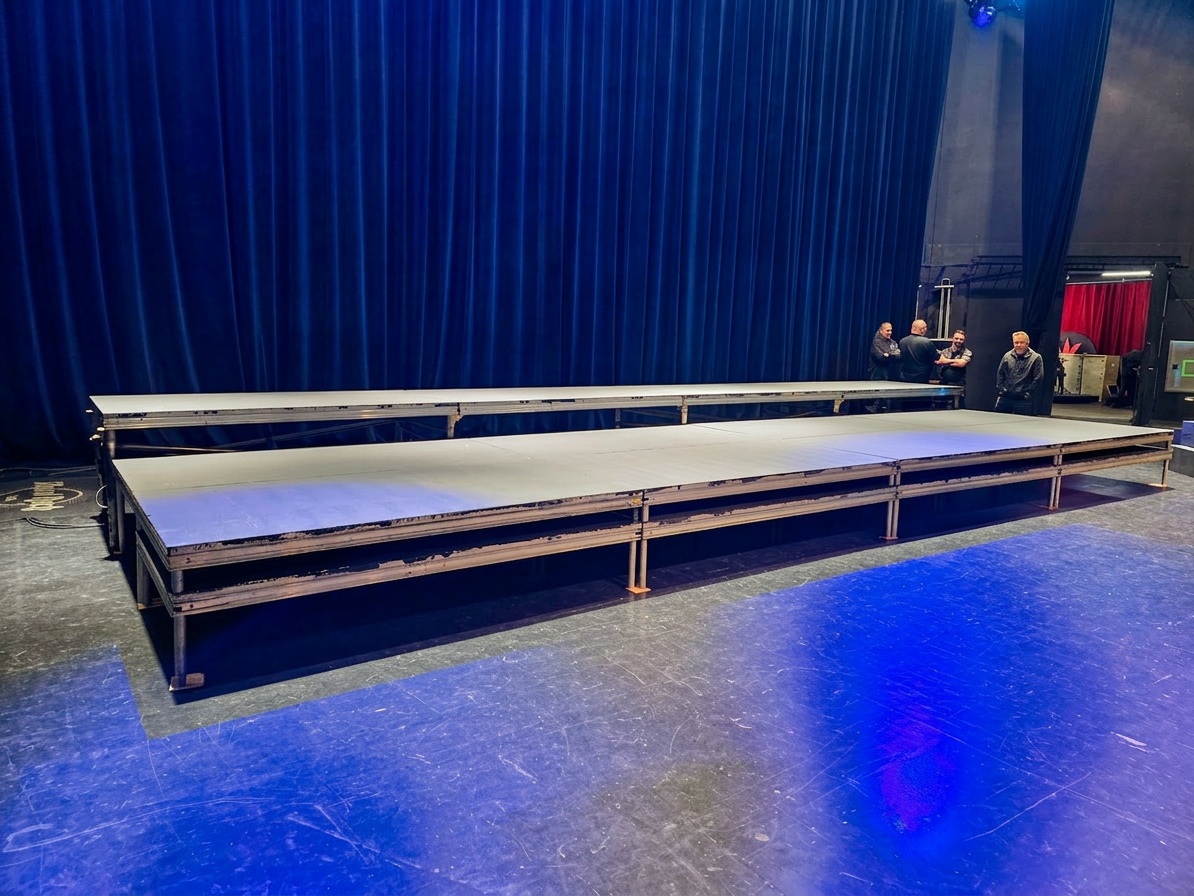
Let’s start with rental pricing because that’s where most venue managers begin their analysis.

When you rent a concert stage from us, you’re not just paying for the decking and supports. You’re paying for delivery, professional setup, teardown, and the peace of mind that if something goes wrong, we fix it.

A standard 24×20 stage with stairs and skirting typically runs between $800 and $1,200 for a weekend event. If your venue hosts 15-20 events per year that need staging, you’re looking at $12,000 to $24,000 annually in rental fees.

But here’s what you get for that cost. Our crew shows up at 6 AM, builds the stage to your exact specs, and returns after the event to break it down. You don’t store anything. You don’t maintain anything. You don’t worry about whether the decking warped during Florida’s humid summer or if the legs are still rated for the load capacity you need.

We recently built a 36×56 stage at the Gaylord Palms for a Desai wedding that included guard rails, marley flooring, professional lighting, and video setup. The rental cost reflected all of that, but the venue didn’t have to coordinate six different vendors or manage a multi-day install. We handled it.

What It Actually Costs to Own Your Equipment

Now let’s talk about buying your own staging system.

A basic modular stage setup that can handle most events runs between $15,000 and $30,000 depending on the size and quality. That includes decking, legs at multiple heights, stairs, and basic skirting. If you want guard rails, professional-grade marley flooring, or specialized accessories, add another $5,000 to $10,000.

So you’re looking at a $20,000 to $40,000 upfront investment for a versatile system.

But (and this is important) that’s just the purchase price. Here are the ongoing costs most venue owners underestimate:

Storage: A 32×20 stage system requires about 600 to 800 square feet of climate-controlled warehouse space. In the Orlando area, that typically costs $400 to $800 per month depending on location. That’s $4,800 to $9,600 per year just to keep the equipment safe from humidity and temperature swings.

Maintenance: Stage decking takes a beating. We resurface or replace worn sections every 18-24 months depending on usage. Budget $1,000 to $2,000 annually for refinishing, hardware replacement, and general upkeep.

Labor: You need trained staff to assemble and disassemble stages safely. Most venues either hire dedicated crew (expensive) or train existing staff (time-consuming and risky if they’re not doing it regularly).

Insurance: Your liability coverage goes up when you own and operate staging equipment. The increase varies by policy, but expect an additional $500 to $1,500 per year.

Hurricane prep: This is Florida. We had to secure stages during Hurricane Ian in 2022, and the prep work is no joke. You need to either fully disassemble and store everything or anchor it properly. Either way, it’s labor hours and stress.

Add it all up and you’re spending $7,000 to $15,000 per year just to own the equipment you already bought.

How to Calculate Your Break-Even Point

Here’s how the math actually works for most venues we talk to.

Let’s say you invest $25,000 in a staging system. Your ongoing costs (storage, maintenance, insurance) average $10,000 per year. So your total cost in year one is $35,000. In years two through five, you’re spending $10,000 annually.

If you’re renting stages 20 times per year at an average of $1,000 per rental, you’re spending $20,000 annually.

Year one: Ownership costs $35,000 vs. renting costs $20,000. Renting wins by $15,000.

Year two: Ownership costs another $10,000 (total $45,000 over two years) vs. renting costs another $20,000 (total $40,000). You’re still $5,000 behind.

Year three: Ownership total is $55,000 vs. renting total of $60,000. You break even.

Year four and beyond: Every year past year three, ownership saves you roughly $10,000 compared to renting.

So if you’re hosting 20+ staged events per year, ownership starts making financial sense around year three. But that assumes your event volume stays consistent and you don’t need specialized equipment beyond your base system.

When Renting Makes More Sense Than Buying

We work with dozens of venues that rent from us exclusively, and it’s not because they haven’t done the math. It’s because renting gives them flexibility their business model needs.
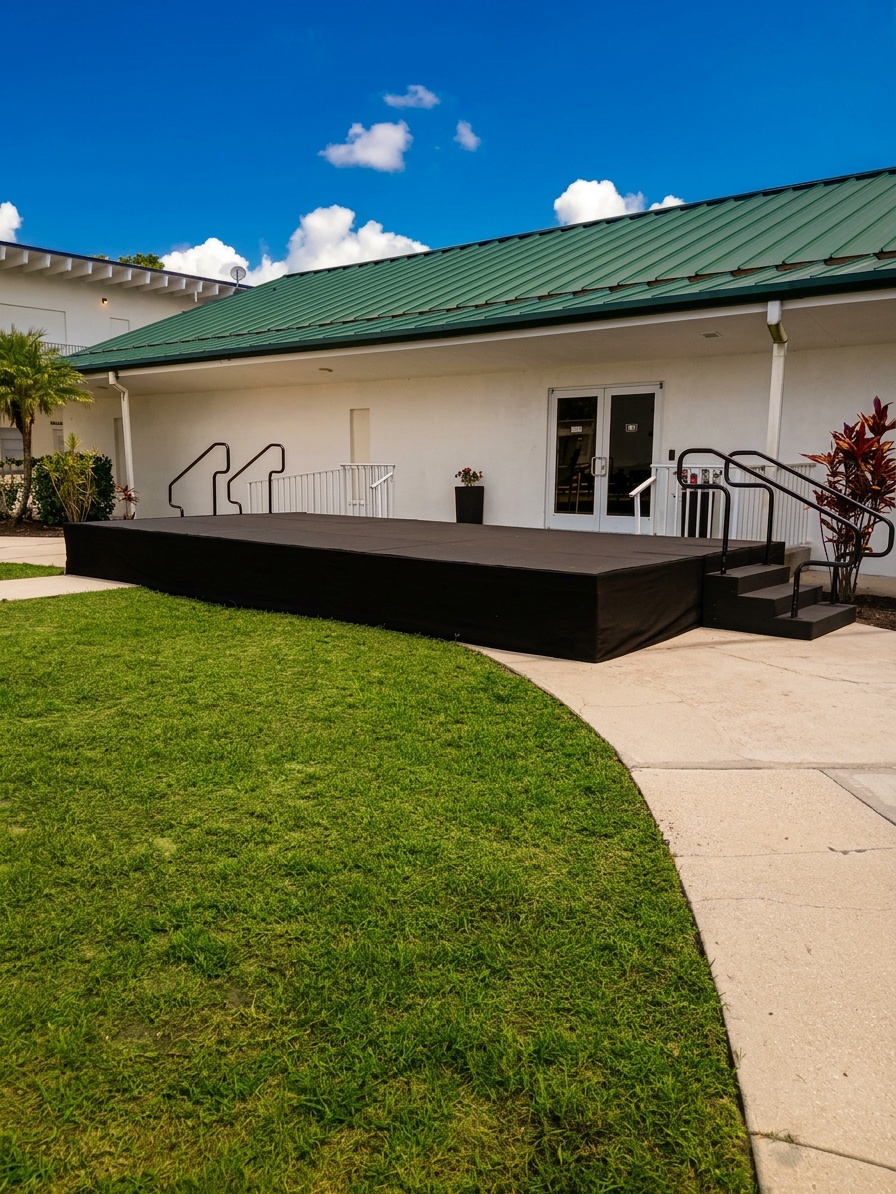
Outdoor stage setup on grass for a community event in Central Florida
Outdoor stage setup for a community event in Central Florida.

Variable event schedules: If your venue books 8 to 12 staged events per year instead of 20+, the break-even timeline stretches to 5 or 6 years. That’s a long time to wait for ROI when event trends change every few years.

Diverse staging needs: We built a 16×12 stage for the Dr. Jaishree Perry award ceremony in Apopka, then the next week set up a 40×24 runway at the Celeste Hotel for the Mastoris fashion show. Two completely different configurations. If you own equipment, you’re locked into whatever dimensions you bought. When you rent, you get exactly what each event requires.

Seasonal demand: Central Florida’s event season peaks in spring (wedding season) and late fall (holiday events). If you own equipment, it sits unused for months during the summer heat. When you rent, you only pay during your busy periods.

No maintenance headaches: This matters more than most venue managers realize. We’ve seen DIY stage setups fail mid-event because someone didn’t check the leg locks or notice cracked decking. When you rent speaking stages or performance staging, you get equipment we inspected that morning. If something’s wrong, we fix it or replace it before your guests arrive.

Hurricane season: We’re bringing this up again because it’s a real operational burden in Florida. When a hurricane warning goes out, venue owners who rent don’t have to worry about securing thousands of dollars of equipment. The liability is on us.

When Ownership Makes Sense for Your Venue

Some venues absolutely should own their staging equipment. Here’s when the investment pays off.

High event frequency: If you’re booking 25 to 30 events per year that need staging, you’ll recover your investment in under three years and save significantly after that.

Consistent setup requirements: Hotels and conference centers that mostly need a standard 24×16 stage for corporate presentations benefit from ownership. You’re not constantly adapting to different dimensions.

In-house crew: If you already employ event staff who can handle setup and teardown safely, your labor costs for ownership are lower. You’re not paying premium rates for outside crews.

Premium positioning: Some high-end venues want to offer “included staging” as part of their package rather than coordinating rentals. It’s a service differentiator that can justify higher venue fees.

Long-term stability: If you’ve been operating for 10+ years with consistent demand, you have the data to predict future needs. Ownership becomes a predictable expense line rather than a risky capital investment.

The Hybrid Approach Most Smart Venues Use

Here’s what we see working really well. Venues own basic staging for their most common configurations, then rent specialty items when events need them.

You might own a 20×16 stage system that covers 70% of your bookings. When a client needs a 40×30 concert stage with professional lighting and marley flooring, you call us. When someone wants a runway for a fashion show or a pool cover installation for a waterfront event, you rent those specialized setups.

This approach minimizes your capital investment and storage costs while still giving you flexibility for the bread-and-butter events that drive most of your revenue.

One venue we work with owns their speaking stage and stairs but rents pipe and drape, audience risers, and lighting packages when events need them. They’ve been doing this for five years and say it’s the perfect balance.

What to Consider Before You Decide

The ROI calculation is just math. The real decision factors are operational.

Do you have climate-controlled storage? Florida humidity will destroy wood decking and warp supports if you store them in a non-climate-controlled space. If you don’t have proper storage, add the cost of renting warehouse space to your ownership budget.

Can you commit to a maintenance schedule? Stage equipment needs regular inspection. Loose bolts, worn decking, and damaged skirting aren’t just cosmetic issues. They’re safety hazards. If you can’t dedicate staff time to quarterly inspections and annual refurbishing, you’re better off renting.

What’s your event mix? If every event needs a different configuration, ownership becomes complicated fast. You either buy multiple systems (expensive) or limit the types of events you can host (lost revenue).

How important is setup time? Our crew can build a 24×20 stage in about 90 minutes because we do it five days a week. Your staff might need four hours the first few times, longer if they only set up stages once a month. Factor in the learning curve and the labor hours.

The 2026 Decision Framework

Ask yourself these questions:

  • How many events per year will require staging? (Be conservative. Use last year’s actual bookings, not projected growth.)
  • What percentage of those events need similar stage configurations?
  • Do you have 600 to 800 square feet of climate-controlled storage available?
  • Do you have trained staff who can safely assemble and disassemble stages?
  • Are you planning to be in business at this location for at least five years?

If you answered “20+ events” to question 1, “70% or more” to question 2, and “yes” to questions 3, 4, and 5, ownership probably makes financial sense.

If you answered “under 20 events” or “no” to any of the operational questions, renting gives you better flexibility and lower risk.

Real-World Advice From Years of Setups

We’ve set up stages at country clubs, hotel ballrooms, outdoor festivals, church ceremonies, school graduations, and corporate galas across Central Florida. The venues that are happiest with their staging decisions (whether they rent or own) are the ones who matched their approach to their actual operational capacity, not just the ROI spreadsheet.

One venue bought a staging system three years ago, used it twice, and now rents from us because they realized they didn’t have staff trained to set it up safely. The equipment is sitting in their storage room depreciating.

Another venue rented from us for five years, then bought their own system once they consistently booked 30+ events per year. They still call us for specialty items like camera risers or round stages when events need them.

Both made the right decision for their situation. That’s what we want for you.

Let’s Run Your Numbers

Every venue runs differently, and your setup should reflect that. One of the easiest ways to keep events running smoothly is having the right equipment in place without taking on the added responsibility of storing, maintaining, and repairing it.

With Stages Plus, you don’t have to worry about any of that. We handle delivery, setup, teardown, and maintenance so your team can stay focused on the event itself, not the equipment behind it.

If you have upcoming events and want a setup you don’t have to think twice about, we’re here when you need us.

Contact us to get started.
Filed Under: Stage Rental Pricing

Orlando Stage Rental Pricing Guide: What Factors Affect Your Quote?

March 9, 2026 by ravivziv@gmail.com

You’re planning an event and you need a stage. You start searching online, and every rental company says “contact us for pricing.” Frustrating, right?

We hear this all the time at Stages Plus, and we get it. You need to plan your budget before you even pick up the phone.

Here’s the truth about stage rental pricing in Orlando: there’s no universal price list because every event is different. A small speaking stage for an indoor corporate meeting costs a lot less than a 36×56 concert stage with full lighting and audio for an outdoor festival. But that doesn’t mean pricing is a mystery. By the end of this post, you’ll understand exactly what factors affect your quote, so you can budget accurately and ask the right questions when you’re ready to book.

Let’s visit our pricing page to see what information we share upfront, then dig into the details that determine your final number.

If you are not sure which stage you need, this calculator might help:

Stages Plus

What Stage Do You Need?

Answer a few questions about your event and we will recommend the right stage size, height, and accessories.

1

What's Happening on Stage?

2

People on Stage at Once

4
1255075100150
or enter exact number:
3

What's on Stage with Them?

Select all that apply
4

Setting and Audience

Indoor or Outdoor?
Add a roof / shade cover?
Estimated audience size
ADA accessible ramp needed?

Stages Plus, LLC | Central Florida stage rental since 2011
407-442-0254 | orlandostagerental.com

Stage Size and Dimensions: The Biggest Variable

This is the biggest factor in any quote. A 16×16 stage uses 16 deck sections. A 36×56 stage uses 126 deck sections. The math is straightforward, but here’s what makes it interesting: our stage decks lock together to create any shape or size you need.

We’ve built stages ranging from compact 8×12 DJ setups to massive 48×64 platforms for major concerts. The stage size calculator on our quote page walks you through common dimensions for different event types. If you’re hosting 50 people watching a keynote speaker, a 16×20 stage works perfectly. Planning a band with drums, amps, and six musicians? You’re looking at 24×32 or larger.

The shape matters too. A rectangular stage uses decks efficiently. A runway stage, camera riser, or custom curved design requires more planning and precision, which affects both materials and labor.

How Stage Height Changes Everything

Stage height changes everything about setup complexity and safety requirements. Standard heights (8 inches, 16 inches, 24 inches, 32 inches) assemble quickly. Custom heights take more time and engineering.

Here’s what affects your event stage rental cost Florida: any stage over 30 inches requires guard rails for safety. That’s not optional. It’s code. We’ve done stages as low as 8 inches for fashion show runways and as high as 6 feet for outdoor concerts where sightlines matter. The six-footer was for a country music festival in Kissimmee where the back row was about 200 feet from the stage.

Diagram showing various stage configurations with dimensions labeled

Indoor venues with low ceilings might limit your height options. Outdoor events often need taller stages so the back of the audience can see. Talk through your venue layout with our team and we’ll recommend the right height for your situation.

Rental Duration: More Days Doesn’t Mean More Money

Most events need stages for a weekend: Friday setup, Saturday event, Sunday strike. That’s our standard rental period. Single-day rentals work for corporate events that happen during business hours (setup morning, strike evening). Multi-week rentals happen for theatrical productions or festival series.

The longer you need the stage, the more value you get per day. A week-long rental doesn’t cost seven times the daily rate. We price longer rentals to reflect that we’re not moving equipment multiple times. Setup and strike (the labor to build and break down your stage) get factored into every quote, so a three-day event and a seven-day event often have similar setup costs.

Delivery Distance and Location

We serve all of Central Florida from our Winter Park location. That includes Orange, Seminole, Osceola, Lake, Polk, Volusia, and Brevard counties. Delivery to downtown Orlando, Winter Park, or Kissimmee is straightforward. A stage rental in Titusville, Melbourne, Palm Bay, Lakeland, or Winter Haven involves more drive time and fuel.

We don’t penalize you for location, but distance does factor into quotes. Our trucks need to make the trip twice (delivery and pickup), and our crew’s time matters. When you request a quote, knowing your venue’s exact address helps us give you accurate numbers.

Some venues are easier to access than others. A ballroom with a loading dock is simple. A park that requires driving across grass or a venue with narrow doorways takes extra planning. We once had to hand-carry deck sections up three flights of stairs for a rooftop event in downtown Orlando. That job took twice as long as a typical setup.

Setup Complexity: Indoor vs Outdoor Makes a Big Difference

Indoor vs outdoor stage rental involves different considerations. Indoor stages go on flat, stable surfaces. Outdoor stages might need ground leveling, weather protection planning, or special configurations to handle grass, sand, or uneven terrain.

Setup complexity includes factors like: How far is the load-in from the setup location? Are there stairs involved? Do we need to protect floors? Is there adequate vehicle access? We’ve done pool covers (one of our favorite things to do at Stages Plus, because we love seeing the creative transformations) that require building over water. We’ve set up stages in ballrooms that needed floor protection. Each situation affects labor time and materials needed.

Stage Accessories and Add-ons

Outdoor stage setup showing crew leveling ground

The stage platform itself is just the foundation. Most events need accessories:

Stairs and ramps: Required for performer access. Standard stairs work for most setups. Ramps comply with ADA requirements and accommodate equipment rolling on and off stage. Check our stair rental and ramp rental pages for options.

Skirting: Black or white pleated fabric that covers the gap between stage and floor. Gives a finished, professional look and hides equipment storage underneath.

Guard rails: Safety requirement for any stage over 30 inches high. Non-negotiable.

Pipe and drape: Our pipe and drape rental includes black or white velour 15oz IFR material, adjustable 8-18 feet tall. Perfect for backdrops, wings, or creating rooms within rooms.

Each add-on increases the quote, but they’re often essential for the event’s success. A concert stage rental without proper skirting looks unfinished. A speaking stage without stairs is unusable.

Technical Equipment Packages

How much does stage rental cost when you add lighting and sound? That depends on your technical needs. Basic stage lighting might add 20-30% to your base quote. We did a corporate awards ceremony last month where they wanted simple uplighting on the backdrop. That was four wireless LED units with a basic controller. Not complicated, but it made the stage look incredible in photos. Full production with intelligent lighting, audio packages, and video displays increases costs significantly.

Our stage lighting page covers options from simple wash lights to complex DMX-controlled systems. Audio packages range from a single podium mic to full band PA systems. For dance events, Marley flooring protects performers and provides the right surface texture.

Technical equipment requires skilled operators. A simple lighting setup might not need an onsite tech. A complex concert rig needs our crew to run the board. Labor for technical staff factors into these quotes separately from stage setup labor.

Seasonal Pricing Variations

Central Florida event staging budget planning should account for peak seasons. Wedding season runs February through May. Every venue books solid, and rental equipment stays busy. Graduation season hits May through June with back-to-back ceremonies. Last May we had three high school graduations in one weekend, all needing 36×40+ stages. October through December brings holiday parties, corporate events, and seasonal festivals.

Split image showing different event types - corporate speaking stage vs outdoor concert stage
Split image showing different event types – corporate speaking stage vs outdoor concert stage

During peak seasons, book early. We maintain our pricing fairly year-round, but availability gets tight. Summer brings outdoor concert season, though Florida heat and afternoon thunderstorms make summer events less popular than spring and fall.

If your event date is flexible, mid-January through early February or the summer heat of July-August often see lower demand. That can mean better availability and sometimes more negotiating room on quotes.

Event Type Specifics

Different events need different staging solutions. We’ve done all of these. A speaking stage rental for a corporate keynote prioritizes sightlines and professional appearance. A fashion show runway rental emphasizes length and surface quality (you can’t have models wobbling on an uneven platform). Pool cover rental requires specialized engineering to build a stable platform over water.

We price based on what your specific event needs. A band stage needs power distribution, cable management, and load capacity for heavy equipment. An awards ceremony needs a polished aesthetic and clear sightlines. Dance competitions need Marley flooring and precise leveling. Each event type comes with unique requirements that affect the final stage rental quote factors.

Custom Configurations

Our deck system locks together to create any configuration you can imagine. Round stages in 11-foot, 17-foot, or 29-foot diameters create intimate performance spaces or unique focal points. Camera risers elevate videographers for perfect sightlines. Audience risers give every guest a clear view of the action.

Custom configurations take more planning and setup time. A rectangular stage follows a grid pattern. Build it, level it, done. A curved stage, multi-level platform, or integrated runway requires careful engineering and assembly. That precision work factors into both the quote and the setup timeline.

How to Get the Most Accurate Quote

When you’re ready to request your quote, have this information ready:

Event details: Date, time, location (specific venue address), expected attendance, event type

Stages Plus team member working with client on laptop, reviewing quote

Stage needs: Approximate size, preferred height, indoor or outdoor, special requirements (pool cover, multi-level, etc.)

Accessories: List everything you think you’ll need (stairs, rails, skirting, pipe and drape, lighting, audio)

Venue information: Photos help tremendously. Layout diagrams show us access points, ceiling heights, and spacing constraints. The more detail you provide, the more accurate our quote.

Our team responds to quote requests within 24 hours. We’ll ask clarifying questions, suggest options you might not have considered, and provide a detailed breakdown of costs. Visit our reserve page to start your quote request, or call us at 407-442-0254 to talk through your needs.

Common Pricing Questions Answered

Do you offer discounts for nonprofits or schools? Yes, we work with educational institutions and nonprofit organizations regularly. Mention your organization type when requesting your quote.

What’s included in the base price? Stage decks, legs, delivery, setup, and strike. Accessories and technical equipment are itemized separately so you see exactly what you’re paying for.

Are there hidden fees? No. Our quotes include everything: equipment, delivery, setup, strike, and any special requirements discussed upfront. The only changes come if you modify your order after the initial quote.

Can I get a price match? We price competitively and fairly. If you’ve received quotes from other companies, share those details with us. We’ll explain our pricing and, where possible, work within your budget.

Ready to Get Your Custom Quote?

Stage rental pricing in Orlando depends on your unique event needs, but it’s not mysterious. You now understand the ten factors that determine your quote: size, height, duration, location, setup complexity, accessories, technical equipment, seasonal timing, event type, and custom configurations.

We believe in transparent pricing and detailed quotes. No hidden fees, no surprises. Just honest numbers based on what your event actually needs. Ready to get an accurate quote for your event? Tell us about your stage needs and we’ll provide a detailed estimate within 24 hours. Get Your Free Quote

Filed Under: Stage Rental Pricing

Get Quote / Contact

Popular Stage Sizes

  • 8ft Stage Sizes
  • 12ft Stage Sizes
  • 16ft Stage Sizes
  • 20ft Stage Sizes
  • 24ft Stage Sizes

Blog

  • 24ft Stage Configurations: Maximizing Space for Large Orlando Events
  • Heat Management for Summer Events: Cooling Solutions for Florida Outdoor Stages
  • Festival Main Stage vs. Secondary Stages: Multi-Stage Event Planning in Orlando

Search


Privacy Policy

Warehouse / Office

6848 Stapoint Ct.
Winter Park, FL 32792
407-442-0254

Located in the Eastpoint Industrial Park
Map

Delivery, Setup, Tear Down

Orlando, DeLand, Deltona, Kissimmee, Sanford, Altamonte Springs, Apopka, Ocoee, Oviedo, St. Cloud, Winter Garden, Winter Park, Winter Springs, Titusville, Melbourne, Palm Bay, Winter Haven, Lakeland, Seminole, Orange, Osceola, Lake, Polk, Volusia, Brevard.

Copyright © 2026 · Modern Portfolio Pro Theme on Genesis Framework · WordPress · Log in