Florida's rainy season has a way of humbling even the most experienced event planners. You can have the perfect venue, the perfect lineup, and the perfect guest list, and then 3:45pm rolls around and the sky opens up. We've been setting up stages across Central Florida long enough to know that the question is never whether it will rain in July. The question is whether your stage is ready for it.
Planning ahead with a covered stage rental in Florida is the single most important decision you will make for any outdoor event scheduled between June and September.
Here's what we've learned from years of setups, and what your planning checklist needs to include before you book any outdoor stage this summer.
Why Florida's Rainy Season Demands a Different Approach
Florida is not like other states when it comes to afternoon weather. From June through September, convective storms build over the peninsula almost daily, usually peaking between 3pm and 5pm. These are not slow-moving fronts you can track on a weather app two days out. They develop fast, drop heavy rain for 20 to 45 minutes, and move on.
The problem for outdoor events is timing. A 4pm ceremony, a 4:30pm performer set, or a community gathering that runs through dinner all land squarely in the peak storm window. Without a covered structure over your stage, a fast-moving cell can shut down your entire event, damage equipment, and create serious safety concerns for performers and guests alike.
We put together a detailed breakdown of what this looks like at the product level in our guide to weatherproofing your outdoor event stage in Florida's climate, but this post focuses specifically on the covered stage solutions and drainage planning that make the difference during rainy season.
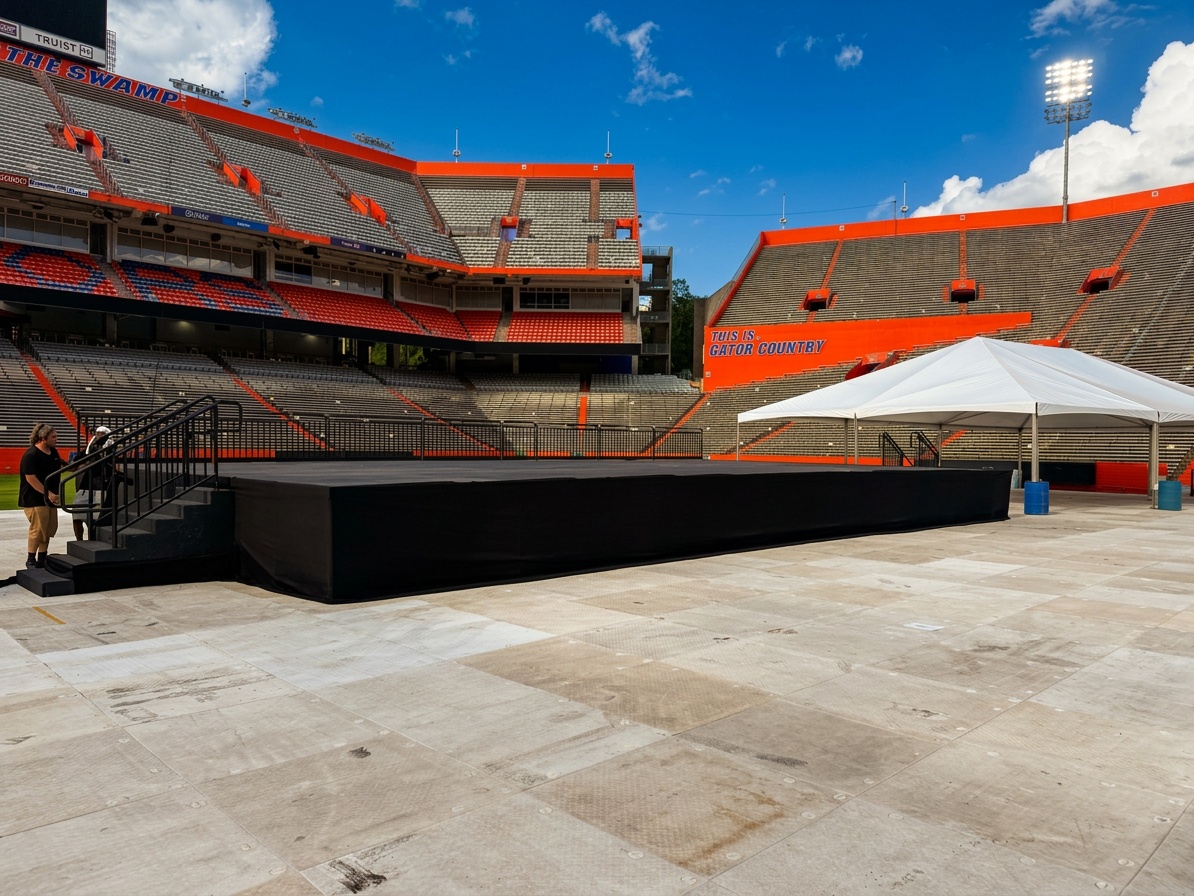
What a Covered Stage Setup Actually Includes
A lot of clients come to us thinking "covered stage" just means throwing a tent over the deck. The reality is more layered than that, and getting each piece right matters.
The Stage Deck and Frame Determine More Than You'd Think
The foundation of any covered outdoor stage starts with a properly engineered deck. For rainy season events, we size stages based on the full performance and production footprint, not just the minimum. A 24×32 or larger configuration gives you room to keep sensitive equipment away from the exposed edges where wind-driven rain can still reach under a cover.
We also pay close attention to leg height and leveling when we're setting up at outdoor venues. Water needs somewhere to go. A stage sitting flat on low ground with no drainage plan around the base is going to create problems regardless of what you put over it.
Shade and Rain Covers: Two Problems, One Solution
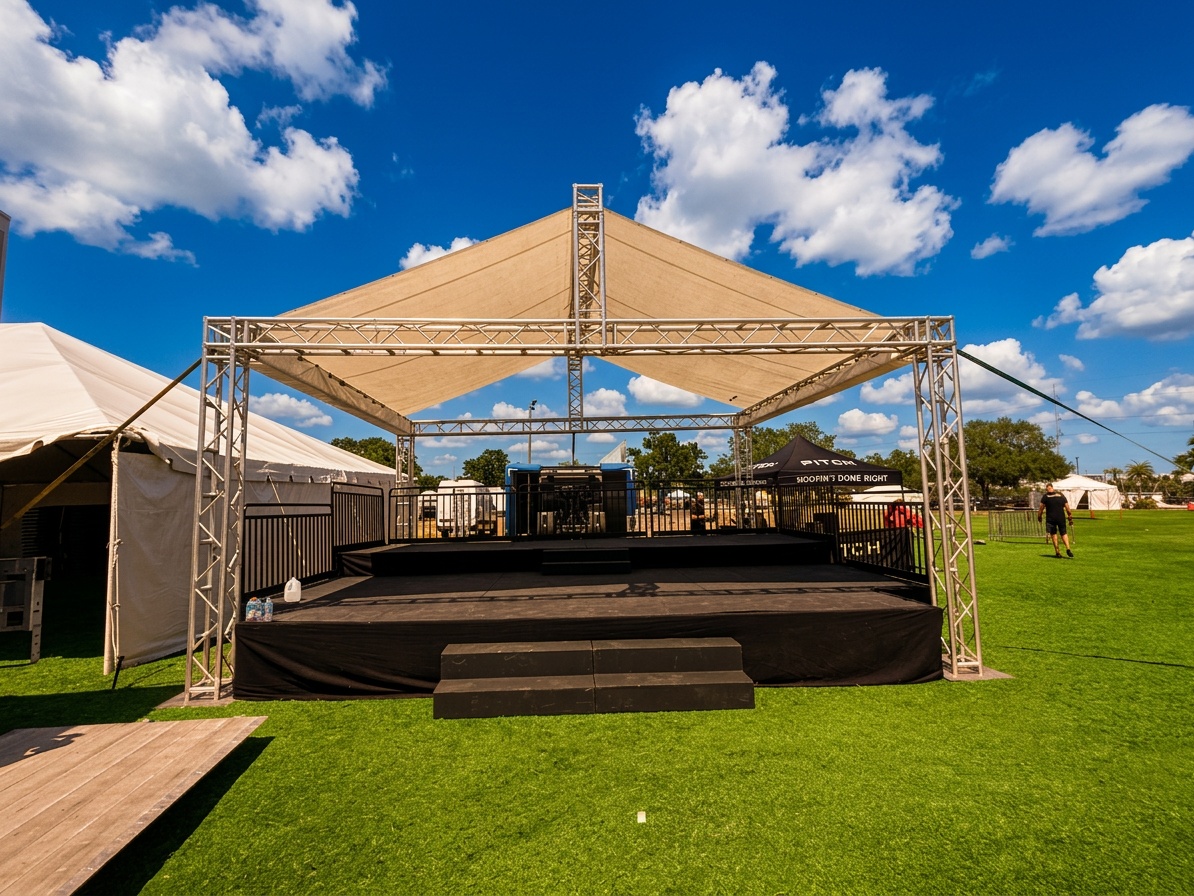
Our shade cover for outdoor stages is designed specifically for the Florida heat-and-rain combination. It attaches directly to the stage structure, so there are no separate poles competing for footprint space on your event grounds.
The cover handles two jobs at once: it keeps direct sun off performers during afternoon load-in, and it sheds rain fast when a storm moves through. For events where the stage is inside a tent perimeter, we coordinate the cover height with the tent rigging to make sure everything integrates cleanly.
Tent Flooring Around the Stage Is Part of the Weather Plan
If your event uses a tent, the flooring inside that tent matters just as much as the stage cover above it. Standing water under a tent floor creates slip hazards, damages subfloor equipment, and makes a generally miserable experience for guests.
We covered the specifics of how tent flooring and stage combinations for Florida outdoor venues work together in a previous post. Short version: the flooring needs to be elevated or channeled so that water that gets in has a clear path out.
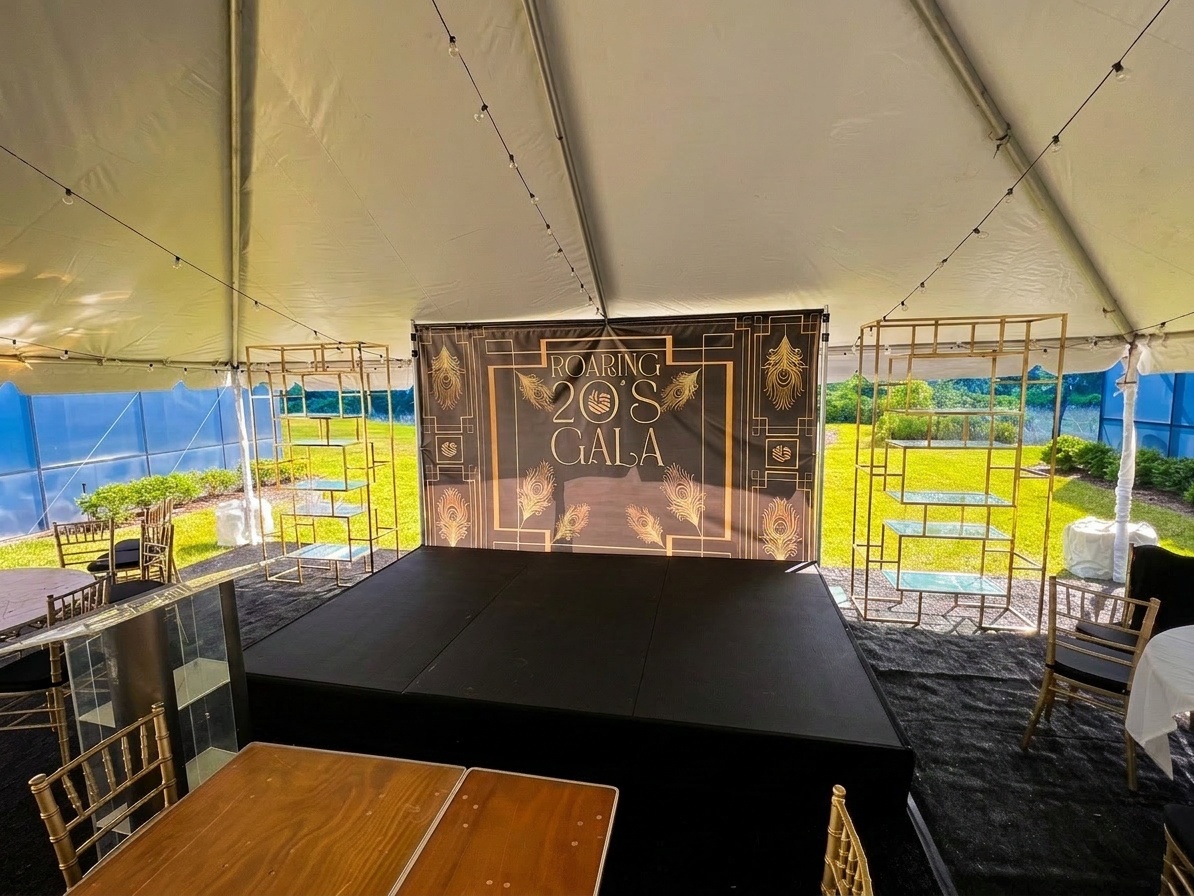
Real Setups That Inform How We Plan for Weather
We built a lot of stages in early 2026 that gave us good reference points for outdoor and transitional venue setups. Each one added something to how we think about rainy season prep.
In February, our team installed a stage for the Ralph event in Tampa. It was a multi-photo outdoor configuration at an open-air venue, and we ran a 20×24 covered setup that required us to think carefully about sightlines, surface drainage around the stage perimeter, and how the structure would behave if conditions shifted fast. Even in February, Florida does not give you guarantees. We positioned the stage on the higher end of the site grade specifically to keep runoff moving away from the base.
The Mastoris install at the Celeste Hotel that same week was a different challenge entirely. The Celeste bridges indoor and outdoor production, and getting our covered structure to serve both zones cleanly took more coordination than a straightforward outdoor job. What we figured out there was that the transition point between protected and exposed space is where most weather problems actually start. We've carried that lesson into every similar project since.
For the Perry install in Apopka, the terrain told us everything we needed to know. Apopka sits in a part of Orange County where site drainage can be genuinely unpredictable, and the natural grade of the property pushed us to adjust the stage position before we ran a single leg. Local knowledge matters here. What works at one Central Florida venue does not automatically transfer to the next, even when they're 15 minutes apart.
The Patel event at the Gaylord Palms in April was a different kind of challenge. The Gaylord's outdoor event spaces are expansive, and they come with strict requirements around how temporary structures integrate with the existing infrastructure. We set up on the Emerald Bay lawn using a covered configuration that had to clear venue specifications while still giving the production team full weather protection. High-profile properties like that don't leave much room for improvisation, so the planning work happens well before load-in day.
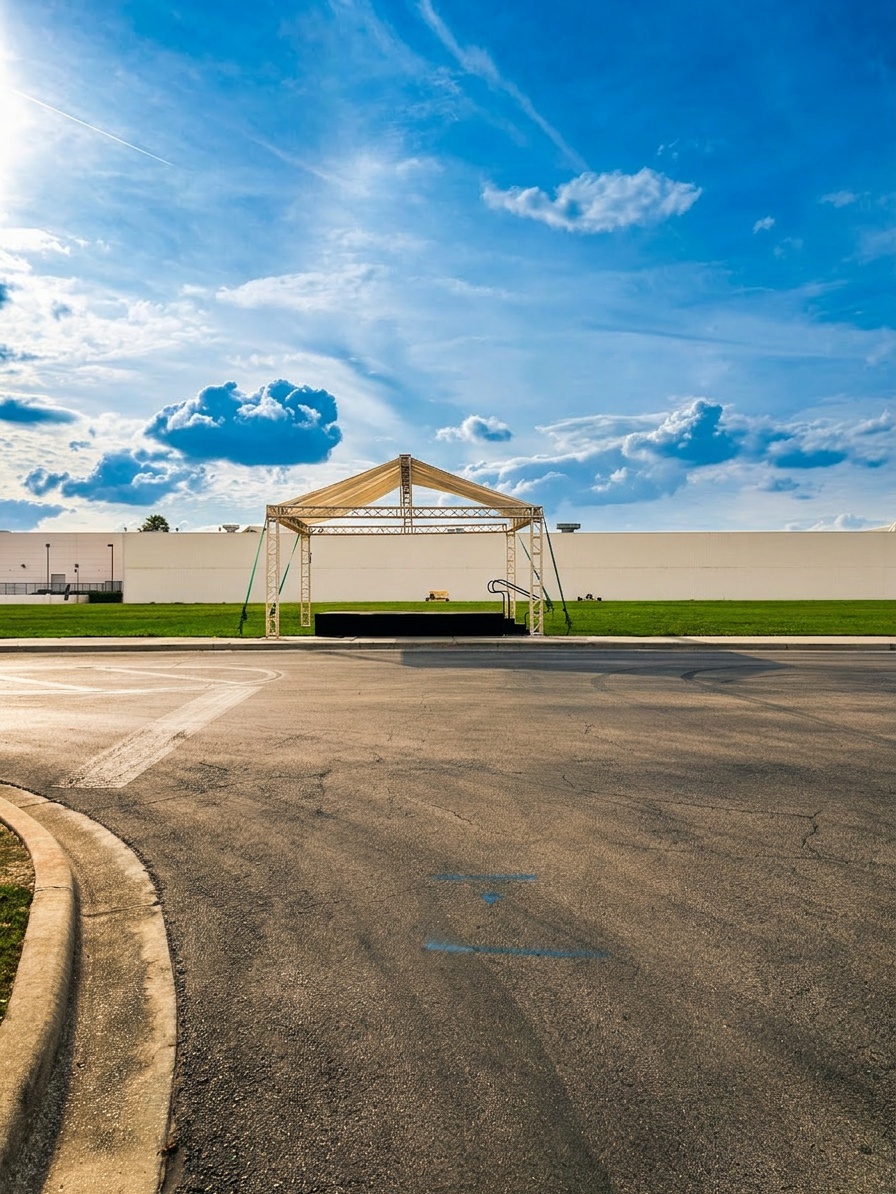
Drainage Planning: The Part Most Planners Miss
You can have the best cover on the market and still end up with a flooded stage if you haven't thought about where the water goes once it hits the ground.
For rainy season events, we walk the site before finalizing a setup plan. We look for low points around the stage footprint, note whether the venue has existing drainage infrastructure, and adjust the stage position or elevation accordingly. In our experience, a grade difference of even 6 inches between one side of the stage and the other can mean the difference between a dry setup and a puddle problem by intermission. It's a small thing that gets ignored until it isn't.
Stage drainage considerations include:
- Ground slope relative to the stage base
- Proximity to existing drainage inlets or channels
- Surface material (grass, pavers, and asphalt all shed water differently)
- Whether a tent perimeter will concentrate runoff in specific directions
For events near water features, this is even more critical. Our pool stage cover rental work gives us a strong background in engineered load and water management, and those same principles apply when we're planning drainage around a temporary outdoor platform.
Building Your Outdoor Event Contingency Plan
A covered stage handles the physical protection side. But a complete rainy season event plan also includes operational decisions about what happens when a storm rolls in mid-event.
Work with your production team to identify a weather hold protocol before the event day. This means knowing at what point the emcee pauses the program, where guests move to if you need to clear the main stage area, and how quickly your audio and lighting team can cover or power down if conditions escalate.
We've watched an emcee hold a crowd of 400 under a tent for nearly 30 minutes and bring them right back when the storm passed, because the organizer had rehearsed that exact scenario. On the other hand, we've also seen events fall apart because no one had talked through the plan in advance. The difference wasn't the weather. It was the preparation.
Florida's afternoon convective storms typically move through in 20 to 45 minutes, which means a well-prepared event can resume with minimal disruption if the structure is right and the team is ready.
If you're planning a large outdoor concert stage rental for summer, factor in an extra 30 minutes of weather buffer in your run-of-show. That padding has saved more events than any other single planning decision we've seen.
Timing Your Booking for Summer Events
May is when most summer event decisions get made. Venues book fast for July and August, especially for weekend dates that fall outside the worst of the storm window (morning events and evening events after 7pm tend to have lower storm exposure than mid-afternoon setups).
When you reach out for a covered stage quote, the most useful information you can give us is your venue, your event date, your estimated guest count, and your start time. Start time actually matters more than most people expect. A 6pm outdoor reception has a very different risk profile than a 3pm outdoor graduation ceremony, and we configure the cover and the contingency advice differently depending on which window you're in.
Use our stage size calculator to get a rough sense of the footprint you need, then contact us so we can layer in the weather protection components and give you a complete picture of what a covered setup costs for your specific event.
Get Your Summer Stage Covered Before the Season Starts
Florida rainy season doesn't negotiate. The storms are coming, and the events on your calendar in June, July, August, and September are counting on you to have a plan that keeps them running.
We've set up covered stages at open-air venues in Tampa, at transitional spaces like the Celeste Hotel, at outdoor sites across Orange and Seminole County, and at large-footprint properties like the Gaylord Palms. Every one of those jobs reinforced the same thing: a great summer event isn't luck. It's a well-built covered structure, a drainage-aware site plan, and a contingency protocol the whole team understands before anyone shows up on event day.
Planning an outdoor event between June and September? Tell us your venue, guest count, and date. We'll spec a covered stage solution that keeps your event running no matter what the afternoon sky does. Call us at 407-442-0254 or get a quote for your event and we'll get back to you fast.