Last summer, we set up a beautiful 36×48 stage for a corporate event in Winter Park. The morning was perfect. Blue skies, light breeze, everything on schedule. At 3 PM, right before the keynote speaker took the stage, the skies opened up. We are talking about the kind of downpour that only Central Florida can deliver, the type where you cannot see 20 feet in front of you.
The difference between that event being a disaster and a success? We had planned for Florida weather.
When you book an outdoor stage rental in Florida, weather planning is not optional.
It is as essential as choosing the right stage size or securing your permits. In this guide, we will walk you through everything our team at Stages Plus has learned from setting up hundreds of outdoor stages across Orange, Seminole, and Osceola counties. This is not theory. This is what actually works when the weather turns on you.
Understanding Central Florida’s Weather Patterns
If you have lived in Orlando or the surrounding areas for more than a week, you know the drill. Summer afternoons bring thunderstorms with clockwork precision. Hurricane season runs from June through November (though we all remember that October surprise a few years back). Even our “winter” throws cold fronts that can drop temperatures 30 degrees overnight.
The 3 PM thunderstorm is practically a local institution. From May through September, you can set your watch by it. We have set up stages at 10 AM under perfect conditions, only to watch storm clouds roll in right on schedule. The rain typically passes in 30 to 45 minutes, but those 45 minutes can destroy unprotected equipment and send guests running for cover.
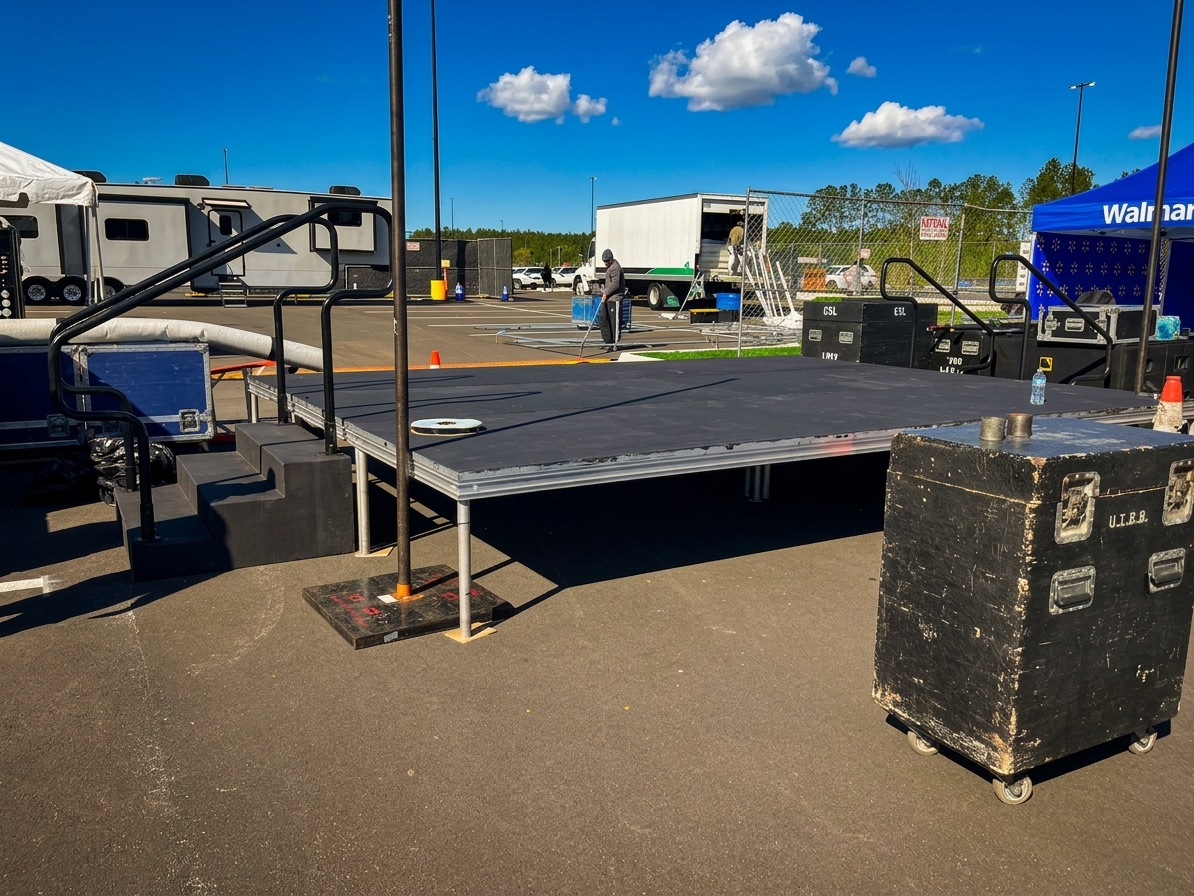
Hurricane season event planning requires a different level of attention. We never recommend scheduling major outdoor events during peak hurricane months (August through October) unless you have serious contingency plans and flexible reschedule options. Even tropical storms that stay offshore can bring sustained winds and days of rain.
Humidity affects more than just your guests’ comfort. It impacts audio equipment, causes condensation on stages and railings, and can make marley flooring slippery if not properly maintained. We have seen fog machines work overtime just from the ambient moisture in the air.
Wind is what keeps us up at night. A 20×40 concert stage rental with pipe and drape acts like a sail in sustained winds above 20 mph. We start monitoring when winds hit 15 mph sustained, add extra anchoring at 20 mph, and have protocols for setup changes at 25 mph and above. We have seen improperly anchored stages shift during wind gusts, which is why we always spec wind load requirements for outdoor setups.
Pre-Event Weather Planning: The Foundation of Success
The best weatherproofing happens before you ever sign a rental contract. When you call us at 407-442-0254, one of the first questions we ask is this: what is your backup plan if it rains?
Start with your event timing. Morning events in Florida (before 2 PM) give you the best weather odds from May through September. Evening events work well if you can start after 7 PM, once the afternoon storms have passed. We set up a 24×32 stage for a wedding reception in Sanford last June with a 6 PM start time. The storm hit at 3:30, cleared by 5 PM, and by the time guests arrived, you would never know it had rained.
Tent versus open-air staging is your first major decision for weatherproof event staging in Orlando.
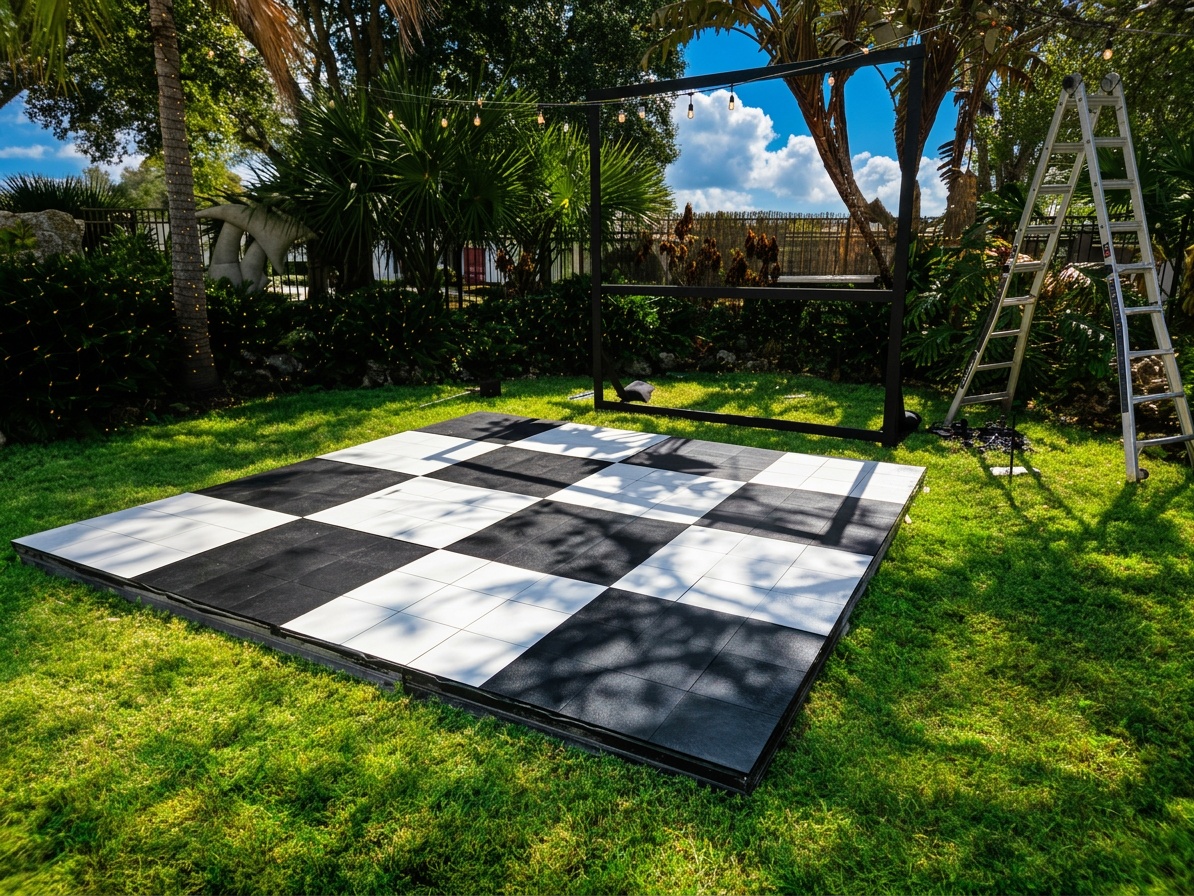
A tent adds cost, but it provides guaranteed protection from rain and sun. Our tent flooring rental serves double duty here. It creates a stable, level surface for your stage while also protecting the ground underneath from becoming a mud pit.
Timeline flexibility matters more than most planners realize. If we know rain is likely between 3 and 5 PM, we can schedule stage setup for early morning (6 AM start) or late afternoon (after 5 PM). We have pulled all-nighters setting up stages to avoid predicted weather windows. It is not glamorous, but it works.
Insurance requirements for outdoor events in Central Florida typically include weather-related cancellation coverage. Most venues require proof of liability insurance that specifically covers outdoor structures. We can provide documentation on our equipment specifications and anchoring methods to help with your insurance paperwork.
Your communication plan should include:
– Direct contact with your stage rental team (save our cell numbers)
– Real-time weather monitoring apps (we use multiple sources)
– Clear decision points (like “if sustained winds exceed 25 mph two hours before the event, we implement Plan B”)
– Guest notification systems
We have learned to build decision trees with our clients. “If X happens, we do Y” planning removes panic from the equation when weather turns.
Equipment Solutions That Actually Handle Florida Weather
After 15 years setting up stages in Central Florida, we have figured out which configurations hold up and which ones fold under pressure. Here is what we recommend.
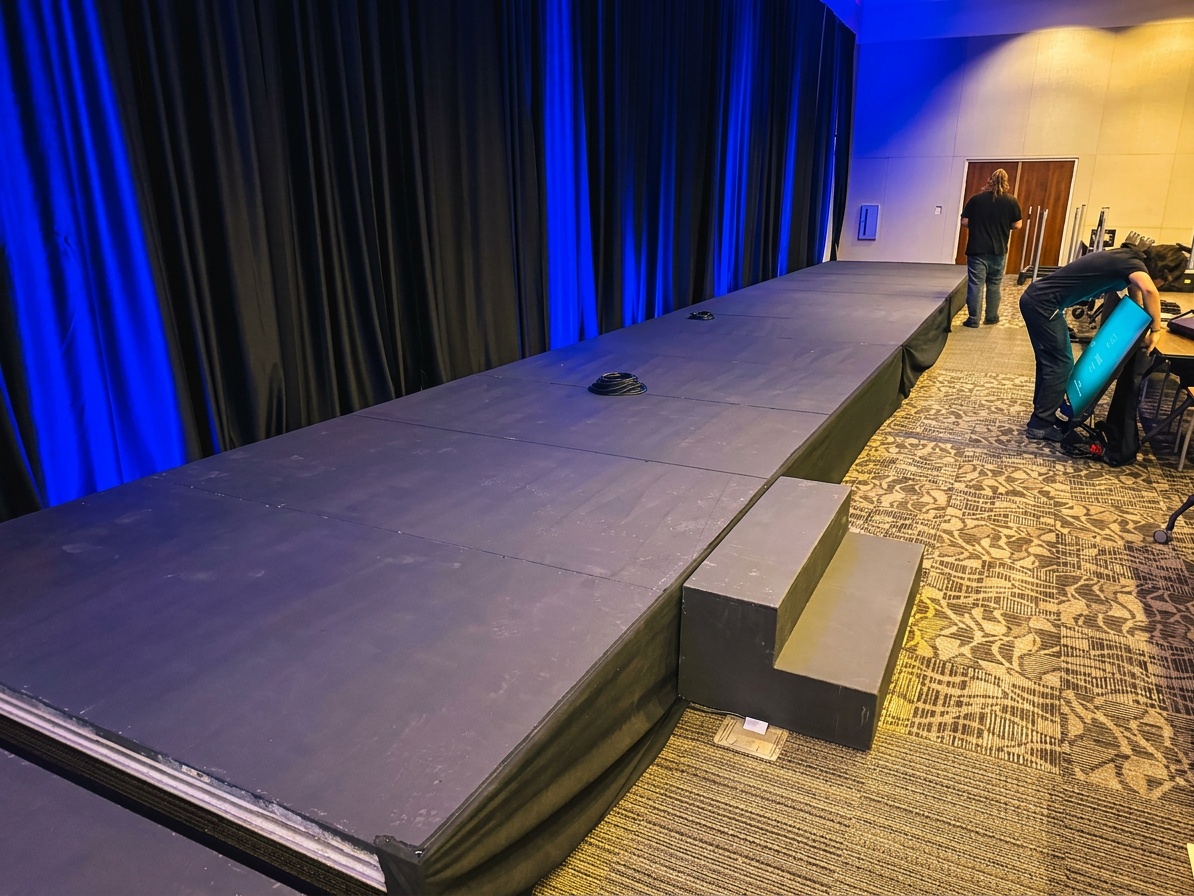
Stage covering options start with full tent coverage, but that is not always in the budget. Pipe and drape can serve as a quick-deploy covering system for speaking stages or DJ setups. We set up our 15oz IFR velour drape on adjustable uprights that can be raised or lowered quickly. During a corporate event in Winter Park, we had drape ready to deploy in under 10 minutes when radar showed an approaching storm.
Anchoring specifications change based on your setup. For a 16×24 stage with no covering, we typically use standard deck locks and stage legs. Add a tent or pipe and drape, and we are looking at ground anchors, sandbags, or ballast weights depending on the surface. Grass allows for stake anchoring. Concrete or pavement requires weight-based systems. A 32×40 stage with tent coverage might need 2,000 pounds of ballast in high-wind conditions.
Electrical and audio equipment protection cannot be an afterthought. Every outdoor setup needs weatherproof power distribution, and all audio equipment should have covered positions. We have seen $50,000 sound systems ruined by unexpected rain because someone assumed the tent coverage extended far enough. It did not.
Our pool cover rental provides a masterclass in weather-resistant staging.
These setups regularly span large open areas with zero leaks, using the same principles we apply to stage weatherproofing. The decking systems lock together tightly, the structure handles wind load, and proper slope prevents water accumulation.
Marley flooring becomes tricky in wet conditions. Standard marley can get slippery when wet. We recommend either covering your stage completely or using non-slip marley specifically rated for outdoor use. For a dance competition in Kissimmee last year, we used weather-resistant marley that maintained grip even during a brief rain shower.
Guard rails need extra attention in wind. Standard rails on a stage above 30 inches (which is code requirement) should have reinforced connections for outdoor setups. We have seen loose rails become projectiles in sustained winds above 25 mph.
Day-Of Weather Response: When to Act and When to Wait
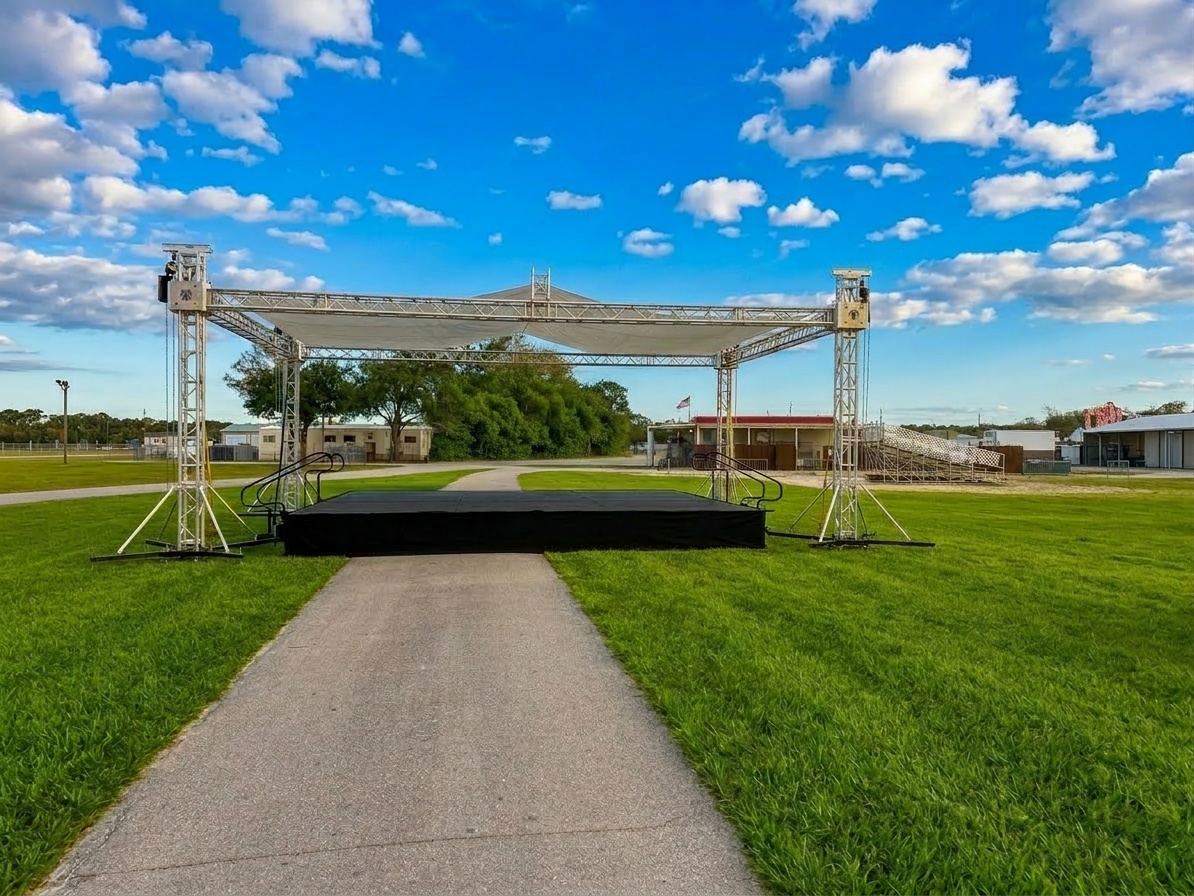
Your event day has arrived. The stage looks perfect. Then you check radar and see a red blob heading straight for your venue. Now what?
Active monitoring starts six hours before your event. We use multiple radar sources because they do not always agree. The difference between “possible showers” and “severe thunderstorm warning” changes everything about our response plan.
Quick teardown protocols should be rehearsed before event day. Know which equipment comes down first (pipe and drape, lighting, audio gear), what stays protected in place (stage structure, tent), and how long the full teardown takes if needed. For a 24×40 stage with full audio and lighting, figure 45 minutes for emergency teardown with a three-person crew.
Equipment protection priorities:
1. Audio and electrical gear (most expensive, most vulnerable)
2. Lighting equipment
3. Decorative elements and pipe and drape
4. Stage covering systems
5. Stage structure (most resilient, least vulnerable)
Guest safety trumps everything. If you see lightning, clear the stage and move guests to hard-sided buildings or vehicles. The 30-30 rule applies. When you see lightning, count to 30 before you hear thunder. That means the storm is six miles away. Take shelter and wait 30 minutes after the last thunder before resuming outdoor activities.
The hardest call is when to wait it out versus when to cancel. We have learned that Central Florida afternoon storms typically move through in 30 to 45 minutes. If radar shows a defined cell moving at 15 mph with clear air behind it, waiting usually works. If you see a line of storms or undefined mess on radar, that is different. Make the safe call, even if it means disappointing guests.
Last summer, we waited out a storm for a corporate event in Altamonte Springs. Radar showed it passing, and it did. The event started 20 minutes late, but it happened. The client thanked us for not panicking and canceling prematurely.
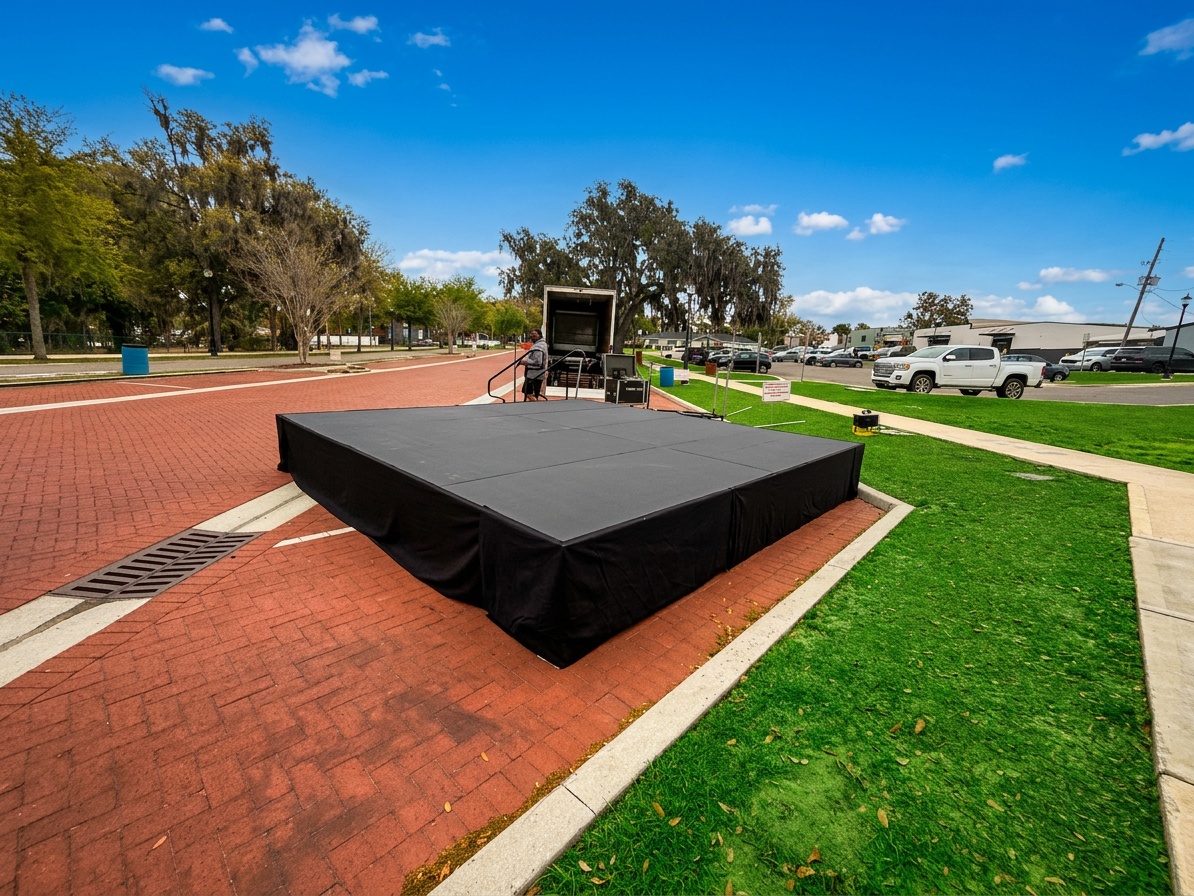
Once the storm passes, walk the site. Check for water pooling on the stage surface (we have seen decks collect an inch of standing water that needs to be swept off). Test all electrical connections before powering anything back up. Look at your anchoring points to make sure nothing shifted. It takes about 10 minutes but saves you from surprises when the music starts.
Your Weather-Ready Stage Starts with Planning
Weatherproofing an outdoor stage in Florida is not about having a crystal ball. It is about respecting the climate, planning for the predictable patterns, and having solid responses ready for the unpredictable moments.
Our team at Stages Plus has set up stages through hurricane season, summer storm season, and everything in between. We know which equipment configurations hold up, which venues provide natural weather protection, and how to read Central Florida weather patterns like a local (because we are locals).
Whether you need a 16×20 speaking stage for an outdoor ceremony or a 40×60 concert stage for a festival, we will help you plan for weather contingencies from day one. We have the tent flooring, the pipe and drape, the anchoring systems, and the experience to handle whatever the Florida sky decides to throw at us.
Ready to plan an outdoor event with confidence? Our team at Stages Plus has weathered every Florida season. Contact us at 407-442-0254 for a consultation on stage options that can handle whatever comes your way. We will talk through your event date, venue specifics, and build a weather-ready plan that lets you sleep at night instead of obsessively checking radar apps.
Because in Central Florida, it is not about if it will rain. It is about being ready when it does.