Orlando Stage Rental

Bands, Runways, Speaking Engagements, Award Ceremonies, Schools

Call Now! 407-442-0254

  • About
    • Blog
  • Pricing
  • Packages
    • Audio Packages
    • Stage Lighting
  • Contact
  • Reserve
  • Stage Sizes
    • 8ft Stage Sizes
    • 12ft Stage Sizes
    • 16ft Stage Sizes
    • 20ft Stage Sizes
    • 24ft Stage Sizes
  • Stage Rentals
    • Speaking Stage Rental
    • Single Performer Stage Rental
    • Concert Stage Rental
    • Round Stage Rental
    • Performance Staging Rental
    • Graduation Stage Rental
    • Wedding Stages
  • Runway
  • Pipe / Drape
  • Audience Riser
  • Pool Cover
  • Tent Floor
  • Camera Riser
  • Stage Accessories
    • Stair Rental
    • Ramp Rental
    • Dancefloor Rentals
    • Barricade Crowd Control Rental
    • Podium Rental

Audience Risers and Bleacher Staging: Maximizing Event Visibility

April 20, 2026 by ravivziv@gmail.com

Audience risers and bleacher staging are one of the most effective ways to improve visibility at live events, presentations, and performances. Whether you’re hosting a conference, corporate meeting, graduation, or live show, proper tiered seating ensures every attendee has a clear line of sight to the stage.

Without elevated seating, guests in the back rows often struggle to see, leading to a less engaging experience. Audience risers solve this by creating a structured layout where each row is slightly higher than the one in front, improving visibility across the entire space.

In this guide, we’ll break down how audience risers and bleacher staging work, when to use them, and how to choose the right setup for your event in Orlando and surrounding areas.

How Audience Risers Actually Work: Configurations and Capacities

Audience risers are modular tiered platforms that elevate rows of seating progressively higher. Each tier typically rises 8 to 12 inches above the previous one, creating stair-step seating where every row has a clear view over the row in front. We build these configurations in sections that interlock, allowing us to create custom layouts for any venue size or shape.

The most common riser configurations we install fall into three categories. Single-tier setups work well for smaller events (50 to 100 attendees) where you need modest elevation, usually one or two levels at 8 inches each. Multi-tier configurations handle larger audiences, 100 to 300-plus people, with three to five tiers, each progressively taller. Custom layouts combine risers with flat floor seating or wrap around stages for 360-degree visibility at concerts and performances.

Each riser section supports specific weight capacities based on its construction. Our standard 4-foot-deep risers handle approximately 125 pounds per square foot, which translates to comfortable seating density without overloading the structure. When we configure risers for an event, we calculate total capacity based on the number of tiers, the depth of each platform, and whether attendees will sit in chairs or stand.

At the Perry event in Apopka in late February 2026, we installed a five-tier configuration that accommodated about 200 attendees. The venue had relatively low ceilings, so we kept tier heights at 8 inches to maintain comfortable head clearance on the back row. Even with that conservative approach, every seat had an unobstructed view of the stage. The event planner told us afterward that audience engagement was noticeably higher than previous years when they used flat floor seating, likely because attendees could actually see the speakers’ faces and presentation screens clearly.

Event Applications: Where Risers Make the Biggest Impact

Some events genuinely need tiered seating to function properly. Dance competitions top that list. At recent setups for Valencia and UCF venues, we configured risers so parents and judges could see dancers’ footwork and formations from elevated positions. When you’re watching 30 dancers execute synchronized choreography, being able to see the back row matters. Flat floor seating turns half the audience into neck-crane victims who miss details.

Graduation ceremonies run a close second. We’ve set up audience riser rental packages for high schools and colleges throughout Central Florida, and the pattern holds: families want to see their graduate walk across the stage, not just the back of someone’s head. Risers let us fit more attendees in venues with limited space while improving visibility for everyone. The alternative is overflow rooms with video feeds, and nobody prefers that.

Corporate presentations and speaking events benefit from risers in different ways. When you have 100-plus attendees watching a keynote or panel discussion, tiered seating creates an amphitheater effect that focuses attention on the stage. At the Ralph event in Tampa in February 2026, we configured risers for a business conference with breakout sessions. The client specifically requested layouts that would allow attendees in back rows to see presentation slides clearly without digital zoom. Three tiers at 10 inches each solved that problem completely.

Indoor conference stage setup showing professional presentation area with tiered audience seating and audio equipment visible

Church services and worship events use risers for choir seating and congregation overflow. Award ceremonies need them so guests can see award recipients on stage. Concert festivals use them to create VIP viewing areas with better sight lines than general admission. Fashion shows sometimes incorporate risers as audience seating that wraps around runway perimeters.

The common thread across all these applications is simple: when it matters that people see clearly, risers deliver. When it doesn’t matter much (cocktail receptions, networking mixers, open houses), flat floor seating works fine and costs less. Know what you actually need before you book.

The Science of Sight Lines: How Riser Height Affects Visibility

Here’s what most event planners don’t think about until it’s too late. The relationship between stage height, riser tier height, and audience distance determines whether your sight lines work or fail. We learned this the hard way years ago when a client insisted on 6-inch tier risers for an event with a 24-inch stage. The math didn’t work. The back rows couldn’t see over the front rows clearly, even with the elevation.

The rule of thumb we follow now: for every foot of distance from the stage, you need approximately one inch of tier height to maintain clear sight lines over previous rows. So if your first row sits 10 feet from the stage and your second row sits 14 feet back, you need at least 4 inches of elevation on the second tier. This assumes standard chair seating heights and average adult sight lines.

Venue ceiling height complicates this calculation. Indoor spaces with 10-foot ceilings limit how high you can build back-row tiers before attendees on the top tier hit their heads on ductwork or light fixtures. We typically cap riser configurations at 48 inches total height for venues with standard ceilings. Outdoor events or venues with vaulted ceilings give us more flexibility to build higher tiers for stadium-style seating.

Theater workshop or performance space with black audience seating arranged in tiered configuration facing stage with red and black set pieces

At the Mastoris event at the Celeste Hotel in February 2026, we dealt with a unique sight line challenge. The venue had pillars scattered throughout the space that would’ve blocked views for flat floor seating. By configuring risers with deliberate gaps and angles, we routed sight lines around the pillars so every seat maintained a clear view of the stage. The client appreciated that we measured the pillar positions during our site visit and planned the layout accordingly. That kind of pre-planning is the difference between a smooth install and a day-of headache.

Outdoor bleacher rental in Central Florida introduces additional variables. Sunlight angle matters for afternoon events, so we orient risers so attendees don’t stare directly into the sun during key moments. Wind load becomes a factor for tall riser configurations at open-air venues, requiring additional ballast or anchoring. Rain drainage is another consideration, so we slope outdoor riser platforms slightly to prevent water pooling.

Safety, Accessibility, and Code Compliance in 2026

Any riser configuration taller than 30 inches requires guard rails on exposed edges. This isn’t a suggestion. It’s code. We install guard rails that meet or exceed local safety standards, typically 42 inches tall with intermediate rails to prevent falls. For events with children, we sometimes add infill panels to close gaps that small kids might slip through.

ADA compliance for audience seating means providing accessible viewing positions that don’t isolate guests with mobility challenges. We achieve this by designating flat areas adjacent to risers for wheelchair seating at the same elevation as the first tier. This gives wheelchair users the same sight line advantages as seated guests on the first riser level. For larger events, we create multiple ADA positions throughout the seating area rather than clustering all accessible seating in one location.

Load capacity calculations matter more than most planners realize. When we say a riser section supports 125 pounds per square foot, that includes the weight of chairs, attendees, and any movement or impact loading when people sit down or shift position. We never max out capacity ratings. For a 4×8 riser section rated at 125 PSF, we plan for about 80 to 85 percent of theoretical capacity to maintain safety margins. That buffer is there for a reason.

Stair rental integrates with riser setups to provide safe access to elevated tiers. We install stairs with handrails on at least one side, and for taller configurations, we add stairs at multiple points so attendees don’t have to navigate around the entire riser bank to reach their seats. This also speeds up egress if attendees need to exit quickly.

At the Perry event in Apopka, the venue required us to submit engineering drawings showing load paths and structural integrity before they approved the install. This happens occasionally at higher-end venues or when configurations exceed standard heights. We keep licensed engineers on call who can stamp drawings when venues or insurance requirements demand it.

Combining Risers with Other Staging Elements for a Complete Setup

Risers rarely work alone. Most events pair them with performance stages, presentation platforms, or runway setups. The key is coordinating heights and positions so the entire system creates a cohesive viewing experience. For a dance competition, we typically install risers facing a stage that sits 24 to 36 inches high. This gives judges and parents elevated views without making performers feel like they’re in a pit.

Pipe and drape rental integrates with risers to create defined seating sections or hide backstage areas from audience view. At corporate events, we often run pipe and drape along the sides of riser banks to create VIP sections or separate general admission from reserved seating. For graduations, pipe and drape conceals the processional staging area until the ceremony begins.

Performance staging rental works hand-in-hand with audience risers. When we plan both elements together, we can optimize sight lines by adjusting stage height relative to riser tiers. A 36-inch stage with five-tier risers creates different sight lines than a 24-inch stage with the same risers. We run those calculations during the quote phase to recommend the combination that maximizes visibility for your specific venue.

Lighting packages benefit from tiered seating layouts because elevated audience positions give lighting designers clearer throw paths. When attendees sit at varying heights, we can position lights to illuminate the stage without blinding the audience or creating harsh shadows. At concert events, we sometimes mount lights on riser support structures to achieve specific effects.

Audio equipment positioning changes with riser configurations too. Speaker arrays need to cover a larger vertical range when you have five tiers of seating versus flat floor seating. We work with audio techs to position speakers so sound reaches back-row attendees clearly without overpowering the front rows.

Orlando Venue Considerations: What Changes Between Indoor and Outdoor Setups

Central Florida venues present unique challenges for riser installations. Indoor hotel ballrooms often have low ceilings with chandeliers or decorative fixtures that limit vertical clearance. Convention centers give us more headroom but may have concrete floors that require special anchoring for tall riser banks. Outdoor venues at parks or amphitheaters deal with uneven ground that needs leveling before we can build stable riser platforms.

The Celeste Hotel venue where we did the Mastoris event had patterned carpet that created optical illusions under certain lighting. We placed solid-color carpet runners under riser feet to eliminate visual distractions and provide stable footing. Small details like that separate a professional install from something that just looks off.

Weather contingencies matter for outdoor events. Florida thunderstorms roll in fast during summer months. We secure outdoor riser configurations with additional tie-downs and ballast so sudden wind gusts don’t shift platforms. For multi-day outdoor events, we inspect and re-level risers each morning because ground settling overnight can affect stability.

Some Orlando-area venues we work with regularly have specific requirements worth knowing about. The Rosen Centre enforces strict floor protection rules. Valencia’s theater spaces have existing fixed seating that limits where we can place portable risers. UCF venues often require proof of insurance beyond standard coverage. Knowing these venue-specific details helps us plan accurate timelines and avoid surprise delays on the day of the install.

Pricing and Planning Timeline for 2026 Events

Audience riser rental pricing in Central Florida varies based on configuration complexity, total tier count, venue location, and event duration. A basic single-tier setup for 50 attendees costs considerably less than a five-tier stadium configuration for 300 people. We quote projects individually after discussing your venue, expected attendance, and sight line requirements.

Lead time for booking risers depends on the season and event size. Graduation season (April through June) and holiday events (November through December) book out earliest. For 2026 spring graduations, we recommend securing riser rentals at least eight weeks in advance. Summer and fall events often have shorter lead times, sometimes as little as two to three weeks for standard configurations.

Setup and strike timelines vary by complexity. A three-tier riser bank for 100 attendees takes our crew about two to three hours to install, assuming clear access and level flooring. Larger configurations with five or more tiers, multiple stair units, and guard rails can take four to six hours. We factor those timelines into delivery schedules so your venue is ready when you need it.

Delivery logistics matter more than many planners expect. Riser components are heavy and bulky. Venues with loading dock access speed up delivery considerably. Sites that require hand-carrying components up stairs or through narrow hallways add time and labor costs. During your quote consultation, we ask about venue access so we can plan realistic delivery windows.

Choosing the Right Riser Configuration for Your Specific Event

Start with your audience size and venue dimensions. Measure the available floor space for riser placement and the distance from that space to your stage or presentation area. Count expected attendees and allow approximately 24 inches of width per person for comfortable seating. If you expect 200 attendees and have 40 feet of width available, you need about five rows of seating, which translates to a four or five-tier riser configuration.

Consider ceiling height next. Measure from floor to the lowest ceiling obstruction (ducts, lights, sprinklers) in the area where you plan to place risers. Subtract 7 feet to allow adequate head clearance for attendees on the tallest tier. The remaining height tells you your maximum total riser elevation.

Think about your event type and how it affects viewing priorities. Graduations need clear views of the stage where diplomas are handed out. Dance competitions require visibility of floor-level choreography. Corporate presentations focus attention on speaker faces and projection screens. Each scenario creates a different optimal sight line angle, and honestly, getting that angle right upfront is a lot easier than trying to fix it after the crew is already on-site.

Budget realistically for the configuration you actually need. Starting with a minimal riser setup to save money often backfires when half your attendees complain about blocked views. We’ve seen clients add tiers mid-event, which costs more and disrupts attendees. Better to plan properly upfront.

During your consultation with us, we ask about all these factors. We have photos and diagrams showing different riser configurations in venues similar to yours. Most clients find it helpful to see real examples rather than trying to visualize abstract tier counts and heights. Visit our how to get a quote page to start that conversation.

Planning an event in Orlando where audience visibility matters? Proper tiered seating makes the difference between frustrated attendees and engaged participants who can actually see what’s happening on stage.

Contact Stages Plus at 407-442-0254 or visit our audience riser rental page to discuss riser configurations that maximize sight lines for your 2026 event. Our team has installed audience seating systems at hundreds of venues across Orlando, Winter Park, Tampa, and surrounding areas. We know how to configure risers for your specific venue, audience size, and sight line requirements.

Filed Under: Uncategorized

Hurricane Season Stage Planning: Protecting Your Florida Outdoor Event

April 16, 2026 by ravivziv@gmail.com

Look, we need to talk about something that every event planner in Central Florida thinks about but nobody really wants to address until it’s too late. Hurricane season. June through November. Six months where your outdoor event could go from perfectly planned to completely scrambled in about 72 hours.

We’ve been setting up stages across Central Florida for years now, and we’ve seen just about every weather scenario you can imagine. The good news? With the right planning, you can protect your event (and your budget) even during peak hurricane season. The key is knowing what to plan for and when to make the tough calls.

Understanding Florida’s Hurricane Season Reality

Hurricane season officially runs from June 1 through November 30, but here’s what the data actually shows. Peak activity happens between mid-August and late October. That’s when the water temperatures are highest and atmospheric conditions line up just right for storm development.

For event planning purposes, you need to think about three different threat levels. June and July are relatively quiet, with most systems staying weak or offshore. August through October is when things get real. November usually settles down, but you still get the occasional surprise system.

The thing most planners don’t realize is that you don’t need a direct hit to have problems. A hurricane 200 miles offshore can still generate 40+ mph sustained winds inland. That’s enough to make any outdoor stage setup dangerous, even if you never see a drop of rain.

When to Book (And When to Postpone)

We get asked this all the time. “Should we even try to plan an outdoor event in September?” Honestly, it depends on what you’re willing to risk and how flexible your schedule is.

If you’re locked into a specific date (anniversary, milestone celebration, something that can’t move), you need contingency plans. Plural. We’re talking indoor backup venue, postponement date already secured, and rental contracts that account for weather-related changes.

For events with flexible timing, consider these windows. Late May and early June before the season really ramps up. December through April is ideal but books up fast. If you must do late summer, have your backup plan finalized before you sign any vendor contracts.

One thing we’ve learned after hundreds of outdoor setups: the seven-day forecast is your friend. Once you’re inside that week-before window, you have pretty reliable data about what’s coming. That’s when you make your final go/no-go decision.

Stage Setup Modifications for Hurricane Season

So you’ve decided to move forward with your outdoor event during hurricane season. Smart move is to modify your stage setup to handle higher winds and potential rain.

Standard stage setups work great in normal conditions, but hurricane season demands upgrades. We typically recommend going with lower profile stages (24 inches or less in height) when wind is a concern. The lower the stage sits, the less surface area catches the wind.

Anchoring becomes critical. For events during peak season, we use additional tie-down points and heavier ballast weights. A standard 24×32 stage might need 50% more anchoring than usual. That’s not us being overly cautious, that’s building to code for sustained winds over 35 mph.

Stage covers and canopies are where most people run into trouble. A fabric canopy in 40 mph winds becomes a sail, and not the good kind. If your event absolutely needs weather protection, we recommend solid roof structures with proper engineering and anchoring. Or accept that you might need to remove the cover entirely if conditions deteriorate.

For events requiring more substantial weather protection, our tent flooring rental options can be combined with fully enclosed tent structures that offer better wind resistance than open canopies.

The 72-Hour Decision Protocol

Three days out from your event, you need a decision framework. Not a vague “we’ll see what happens” plan. An actual protocol with specific triggers and actions.

Here’s what we use internally and recommend to clients. At 72 hours out, check the National Hurricane Center forecast. If there’s a named storm within 500 miles with projected track toward Central Florida, activate your contingency plan. Don’t wait to see if it shifts.

At 48 hours, you’re making the final call. Wind forecasts over 30 mph sustained? That’s postpone territory for most outdoor stages. Rain alone we can work with (assuming proper drainage and electrical safety). But rain plus wind? That’s when things get dangerous for equipment and guests.

The 24-hour mark is too late to make major changes. At that point you’re in execution mode, whatever you decided at 48 hours. Trying to reschedule or relocate with one day notice usually creates more problems than it solves.

Insurance and Contracts: The Boring Stuff That Saves You

Nobody loves reading rental contracts, but during hurricane season this paperwork matters more than usual.

Weather clauses need to be explicit. What constitutes a weather-related cancellation? Who decides? What’s the refund or credit policy? We’ve seen contracts that define “severe weather” so vaguely that both parties end up arguing about it after the fact.

Event insurance specifically covering named storms is available and worth the cost for any event over $10,000 in rental expenses. Standard policies often exclude hurricane-related claims or have specific notification windows. Read the fine print before you’re three days from landfall.

For our rental agreements, we include clear language about weather-related postponements. If a hurricane is forecasted to impact the area within 72 hours of your event, you can reschedule once without penalty. That’s not us being generous, that’s us being practical. We’d rather move your date than deal with damaged equipment or liability issues.

Real Talk: What We’ve Learned From Past Seasons

We set up a 40×60 stage for a corporate event back in August 2019. Everything was looking perfect until 96 hours before the event when a tropical depression formed in the Gulf. The forecast models couldn’t agree on whether it would hit Tampa or track north toward us.

The client made the call at 72 hours to postpone by one week. Smart decision. The system ended up staying offshore but generated sustained winds of 35 mph across Central Florida on what would have been their event day. The rescheduled event a week later happened under clear skies.

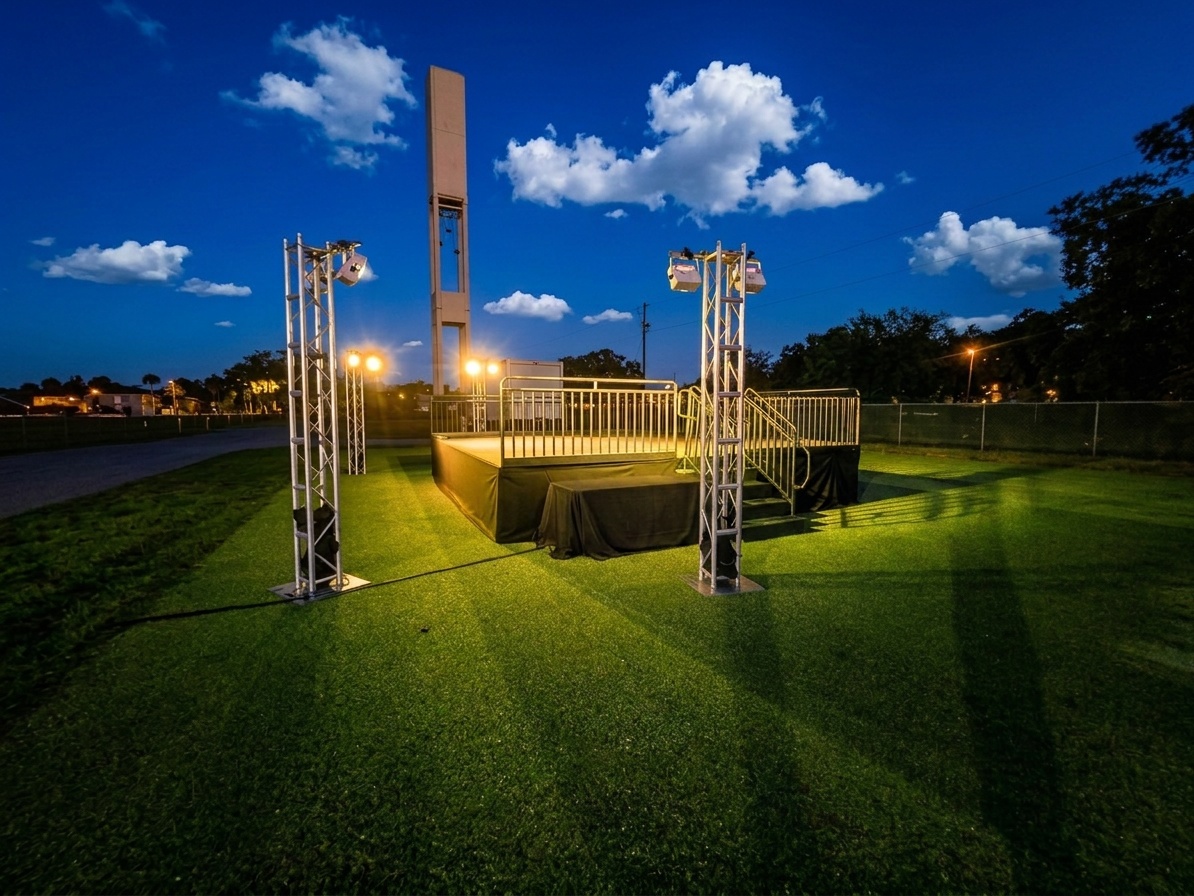
Outdoor stage setup with audio

That postponement cost them about $3,000 in rescheduling fees across all vendors. The alternative would have been canceling outright or trying to run the event in dangerous conditions. Three grand is cheap insurance when you’re talking about guest safety and a six-figure corporate event.

Another case from September 2022. Wedding with about 150 guests. Outdoor ceremony with a speaking stage and pipe and drape backdrop. Hurricane forecast looked clear when they booked, but two weeks before the event a system developed and models showed possible Central Florida impact.

We worked with them to have a complete indoor backup plan at their venue’s ballroom. Cost to have both setups ready? About 40% more than the original outdoor-only plan. The storm tracked west, missed us entirely, and they used the outdoor setup as planned. But having that backup ready meant the bride wasn’t losing sleep the week before her wedding.

For clients planning significant outdoor events, we often recommend exploring our speaking stage rental options that can be quickly adapted for either outdoor or covered venue use.

Venue-Specific Considerations in Central Florida

Not all outdoor venues handle hurricane season weather the same way. Some locations have natural wind breaks or drainage issues that affect your planning.

Waterfront venues are gorgeous but exposed. Lake Eola, the Winter Park chain of lakes, any venue right on the water has zero wind protection. Beautiful for photos, challenging when a tropical system is 300 miles offshore kicking up sustained winds.

Venues with tree coverage offer some wind protection but create their own issues. Falling branches during high winds can damage equipment. We’ve had setups where we positioned stages specifically to avoid being directly under large tree canopies during uncertain weather.

Indoor/outdoor combination venues give you the most flexibility. Places that have an outdoor ceremony space with an adjacent indoor reception area. You can make the indoor/outdoor call much closer to the event date because you’re not scrambling to find a completely different location.

Your September Event Checklist

If you’re planning an outdoor event for August, September, or October in Central Florida, here’s your action list.

  • Book your venue and vendors with explicit weather postponement clauses. No handshake agreements or vague “we’ll work something out” promises. Get it in writing.
  • Identify your backup plan before you send invitations. Indoor venue secured or clear postponement date agreed to by key vendors. You can’t scramble for alternatives a week before your event during peak season.
  • Budget an extra 20-30% for weather-related modifications. Lower stages, additional anchoring, backup plans, potential rescheduling fees. These aren’t optional extras, they’re requirements for responsible planning.
  • Monitor weather starting at 10 days out. Not obsessively, but daily check-ins on the National Hurricane Center site. At seven days, you should be in regular contact with your rental vendors about current forecasts.
  • Make your go/no-go decision at 72 hours. This is hard for a lot of clients because you’re making the call before you know for certain what will happen. But that’s the point. You need enough lead time to execute changes safely.

Our team at Stages Plus monitors weather conditions for all our scheduled events during hurricane season. We’ll reach out proactively if we see potential concerns, but we also encourage clients to contact us at 407-442-0254 if they have questions about forecast impacts on their setup.

The Bottom Line on Hurricane Season Events

Can you successfully plan outdoor events during Florida’s hurricane season? Absolutely. We do it all the time. But it requires more planning, more flexibility, and more honest conversations about acceptable risk.

The events that go smoothly are the ones where everyone involved understands the weather risks from day one and builds appropriate contingencies into the plan. The disasters happen when people assume everything will work out fine without backup plans.

Your outdoor event can happen. Just make sure you’re planning for the weather you might get, not just the weather you’re hoping for.

Filed Under: Uncategorized

Stage Rental ROI: When Renting vs. Buying Makes Sense

April 13, 2026 by ravivziv@gmail.com

If you run an event venue in Orlando, you’ve probably asked yourself whether it makes more sense to rent stages for every event or buy your own equipment outright. We get this question all the time at Stages Plus, and honestly, there’s no one-size-fits-all answer. It depends on how often you’re booking events, what kinds of setups your clients need, and whether you have the space and crew to maintain staging equipment year-round.

We’re going to walk through the real numbers based on what we see working with venues across Central Florida. Not abstract theory. Actual rental costs, purchase prices, and the hidden factors that tip the decision one way or the other.

The True Cost of Renting: What You’re Really Paying For

Let’s start with rental pricing because that’s where most venue managers begin their analysis.

When you rent a concert stage from us, you’re not just paying for the decking and supports. You’re paying for delivery, professional setup, teardown, and the peace of mind that if something goes wrong, we fix it.

A standard 24×20 stage with stairs and skirting typically runs between $800 and $1,200 for a weekend event. If your venue hosts 15-20 events per year that need staging, you’re looking at $12,000 to $24,000 annually in rental fees.

But here’s what you get for that cost. Our crew shows up at 6 AM, builds the stage to your exact specs, and returns after the event to break it down. You don’t store anything. You don’t maintain anything. You don’t worry about whether the decking warped during Florida’s humid summer or if the legs are still rated for the load capacity you need.

We recently built a 36×56 stage at the Gaylord Palms for a Desai wedding that included guard rails, marley flooring, professional lighting, and video setup. The rental cost reflected all of that, but the venue didn’t have to coordinate six different vendors or manage a multi-day install. We handled it.

What It Actually Costs to Own Your Equipment

Now let’s talk about buying your own staging system.

A basic modular stage setup that can handle most events runs between $15,000 and $30,000 depending on the size and quality. That includes decking, legs at multiple heights, stairs, and basic skirting. If you want guard rails, professional-grade marley flooring, or specialized accessories, add another $5,000 to $10,000.

So you’re looking at a $20,000 to $40,000 upfront investment for a versatile system.

But (and this is important) that’s just the purchase price. Here are the ongoing costs most venue owners underestimate:

Storage: A 32×20 stage system requires about 600 to 800 square feet of climate-controlled warehouse space. In the Orlando area, that typically costs $400 to $800 per month depending on location. That’s $4,800 to $9,600 per year just to keep the equipment safe from humidity and temperature swings.

Maintenance: Stage decking takes a beating. We resurface or replace worn sections every 18-24 months depending on usage. Budget $1,000 to $2,000 annually for refinishing, hardware replacement, and general upkeep.

Labor: You need trained staff to assemble and disassemble stages safely. Most venues either hire dedicated crew (expensive) or train existing staff (time-consuming and risky if they’re not doing it regularly).

Insurance: Your liability coverage goes up when you own and operate staging equipment. The increase varies by policy, but expect an additional $500 to $1,500 per year.

Hurricane prep: This is Florida. We had to secure stages during Hurricane Ian in 2022, and the prep work is no joke. You need to either fully disassemble and store everything or anchor it properly. Either way, it’s labor hours and stress.

Add it all up and you’re spending $7,000 to $15,000 per year just to own the equipment you already bought.

How to Calculate Your Break-Even Point

Here’s how the math actually works for most venues we talk to.

Let’s say you invest $25,000 in a staging system. Your ongoing costs (storage, maintenance, insurance) average $10,000 per year. So your total cost in year one is $35,000. In years two through five, you’re spending $10,000 annually.

If you’re renting stages 20 times per year at an average of $1,000 per rental, you’re spending $20,000 annually.

Year one: Ownership costs $35,000 vs. renting costs $20,000. Renting wins by $15,000.

Year two: Ownership costs another $10,000 (total $45,000 over two years) vs. renting costs another $20,000 (total $40,000). You’re still $5,000 behind.

Year three: Ownership total is $55,000 vs. renting total of $60,000. You break even.

Year four and beyond: Every year past year three, ownership saves you roughly $10,000 compared to renting.

So if you’re hosting 20+ staged events per year, ownership starts making financial sense around year three. But that assumes your event volume stays consistent and you don’t need specialized equipment beyond your base system.

When Renting Makes More Sense Than Buying

We work with dozens of venues that rent from us exclusively, and it’s not because they haven’t done the math. It’s because renting gives them flexibility their business model needs.

Outdoor stage setup on grass for a community event in Central Florida
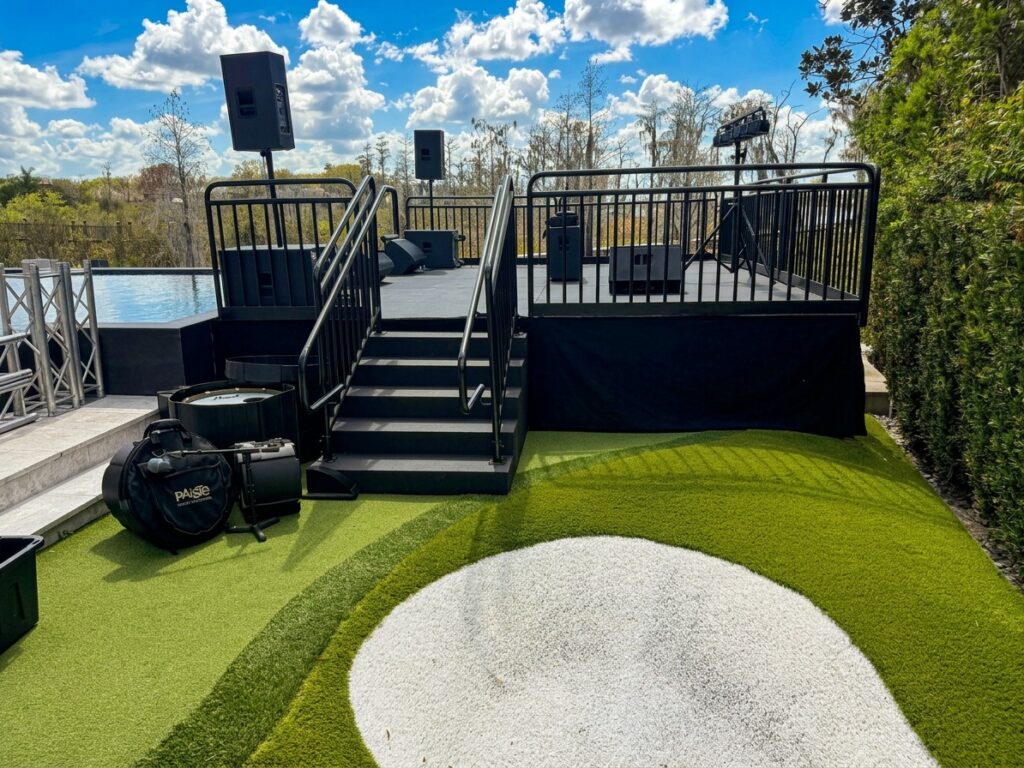
Outdoor stage setup for a community event in Central Florida.

Variable event schedules: If your venue books 8 to 12 staged events per year instead of 20+, the break-even timeline stretches to 5 or 6 years. That’s a long time to wait for ROI when event trends change every few years.

Diverse staging needs: We built a 16×12 stage for the Dr. Jaishree Perry award ceremony in Apopka, then the next week set up a 40×24 runway at the Celeste Hotel for the Mastoris fashion show. Two completely different configurations. If you own equipment, you’re locked into whatever dimensions you bought. When you rent, you get exactly what each event requires.

Seasonal demand: Central Florida’s event season peaks in spring (wedding season) and late fall (holiday events). If you own equipment, it sits unused for months during the summer heat. When you rent, you only pay during your busy periods.

No maintenance headaches: This matters more than most venue managers realize. We’ve seen DIY stage setups fail mid-event because someone didn’t check the leg locks or notice cracked decking. When you rent speaking stages or performance staging, you get equipment we inspected that morning. If something’s wrong, we fix it or replace it before your guests arrive.

Hurricane season: We’re bringing this up again because it’s a real operational burden in Florida. When a hurricane warning goes out, venue owners who rent don’t have to worry about securing thousands of dollars of equipment. The liability is on us.

When Ownership Makes Sense for Your Venue

Some venues absolutely should own their staging equipment. Here’s when the investment pays off.

High event frequency: If you’re booking 25 to 30 events per year that need staging, you’ll recover your investment in under three years and save significantly after that.

Consistent setup requirements: Hotels and conference centers that mostly need a standard 24×16 stage for corporate presentations benefit from ownership. You’re not constantly adapting to different dimensions.

In-house crew: If you already employ event staff who can handle setup and teardown safely, your labor costs for ownership are lower. You’re not paying premium rates for outside crews.

Premium positioning: Some high-end venues want to offer “included staging” as part of their package rather than coordinating rentals. It’s a service differentiator that can justify higher venue fees.

Long-term stability: If you’ve been operating for 10+ years with consistent demand, you have the data to predict future needs. Ownership becomes a predictable expense line rather than a risky capital investment.

The Hybrid Approach Most Smart Venues Use

Here’s what we see working really well. Venues own basic staging for their most common configurations, then rent specialty items when events need them.

You might own a 20×16 stage system that covers 70% of your bookings. When a client needs a 40×30 concert stage with professional lighting and marley flooring, you call us. When someone wants a runway for a fashion show or a pool cover installation for a waterfront event, you rent those specialized setups.

This approach minimizes your capital investment and storage costs while still giving you flexibility for the bread-and-butter events that drive most of your revenue.

One venue we work with owns their speaking stage and stairs but rents pipe and drape, audience risers, and lighting packages when events need them. They’ve been doing this for five years and say it’s the perfect balance.

What to Consider Before You Decide

The ROI calculation is just math. The real decision factors are operational.

Do you have climate-controlled storage? Florida humidity will destroy wood decking and warp supports if you store them in a non-climate-controlled space. If you don’t have proper storage, add the cost of renting warehouse space to your ownership budget.

Can you commit to a maintenance schedule? Stage equipment needs regular inspection. Loose bolts, worn decking, and damaged skirting aren’t just cosmetic issues. They’re safety hazards. If you can’t dedicate staff time to quarterly inspections and annual refurbishing, you’re better off renting.

What’s your event mix? If every event needs a different configuration, ownership becomes complicated fast. You either buy multiple systems (expensive) or limit the types of events you can host (lost revenue).

How important is setup time? Our crew can build a 24×20 stage in about 90 minutes because we do it five days a week. Your staff might need four hours the first few times, longer if they only set up stages once a month. Factor in the learning curve and the labor hours.

The 2026 Decision Framework

Ask yourself these questions:

  • How many events per year will require staging? (Be conservative. Use last year’s actual bookings, not projected growth.)
  • What percentage of those events need similar stage configurations?
  • Do you have 600 to 800 square feet of climate-controlled storage available?
  • Do you have trained staff who can safely assemble and disassemble stages?
  • Are you planning to be in business at this location for at least five years?

If you answered “20+ events” to question 1, “70% or more” to question 2, and “yes” to questions 3, 4, and 5, ownership probably makes financial sense.

If you answered “under 20 events” or “no” to any of the operational questions, renting gives you better flexibility and lower risk.

Real-World Advice From Years of Setups

We’ve set up stages at country clubs, hotel ballrooms, outdoor festivals, church ceremonies, school graduations, and corporate galas across Central Florida. The venues that are happiest with their staging decisions (whether they rent or own) are the ones who matched their approach to their actual operational capacity, not just the ROI spreadsheet.

One venue bought a staging system three years ago, used it twice, and now rents from us because they realized they didn’t have staff trained to set it up safely. The equipment is sitting in their storage room depreciating.

Another venue rented from us for five years, then bought their own system once they consistently booked 30+ events per year. They still call us for specialty items like camera risers or round stages when events need them.

Both made the right decision for their situation. That’s what we want for you.

Let’s Run Your Numbers

Every venue runs differently, and your setup should reflect that. One of the easiest ways to keep events running smoothly is having the right equipment in place without taking on the added responsibility of storing, maintaining, and repairing it.

With Stages Plus, you don’t have to worry about any of that. We handle delivery, setup, teardown, and maintenance so your team can stay focused on the event itself, not the equipment behind it.

If you have upcoming events and want a setup you don’t have to think twice about, we’re here when you need us.

Contact us to get started.

Filed Under: Uncategorized

How to Choose the Right Stage Size for Your Orlando Event

April 9, 2026 by ravivziv@gmail.com

We get this question every day: “How big should my stage be?” It’s the first thing clients ask when they call Stages Plus, and honestly, it’s one of the most important decisions you’ll make for your event. Choose too small and your band looks cramped. Go too big and you’ve wasted money on empty space (and made your performers look lost on stage).

The right stage size for your event depends on several factors that work together: who’s performing, what equipment they’re bringing, where your event is happening, and how many people are watching.

Let us walk you through exactly how we help Central Florida event planners choose the perfect stage dimensions every single week.

What Determines Your Stage Size

When clients call our Winter Park office, we don’t just quote a number. We ask questions. Here’s what actually matters when sizing a stage.

Number of performers or speakers. A solo DJ needs about 100 square feet of stage space. A five-piece band needs closer to 400. A 50-person choir? You’re looking at 1,000+ square feet. The math is simple, but clients often forget to count everyone who’ll be on stage at once. That includes the emcee standing next to the award recipient, the backup singers behind the soloist, or the entire wedding party during toasts.

Equipment footprint. Drum kits eat up 8 feet of depth by themselves. Add monitor speakers, mic stands, and keyboard rigs, and suddenly that 8×12 stage looks way too small. We built a 16×24 stage last month for what the client thought was “just a small band.” They were right about the band size (four people) but forgot about the grand piano.

Venue constraints. That gorgeous ballroom at your Central Florida resort might have 12-foot ceilings. Put a 48-inch tall stage in there and you’ve got performers hitting their heads on chandeliers. Outdoor venues have different issues. We did a lakefront corporate event in Winter Park where the only flat ground for staging was 20×30 feet maximum. The client wanted a 24×40 stage. Physics said no.

Audience sightlines. Stage height and width work together. A wide, low stage works great for 200 people in a ballroom. That same stage at an outdoor festival with 2,000 attendees? The back half can’t see anything. Sometimes you need a taller stage more than a bigger one.

Your budget. Stages are priced by the deck (our standard 4×8 decks lock together to build any size you need). A 16×20 stage uses 10 decks. A 24×40 uses 30 decks. The cost difference is real, but so is the functionality difference. We’d rather right-size your stage rental pricing than sell you something too big.

Stage size comparison showing 8x12, 16x24, and 24x40 configurations with deck counts labeled

Stage Size Guidelines by Event Type

After setting up thousands of Central Florida events, we’ve learned what works. These are starting points, not rules. Your specific event might need adjustments.

Solo speaker or DJ: An 8×12 or 8×16 speaking stage handles one person with a podium and basic AV. Add 4 feet of depth if they’re using confidence monitors or moving around while presenting. DJs who bring full controller setups often need 8×16 minimum.

Small band (3-5 musicians): Start with 16×20 or 16×24. That’s our most common concert stage rental size for wedding bands and corporate entertainment. If the drummer has a large kit or they’re bringing a keyboard rig, go 16×24 or 20×24.

Large band or orchestra: Once you hit 8+ musicians, you’re looking at 20×32 minimum. Full orchestras and 20+ person choirs need 24×40 or larger. We built a 36×56 stage for a dance competition near Disney last year, and they used every inch.

Fashion runway: Width matters more than depth here. Standard runway stages are 4 feet wide. Length depends on your venue, but 40-60 feet gives models enough space to walk naturally. Our runway rental stages can extend to whatever length your show needs.

Dance performances: Dancers need room to move. For a solo or duo, 12×16 works. Ensemble pieces need 20×24 or larger. Competitive dance teams often request 36×56 for full routines. The depth matters more than width because choreography moves front to back.

Panel discussions or awards ceremonies: Figure 8 feet of width per person seated on stage, plus 4-6 feet of depth for the chairs and a walkway behind them. A four-person panel fits comfortably on a 12×16 or 16×16 stage.

These are guidelines we share during the stage size options and pricing conversation. Your event might need something completely different, and that’s fine. Our modular decks build any configuration.

Depth vs Width: What Actually Matters

Here’s something most clients get wrong: they think about stage width first. We think about depth.

Stage depth runs front to back (how far the stage extends away from the audience). Width runs side to side (how wide the stage appears from the audience’s view). Both matter, but depth gets underestimated constantly.

Picture a five-piece band. They need about 16 feet of width to spread out comfortably. But here’s what else is happening on that stage: drum kit in the back (8 feet deep), monitor speakers in front of the drummer (2 feet), the other musicians standing 3-4 feet in front of the monitors, and ideally 2-3 feet of clearance at the front edge so performers aren’t hanging off the stage. That’s 15-16 feet of depth minimum.

We built a 24×16 stage once (24 feet wide, 16 feet deep) for a client who insisted width mattered more. The band fit, technically. But the keyboard player was literally standing with his back against the drum kit, and the singer had about 6 inches of stage in front of the monitors. It looked cramped and felt cramped.

Flip those dimensions to 16×24 (16 feet wide, 24 feet deep) and suddenly everyone has breathing room. The drummer sits 8 feet back, monitors at 10 feet, musicians at 13-14 feet, and the front edge at 16 feet. Much better.

For performance staging rental, we typically recommend prioritizing depth up to 20 feet, then adding width as needed. The exception is runway shows where width stays constant at 4 feet and you just extend the length.

Overhead diagram showing stage depth zones - equipment area, performer area, safety margin at front

Orlando Venue Considerations You Can’t Ignore

Central Florida venues each have their quirks. We’ve worked them all, from the convention centers in Kissimmee to hotel ballrooms in Winter Park to outdoor spaces at lakefront resorts.

Load-in access. That gorgeous historic venue in downtown Orlando with the 6-foot-wide doorways? Your 8-foot decks aren’t fitting through without standing them vertical. We can do it, but it affects setup time and cost. Convention centers have loading docks and freight elevators. Country clubs have narrow hallways. Always check load-in before finalizing stage size.

Ceiling heights. Most Central Florida hotel ballrooms have 12-15 foot ceilings. That’s plenty for a 32-inch or 40-inch tall stage with normal-height performers. But if you’re adding truss for lighting above the stage, or if your performers are basketball-player tall, you need to account for total height. Outdoor venues don’t have ceiling constraints, but they do have tent heights if you’re under a canopy.

Floor conditions. Outdoor grass stages need a different approach than indoor concrete. We can build on either surface, but grass might need plywood subflooring first, which adds to the footprint slightly. Sloped lawns limit your maximum stage size because we can only level so much.

Overhead diagram showing stage depth zones - equipment area, performer area, safety margin at front
Overhead diagram showing stage depth zones – equipment area, performer area, safety margin at front

Existing features. Pool cover stages are one of our specialties (we love turning pools into usable event space). But a 20×40 pool dictates your maximum stage size pretty specifically. Same with stages built around existing bandstands, loading dock stages, or platforms over retention ponds.

Local weather planning. Summer afternoon thunderstorms are guaranteed in Orlando. Outdoor stages need quick teardown plans or weather protection. That might mean keeping your stage size conservative so we can break it down in 30 minutes if needed, or investing in a tent large enough to cover your staging area.

We know the venues. When you tell us you’re at the Rosen Centre or the Omni Resort or that lakefront park in Winter Springs, we already know what will and won’t work for staging.

How Our Modular System Builds Any Size

Here’s what makes Stages Plus different from rental companies with fixed-size stage kits: our decks lock together to build literally any configuration you need.

Each deck is 4 feet by 8 feet. They connect with a locking system that creates a solid, safe surface. Need a 12×20 stage? That’s 6 decks (3 wide, 2 deep). Need 24×40? That’s 30 decks (6 wide, 5 deep). Need something weird like 18×26? We can build it.

This matters because your event isn’t standard. Maybe your venue has an alcove that’s 22 feet wide. Maybe you need exactly 28 feet of depth to fit between the back wall and the dance floor. Maybe you want an L-shaped stage that wraps around a pillar. We’ve built all of these.

Stage height is customizable too. We stock 16-inch, 24-inch, 32-inch, and 40-inch leg sets. Mix them if you want a ramped stage or stepped levels. Add guard rails when the stage is over 30 inches tall (required by code). Add stairs where people access the stage. Add skirting around the base to hide the legs and create a finished look.

The modular deck system means you’re not forced into “small, medium, or large” packages. You get exactly the stage size and shape your event needs, built specifically for your venue.

Modular stage decks being assembled, showing how they lock together

Common Sizing Mistakes (And How to Avoid Them)

We’ve seen every stage sizing mistake possible. Here are the ones that happen most often.

Mistake 1: Measuring the performance area but forgetting wing space. Performers need somewhere to enter and exit. Equipment needs storage space during the event. If your 16×20 stage is wall-to-wall in your venue, there’s no wings. Add 4-6 feet of clearance on at least one side, or make the stage itself slightly larger to include wing space.

Mistake 2: Assuming “bigger is always better.” A solo speaker on a 24×40 stage looks ridiculous and feels disconnected from the audience. Right-sizing saves money and actually improves the event. We’d rather build you a 12×16 that fits your needs perfectly than sell you a 20×30 because you’re worried about having enough room.

Mistake 3: Ignoring ADA access requirements. If your event is open to the public or has attendees who use mobility devices, you need ADA-compliant stage access. That typically means a ramp (taking up 20+ feet of space depending on stage height) or designating an accessible area of the stage reachable without stairs. Plan for this from the beginning, not the day before the event.

Mistake 4: Choosing stage size before confirming the venue. We get calls asking for quotes on a 32×48 stage, then find out the venue’s ballroom is only 40×60 feet total. The stage would take up half the room and leave no space for audience seating. Always confirm your venue dimensions first, then size the stage to fit proportionally.

Mistake 5: Forgetting about sightlines from the back. A 24-inch tall stage works great for 100 people. For 500 people in a flat ballroom, the folks in back can’t see anything. Either raise the stage height, add audience risers in the back, or plan your room layout so everyone has decent sightlines.

Modular stage decks being assembled, showing how they lock together

Mistake 6: Not planning for load-in logistics. That 40×60 stage you want? It requires trucking in 75 decks, plus legs, plus rails, plus stairs. Make sure your venue has loading dock access and enough space near the stage location to stage all that equipment during assembly. Hotel ballrooms with narrow service corridors can be tricky.

Get Expert Sizing Advice From Our Team

After 20+ years of building stages across Central Florida, we’ve learned that every event is unique. The “standard” sizes are starting points. The real answer to “how big should my stage be” depends on your specific performers, venue, audience, and goals.

That’s why we don’t just quote dimensions and prices. We ask about your event. We look at your venue. We think through the logistics with you. Sometimes we recommend a smaller stage than you expected (and save you money). Sometimes we suggest going bigger in one dimension to solve a problem you hadn’t considered yet.


Not sure what size you need? Contact Stages Plus for a free consultation. Our team has set up stages for thousands of Central Florida events, from intimate hotel conferences to massive outdoor festivals. Call 407-442-0254 or get a free quote online. We’ll help you choose the perfect size for your event and venue, with pricing that fits your budget.

Whether you need an 8×12 podium stage or a 40×80 festival stage, we’ve got the equipment and experience to make it happen. Let’s figure out exactly what your event needs.

Filed Under: Planning and Logistics

Emergency Safety Protocols for Stage Events in Central Florida

April 6, 2026 by ravivziv@gmail.com

Last summer, a corporate event planner called us thirty minutes before their outdoor concert was scheduled to start. Dark clouds were rolling in from the east, and they had no weather contingency plan. We helped them make the right call (postpone and cover the equipment), but that conversation reminded us how many event organizers don’t think about stage safety protocols Florida requires until it’s almost too late.

Safety isn’t just about checking boxes. It’s about understanding what can go wrong in Central Florida’s unique environment and having a plan before your guests arrive. At Stages Plus, we have set up stages in every condition this region throws at us: sudden thunderstorms, scorching July heat, and even last-minute venue changes during hurricane warnings. Here’s what every event planner needs to know about keeping their staging setup safe.

Pre-Event Safety Checklist

Before we deliver a single stage deck to your venue, we walk through a detailed safety assessment. You should do the same thing, whether you are working with us or another rental company.

Load capacity verification comes first. Our stage decks lock together to create platforms that support specific weight loads based on configuration and height. A 24×40 stage at 24 inches high has different capacity requirements than the same footprint at 48 inches. When you request a quote through our stage size calculator, we factor in not just the performers but also equipment, lighting rigs, and any additional structures. If you’re planning a concert stage rental with heavy audio equipment, we need to know that up front so we can spec the right support configuration.

Weather monitoring becomes critical for outdoor events. Central Florida weather changes fast. We recommend having a dedicated person monitoring radar from two hours before doors open until the last guest leaves. The National Weather Service issues specific lightning protocols (if you hear thunder, you’re close enough to be struck), and we follow those strictly. During hurricane season from June through November, we watch long-range forecasts starting five days out. If a named storm is tracking toward Central Florida within 72 hours of your event, we contact you immediately to discuss options.

ADA compliance requirements affect almost every staging setup. If your stage is more than six inches off the ground and accessible to the public, Florida building codes require accessible routes. We provide ramps that meet ADA slope requirements (1:12 ratio maximum) and stairs with proper handrails. For speaking stage rentals at corporate events, we often build a combination of stairs for able-bodied attendees and a ramp system that allows wheelchair users to access the same platform with dignity.

Stage setup showing guard rails, stairs with handrails, and ADA-compliant ramp access at an outdoor Central Florida venue

Florida-Specific Challenges

Working in Central Florida means planning for weather scenarios that don’t exist in other parts of the country. Our team has learned these lessons over hundreds of events.

Hurricane season contingencies start with communication. When we book an event between June and November, we include weather language in our contract and discuss backup dates. For outdoor events scheduled during active hurricane weeks, we recommend having an indoor backup venue identified even if you don’t book it. We can often relocate a stage setup to an indoor space within 24 hours if needed, but that only works if the indoor venue has availability. Large outdoor festivals should have weather insurance that covers postponement costs.

Lightning protocols are non-negotiable. The 30-30 rule applies: if you see lightning and count fewer than 30 seconds before hearing thunder, clear the stage and move guests to shelter. Wait 30 minutes after the last thunder before resuming. We have walked event organizers through this decision multiple times, and it’s never easy to delay a paid performer or disappoint a crowd. But it’s always the right call. Our stages are metal structures that conduct electricity, and no performance is worth risking lives.

Heat safety affects both crew and attendees from May through September. Our team starts setup jobs at sunrise during summer months to avoid working in midday heat. For events, consider these factors: Will your stage be in direct sun all afternoon? Are you providing water stations? Do you have shade structures for guests waiting in line? We set up a 36×56 stage for a dance competition last June, and the event organizer had misters running and provided cooling towels. That attention to detail prevented heat exhaustion among performers who were dancing in full sun.

Stage Setup Safety Standards

Stage setup showing guard rails, stairs with handrails, and ADA-compliant ramp access at an outdoor Central Florida venue


The physical setup of your stage determines how safe it is for everyone using it. These aren’t suggestions – they’re requirements we follow on every job.

Guard rail requirements apply to any stage more than 30 inches high. Florida building codes mandate guard rails on open sides to prevent falls. Our guard rails attach securely to the stage frame and stand 42 inches high (standard requirement). For audience risers where guests sit facing forward, we often use guard rails on the rear and sides but leave the front open for sightlines. The configuration depends on your specific setup, and we design it during the consultation phase.

Stair and ramp specifications must meet code for the stage height and intended use. Our stairs have non-slip treads and handrails on both sides. Ramps cannot exceed a 1:12 slope ratio (for every inch of rise, you need 12 inches of ramp length). This means a 24-inch high stage requires a 24-foot long ramp for ADA compliance. When space is limited, we work with event planners to design a combination approach or suggest a lower stage height that reduces the ramp footprint.

Proper stage locking and securing happens during installation. Our decks lock together with a cam-lock system that creates a unified platform. No gaps, no movement between sections. For outdoor setups, we use additional anchoring systems based on wind exposure and forecast conditions. A stage in an open field needs different securing than one under a covered pavilion. We assess the specific venue during site visits and bring appropriate equipment.

Close-up of stage deck locking mechanism and guard rail attachment points showing secure connection

Emergency Response Planning

Every event should have a written emergency response plan. We help clients develop these plans based on their venue and event type.

Evacuation routes must be clearly marked and communicated to staff before guests arrive. For indoor events in hotel ballrooms or conference centers, identify the nearest exits from the stage area and establish a meeting point outside the building. For outdoor events, the evacuation plan depends on the specific threat. Lightning requires moving to enclosed vehicles or buildings. Medical emergencies need clear paths for paramedics to access the stage area. We always design stage setups with emergency vehicle access in mind.

Communication protocols determine how quickly you can respond to problems. Designate a safety officer who carries a two-way radio and has direct contact with venue security, stage crew, and event management. This person makes the call to stop a performance or evacuate if needed. During setup, our crew lead has direct contact with the event organizer and can quickly relay any safety concerns we identify.

Venue-specific considerations change based on where you’re hosting the event. Indoor venues have fire codes that limit stage size and materials. Outdoor venues near water (we do many lakefront events in Central Florida) require different safety considerations than events in open fields or parking lots. Venues with permanent structures (covered pavilions, amphitheaters) offer weather protection but may have load-bearing limits for hanging equipment.

Working with Stages Plus on Safety

Safety planning starts the moment you contact us. During the initial consultation, we ask detailed questions about your event that might seem excessive if you don’t understand why we need to know.

We ask about expected attendance because crowd size affects emergency planning. We ask about the performance type because a DJ setup has different safety requirements than a full band with heavy equipment. We ask about your backup date because Central Florida weather sometimes forces postponements. These questions help us design the safest possible setup for your specific event.

On the day of installation, our team conducts a final safety check before leaving the site. We verify all locks are secure, guard rails are properly attached, stairs and ramps are stable, and the overall structure meets our standards. For multi-day events, we offer day-of-event safety support where our crew remains on-call to address any issues that arise during the event itself.

The event planning checklist for stage safety protocols Florida events require isn’t about creating extra work. It’s about making sure everyone goes home safely after a successful event. We have been doing this in Central Florida for years, and we have seen what works and what doesn’t in this specific environment.

Making Safety a Priority

Emergency safety protocols exist because accidents happen when people assume everything will go fine. The best events are the ones where guests never realize how much planning went into keeping them safe.

If you’re planning an event in Orlando, Winter Park, Kissimmee, or anywhere in Central Florida, start the conversation about safety early. Talk to your venue about their emergency procedures. Discuss weather contingencies with your vendors. Build extra time into your setup schedule so decisions aren’t made under pressure.

Ready to ensure your event has the safest staging setup? Contact Stages Plus at 407-442-0254 or visit our reservation page to discuss your event’s specific safety requirements with our experienced team. We will help you plan for the scenarios you hope never happen, so you can focus on creating an event your guests will remember for all the right reasons.

Filed Under: Stage Setup and Safety

  • 1
  • 2
  • Next Page »

Get Quote / Contact

Popular Stage Sizes

  • 8ft Stage Sizes
  • 12ft Stage Sizes
  • 16ft Stage Sizes
  • 20ft Stage Sizes
  • 24ft Stage Sizes

Blog

  • Why Orlando Businesses Choose Mobile Stages for Product Launches in 2026
  • Step-by-Step Guide to Setting Up a 20ft Stage for Corporate Presentations
  • Wedding Reception Stage Ideas: Creating Memorable Moments in Central Florida

Search


Privacy Policy

Warehouse / Office

6848 Stapoint Ct.
Winter Park, FL 32792
407-442-0254

Located in the Eastpoint Industrial Park
Map

Delivery, Setup, Tear Down

Orlando, DeLand, Deltona, Kissimmee, Sanford, Altamonte Springs, Apopka, Ocoee, Oviedo, St. Cloud, Winter Garden, Winter Park, Winter Springs, Titusville, Melbourne, Palm Bay, Winter Haven, Lakeland, Seminole, Orange, Osceola, Lake, Polk, Volusia, Brevard.

Copyright © 2026 · Modern Portfolio Pro Theme on Genesis Framework · WordPress · Log in