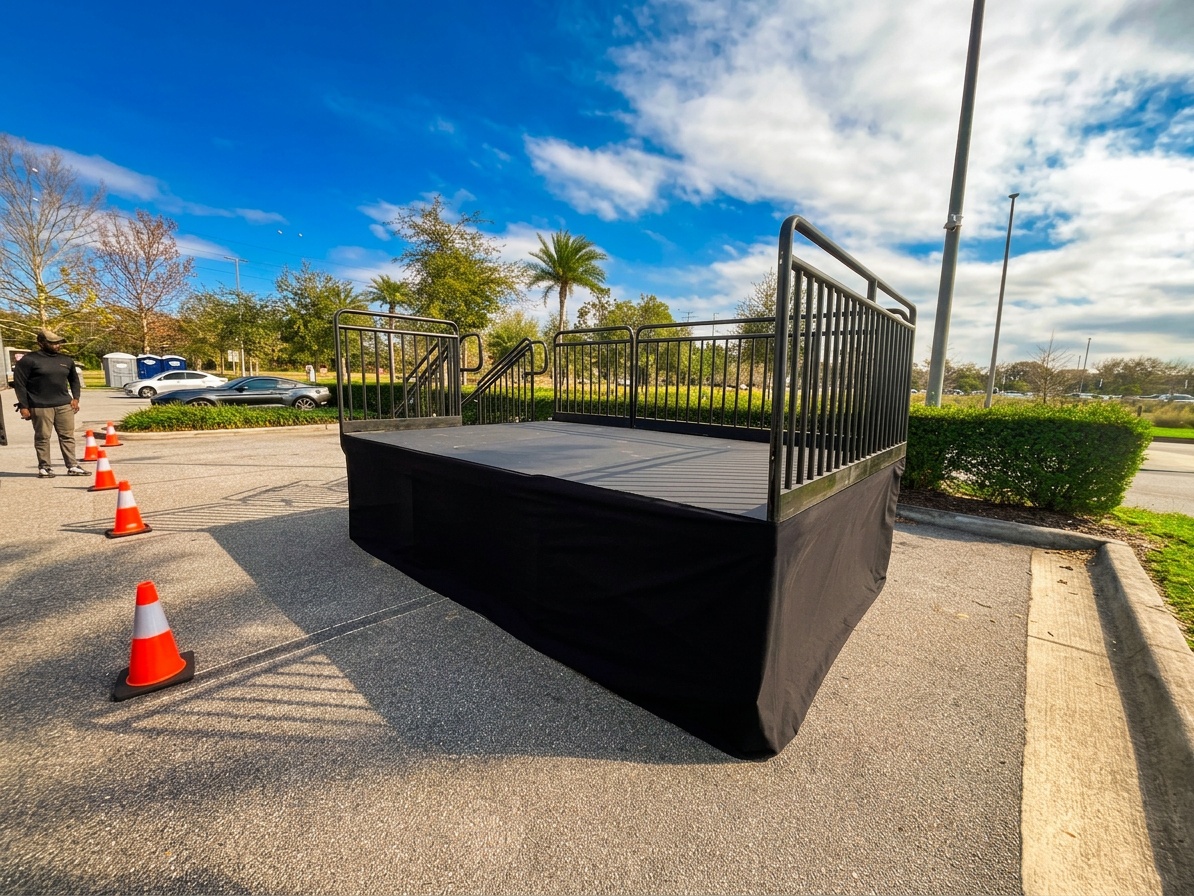
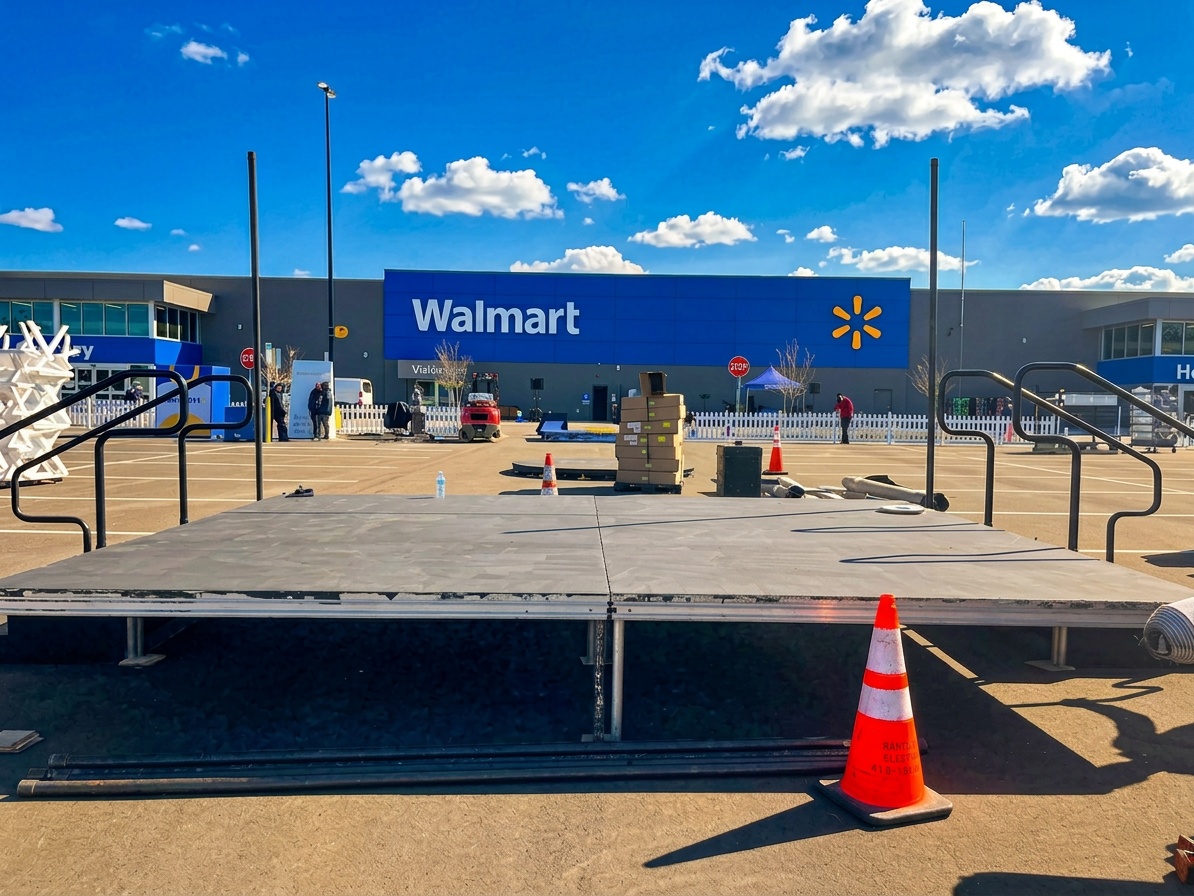
Stage lighting setups can put a serious demand on a venue’s electrical system. Between moving lights, LED panels, control systems, and audio support, the total load adds up quickly. It’s not always obvious how much power is required until everything is mapped out.
That’s where issues tend to come up.
Electrical safety is not just about avoiding a breaker trip during an event. It starts with understanding the venue’s available power, planning proper distribution, and knowing when additional support like generators or dedicated circuits is needed. In Central Florida, it also means accounting for weather, humidity, and outdoor conditions that can impact both safety and performance.
If you’re planning an event in Central Florida, this guide covers the key electrical considerations behind a safe and reliable stage lighting setup.
Understanding Electrical Load Capacity
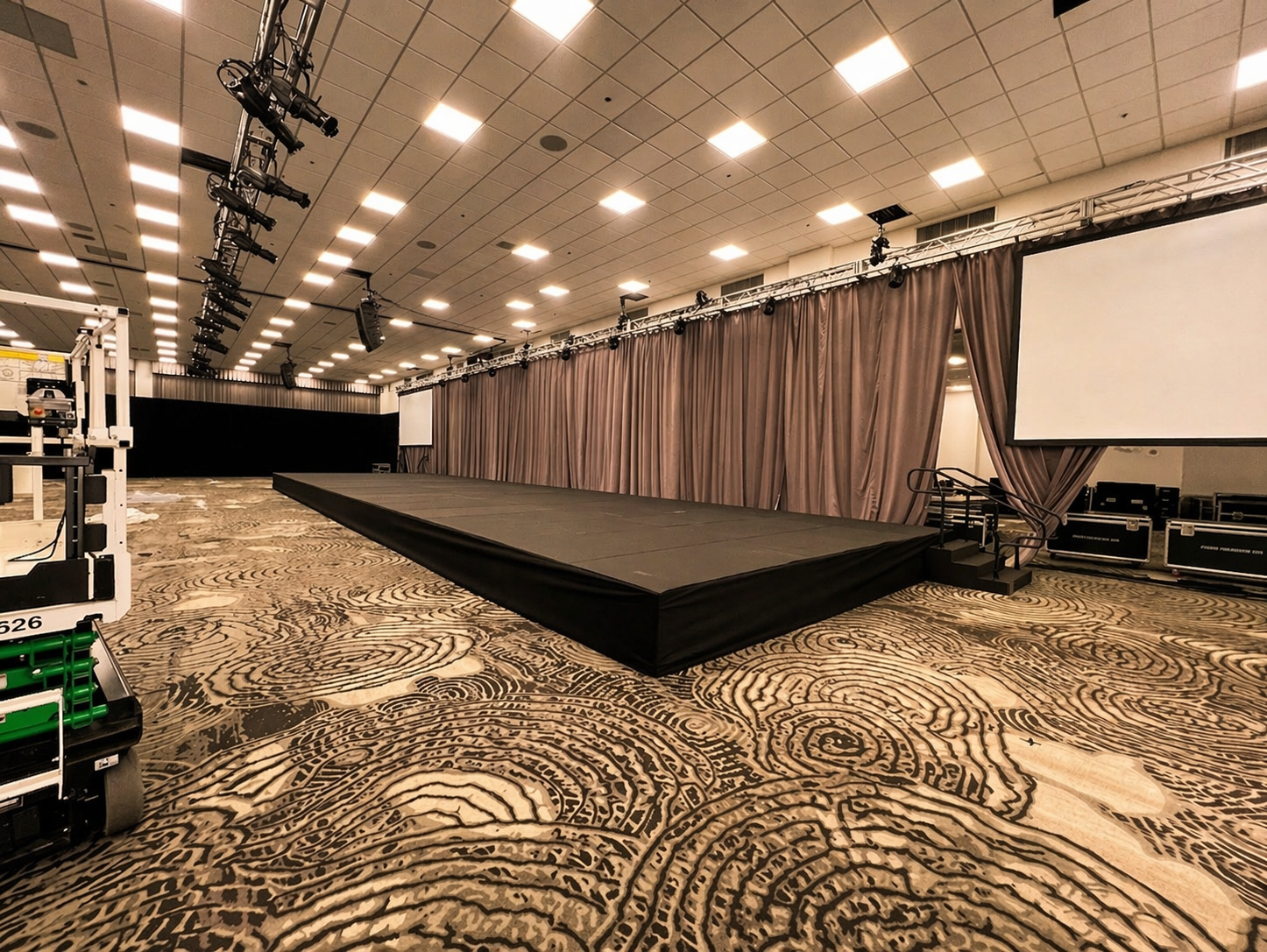
Most venues will tell you they have “standard electrical.” That doesn’t mean much until you know what your lighting rig actually pulls.
Stage lighting safety in Orlando starts with basic math. Every light has a wattage rating. A typical LED par can pulls about 150 watts. A moving head might pull 400-600 watts. You add those up, divide by voltage (usually 120V in the US), and you get amperage. That tells you how much power you’re actually drawing from the circuit.
Most standard wall outlets are on 15-amp or 20-amp circuits. Sounds like plenty until you start stacking lights. Ten LED pars on one circuit? You’re already pushing 12-13 amps. Add one moving head and you’re over. The breaker trips. Your event goes dark.
We always map out the electrical load before we even load the truck. For the Winter Park Events Center job, we knew we’d be pulling close to 80 amps total across all the fixtures. The venue had 208V three-phase power available (most commercial spaces do), which gave us more headroom. But if we’d tried to run that rig off standard 120V household circuits, we would have needed at least six separate 20-amp circuits, perfectly balanced.
Here’s what most people don’t realize: you never want to load a circuit beyond 80% of its rated capacity. A 20-amp circuit? Don’t pull more than 16 amps. That 20% buffer accounts for voltage fluctuations, startup surges when lights power on, and the fact that electrical systems get cranky when you max them out.
Generators and Power Distribution for Outdoor Events
Outdoor events almost always require generators. In some cases, there is no accessible power at all. In others, power exists but is too far from the stage location to be practical or safe to run.
In those situations, a properly sized generator becomes essential to support the full lighting and audio setup.
Generator sizing is not something you estimate on the fly. It starts with calculating your total wattage, then adding an additional 20 to 30 percent to account for startup surges. Many lighting fixtures and audio components draw more power when they first turn on, and your system needs to handle that without risk.
For most stage lighting setups in Orlando, typical ranges look like this:
- Small event (4 to 8 lights): 15 to 20kW generator
- Medium event (10 to 20 lights): 30 to 40kW generator
- Large event (20+ lights, moving heads, hazers): 60kW or more
Along with the generator, a power distribution box is key. This allows the load to be split into multiple circuits so different parts of the setup can run independently. If one circuit has an issue, it does not bring down the entire system.
For outdoor setups especially, protection is just as important as power. Ground fault circuit interrupter (GFCI) protection should always be used. With Florida’s frequent rain and humidity, moisture is a constant factor. GFCI protection shuts off power if a fault is detected, helping reduce the risk of electrical shock and keeping both crew and guests safe.
Weather Protection and Waterproofing Considerations
Florida weather is one of the biggest variables to plan for when working on outdoor events.
Conditions can shift quickly, especially during the summer months. Between May and October, afternoon storms, high humidity, and heat are all part of the equation. A proper setup needs to account for all of it, not just the lighting design.
Rain and moisture
Many professional stage lights are built to handle outdoor conditions, but connection points are where problems usually start. Anywhere a cable plugs into a fixture, distro box, or power source becomes a potential failure point if exposed to water.
Connections should always be properly sealed and protected using appropriate coverings designed for outdoor use. Cables should also be routed with drainage in mind and never placed in areas where water can collect. Even if equipment is rated for outdoor use, standing water around connections creates unnecessary risk.
Wind
Outdoor setups need to be secured for sudden gusts. Lighting mounted on truss systems must be properly weighted or anchored to prevent movement. Even moderate wind can shift unsecured structures, which creates both safety risks and potential equipment damage.
Using outdoor-rated truss and securing all bases with appropriate weights or anchoring methods helps keep everything stable throughout the event.

Heat and humidity
High temperatures and humidity levels can affect both equipment performance and longevity. While modern lighting runs cooler than older systems, it still generates heat and requires proper airflow.
Spacing fixtures appropriately and avoiding enclosed or poorly ventilated setups helps prevent overheating. Over multi-day events, humidity can also impact connections, so regular checks are important to ensure everything continues running safely.
Planning for these conditions ahead of time helps avoid issues during the event and keeps both the equipment and the people around it safe.
Code Compliance and Safety Regulations
Florida has electrical codes. The National Electrical Code (NEC) sets the baseline, and local jurisdictions add their own requirements on top. If you’re setting up stage lighting for a public event, you’re technically supposed to follow these codes.
Most events don’t get inspected. But if something goes wrong, and someone gets hurt, and the insurance adjuster or lawyer starts asking questions, “we didn’t think we needed to follow code” is not going to help you.
The big ones that apply to temporary stage lighting:
Grounding: Every piece of electrical equipment needs a proper ground path. Three-prong plugs aren’t optional. If you’re using an adapter to run a light off a two-prong outlet, you’re creating a shock hazard. We only use three-wire cable with ground, and we test continuity on the ground line before every event.
GFCI protection: Already mentioned this for outdoor setups, but it applies indoors too if you’re anywhere near water (pool covers, fountain areas, outdoor pavilions with misters). NEC requires GFCI protection within 6 feet of water sources.
Overcurrent protection: Your circuits need breakers or fuses that will trip before the cable overheats and starts a fire. This is usually built into the venue’s electrical system or your generator’s distro box, but it’s worth confirming. We’ve worked at older venues where the electrical panel was a mess of bypassed breakers and jury-rigged wiring. If that’s what you’re dealing with, bring your own distro with proper breakers.
Cable ratings: Not all extension cords are rated for stage lighting. We use 12-gauge SJOOW cable for most runs (that’s the rubber-jacketed outdoor-rated stuff). 16-gauge cable is fine for small LED fixtures, but if you’re running multiple lights or anything pulling more than 10 amps, you need heavier wire. Undersized cable gets hot. Hot cable melts insulation. Melted insulation causes shorts and fires.
Clearances: NEC says electrical equipment needs clearance from combustible materials. That means if you’re hanging lights above fabric draping or pipe and drape, you need at least 12 inches of space. We’ve seen setups where LED uplights were right against velour curtains. LEDs don’t get as hot as halogens, but they’re still warm enough to be a fire risk if something goes wrong.
If you’re doing a large public event (think hundreds of people), some cities require you to get an electrical permit and have an inspector sign off on the setup. Orange County and Seminole County both have stricter requirements for outdoor events. Winter Park tends to be more relaxed, but we still recommend following NEC guidelines regardless of what the local jurisdiction requires.
Working with Professional Lighting Technicians
There’s a reason we have a crew. It’s not just because hauling fixtures and cable is heavy work. It’s because proper stage lighting setup requires knowledge that most event planners and AV renters don’t have.
When you rent stage lighting from Stages Plus, you’re getting our crew’s experience along with the fixtures. We’ve been doing this long enough to know which venues have sketchy electrical, which outdoor locations flood when it rains, and how to rig truss that won’t sag under load.
But not everyone uses a full-service staging company. Some events hire separate vendors for staging, lighting, audio, and video. That’s fine, but it means you need a lighting tech who actually knows what they’re doing.
What to ask when hiring a lighting technician:
First, ask about their electrical load calculations. A good tech should be able to tell you, within a few amps, what your rig will pull and whether the venue’s power can handle it. If they shrug and say “it’ll be fine,” that’s a red flag.
Second, ask about their backup plan. What happens if a fixture fails mid-event? Do they bring spares? What if a circuit trips? A professional tech carries extra cable, spare fixtures, and tools to troubleshoot on site.
Third, ask about their safety certifications. ETCP (Entertainment Technician Certification Program) certification isn’t required, but it shows the tech has passed exams on rigging, electrical safety, and industry best practices. At minimum, they should have OSHA safety training if they’re working on elevated platforms or truss.
Red flags to watch for: If they’re planning to daisy-chain multiple power strips together to reach a distant outlet, walk away. If they say they can “probably” fit your lighting rig on the venue’s existing electrical without doing load calculations first, walk away. If they don’t ask about weather protection for an outdoor event, walk away.
We always do a site walkthrough before the event day. We look at the electrical panel, check outlet locations, confirm generator placement if needed, and talk through the event flow with the client and the venue staff. That 30-minute walkthrough has saved us from major problems more times than I can count.
Common Lighting Setup Mistakes to Avoid
After setting up hundreds of stages across Central Florida, we’ve learned to spot these mistakes from a mile away:
Mistake #1: Underestimating power needs This is the big one. Someone sees that a venue has “electrical available” and assumes it’s enough. Then they show up with 20 lights, plug everything in, and trip breakers all night. Do the math before you commit. Better yet, hire someone who knows how to do the math.
Mistake #2: Using household extension cords The orange extension cord from Home Depot is not rated for continuous load. It’s not rated for outdoor use in wet conditions. It’s definitely not rated to power multiple stage lights. Spend the money on proper cable. Your insurance company will thank you if something goes wrong.
Mistake #3: No cable management Cable lying across walkways is a trip hazard and a liability lawsuit waiting to happen. We tape down every cable run that crosses a path, and we use cable ramps for high-traffic areas. On the Disney Springs concert setup, we ran cable around the perimeter of the plaza and covered every crossing with rubber ramps. Not one person tripped.
Mistake #4: Ignoring weather forecasts Florida weather is unpredictable, but the forecast will at least tell you if thunderstorms are likely. We’ve had clients insist on setting up lighting for an outdoor evening event when the forecast showed 80% chance of severe storms. We set it up, but we also brought rain covers, secured everything for wind, and had a plan to kill power and evacuate if lightning got close. The storm hit. The lights stayed dry. The event went on.
Mistake #5: No safety walkthrough Before an event starts, someone should walk the entire setup and check for hazards. Loose cables. Unsecured truss. Exposed connections. Lights aimed at the audience’s eyes (seriously, we’ve seen it). We do a final safety check before doors open on every event. It takes ten minutes. It’s worth it.
Mistake #6: Skipping the test run Always, always power on the lights and test them before the event starts. We had a situation last year where two fixtures had been damaged in transport. If we hadn’t tested them during setup, we wouldn’t have known until the show started. We swapped them out with spares from the truck. Crisis avoided.
Emergency Protocols and Backup Plans
You need to know what to do when something goes wrong. Not if. When.
Circuit overload/breaker trip: If a breaker trips mid-event, don’t just reset it and hope for the best. Something caused that trip. Either you’re pulling too much current, or there’s a short somewhere. Disconnect half the lights on that circuit and reset the breaker. If it holds, you know you were overloaded. If it trips again immediately, you’ve got a short and you need to isolate the problem fixture or cable.
Fixture failure: Bring spares. If a moving head dies mid-show, we can swap it out in under five minutes if it’s on the deck. If it’s hung on truss, that’s trickier, but at least we have the option.
Power loss: If you’re on venue power and the whole building goes dark, there’s not much you can do except wait for the utility company. If you’re on a generator and it quits, check fuel first (obvious, but you’d be surprised). Check the breaker panel on the generator. Check your kill switch. If the generator won’t restart, you’re done unless you have a backup generator, which almost nobody does.
Weather emergencies: If you’re outdoors and you see lightning, NOAA recommends clearing the area when lightning is within 6 miles. That’s about a 30-second delay between flash and thunder. We have a lightning detector on our crew lead’s phone. If it goes off, we kill power to the lights and tell everyone to get inside. The light show can wait. People’s safety can’t.
Protect Your Investment and Your Audience
Stage lighting safety isn’t glamorous. It’s the behind-the-scenes work that most people never think about until something goes wrong. But that’s the whole point. If you do it right, nobody notices. The lights work. The event looks amazing. Everyone goes home safe.
Whether you’re setting up a concert stage for a 500-person outdoor festival or a speaking stage for a corporate event at a hotel ballroom, the electrical safety fundamentals are the same. Calculate your load. Use proper cable and distribution. Protect against weather. Follow code. Work with professionals who know what they’re doing. Have a backup plan.
We’ve done pool cover stages with underwater lighting, runway setups with dramatic uplighting, and dance competition stages with enough moving heads to light a small arena. Every one of those setups required careful electrical planning and a crew that knows how to work safely.
If you’re planning an event in Orlando, Winter Park, or anywhere in Central Florida, and you need stage lighting that’s both impressive and safe, that’s what we do. Our team handles the electrical load calculations, the generator sizing, the weatherproofing, and all the details that keep your event running smoothly.
Call us at 407-442-0254 or get a quote online and let’s talk through your event. We’ll make sure your lighting looks great and keeps everyone safe.