We get this question every day: “How big should my stage be?” It’s the first thing clients ask when they call Stages Plus, and honestly, it’s one of the most important decisions you’ll make for your event. Choose too small and your band looks cramped. Go too big and you’ve wasted money on empty space (and made your performers look lost on stage).
The right stage size for your event depends on several factors that work together: who’s performing, what equipment they’re bringing, where your event is happening, and how many people are watching.
Let us walk you through exactly how we help Central Florida event planners choose the perfect stage dimensions every single week.
What Determines Your Stage Size
When clients call our Winter Park office, we don’t just quote a number. We ask questions. Here’s what actually matters when sizing a stage.
Number of performers or speakers. A solo DJ needs about 100 square feet of stage space. A five-piece band needs closer to 400. A 50-person choir? You’re looking at 1,000+ square feet. The math is simple, but clients often forget to count everyone who’ll be on stage at once. That includes the emcee standing next to the award recipient, the backup singers behind the soloist, or the entire wedding party during toasts.
Equipment footprint. Drum kits eat up 8 feet of depth by themselves. Add monitor speakers, mic stands, and keyboard rigs, and suddenly that 8×12 stage looks way too small. We built a 16×24 stage last month for what the client thought was “just a small band.” They were right about the band size (four people) but forgot about the grand piano.
Venue constraints. That gorgeous ballroom at your Central Florida resort might have 12-foot ceilings. Put a 48-inch tall stage in there and you’ve got performers hitting their heads on chandeliers. Outdoor venues have different issues. We did a lakefront corporate event in Winter Park where the only flat ground for staging was 20×30 feet maximum. The client wanted a 24×40 stage. Physics said no.
Audience sightlines. Stage height and width work together. A wide, low stage works great for 200 people in a ballroom. That same stage at an outdoor festival with 2,000 attendees? The back half can’t see anything. Sometimes you need a taller stage more than a bigger one.
Your budget. Stages are priced by the deck (our standard 4×8 decks lock together to build any size you need). A 16×20 stage uses 10 decks. A 24×40 uses 30 decks. The cost difference is real, but so is the functionality difference. We’d rather right-size your stage rental pricing than sell you something too big.
Stage Size Guidelines by Event Type
After setting up thousands of Central Florida events, we’ve learned what works. These are starting points, not rules. Your specific event might need adjustments.
Solo speaker or DJ: An 8×12 or 8×16 speaking stage handles one person with a podium and basic AV. Add 4 feet of depth if they’re using confidence monitors or moving around while presenting. DJs who bring full controller setups often need 8×16 minimum.
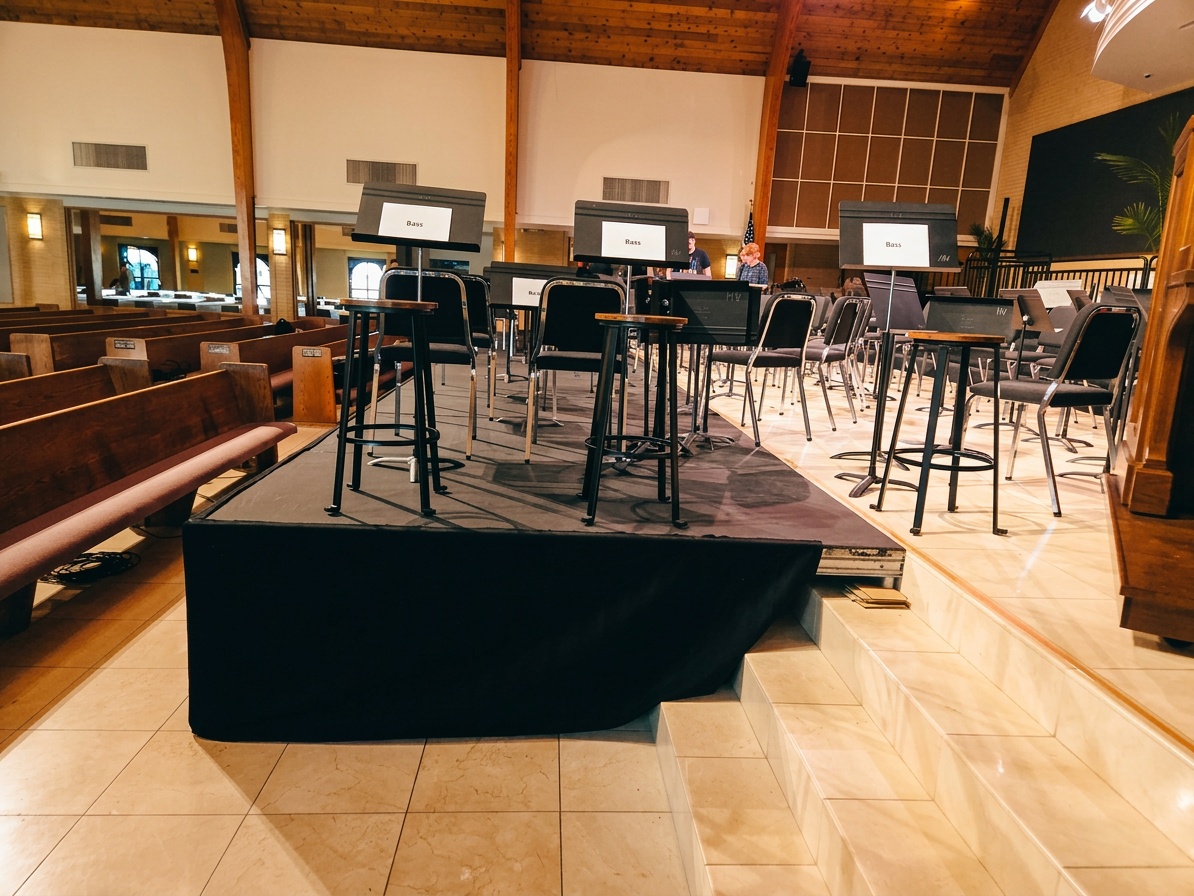
Small band (3-5 musicians): Start with 16×20 or 16×24. That’s our most common concert stage rental size for wedding bands and corporate entertainment. If the drummer has a large kit or they’re bringing a keyboard rig, go 16×24 or 20×24.
Large band or orchestra: Once you hit 8+ musicians, you’re looking at 20×32 minimum. Full orchestras and 20+ person choirs need 24×40 or larger. We built a 36×56 stage for a dance competition near Disney last year, and they used every inch.
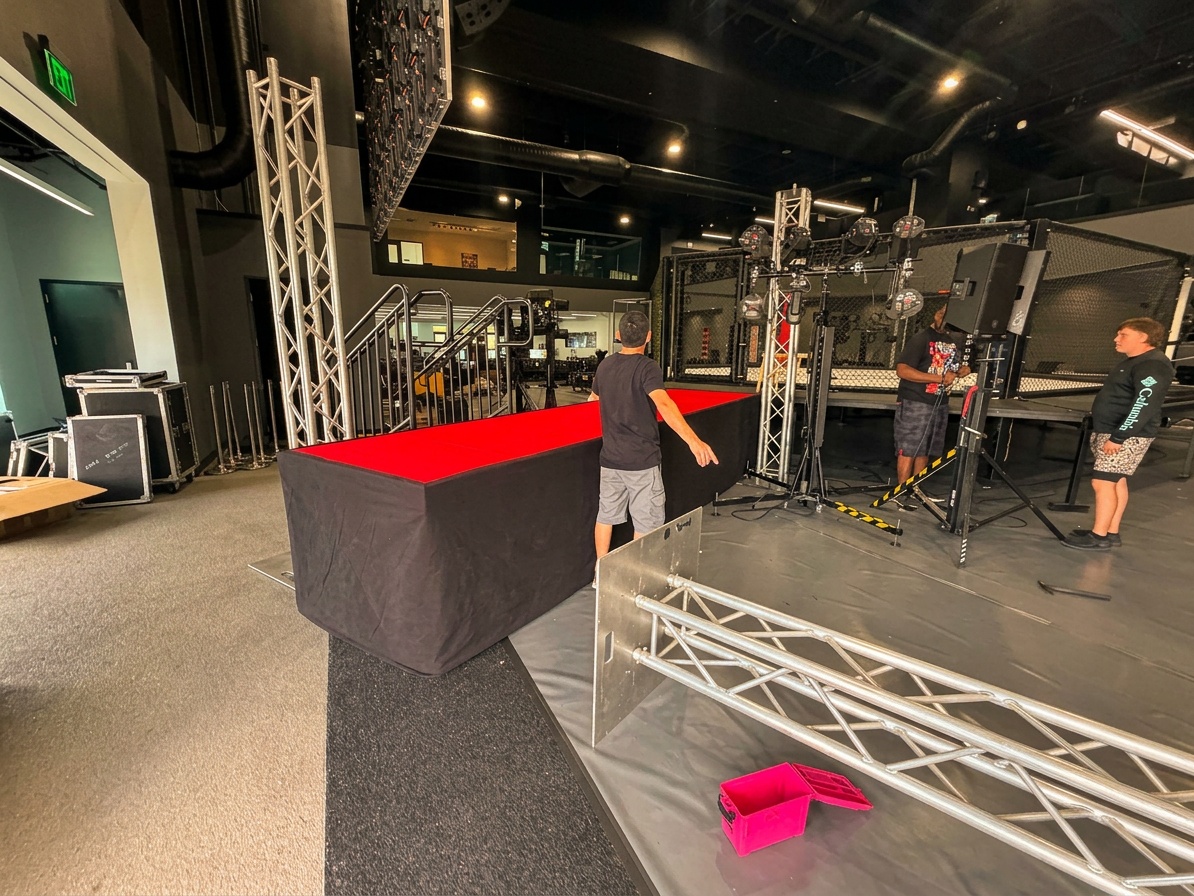
Fashion runway: Width matters more than depth here. Standard runway stages are 4 feet wide. Length depends on your venue, but 40-60 feet gives models enough space to walk naturally. Our runway rental stages can extend to whatever length your show needs.
Dance performances: Dancers need room to move. For a solo or duo, 12×16 works. Ensemble pieces need 20×24 or larger. Competitive dance teams often request 36×56 for full routines. The depth matters more than width because choreography moves front to back.
Panel discussions or awards ceremonies: Figure 8 feet of width per person seated on stage, plus 4-6 feet of depth for the chairs and a walkway behind them. A four-person panel fits comfortably on a 12×16 or 16×16 stage.
These are guidelines we share during the stage size options and pricing conversation. Your event might need something completely different, and that’s fine. Our modular decks build any configuration.
Depth vs Width: What Actually Matters
Here’s something most clients get wrong: they think about stage width first. We think about depth.
Stage depth runs front to back (how far the stage extends away from the audience). Width runs side to side (how wide the stage appears from the audience’s view). Both matter, but depth gets underestimated constantly.
Picture a five-piece band. They need about 16 feet of width to spread out comfortably. But here’s what else is happening on that stage: drum kit in the back (8 feet deep), monitor speakers in front of the drummer (2 feet), the other musicians standing 3-4 feet in front of the monitors, and ideally 2-3 feet of clearance at the front edge so performers aren’t hanging off the stage. That’s 15-16 feet of depth minimum.
We built a 24×16 stage once (24 feet wide, 16 feet deep) for a client who insisted width mattered more. The band fit, technically. But the keyboard player was literally standing with his back against the drum kit, and the singer had about 6 inches of stage in front of the monitors. It looked cramped and felt cramped.
Flip those dimensions to 16×24 (16 feet wide, 24 feet deep) and suddenly everyone has breathing room. The drummer sits 8 feet back, monitors at 10 feet, musicians at 13-14 feet, and the front edge at 16 feet. Much better.
For performance staging rental, we typically recommend prioritizing depth up to 20 feet, then adding width as needed. The exception is runway shows where width stays constant at 4 feet and you just extend the length.
Orlando Venue Considerations You Can’t Ignore
Central Florida venues each have their quirks. We’ve worked them all, from the convention centers in Kissimmee to hotel ballrooms in Winter Park to outdoor spaces at lakefront resorts.
Load-in access. That gorgeous historic venue in downtown Orlando with the 6-foot-wide doorways? Your 8-foot decks aren’t fitting through without standing them vertical. We can do it, but it affects setup time and cost. Convention centers have loading docks and freight elevators. Country clubs have narrow hallways. Always check load-in before finalizing stage size.
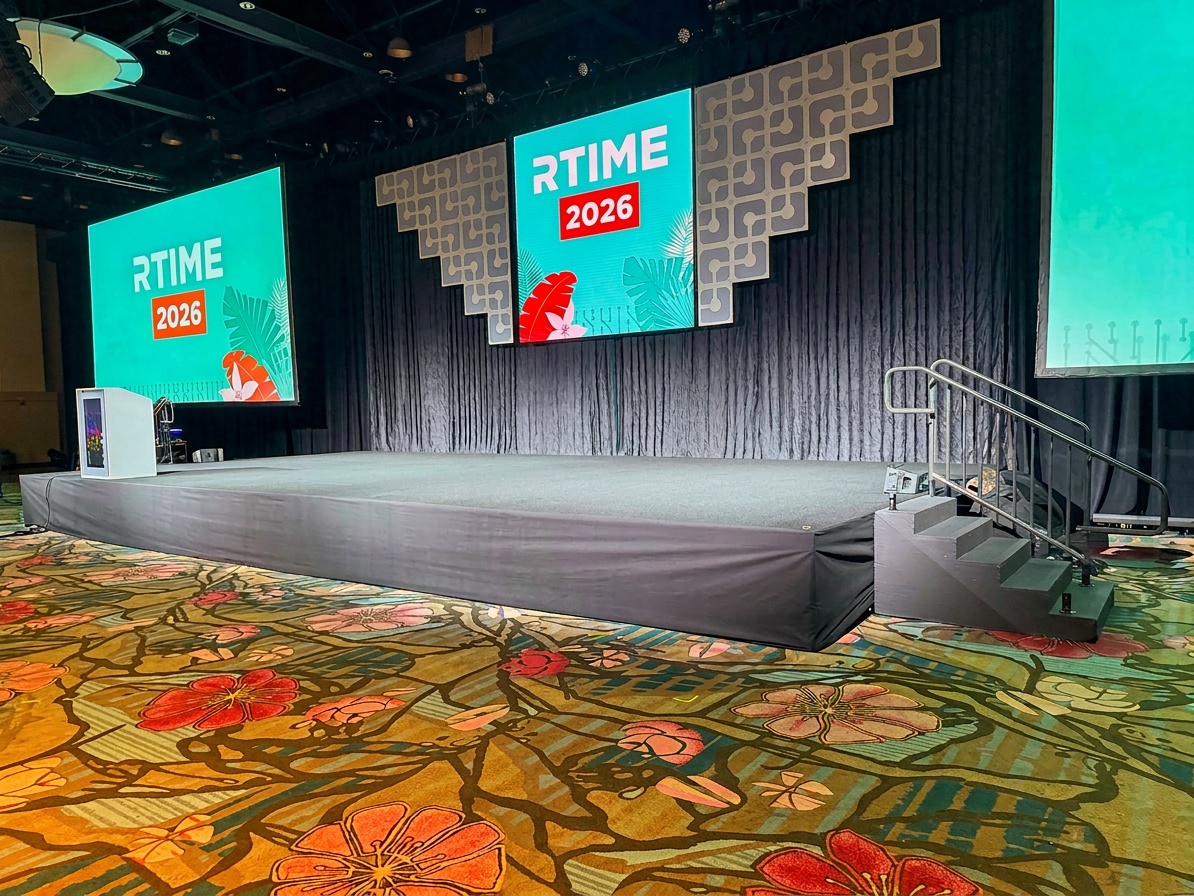
Ceiling heights. Most Central Florida hotel ballrooms have 12-15 foot ceilings. That’s plenty for a 32-inch or 40-inch tall stage with normal-height performers. But if you’re adding truss for lighting above the stage, or if your performers are basketball-player tall, you need to account for total height. Outdoor venues don’t have ceiling constraints, but they do have tent heights if you’re under a canopy.
Floor conditions. Outdoor grass stages need a different approach than indoor concrete. We can build on either surface, but grass might need plywood subflooring first, which adds to the footprint slightly. Sloped lawns limit your maximum stage size because we can only level so much.
Existing features. Pool cover stages are one of our specialties (we love turning pools into usable event space). But a 20×40 pool dictates your maximum stage size pretty specifically. Same with stages built around existing bandstands, loading dock stages, or platforms over retention ponds.
Local weather planning. Summer afternoon thunderstorms are guaranteed in Orlando. Outdoor stages need quick teardown plans or weather protection. That might mean keeping your stage size conservative so we can break it down in 30 minutes if needed, or investing in a tent large enough to cover your staging area.
We know the venues. When you tell us you’re at the Rosen Centre or the Omni Resort or that lakefront park in Winter Springs, we already know what will and won’t work for staging.
How Our Modular System Builds Any Size
Here’s what makes Stages Plus different from rental companies with fixed-size stage kits: our decks lock together to build literally any configuration you need.
Each deck is 4 feet by 8 feet. They connect with a locking system that creates a solid, safe surface. Need a 12×20 stage? That’s 6 decks (3 wide, 2 deep). Need 24×40? That’s 30 decks (6 wide, 5 deep). Need something weird like 18×26? We can build it.
This matters because your event isn’t standard. Maybe your venue has an alcove that’s 22 feet wide. Maybe you need exactly 28 feet of depth to fit between the back wall and the dance floor. Maybe you want an L-shaped stage that wraps around a pillar. We’ve built all of these.
Stage height is customizable too. We stock 16-inch, 24-inch, 32-inch, and 40-inch leg sets. Mix them if you want a ramped stage or stepped levels. Add guard rails when the stage is over 30 inches tall (required by code). Add stairs where people access the stage. Add skirting around the base to hide the legs and create a finished look.
The modular deck system means you’re not forced into “small, medium, or large” packages. You get exactly the stage size and shape your event needs, built specifically for your venue.
Common Sizing Mistakes (And How to Avoid Them)
We’ve seen every stage sizing mistake possible. Here are the ones that happen most often.
Mistake 1: Measuring the performance area but forgetting wing space. Performers need somewhere to enter and exit. Equipment needs storage space during the event. If your 16×20 stage is wall-to-wall in your venue, there’s no wings. Add 4-6 feet of clearance on at least one side, or make the stage itself slightly larger to include wing space.
Mistake 2: Assuming “bigger is always better.” A solo speaker on a 24×40 stage looks ridiculous and feels disconnected from the audience. Right-sizing saves money and actually improves the event. We’d rather build you a 12×16 that fits your needs perfectly than sell you a 20×30 because you’re worried about having enough room.
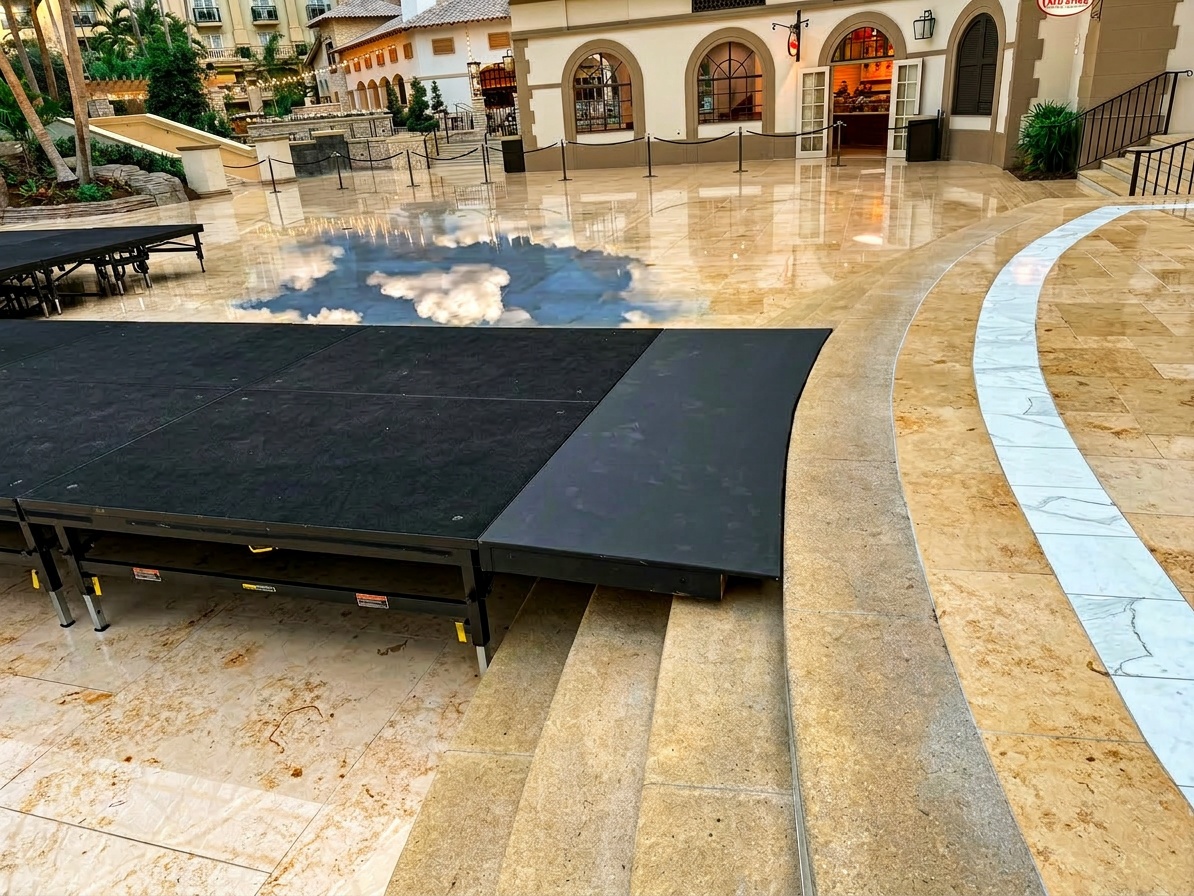
Mistake 3: Ignoring ADA access requirements. If your event is open to the public or has attendees who use mobility devices, you need ADA-compliant stage access. That typically means a ramp (taking up 20+ feet of space depending on stage height) or designating an accessible area of the stage reachable without stairs. Plan for this from the beginning, not the day before the event.
Mistake 4: Choosing stage size before confirming the venue. We get calls asking for quotes on a 32×48 stage, then find out the venue’s ballroom is only 40×60 feet total. The stage would take up half the room and leave no space for audience seating. Always confirm your venue dimensions first, then size the stage to fit proportionally.
Mistake 5: Forgetting about sightlines from the back. A 24-inch tall stage works great for 100 people. For 500 people in a flat ballroom, the folks in back can’t see anything. Either raise the stage height, add audience risers in the back, or plan your room layout so everyone has decent sightlines.
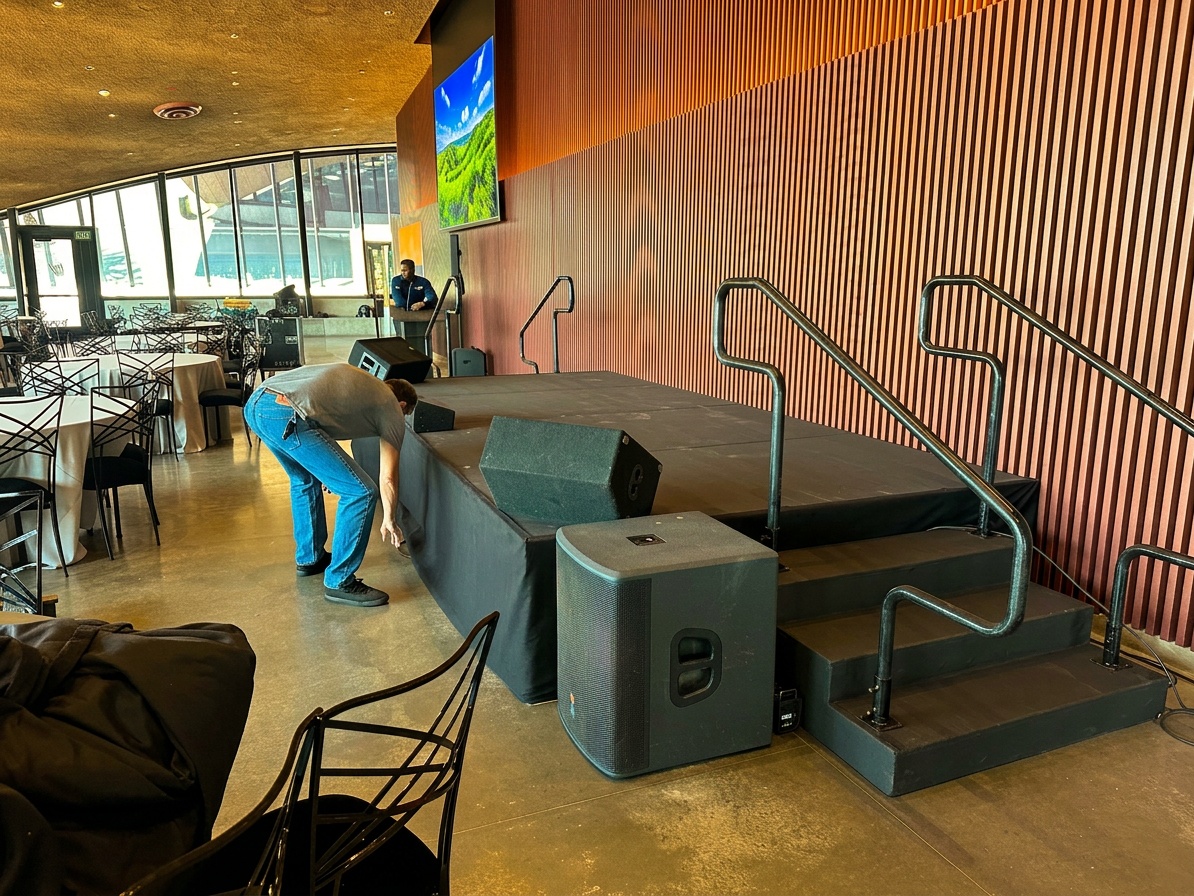
Mistake 6: Not planning for load-in logistics. That 40×60 stage you want? It requires trucking in 75 decks, plus legs, plus rails, plus stairs. Make sure your venue has loading dock access and enough space near the stage location to stage all that equipment during assembly. Hotel ballrooms with narrow service corridors can be tricky.
Get Expert Sizing Advice From Our Team
After 20+ years of building stages across Central Florida, we’ve learned that every event is unique. The “standard” sizes are starting points. The real answer to “how big should my stage be” depends on your specific performers, venue, audience, and goals.
That’s why we don’t just quote dimensions and prices. We ask about your event. We look at your venue. We think through the logistics with you. Sometimes we recommend a smaller stage than you expected (and save you money). Sometimes we suggest going bigger in one dimension to solve a problem you hadn’t considered yet.
Not sure what size you need? Contact Stages Plus for a free consultation. Our team has set up stages for thousands of Central Florida events, from intimate hotel conferences to massive outdoor festivals. Call 407-442-0254 or get a free quote online. We’ll help you choose the perfect size for your event and venue, with pricing that fits your budget.
Whether you need an 8×12 podium stage or a 40×80 festival stage, we’ve got the equipment and experience to make it happen. Let’s figure out exactly what your event needs.