You spent months planning your event, hired a talented video crew, and built out a full live streaming setup. Then the day arrives and your camera operator is shooting over the tops of heads from the floor, with no clear sightline to the stage. It happens more often than it should. The fix is simple: the right camera riser rental, configured before the crew shows up.
At Stages Plus, camera riser rental is one of the most technically specific requests we handle, because the platform has to work for the staging company, the venue, and the production crew all at the same time.
Getting that coordination right is what separates a clean broadcast from a frustrating workaround. Graduation ceremonies, corporate galas, hybrid conferences with thousands of remote viewers – we’ve seen all of them at Central Florida venues, and the setup principles are the same across the board. If you’re still figuring out your full production footprint, our how to get a quote page walks through exactly what information we need to get started. Here’s what our team has learned from building elevated camera platforms across Orlando all year long.
Why Camera Riser Height and Platform Size Matter for Video Quality
A camera riser is not just a tall box for your operator to stand on. The height determines whether your video feed captures the speaker, the performer, or the back of someone’s head. The platform size determines whether your operator can move safely, swap lenses mid-show, or run a jib arm without clipping a guard rail.
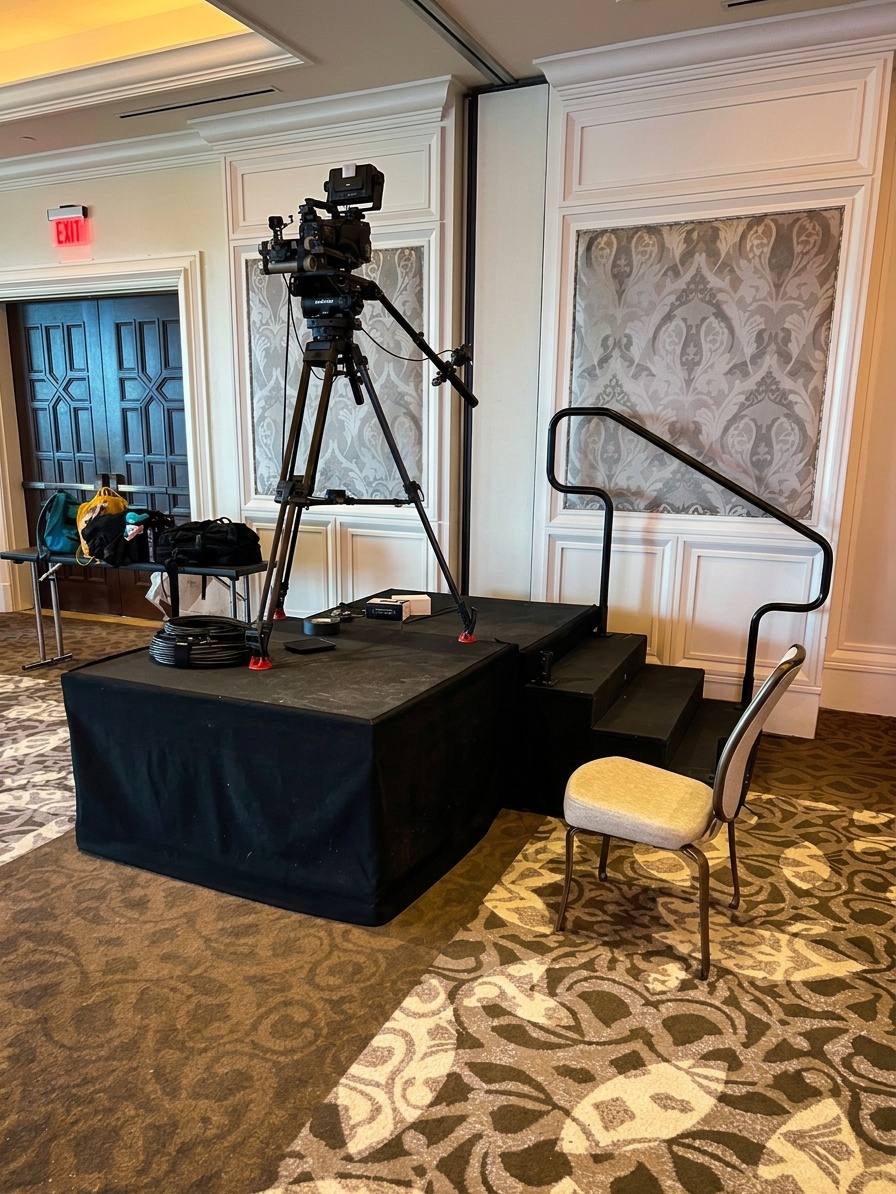
For a standard conference keynote with 300 to 500 guests seated in rows, most camera operators need to clear an audience height of roughly 48 to 54 inches when seated. That means the camera lens needs to sit somewhere between 72 and 84 inches above the floor to get a clean frame over the crowd. A riser at 24 to 30 inches of deck height, combined with a standard fluid head tripod and camera, usually gets you there.
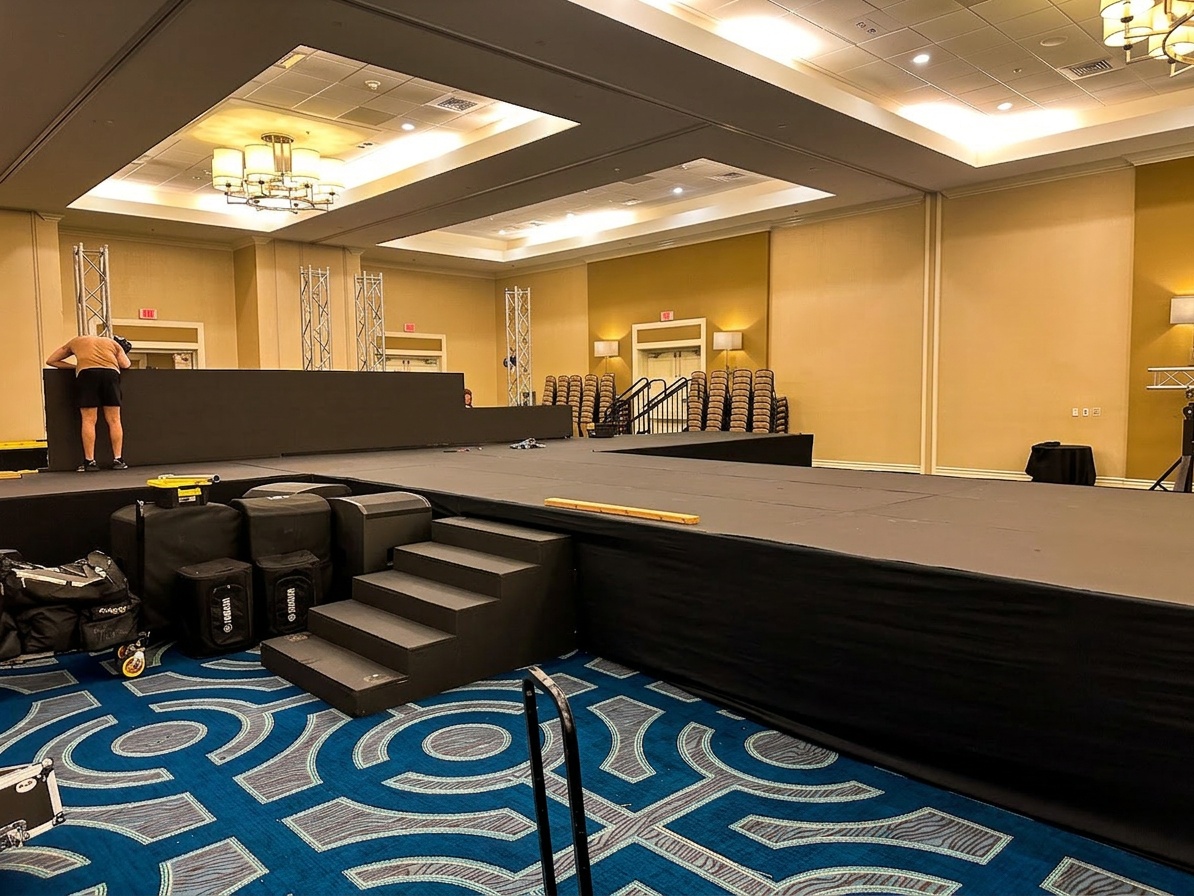
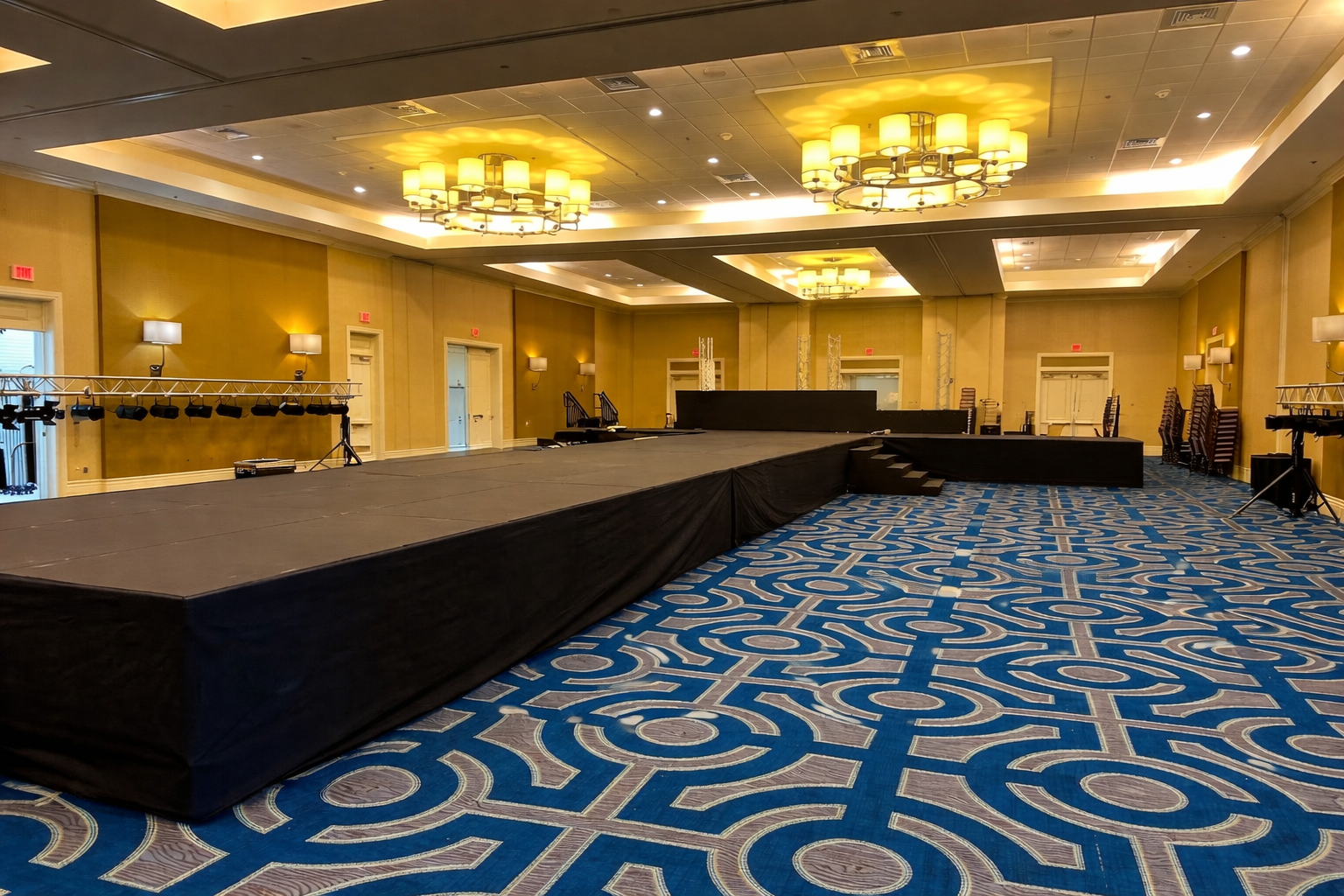
For concerts and large galas, the math shifts. A packed standing crowd or a wide ballroom arrangement means your operator may need to go higher, especially if the venue has round tables that spread guests further back from the stage. We set up elevated staging for an event at Gaylord Palms in February 2026, where multi-zone staging across a large ballroom floor made sightline planning a real priority. Getting the riser positioned at the right depth from the stage, and at the right height, made the difference between a usable broadcast and a lot of post-production cropping.
Production planners often come to us with a height preference but no platform dimensions in mind. Our advice: start with the equipment, then size the platform around it. Our stage size calculator can also help you think through footprint needs before you call.
Platform Configuration: Single Operator, Multi-Camera, and Jib Arm Setups
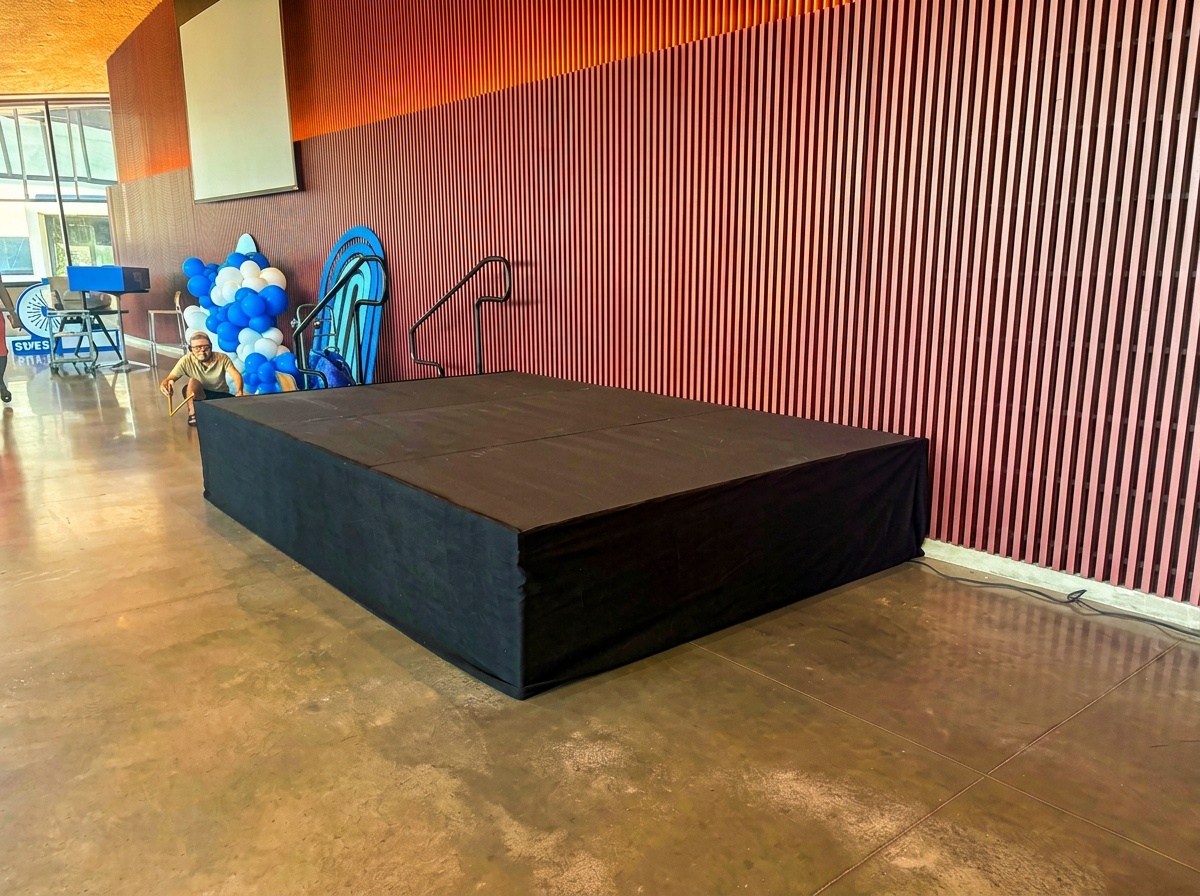
The most common camera riser request we get is for a single operator with a tripod-mounted broadcast camera. For that setup, a 4×4 or 4×6 platform gives the operator enough room to move slightly, set down a gear bag, and rotate the tripod head without bumping the guard rails.
Multi-camera setups are a different conversation. If you have two operators side by side, each running a broadcast camera on a 75mm bowl tripod, you need at minimum an 8-foot wide platform. Factoring in the leg spread of both tripods and the working space behind each camera, an 8×6 or 8×8 deck is more comfortable and safer.
Jib arms change everything. A 6-foot or 8-foot jib requires significant rear clearance for the counterweight swing behind the pivot point, roughly one-third to one-half the arm’s total length on most configurations. The exact ratio depends on the arm and counterweight setup, so confirm the specifics with your operator before booking. A jib on a riser that is too small puts the counterweight over the edge of the platform, which is a load distribution problem and a safety hazard. We’ve seen it nearly happen on load-in day. It is not a fun conversation.
Guard Rail Requirements Above 30 Inches Protect Your Crew and Your Client
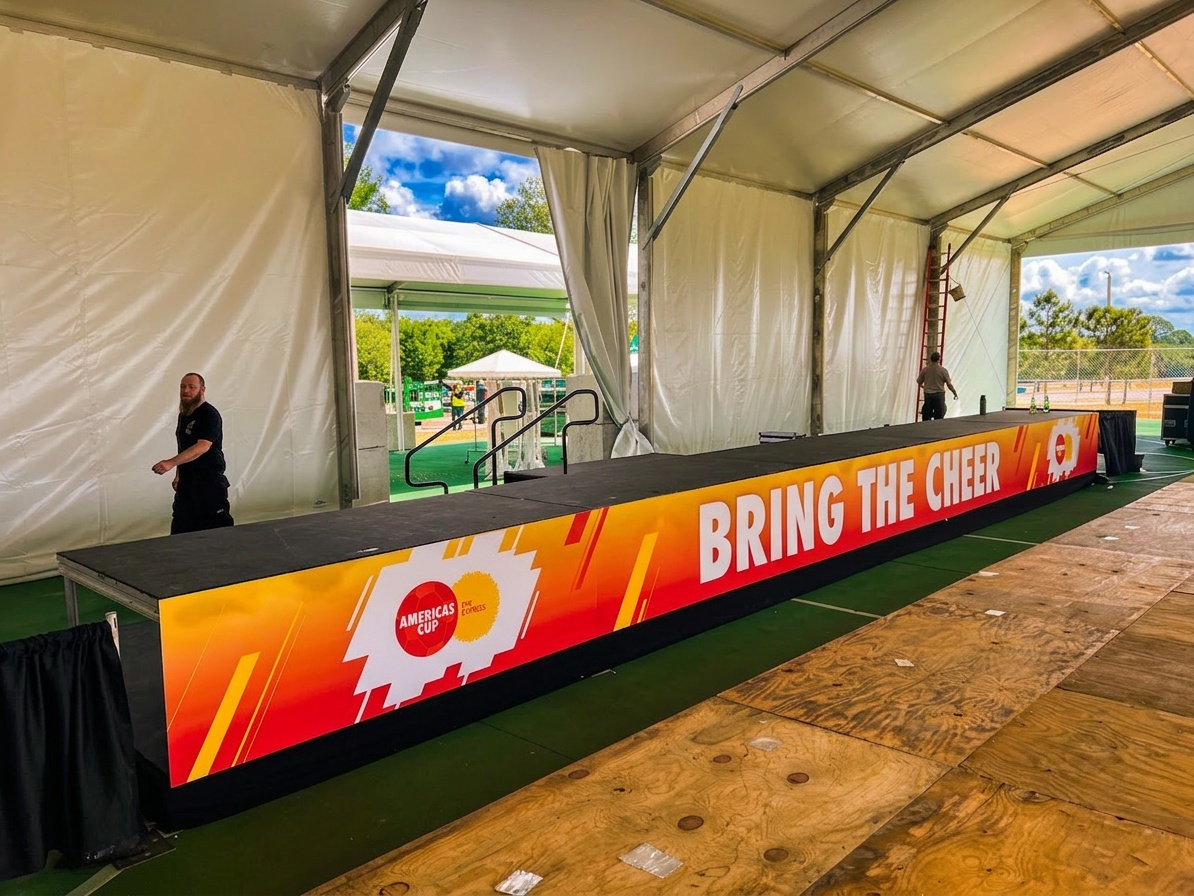
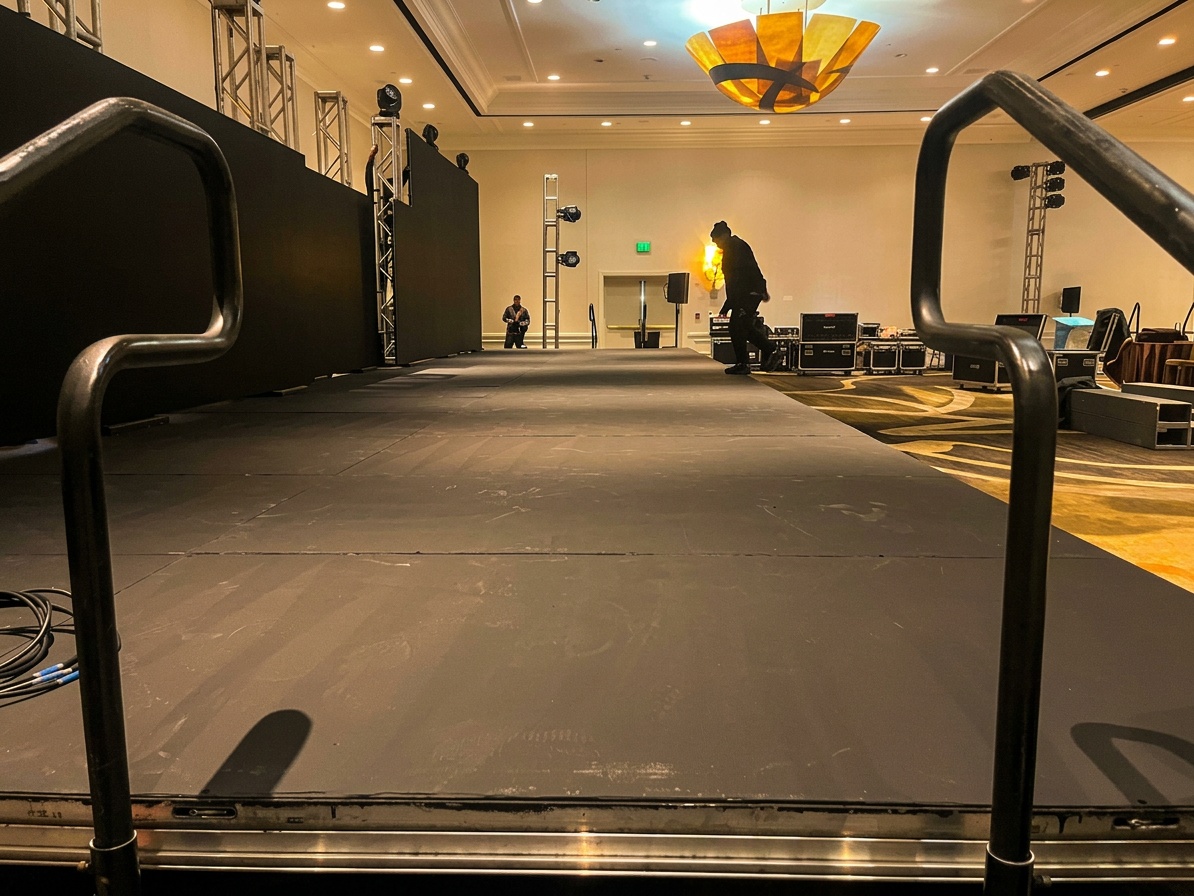
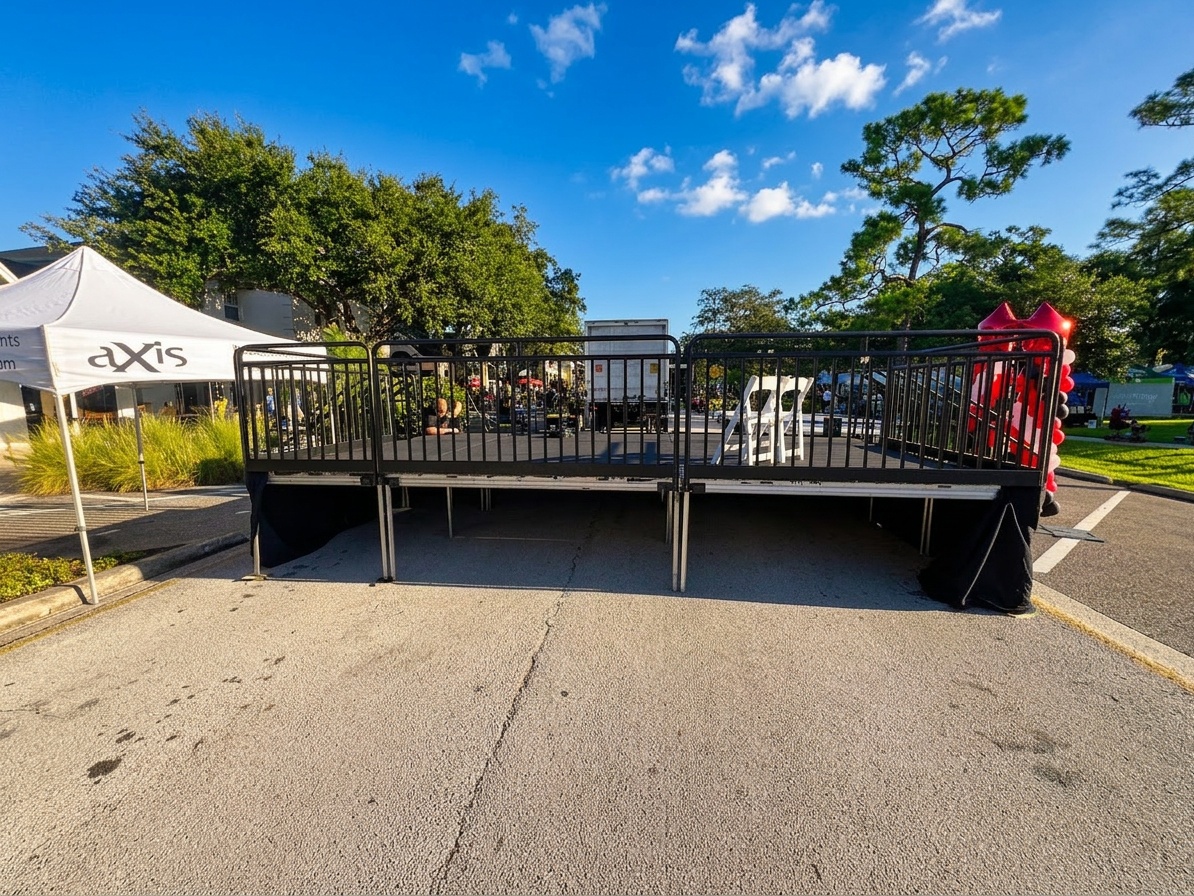
Any platform we build above 30 inches of deck height gets guard rails. That’s not optional. It’s a safety standard we follow on every build, and it protects both your crew and your client from liability. For camera risers specifically, we configure the rail openings so cable runs can exit cleanly without the crew having to step over a rail mid-show.
If your operator needs to swap cameras frequently or is running a gimbal that requires moving around the platform, let us know before we build. We can adjust the rail configuration to give open access on one side while keeping the remaining perimeter fully protected.
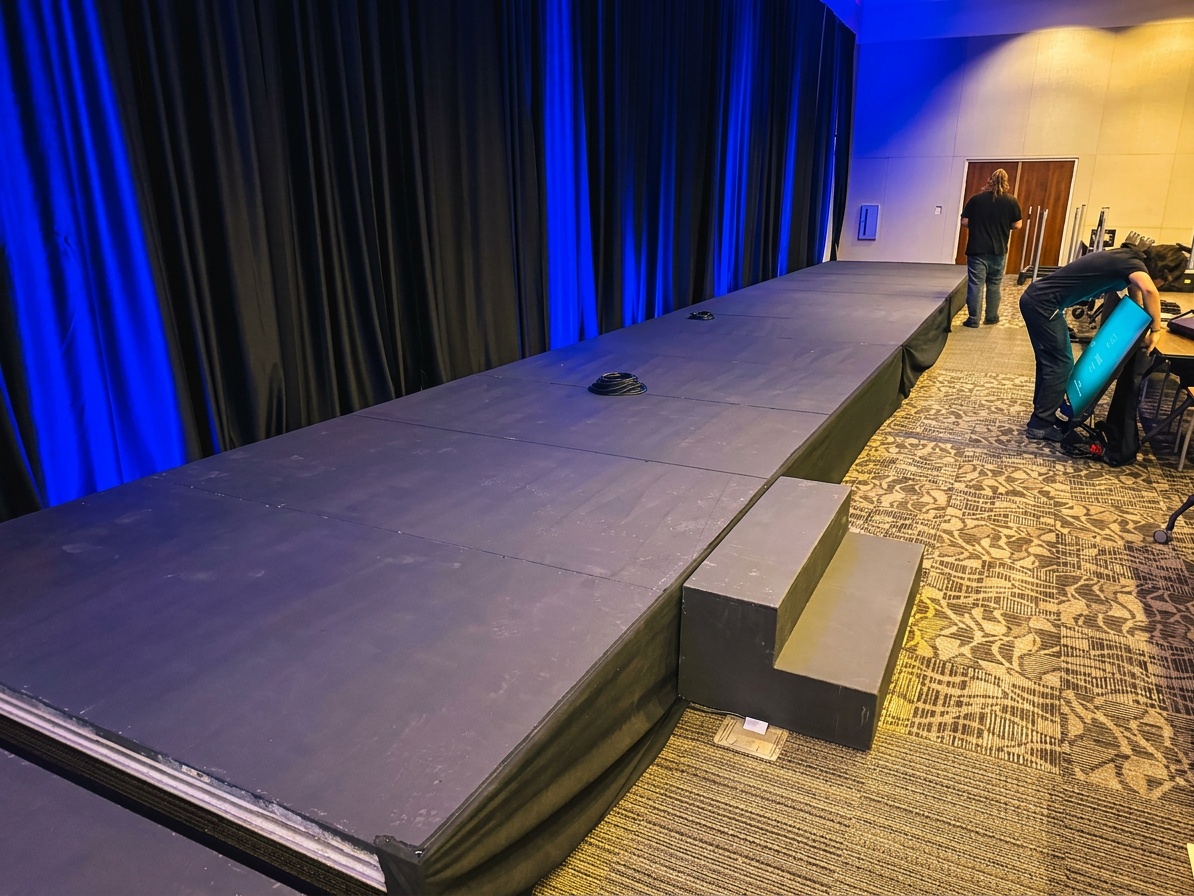
For live event video crew platform setups where the riser sits close to the main stage, we also factor in whether the production crew needs stair access from the front, back, or both sides of the platform. That affects how we orient the entire build.
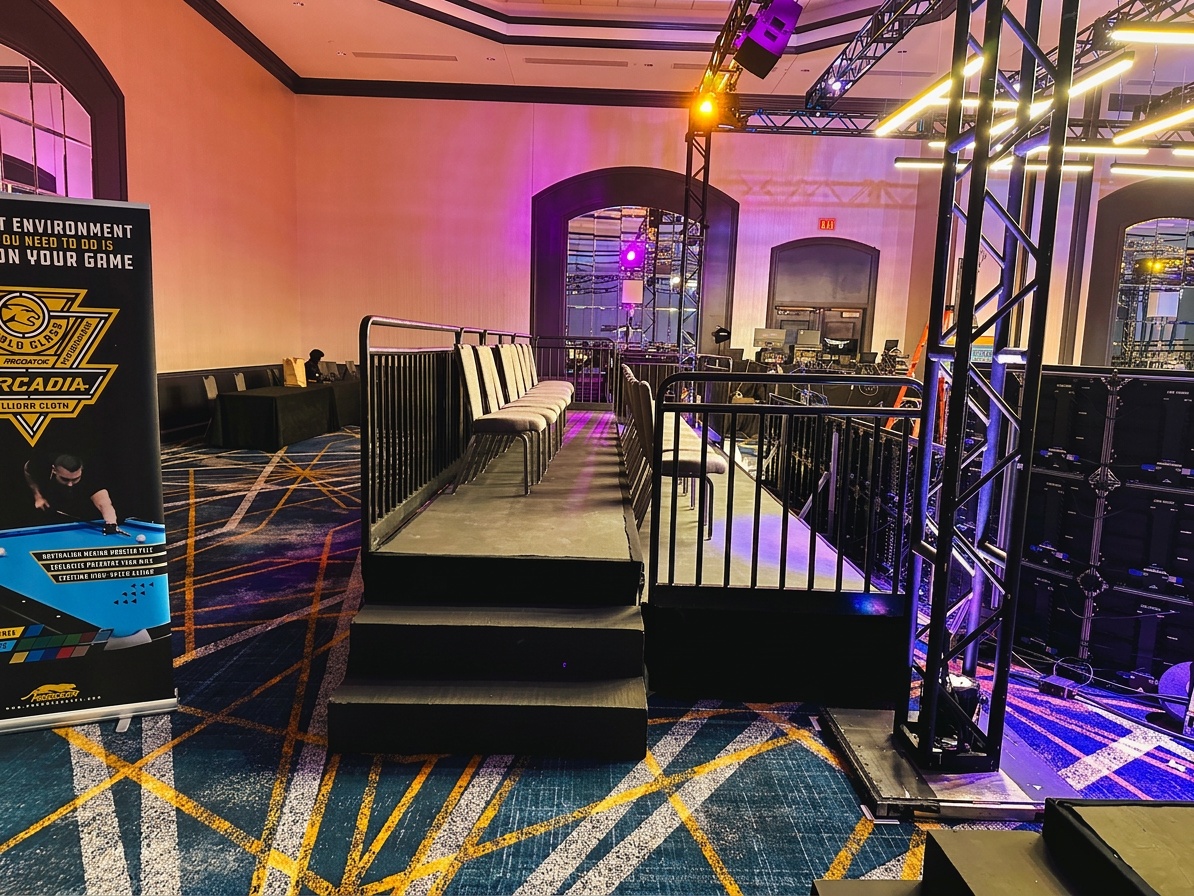
Larger productions that pair an elevated camera position with tiered audience seating will want to look at our audience riser rental options as well, since the two footprints need to be coordinated so they don’t compete for the same floor space.
Cable Management and Crew Access: The Details That Make or Break a Broadcast
This is the part most rental conversations skip over entirely. Your camera operator is running signal cables (SDI, HDMI, or fiber on longer venue runs) from the camera down to a switcher or encoder at FOH. That cable has to travel from the top of the riser, down through or along the structure, across the floor, and to the production table. Every step of that path matters.
We route signal cables through the frame of the riser wherever possible, keeping them off the walking surface and away from foot traffic. When that’s not possible, we use cable ramps or route along the aisle edge to protect both the cable and anyone walking nearby. For Orlando video production staging at hotel venues like the Celeste Hotel, where we installed and struck a full production setup across two days in February 2026, the ballroom floor plan determines exactly how much cable runway you have and where you can safely cross aisles. Some of those runs are longer than you’d expect, and knowing that before install day matters.
Power is a separate run. Camera operators typically need one or two AC circuits on the platform for battery chargers, monitors, and intercom stations. We coordinate with the venue on circuit access before the build so there are no surprises when the crew arrives.
A few specifics to share with your staging company before booking:
- Total cable count leaving the platform (SDI, HDMI, fiber, intercom, AC)
- Whether cables run to a combined FOH position or a separate production table
- Whether the platform needs a floor box or can use a side cable drop
- Whether the production team needs comms hardwired to the platform
We’ve gotten calls at 7am on load-in day about all four of these. One email at booking handles every single one of them. It takes five minutes.
Getting this information before install day means we can pre-run conduit or cable trays into the riser frame, which keeps the broadcast side clean and professional. For events that also need stage lighting routed from the same general area, coordinating both runs at once saves significant time on load-in.
Coordinating with Your Video Production Team Before You Book
The most common mistake we see with production platform rental Orlando requests is when the event planner books the riser without looping in the video crew. The planner knows the venue and the event schedule. The video crew knows the equipment. Neither one always knows what the other needs from the platform, and we end up getting a call two days before the event to reconfigure something that would have taken five minutes to address at the planning stage.
Honestly, it’s one of the easiest problems to prevent. So here’s what helps us build the right platform the first time.
Camera count and operator count. One camera, one operator is straightforward. Two cameras with one operator means the second camera is probably fixed and unmanned, so we size the platform for one working person plus two tripod footprints. Three cameras with two operators needs a significantly larger deck.
Equipment type and weight. A cinema camera on a tripod weighs differently than a broadcast box camera on a pedestal, and a jib arm with a counterweight adds structural load that we need to account for. Our platforms are built to handle professional production loads, but we want to confirm the numbers before install.
Desired height above the floor. Give us the venue seating configuration and tell us where the main stage sits. Our team can recommend a height based on sightline math, or we can match a specific height your TD has already calculated.
FOH position. Is your front-of-house table combined with the camera riser, or is it a separate position on the floor? This affects how we route cables and whether the platform needs to be wider to accommodate a monitor station alongside the camera operator.
For a separate corporate event at Gaylord Palms in April 2026 (the Patel event), the venue’s scale meant that sightline planning was part of the initial conversation, not an afterthought. Large ballrooms at properties like Gaylord can stretch 100 feet or more from stage to back wall. Getting the riser positioned correctly, with the right height and cable plan in place, is what allows the video crew to focus on the broadcast instead of solving logistics on load-in day.
Our concert stage rental and audience riser packages often work alongside camera platforms on larger productions, so if your event needs a main performance stage, tiered seating, and an elevated camera position, we can quote everything together and make sure the footprints don’t conflict.
Bringing It All Together for Your Central Florida Event
A well-configured camera riser rental is invisible to the audience and essential to the production crew. When the height is right, the platform is sized correctly, and the cables are routed cleanly, your video team can focus entirely on capturing the event instead of managing workarounds.
At Stages Plus, we handle the staging side so your production crew can handle the broadcast side. We’ve built camera platforms at hotel ballrooms, outdoor festival grounds, gymnasiums, and conference centers across Central Florida, and we’ve seen what works and what causes problems on load-in day. The earlier you bring us into the conversation, the better the result.
Planning a live streamed event or video production in Central Florida? Tell us your camera setup, crew size, equipment type, and venue, and we’ll configure the right platform for you. Get a quote at orlandostagerental.com/how-to-get-a-quote/ or call us at 407-442-0254.
Need help thinking through your full production infrastructure? Check out our audio packages to round out your event setup.