Look, we need to talk about something that every event planner in Central Florida thinks about but nobody really wants to address until it’s too late. Hurricane season. June through November. Six months where your outdoor event could go from perfectly planned to completely scrambled in about 72 hours.
We’ve been setting up stages across Central Florida for years now, and we’ve seen just about every weather scenario you can imagine. The good news? With the right planning, you can protect your event (and your budget) even during peak hurricane season. The key is knowing what to plan for and when to make the tough calls.
Understanding Florida’s Hurricane Season Reality
Hurricane season officially runs from June 1 through November 30, but here’s what the data actually shows. Peak activity happens between mid-August and late October. That’s when the water temperatures are highest and atmospheric conditions line up just right for storm development.
For event planning purposes, you need to think about three different threat levels. June and July are relatively quiet, with most systems staying weak or offshore. August through October is when things get real. November usually settles down, but you still get the occasional surprise system.
The thing most planners don’t realize is that you don’t need a direct hit to have problems. A hurricane 200 miles offshore can still generate 40+ mph sustained winds inland. That’s enough to make any outdoor stage setup dangerous, even if you never see a drop of rain.
When to Book (And When to Postpone)
We get asked this all the time. “Should we even try to plan an outdoor event in September?” Honestly, it depends on what you’re willing to risk and how flexible your schedule is.
If you’re locked into a specific date (anniversary, milestone celebration, something that can’t move), you need contingency plans. Plural. We’re talking indoor backup venue, postponement date already secured, and rental contracts that account for weather-related changes.
For events with flexible timing, consider these windows. Late May and early June before the season really ramps up. December through April is ideal but books up fast. If you must do late summer, have your backup plan finalized before you sign any vendor contracts.
One thing we’ve learned after hundreds of outdoor setups: the seven-day forecast is your friend. Once you’re inside that week-before window, you have pretty reliable data about what’s coming. That’s when you make your final go/no-go decision.
Stage Setup Modifications for Hurricane Season
So you’ve decided to move forward with your outdoor event during hurricane season. Smart move is to modify your stage setup to handle higher winds and potential rain.
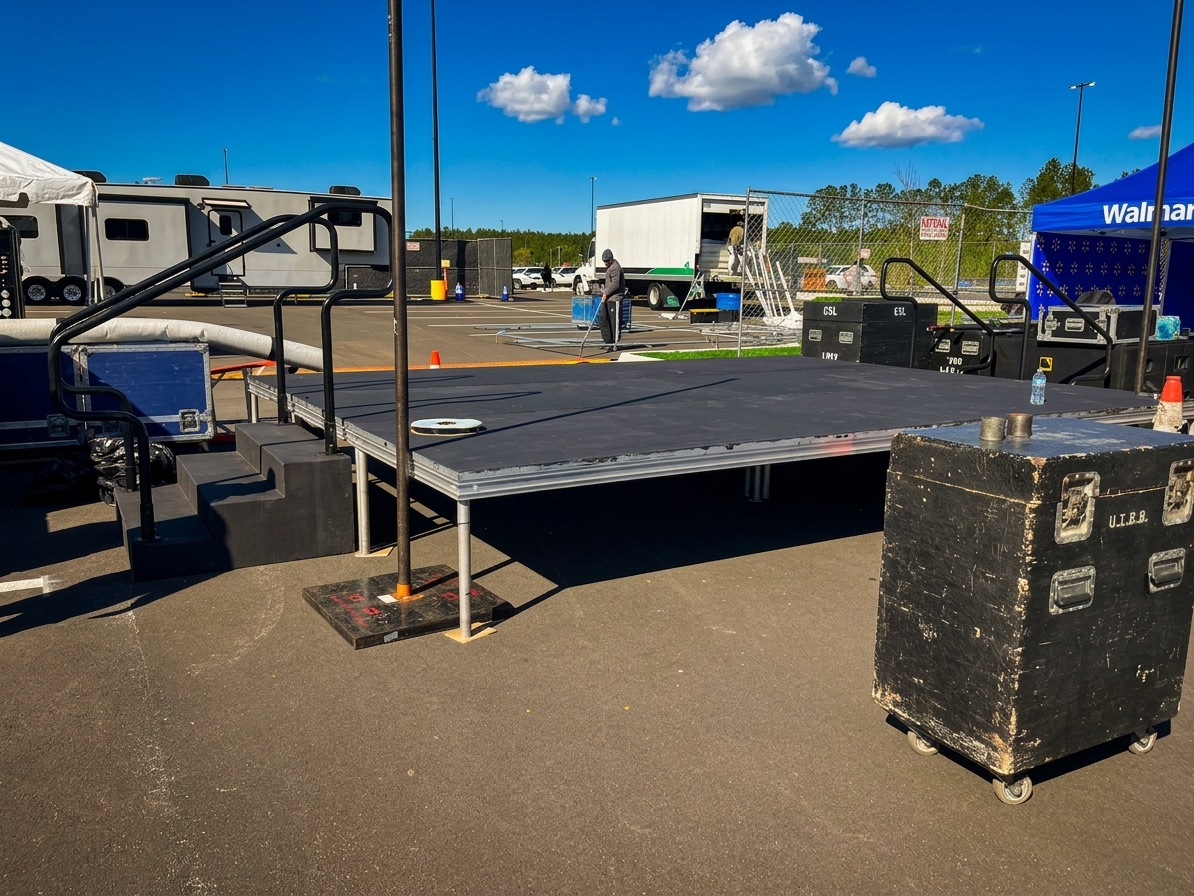
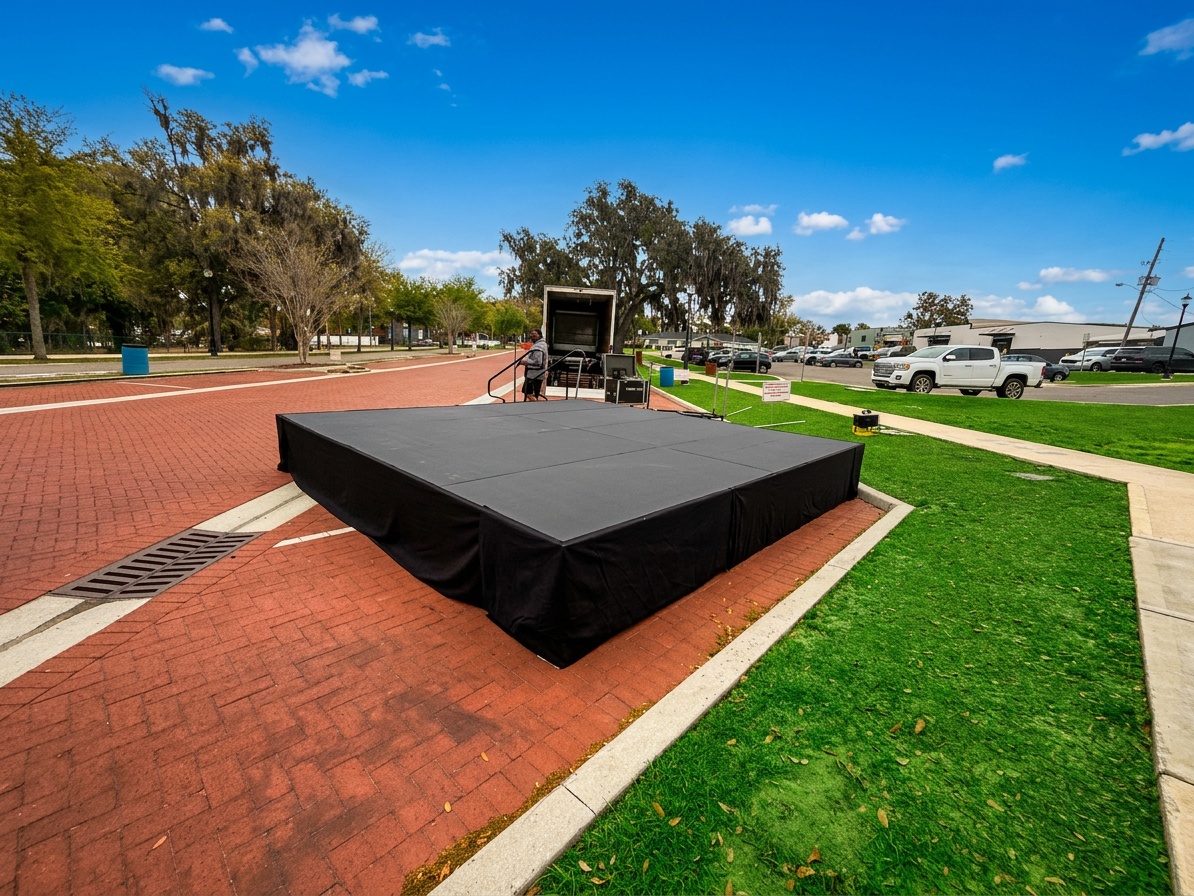
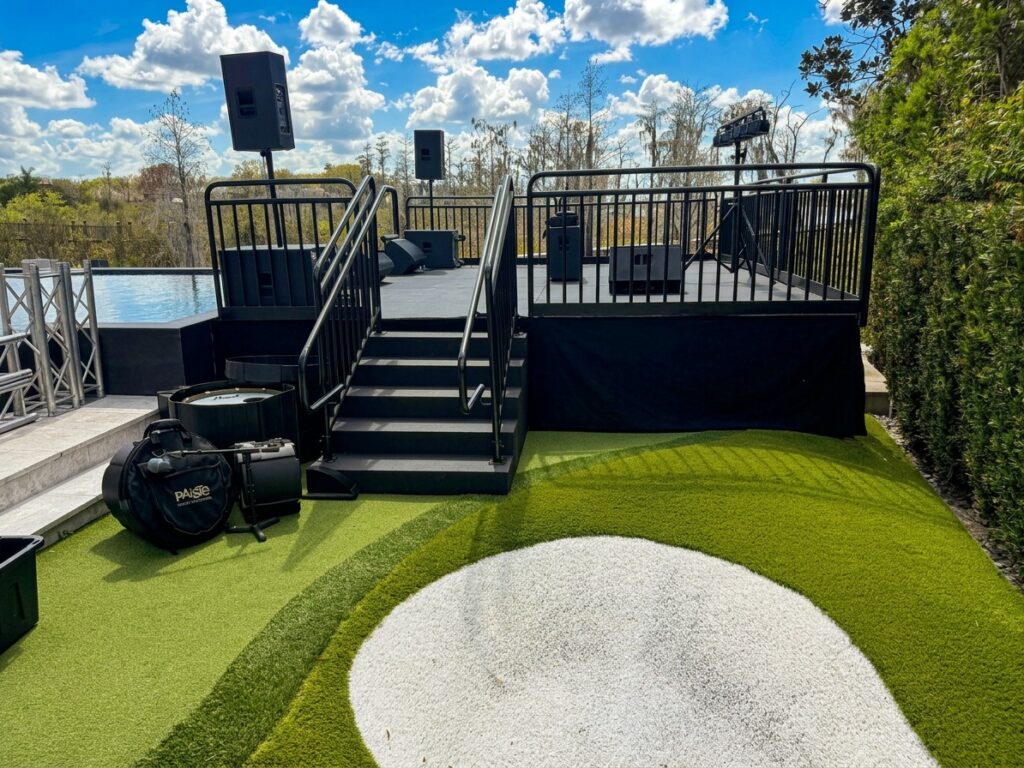
Standard stage setups work great in normal conditions, but hurricane season demands upgrades. We typically recommend going with lower profile stages (24 inches or less in height) when wind is a concern. The lower the stage sits, the less surface area catches the wind.
Anchoring becomes critical. For events during peak season, we use additional tie-down points and heavier ballast weights. A standard 24×32 stage might need 50% more anchoring than usual. That’s not us being overly cautious, that’s building to code for sustained winds over 35 mph.
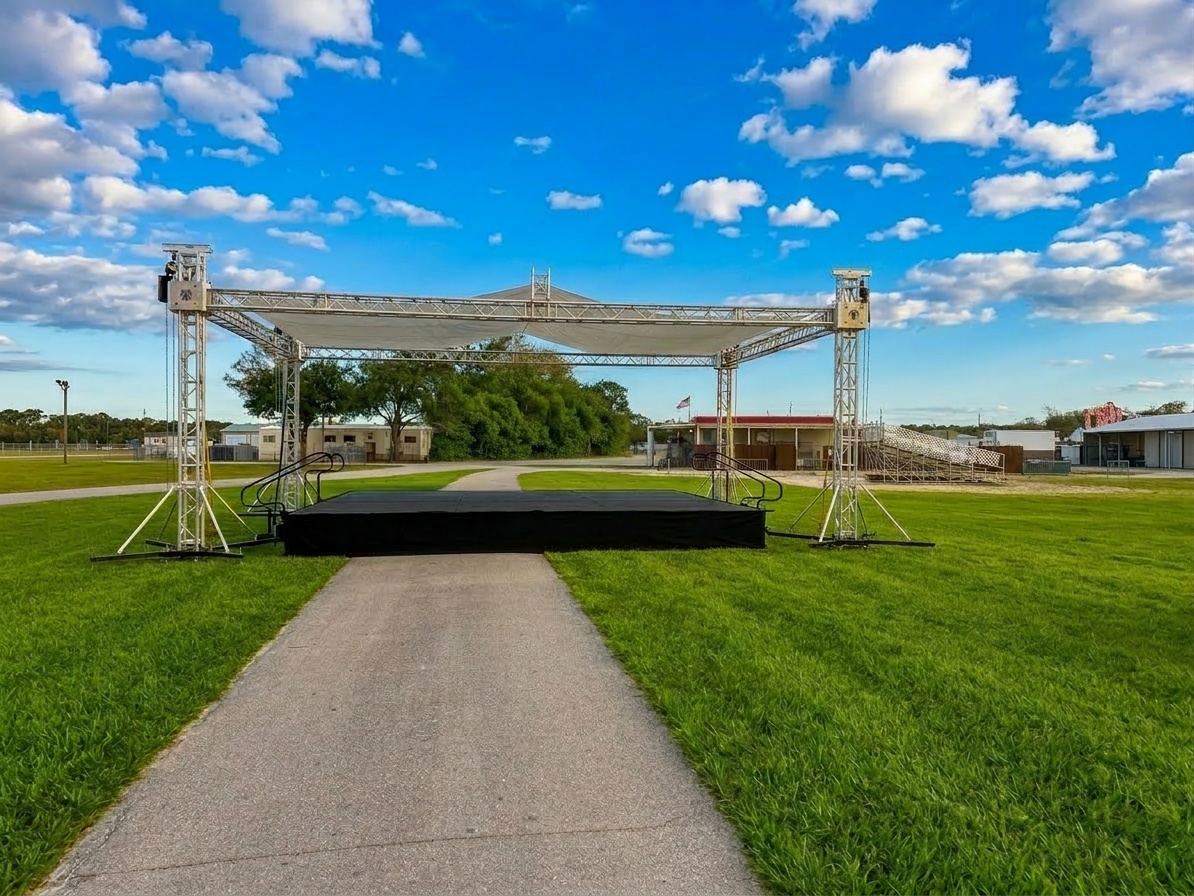
Stage covers and canopies are where most people run into trouble. A fabric canopy in 40 mph winds becomes a sail, and not the good kind. If your event absolutely needs weather protection, we recommend solid roof structures with proper engineering and anchoring. Or accept that you might need to remove the cover entirely if conditions deteriorate.
For events requiring more substantial weather protection, our tent flooring rental options can be combined with fully enclosed tent structures that offer better wind resistance than open canopies.
The 72-Hour Decision Protocol
Three days out from your event, you need a decision framework. Not a vague “we’ll see what happens” plan. An actual protocol with specific triggers and actions.
Here’s what we use internally and recommend to clients. At 72 hours out, check the National Hurricane Center forecast. If there’s a named storm within 500 miles with projected track toward Central Florida, activate your contingency plan. Don’t wait to see if it shifts.
At 48 hours, you’re making the final call. Wind forecasts over 30 mph sustained? That’s postpone territory for most outdoor stages. Rain alone we can work with (assuming proper drainage and electrical safety). But rain plus wind? That’s when things get dangerous for equipment and guests.
The 24-hour mark is too late to make major changes. At that point you’re in execution mode, whatever you decided at 48 hours. Trying to reschedule or relocate with one day notice usually creates more problems than it solves.
Insurance and Contracts: The Boring Stuff That Saves You
Nobody loves reading rental contracts, but during hurricane season this paperwork matters more than usual.
Weather clauses need to be explicit. What constitutes a weather-related cancellation? Who decides? What’s the refund or credit policy? We’ve seen contracts that define “severe weather” so vaguely that both parties end up arguing about it after the fact.
Event insurance specifically covering named storms is available and worth the cost for any event over $10,000 in rental expenses. Standard policies often exclude hurricane-related claims or have specific notification windows. Read the fine print before you’re three days from landfall.
For our rental agreements, we include clear language about weather-related postponements. If a hurricane is forecasted to impact the area within 72 hours of your event, you can reschedule once without penalty. That’s not us being generous, that’s us being practical. We’d rather move your date than deal with damaged equipment or liability issues.
Real Talk: What We’ve Learned From Past Seasons
We set up a 40×60 stage for a corporate event back in August 2019. Everything was looking perfect until 96 hours before the event when a tropical depression formed in the Gulf. The forecast models couldn’t agree on whether it would hit Tampa or track north toward us.
The client made the call at 72 hours to postpone by one week. Smart decision. The system ended up staying offshore but generated sustained winds of 35 mph across Central Florida on what would have been their event day. The rescheduled event a week later happened under clear skies.
That postponement cost them about $3,000 in rescheduling fees across all vendors. The alternative would have been canceling outright or trying to run the event in dangerous conditions. Three grand is cheap insurance when you’re talking about guest safety and a six-figure corporate event.
Another case from September 2022. Wedding with about 150 guests. Outdoor ceremony with a speaking stage and pipe and drape backdrop. Hurricane forecast looked clear when they booked, but two weeks before the event a system developed and models showed possible Central Florida impact.
We worked with them to have a complete indoor backup plan at their venue’s ballroom. Cost to have both setups ready? About 40% more than the original outdoor-only plan. The storm tracked west, missed us entirely, and they used the outdoor setup as planned. But having that backup ready meant the bride wasn’t losing sleep the week before her wedding.
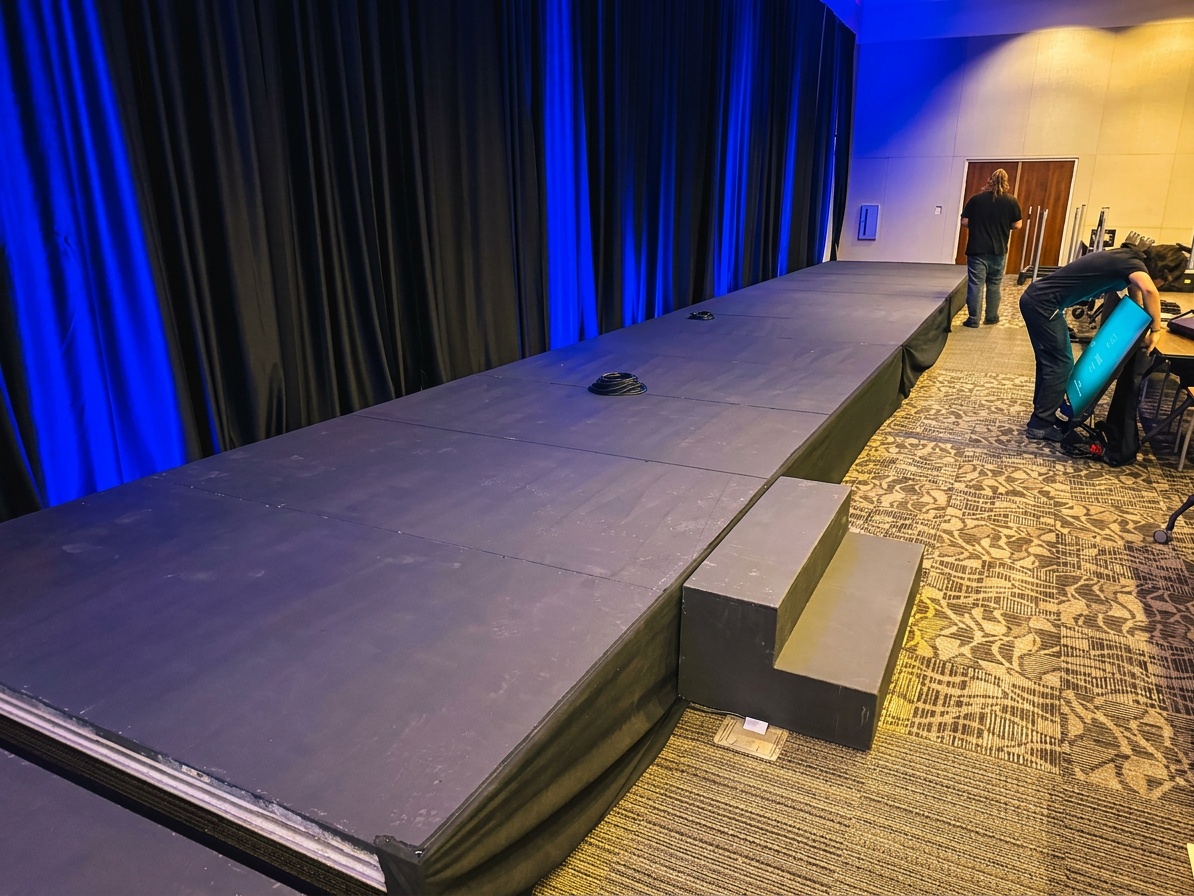
For clients planning significant outdoor events, we often recommend exploring our speaking stage rental options that can be quickly adapted for either outdoor or covered venue use.
Venue-Specific Considerations in Central Florida
Not all outdoor venues handle hurricane season weather the same way. Some locations have natural wind breaks or drainage issues that affect your planning.
Waterfront venues are gorgeous but exposed. Lake Eola, the Winter Park chain of lakes, any venue right on the water has zero wind protection. Beautiful for photos, challenging when a tropical system is 300 miles offshore kicking up sustained winds.
Venues with tree coverage offer some wind protection but create their own issues. Falling branches during high winds can damage equipment. We’ve had setups where we positioned stages specifically to avoid being directly under large tree canopies during uncertain weather.
Indoor/outdoor combination venues give you the most flexibility. Places that have an outdoor ceremony space with an adjacent indoor reception area. You can make the indoor/outdoor call much closer to the event date because you’re not scrambling to find a completely different location.
Your September Event Checklist
If you’re planning an outdoor event for August, September, or October in Central Florida, here’s your action list.
- Book your venue and vendors with explicit weather postponement clauses. No handshake agreements or vague “we’ll work something out” promises. Get it in writing.
- Identify your backup plan before you send invitations. Indoor venue secured or clear postponement date agreed to by key vendors. You can’t scramble for alternatives a week before your event during peak season.
- Budget an extra 20-30% for weather-related modifications. Lower stages, additional anchoring, backup plans, potential rescheduling fees. These aren’t optional extras, they’re requirements for responsible planning.
- Monitor weather starting at 10 days out. Not obsessively, but daily check-ins on the National Hurricane Center site. At seven days, you should be in regular contact with your rental vendors about current forecasts.
- Make your go/no-go decision at 72 hours. This is hard for a lot of clients because you’re making the call before you know for certain what will happen. But that’s the point. You need enough lead time to execute changes safely.
Our team at Stages Plus monitors weather conditions for all our scheduled events during hurricane season. We’ll reach out proactively if we see potential concerns, but we also encourage clients to contact us at 407-442-0254 if they have questions about forecast impacts on their setup.
The Bottom Line on Hurricane Season Events
Can you successfully plan outdoor events during Florida’s hurricane season? Absolutely. We do it all the time. But it requires more planning, more flexibility, and more honest conversations about acceptable risk.
The events that go smoothly are the ones where everyone involved understands the weather risks from day one and builds appropriate contingencies into the plan. The disasters happen when people assume everything will work out fine without backup plans.
Your outdoor event can happen. Just make sure you’re planning for the weather you might get, not just the weather you’re hoping for.