A wedding band stage should sit at a 90-degree angle to the dance floor, close enough that the band can see both the dancing crowd and the head table, with dedicated 20-amp power circuits run directly to the stage instead of shared through the venue's house power. At Stages Plus, we typically spec a 12x16ft stage with two dedicated 20-amp drops for a standard 6-piece Orlando wedding band, positioned so musicians never have to choose between watching the crowd or watching the newlyweds.
Key takeaways
-
A 4-piece band needs roughly a 12x20ft stage, a 5-piece dance band needs about 155-210 square feet, and a DJ booth fits comfortably in a 10x10ft footprint.
-
Live bands need two dedicated 20-amp circuits within 25 feet of the stage, never shared with catering or lighting.
-
Angle the stage 90 degrees to the dance floor, not head-on, so the band sees both the dance floor and the head table at once.
-
Outdoor stages need GFI-protected circuits, and performances pause the moment lightning is detected within 8 miles of the venue (NOAA Lightning Safety Toolkit).
-
Book your band stage 6 to 12 months ahead for popular Central Florida wedding dates.
Position the Stage at a 90-Degree Angle to the Dance Floor
A reception stage works best when it sits at a 90-degree angle to the dance floor, not facing it head-on. Face the band straight at the dance floor and they lose sight of the head table and the rest of the room. Angle the stage instead, and the band or DJ can watch dancers on one side and the wedding party on the other, adjusting tempo and song choice on the fly.
We keep a buffer zone of at least 3-4 feet between the stage edge and the dance floor so musicians have room to move without crowding dancers, and so speaker stacks never end up directly behind anyone's chair. Guest tables, especially the head table, should sit far enough back that conversation is still possible during dinner, but close enough that toasts and first dances feel personal rather than distant.
For ballroom receptions, we often position the stage along the room's long wall, which keeps sightlines open from every table. For tented outdoor receptions, the stage typically anchors one end of the tent, with the dance floor immediately in front and dining tables fanning out behind it. If you're still weighing overall stage placement against decor and photo angles, our wedding reception stage ideas guide covers the aesthetic side of this same question.
Stage Size Scales Directly With Band Size
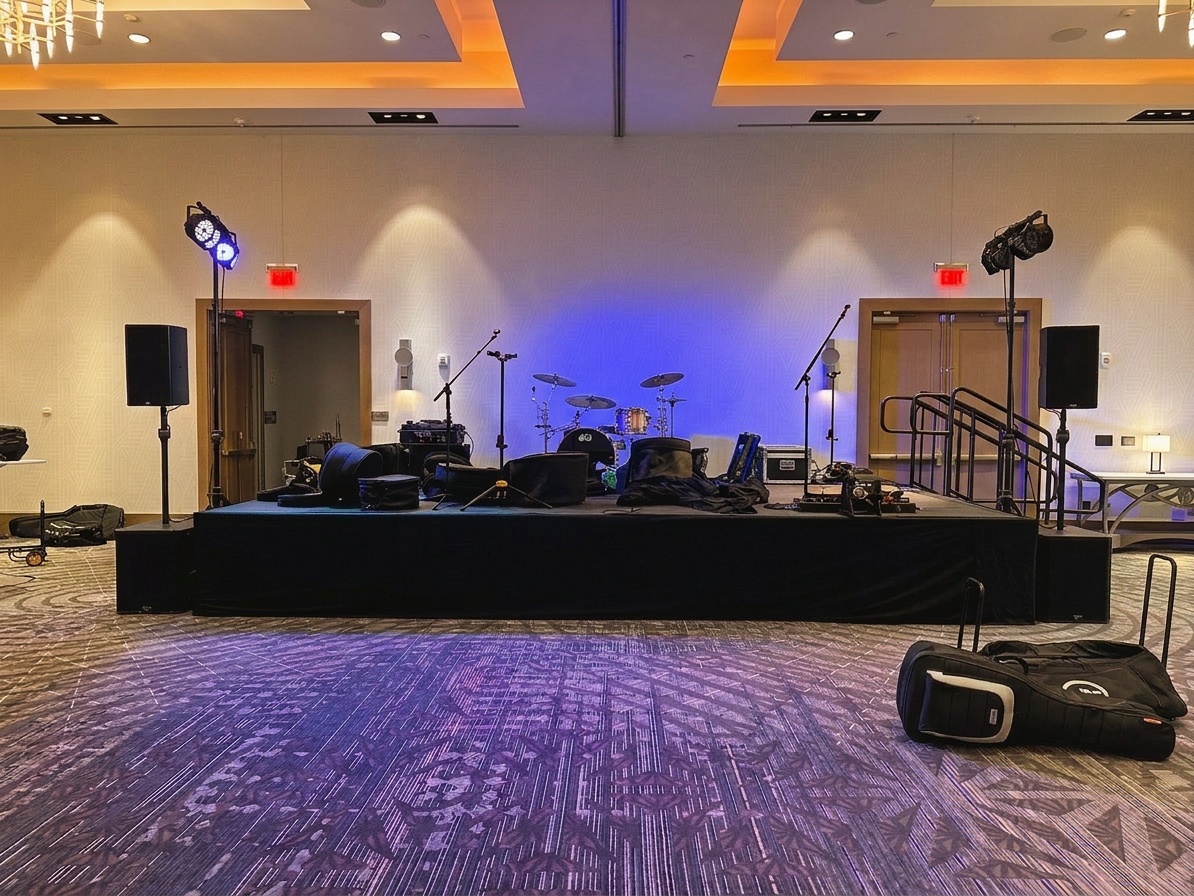
Stage size scales directly with band size, and guessing wrong is the single most common layout mistake we see. A solo DJ needs very little: roughly a 10x10ft footprint for a table, speakers, and equipment. A 4-piece band with amps typically needs a 12x20ft stage. A 5-piece dance band, the classic lead singer, drummer, keyboardist, bassist, and guitarist lineup, needs approximately 155 to 210 square feet, which works out to a minimum stage of about 16x12ft.
Break it down by instrument and the numbers add up, according to The Special Event Guru's stage sizing breakdown:
- Guitar, bass, and keyboard players need 25-30 square feet each, including amps.
- Horns and acoustic strings need 10-15 square feet each.
- A drummer needs 50-70 square feet, usually on a small riser.
- A lead vocalist needs 30-50 square feet to move around.
For a full 8-10 piece band with horns, we're usually looking at 16x20ft or larger once you factor in horn sections and extra monitors. That's why our concert stage rental options come in a range of footprints instead of one fixed package. If you're not sure where your lineup lands, our stage size calculator and our post on how to choose the right stage size for your event are both good starting points. Tell us your headcount and instrument list, and we'll match the stage to the band, not the other way around.
Live Bands Require Dedicated Power Circuits DJs Don't Need
Live bands need dedicated circuits that a DJ setup usually doesn't require.
Professional wedding bands typically need two dedicated 20-amp, 110-volt circuits run within 25 feet of the stage, and these circuits should never be shared with catering equipment, lighting, or anything else drawing power at the same time, per Murray Hill Talent's band electrical requirements guide. Larger bands need even more: Gulf Coast Entertainment notes that bigger acts with more gear typically require four to five isolated 20-amp outlets, with stage lighting run on its own separate circuit entirely.
A DJ booth is far simpler electrically. Most DJ setups run on a single standard circuit, since there's no amp stack, no drum kit monitors, and no horn section pulling power at the same time.
Our crews run dedicated power drops straight to the stage rather than daisy-chaining an extension cord through the dance floor, which is a tripping hazard and a good way to blow a breaker mid-song. Pairing the stage with our own audio packages means we already know the load requirements before the band's tour manager even asks. If you want the full electrical picture, including lighting circuits, our stage lighting safety guide covers best practices for Orlando events.
Stage Height Depends on Guest Count and Room Depth
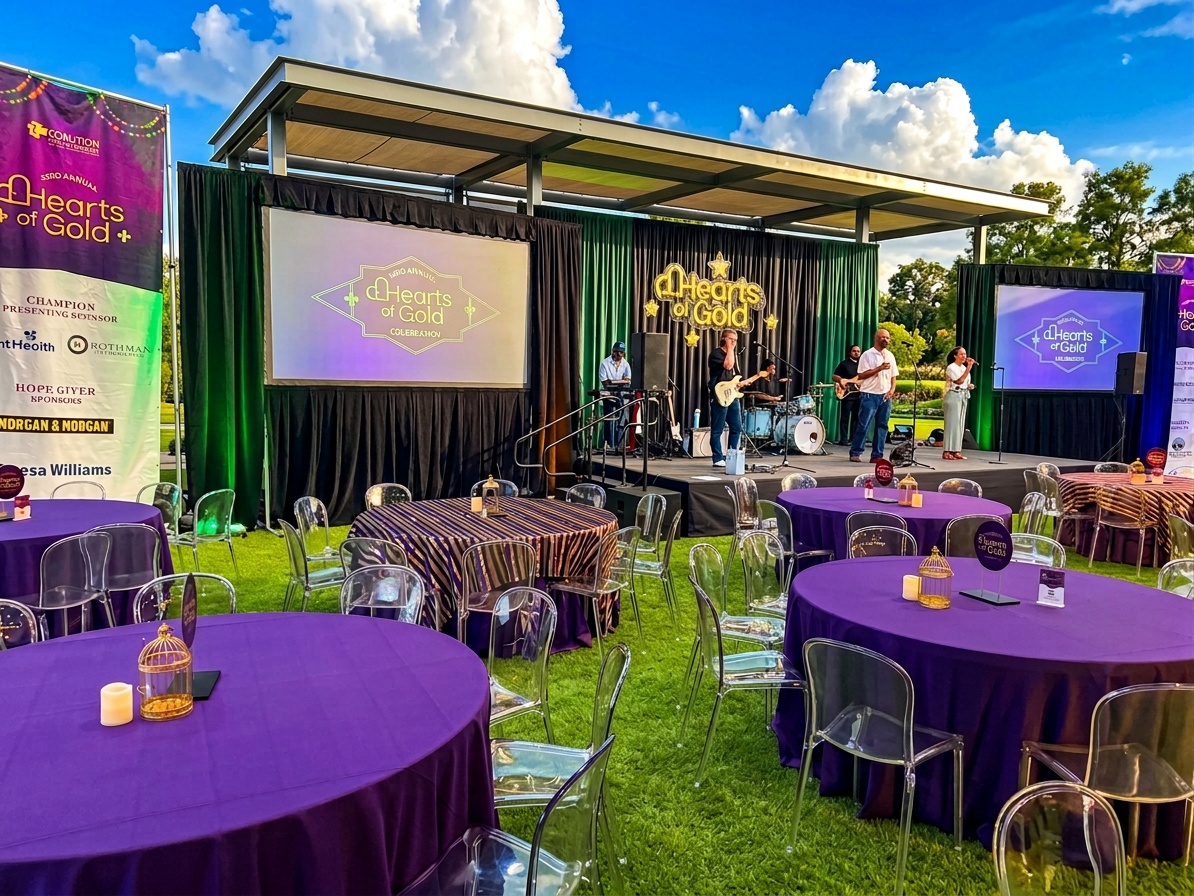
Stage height depends on how many rows of seated guests need a clear view over the heads in front of them. For an intimate reception where most guests sit within a few tables of the stage, a low platform, often just 16 to 24 inches, keeps the band visible and approachable without towering over the room. For larger receptions with 150-plus guests or a deep seating arrangement, we typically go higher, in the 24 to 36 inch range, so guests at the back tables aren't staring at the backs of heads during the first dance.
This is a judgment call our crew makes on site based on room depth, ceiling height, and whether there's a raised dance floor competing for sightlines.
Under international building code, guardrails aren't required on the audience-facing side of a performance stage even when the platform exceeds 30 inches (ICC guardrail guide via DataDrivenAEC), which keeps the front of the stage open and unobstructed for photos and dancing right up to the platform edge.
If your venue has a balcony or mezzanine seating section, factor that in early. Explore our wedding stages options to see height configurations that work for both ground-floor and multi-level venues.
Indoor Ballrooms and Outdoor Tents Need Different Layout Approaches
Indoor ballrooms give you fixed walls and controlled climate to plan sightlines around. Outdoor tents and marquees force you to plan around weather, ground condition, and available power at the same time. In a ballroom, we position the stage against a load-bearing wall, run power from the venue's existing house circuits when they meet the amperage the band needs, and rely on the room's own acoustics and ceiling height to guide speaker placement. Column obstructions and chandeliers are usually the only real sightline hazards to check before load-in.
Outdoor tented receptions add a second layer of planning. Ground condition matters as much as layout, since a stage set on grass or gravel needs a leveled sub-base before deck panels go down, and cable runs from the generator or shore power need to be trenched or ramped so nobody trips crossing from the dance floor to the bar. We always build in a weather contingency for outdoor stages: covered decking, tarps ready for a quick cover, and a plan for pausing the show if lightning shows up on radar.
Sightlines change too. A ballroom's flat floor means stage height does most of the sightline work, but a tent on uneven ground sometimes needs a taller platform just to compensate for a slope toward one side. Whichever setup you're working with, our tent flooring options pair with the stage to keep the whole reception floor level and stable from the entrance to the dance floor.
[IMAGE: outdoor wedding tent reception with a covered band stage and string lighting, dance floor in front]
Frequently asked questions
Do we need a stage for a small acoustic duo?
Not always. A duo with an acoustic guitar and a vocalist, or a keyboard and vocalist pairing, can often perform from ground level with just a small carpeted area, especially at intimate receptions under 75 guests. Once you add a cajon, amp, or a third musician, a small 8x8ft or 10x10ft platform helps with visibility and sound.
Can the band and DJ share one stage?
Yes, and it's common at Orlando receptions where a live band plays sets and a DJ takes over for the rest of the night. We build in extra footprint, usually an additional 4-6 feet of width, so the DJ booth and band gear can coexist without a mid-reception teardown.
What happens to the band stage if it rains outdoors?
Our outdoor stages use covered decking and GFI-protected circuits built for wet conditions, but live performances pause the moment lightning is detected within 8 miles of the venue, per NOAA lightning safety guidance. We plan a tented or indoor backup location with every outdoor wedding stage booking.
How far in advance should we book our band stage?
We recommend booking your band stage 6 to 12 months ahead for popular Central Florida wedding dates, in line with the booking windows Encore Musicians and Live Note Entertainment recommend for securing both talent and staging during peak spring and fall wedding season.
What size dance floor pairs with a band stage?
Dance floor size depends on guest count, but a good rule of thumb is roughly 3 square feet per person if you expect half your guests dancing at once. Our dancefloor rentals team can size the floor alongside your stage so the two footprints line up cleanly.
Getting the stage size, power, and angle right the first time saves you a frustrating mid-reception adjustment. It's the difference between a band that reads the room and one that's stuck staring at a wall. Reach out through our how to get a quote page and tell us your guest count, band lineup, and venue, and we'll spec the right stage for your Central Florida wedding.