Key takeaways
- Base plates go down first, uprights second, crossbars third, and drape panels last, always in that order.
- A two-person crew can typically build a 20ft x 12ft pipe and drape backdrop in 35-40 minutes once base plates are placed.
- For fabric fullness, plan on 1.5 times your finished width for a tailored look or 2 times the width for a fuller, more formal drape, per the Rose Brand curtain fullness guide.
- Outdoor setups in Central Florida need weighted or staked base plates because afternoon thunderstorms build fast, often between 2pm and 6pm from June through September.
- Look for NFPA 701 compliant, IFR-rated drape fabric. It's the industry benchmark most venues require, even though no single federal law mandates it.
Tools and equipment you need before starting
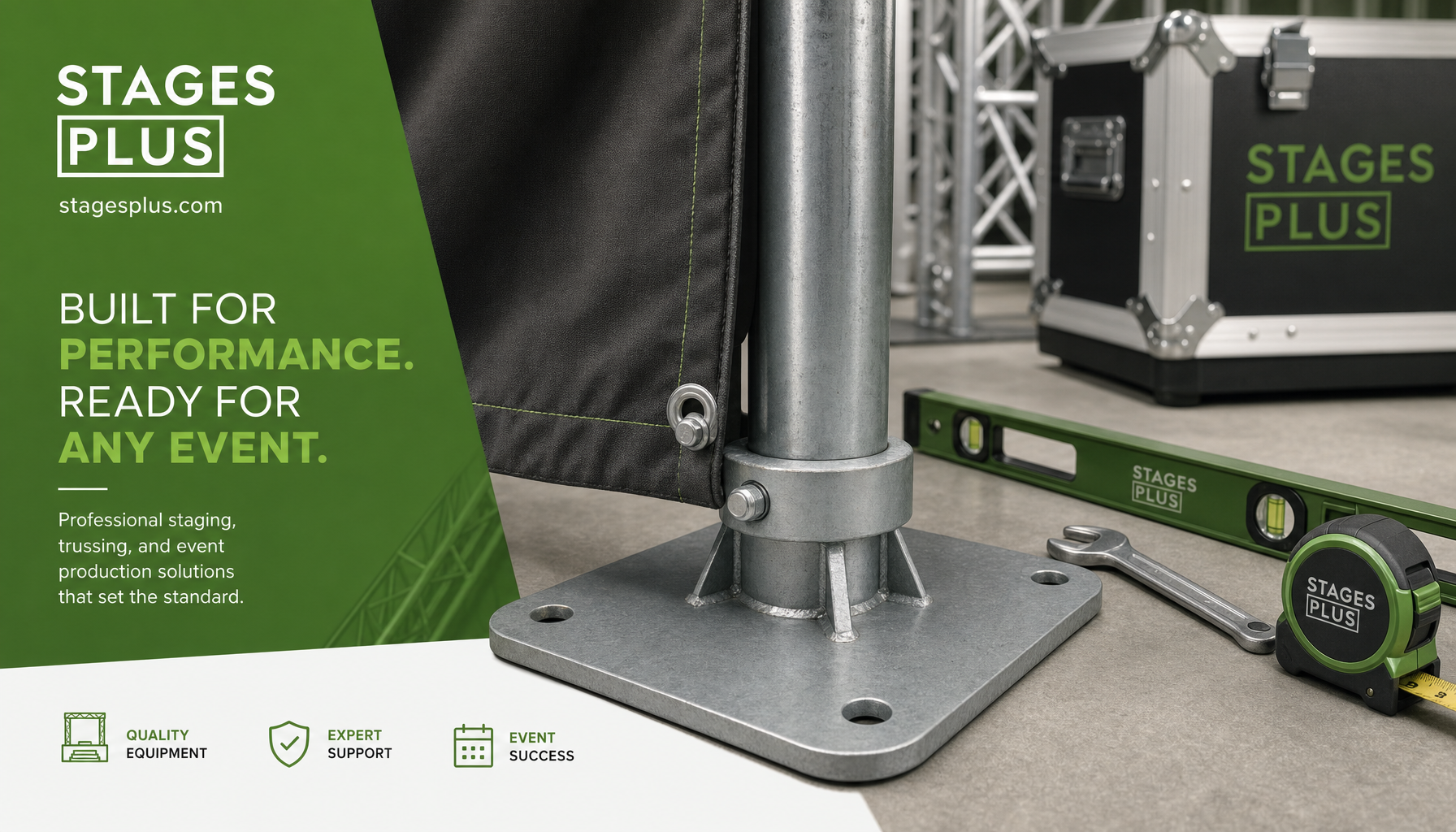
A pipe and drape setup needs four core components: base plates, upright poles, horizontal crossbars, and drape panels, plus a rubber mallet and a tape measure. Beyond the hardware, we bring a step stool for taller runs, work gloves for handling steel poles in the sun, and a chalk line or painter's tape to mark base plate positions before anything goes down.
Our crews use adjustable steel uprights that telescope from 8 to 18 feet, which covers everything from an intimate speaking stage backdrop to a full concert-scale wall. Crossbars slide through the uprights and lock at your target width, so you're not cutting or splicing pipe on site.
For the drape itself, confirm you're working with 15oz IFR-rated fabric before the day of the event. NFPA 701 is the governing flame-test standard for hanging drapery fabric used at exhibitions and events, and it's the benchmark most venues and fire marshals check against, even though it isn't a federal law in itself and enforcement varies by state and local authority (BeGoodTex NFPA 701 guide). If you're renting through a company like ours, this is already handled, but it's worth confirming if you're sourcing drape elsewhere.
The step-by-step setup order
Pipe and drape goes together in four stages, always base plates first and drape fabric last. Skipping the order, or trying to hang fabric before the frame is fully assembled, is the fastest way to end up with a lopsided backdrop or a tipped pole.
Here's the sequence our crews follow on every job:
- Mark and place base plates. Measure your total backdrop width, mark base plate positions at even intervals (our crews typically space plates every 8 to 10 feet), and set the plates on level ground.
- Insert and raise uprights. Drop each upright pole into its base plate socket, extend it to the target height, and lock the telescoping collar.
- Connect the crossbars. Slide horizontal crossbars through the pole openings to link adjacent uprights, creating a continuous frame across the full width.
- Square and level the frame. Walk the line and check that every upright stands plumb before you add fabric weight to the equation.
- Hang the drape panels. Slide drape panels onto the crossbars last, working from one end to the other, then adjust pleats and fullness by hand.
This order matters because a fully framed structure distributes the drape's weight evenly. Hang fabric on a half-built frame and you're adding load to poles that aren't locked into a complete system yet.
Setup time and crew size for a pipe and drape backdrop
A 20ft x 12ft pipe and drape backdrop takes a two-person crew roughly 35 to 40 minutes once base plates are placed, based on our own field timing at Stages Plus. Longer runs, taller heights above 14 feet, or double-sided drape walls add time. In our crews' experience, that's usually another 10 to 15 minutes per additional 20-foot section.
Two people is the practical minimum for a reason that has nothing to do with speed. Base plates for taller uprights get heavy fast. Manufacturer specs put an 18-inch by 18-inch base plate at roughly the right rating for a 12-foot upright, and a 24-inch by 24-inch base built for 14-foot-plus uprights can weigh 30 to 62 pounds (Pipe and Drape USA base plate specs). That's well above the NIOSH load constant of 51 pounds, the recommended maximum for a single person lifting under ideal conditions (OSHA/NIOSH lifting guidance). One person carrying and setting a heavy base plate alone isn't just slower, it's a real injury risk.
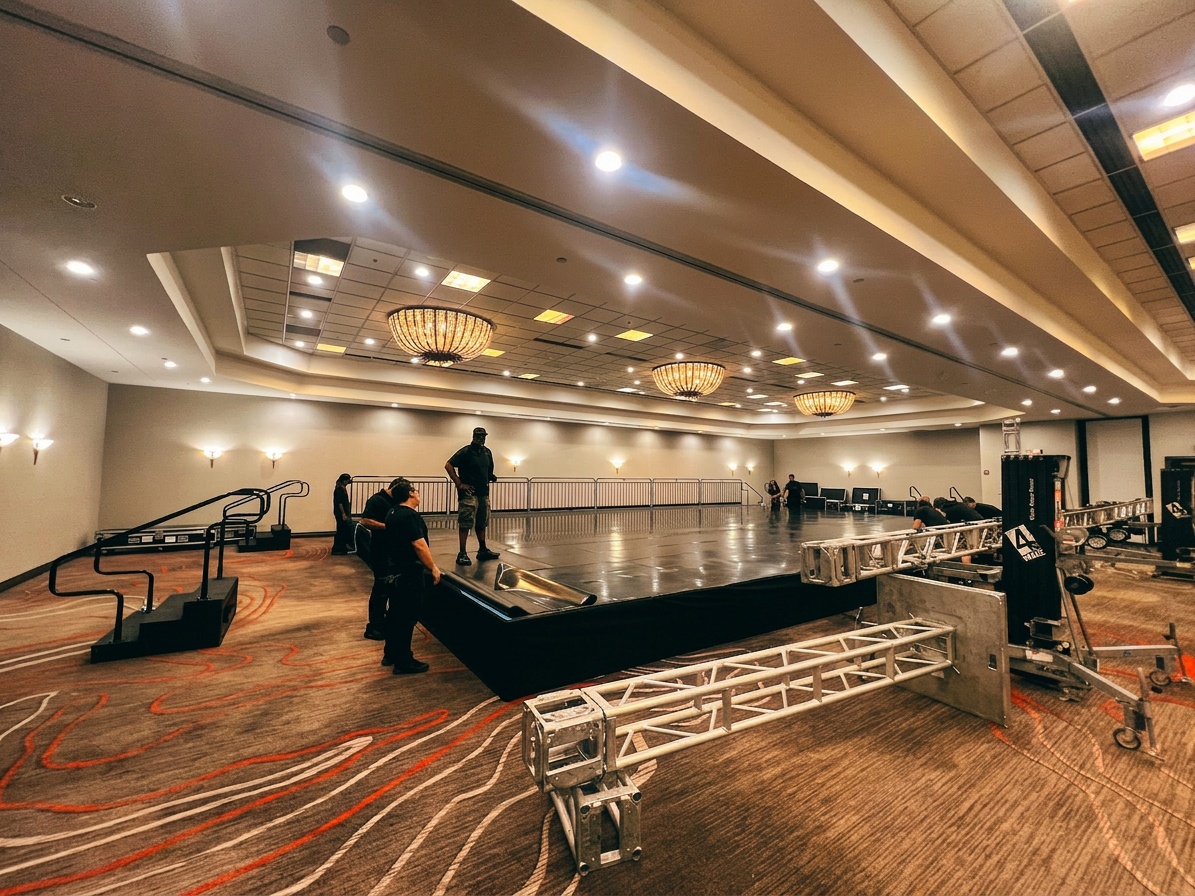
For anything wider than 40 feet, or backdrops that wrap corners for a stage's back and sides, we run a three- or four-person crew so uprights, crossbars, and drape can move in parallel instead of one long line.
Keeping pipe and drape stable outdoors in Central Florida
Outdoor pipe and drape needs weighted or staked base plates, not just the standard steel plate you'd use indoors. A backdrop that stands perfectly still in a ballroom can catch wind like a sail the moment it's outside, and Central Florida's weather doesn't give you much warning.
The interior sections of Central Florida see nearly 100 or more thunderstorm days a year, and storms typically build fast between 2pm and 6pm from June through September (FloridaDisaster.org thunderstorm data). That timing matters for setup planning: if your event runs into late afternoon, plan your outdoor drape install for the morning and have a strike plan ready if the sky changes.
The entertainment industry has an actual engineering standard for this. ANSI/ESTA E1.21 governs temporary outdoor structures exposed to wind and sets the design wind speed at 0.75 times the basic wind speed defined in ASCE 7 (ANSI E1.21 overview). In practice, that means adding sandbags, water-filled ballast, or ground stakes to every outdoor base plate, not just the end poles. We follow the same standard whether we're building a ballroom backdrop at a Winter Park hotel or setting drape for an outdoor tent job. Indoors, a standard steel base plate is usually enough since there's no wind load to plan around.
If your event falls during hurricane season, it's worth reading our notes on hurricane season stage planning style prep before you commit to an outdoor drape layout.
How much drape fabric you need for your backdrop
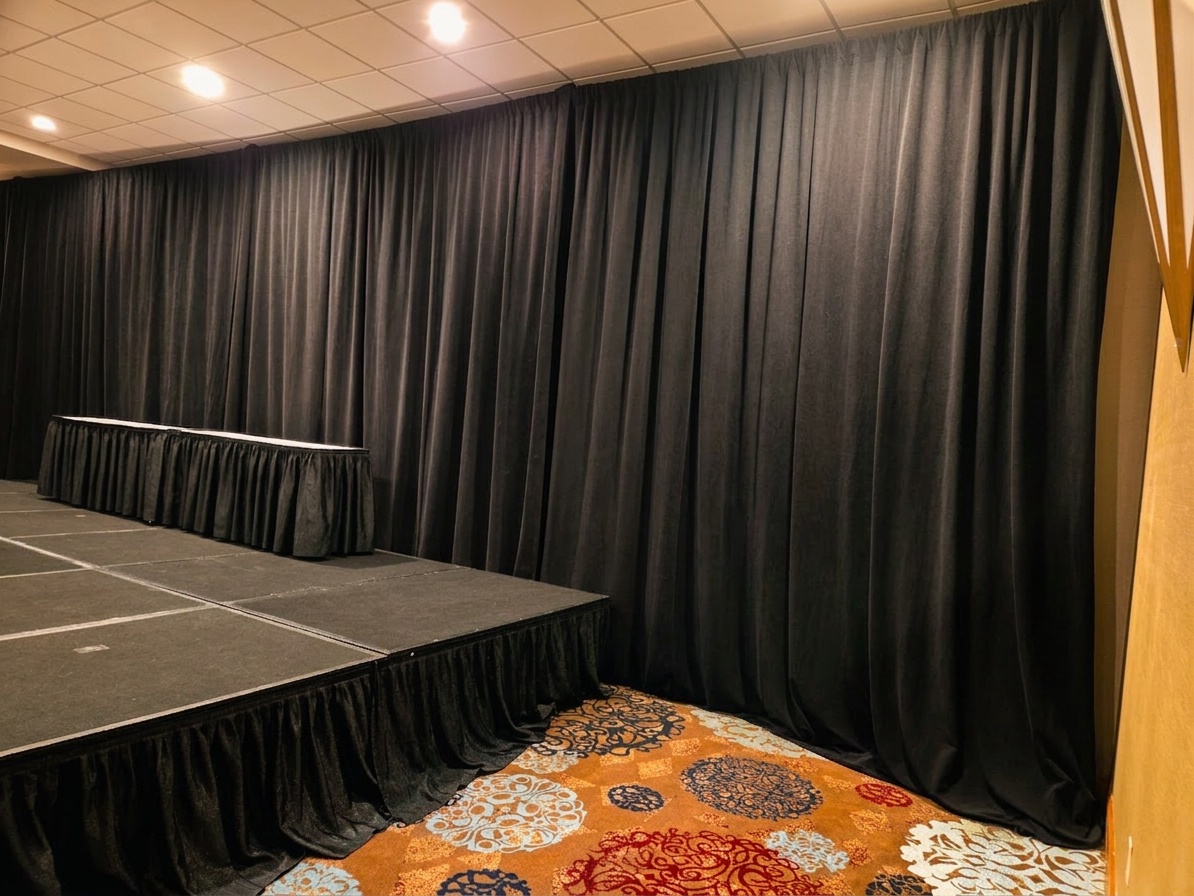
Plan on 1.5 times your finished backdrop width in fabric for a tailored look, or 2 times the width for a fuller, more formal drape. Per the Rose Brand curtain fullness guide, a drape at 50% fullness uses 1.5 times the finished width in material, while 100% fullness uses 2 times the finished width, and taller draperies need more fullness to maintain that fullness down to the floor (Rose Brand fullness guide).
For a practical example: a 20-foot-wide backdrop at 50% fullness needs 30 linear feet of drape panel material. Push that to 100% fullness for a denser, more luxurious look at a wedding ceremony or awards stage, and you're looking at 40 linear feet.
Height factors in too. Our uprights adjust from 8 to 18 feet, and taller drape runs (14 feet and up) need extra fabric length to keep the fullness consistent from top to bottom instead of pulling thin near the floor. If you're planning a backdrop for a ceremony stage specifically, our post on pipe and drape backdrops for wedding ceremonies walks through height and color choices in more detail.
Common setup mistakes and when to call a crew
The most common pipe and drape mistakes are skipping base plate weighting outdoors, hanging fabric before the frame is fully squared, and underestimating fabric quantity for taller runs. Any one of these leads to a backdrop that looks sloppy at best or tips over at worst.
We also see people try to save an hour by mixing upright brands or reusing damaged base plates. Steel uprights from different manufacturers don't always share the same collar diameter, and a cracked base plate loses most of its rated weight capacity even if it looks fine. For a longer breakdown of setup errors across all stage types, see our post on common stage setup mistakes.
DIY setup makes sense for a small, single-run backdrop under 16 feet wide in a controlled indoor space with no wind to worry about. Once you're dealing with outdoor wind loading, runs longer than 30 feet, heights above 12 feet, or a layout that wraps corners, it's worth having a crew that does this daily handle it. Our team brings 15oz IFR-rated panels and adjustable steel uprights sized to your exact stage, and we've built these frames enough times to know where they fail before they fail.
Frequently asked questions
How long does pipe and drape setup take indoors versus outdoors?
Indoor setup is faster since there's no wind loading to plan for. A 20ft x 12ft indoor backdrop runs about 35 to 40 minutes with two people. Add 10 to 15 minutes outdoors for staking or weighting each base plate properly.
What height should I choose for a stage backdrop specifically?
Most stage backdrops run 8 to 12 feet, which frames a performer or speaker without overwhelming the stage. Concert and gala backdrops often go 14 to 18 feet for a bigger visual presence. Our uprights adjust across that full range on the same hardware.
Does pipe and drape fabric need to be fire-rated?
Yes, in practice. NFPA 701 is the recognized flame-test standard for hanging drapery at events, and most venues require it even though no single federal law mandates it. Our drape panels are 15oz IFR-rated to meet that standard.
Can I set up pipe and drape myself for a small event?
Small, indoor, single-run backdrops under 16 feet wide are reasonable to DIY with two people. Once you're outdoors, wrapping corners, or going above 12 feet tall, the wind loading and base plate weight make it a job for an experienced crew.
What's the minimum crew size for a safe setup?
Two people is our practical minimum, mainly because base plates for taller uprights can weigh 30 to 62 pounds, above the recommended single-person lift threshold. Wider runs over 40 feet or backdrops that wrap corners work better with three or four people.
If you'd rather not measure fullness ratios or check wind ratings yourself, that's exactly what we're here for. Explore our pipe and drape rental options or see how we build pipe and drape combinations for professional backdrops, then request a quote and let our crew set it up right the first time.