The best time of year for an outdoor event in Orlando is March through April or late October through November. These shoulder-season windows sit between the region's dry months and its wet, hurricane-prone stretch, giving you the lowest average rain-day count paired with the widest stage rental availability. Booking inside hurricane season (June 1 through November 30) is possible, but it means planning around daily afternoon thunderstorms and building in a weather contingency from day one.
Key takeaways
- March and April average around 6 rain days each, versus 16 to 17 rain days in June, July, and August at Orlando International Airport.
- Atlantic hurricane season runs June 1 to November 30 and covers over 97% of all Atlantic tropical cyclone activity.
- Shoulder season (spring and late fall) overlaps with Orlando's heaviest wedding and graduation demand, so book 4 to 6 months out.
- A covered stage or tent flooring turns a summer or hurricane-season date from risky to workable.
- Florida sees more thunderstorm activity than anywhere else in the country, and over 75% of it hits between early June and early September.
Orlando's dry season and wet season run on opposite calendars
Orlando has two distinct seasons for outdoor event planning, and they are not close to equal. NOAA's 1991-2020 climate normals for Orlando International Airport show average precipitation days of 6.4 in February, 6.3 in April, and 6.0 in November, compared to 16.2 in June, 17.1 in July, and 17.2 in August. (NOAA / NCEI Orlando climate normals) That's nearly three times the number of rainy days once summer sets in.
Monthly rainfall totals confirm the same split: average precipitation ranges from a low of 1.79 inches in November up to 7.69 inches in August. (NOAA / NCEI Orlando climate normals) For an outdoor stage build, that difference matters. A dry November afternoon lets our crew set a deck, run cable, and finish skirting without a tarp in sight. A July afternoon almost always means racing a 2 p.m. storm cell.
Florida also sees more thunderstorm activity than any other state, with over 80 days of thunder and lightning per year in the western half of the peninsula, and that activity drops off sharply in fall before picking back up in spring. (Florida Climate Center, Florida State University)
Shoulder season weeks give you the best weather-to-availability ratio
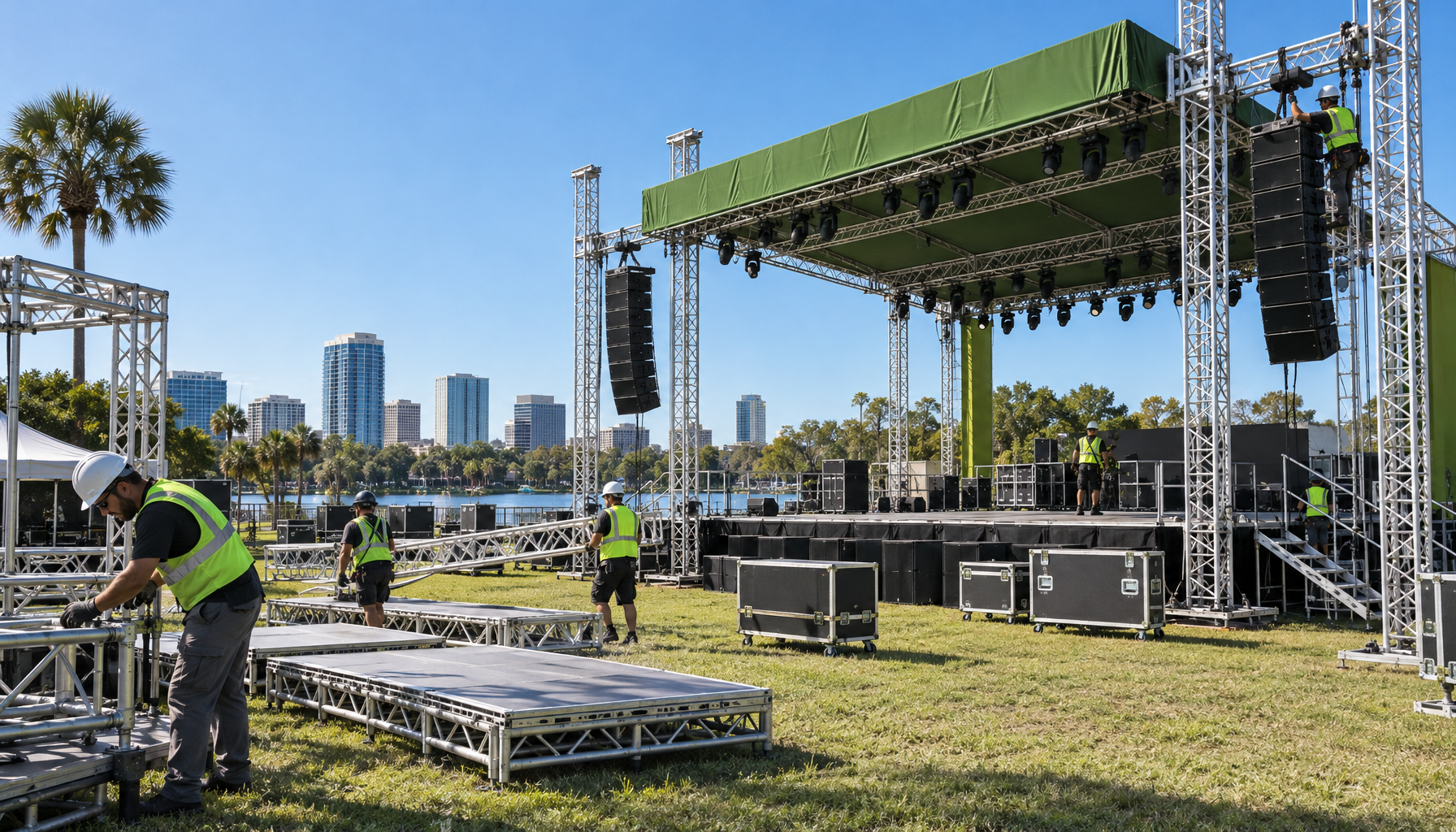
March, April, late October, and November offer Central Florida's best combination of low rain odds and open calendar slots. These are the weeks our Winter Park warehouse watches closest. They sit just outside the two demand spikes, spring wedding season and the holiday events rush, while still carrying the driest conditions on the calendar.
An event booked the second or third week of April, for example, lands after the early-spring wedding crunch but before early-summer humidity builds. A late-October date often lands after hurricane season's statistical peak but before the holiday calendar fills every weekend solid. Clients who target these in-between weeks get first pick of stage sizes, pipe and drape colors, and crew scheduling, instead of competing for the last open Saturday in a peak month.
On October 2, 2026, our crew worked a shoulder-season outdoor build under exactly these conditions: dry ground, no rain delay, and a full afternoon to finish lighting and audio before guests arrived.
Booking lead times stretch out during Orlando's two peak seasons
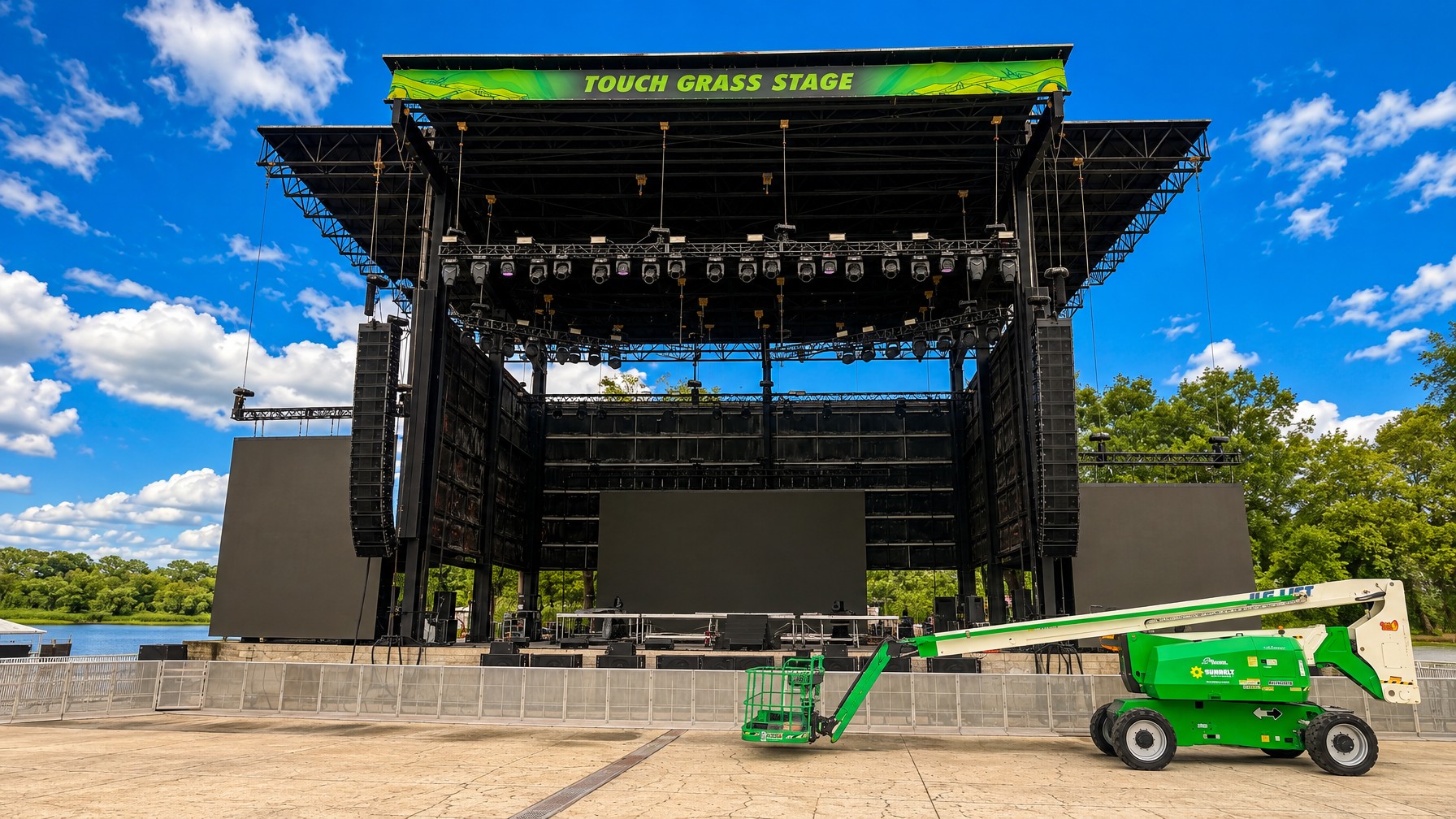
Outdoor stage availability tightens hardest during February through May and again October through December, so those dates need the longest lead time. Both windows overlap Florida's biggest demand drivers: wedding and graduation season stack on top of the usual corporate and holiday events.
Florida's wedding calendar is actually inverted compared to the national pattern. March ties with May at 15.6% of all Florida weddings, and October adds another 12.8%, concentrated in Central and North Florida, because late fall and early spring beat the summer humidity and hurricane risk that national data (which shows May through October as peak wedding season overall) doesn't fully capture for this market. (Carats & Cake 2025 Real Weddings Dataset via Bliss & Bone; The Knot Real Weddings Study)
Graduation season (May and June) adds another wave of outdoor stage requests right as that spring window closes. If your date falls inside either peak window, book as early as possible instead of waiting until a month or two out. For a fuller look at how these demand spikes stack up against each other month by month, our Orlando Event Calendar 2026: Peak Season Planning for Stage Rentals breaks down demand week by week.
Hurricane season dates still work with the right stage setup
You can host a safe outdoor event any time between June 1 and November 30, but it requires planning around daily storm risk from the start, not as an afterthought. NOAA defines the official Atlantic hurricane season as June 1 through November 30, chosen because it captures over 97% of all Atlantic tropical cyclone activity. (NOAA AOML Hurricane FAQ; NOAA Climate Prediction Center)
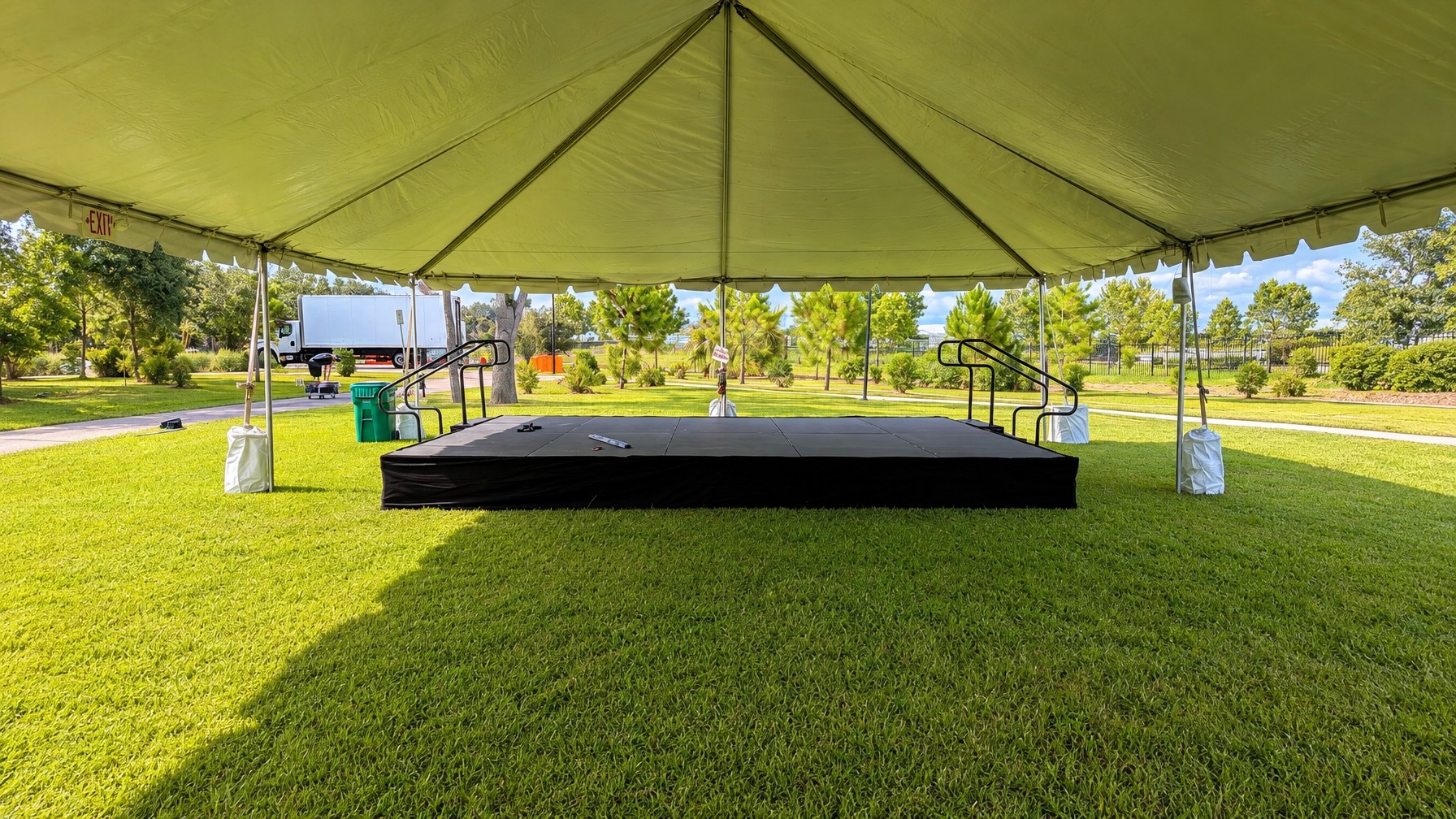
On September 19 and 20, 2026, our crew built two outdoor stages back to back during exactly this late-wet-season stretch. Both went up under a covered-stage configuration with tent flooring underneath, so when the afternoon cells rolled through on schedule, the show kept running instead of pausing for a tarp scramble. That's our default recommendation for any outdoor build scheduled June through September: cover the deck, protect the gear, and plan the run-of-show around the storm window instead of hoping it skips you.
If your date sits inside hurricane season, read our Hurricane Season Stage Planning for Florida Outdoor Events guide and our Florida's Rainy Season: Why a Covered Stage Rental Is Non-Negotiable post before you lock a layout.
Summer heat and humidity affect your stage, your crew, and your guests
Summer afternoon storm risk gets most of the attention, but the heat itself changes how a stage performs and how comfortable guests feel standing in front of it. More than 75% of Florida's yearly lightning strikes occur between early June and early September, concentrated in the same daily thunderstorm window that drives the rain-day numbers above. (Bay News 9, citing Vaisala data)
Heat index matters just as much as rain for crew safety. Under OSHA's proposed heat standard, protections apply whenever the heat index passes 80°F for more than 15 minutes, and requirements intensify at a 90°F heat index trigger, which requires mandatory paid rest breaks of at least 15 minutes for every two hours of work. (OSHA proposed rule summary, Envigilance) Our builds in June, July, and August schedule around those thresholds, which is part of why early-morning or late-afternoon load-in windows work better than midday in peak summer.
Materials feel the heat too. Marley flooring can soften and shift under direct sun for hours, and metal stair rails and guard rails hold heat long after the sun moves. We shift to shaded or covered configurations for any summer outdoor booking rather than leaving performers and guests on an uncovered deck all afternoon. For more on keeping guests comfortable, our Heat Management for Summer Events: Cooling Solutions for Florida Outdoor Stages post covers the full lineup of cooling options.
Weather contingency language belongs in every outdoor stage contract
Every outdoor stage rental contract should spell out what happens if weather forces a delay, a cover change, or a reschedule, regardless of what month you book. This isn't just a hurricane-season issue. March and November both have dry-season reputations, but a rogue front can still roll through on an otherwise clear week.
At minimum, your contract should name who decides to pause a build or a show for lightning, what the covered-stage or tent-flooring fallback option is, and how reschedule fees (if any) work for weather-driven date changes. We write this into every quote regardless of season, because a clear plan on paper means nobody is improvising when a storm cell shows up on the radar an hour before doors open. If you're planning an outdoor ceremony specifically, our Outdoor Wedding Ceremony Stages: Romantic Settings in Florida's Natural Beauty guide walks through backup-plan language couples ask for most.
Frequently asked questions
Does booking during Orlando's rainy season cost less?
Rainy-season dates (June through September) sometimes have more open availability, which can translate to easier scheduling, but the real cost consideration is the weather contingency itself. Adding a covered stage or tent flooring to protect a summer date often closes most of that savings gap, so weigh availability against added protection costs before assuming rainy season is cheaper.
Can I still safely host an outdoor event during hurricane season?
Yes, with the right setup. A covered stage, tent flooring, and a clear weather contingency clause in your contract let events run through Florida's June-through-November hurricane season. Our crews build this way regularly, as shown in our September 2026 wet-season setups, and simply plan the run-of-show around the daily storm window.
How far ahead should I book a peak-season outdoor stage?
Dates inside February-May or October-December fill fastest because they overlap wedding, graduation, and holiday event demand. We recommend locking in these dates as early as possible, ideally months ahead rather than weeks, to get your preferred stage size and configuration before the calendar tightens.
How does Orlando's event calendar compare to wedding and graduation season?
Florida's wedding calendar actually peaks in March, May, and October, the same shoulder-season months that offer the driest weather. Graduation season (May-June) adds another demand spike right after spring wedding season closes, which is why both shoulder windows book up quickly despite having the best weather odds.
What's the single best month for an outdoor event in Orlando?
April is hard to beat. It falls after the spring wedding rush starts to thin, carries one of the lowest average rain-day counts of the year, and sits well ahead of hurricane season's official June 1 start, giving planners dry conditions and solid stage availability in the same window.
If your date falls in a shoulder season, lock it in early. If it falls in hurricane season or peak summer, build the weather plan in from the start instead of hoping it works out. Either way, our team can map your event date against current seasonal availability and recommend the right covered or open stage configuration. Check your date and get a weather-ready quote at How to Get a Quote, or go ahead and lock in your preferred booking window at Reserve.