Stage rental costs in Central Florida scale mainly with two things: footprint (depth and width) and deck height, not a flat per-square-foot rate. An 8ft single-performer platform costs far less than a 24ft-deep concert stage, and extras like guardrails, stairs, skirting, lighting, and delivery distance can move your total as much as size does. The fastest way to get a real number is our Stage Size Calculator, with this guide explaining what actually drives that number up or down.
Key takeaways
- Stage cost scales with footprint and deck height together, not square footage alone. Once a platform reaches code-height thresholds, guardrails become mandatory and add to the price.
- Add-ons like lighting, audio, pipe and drape, and dancefloor can add as much to your total as the bare stage platform does.
- Outdoor setups generally cost more than indoor ones because of weighting, anchoring, and weather contingency gear.
- Delivery fees in our Central Florida service area scale with distance from our Winter Park base, so Orlando metro events cost less to deliver than Lakeland or Melbourne.
- Small events still carry a minimum cost floor because crew time and delivery don't shrink just because the stage does.
How stage rental pricing scales from 8ft to 24ft deep
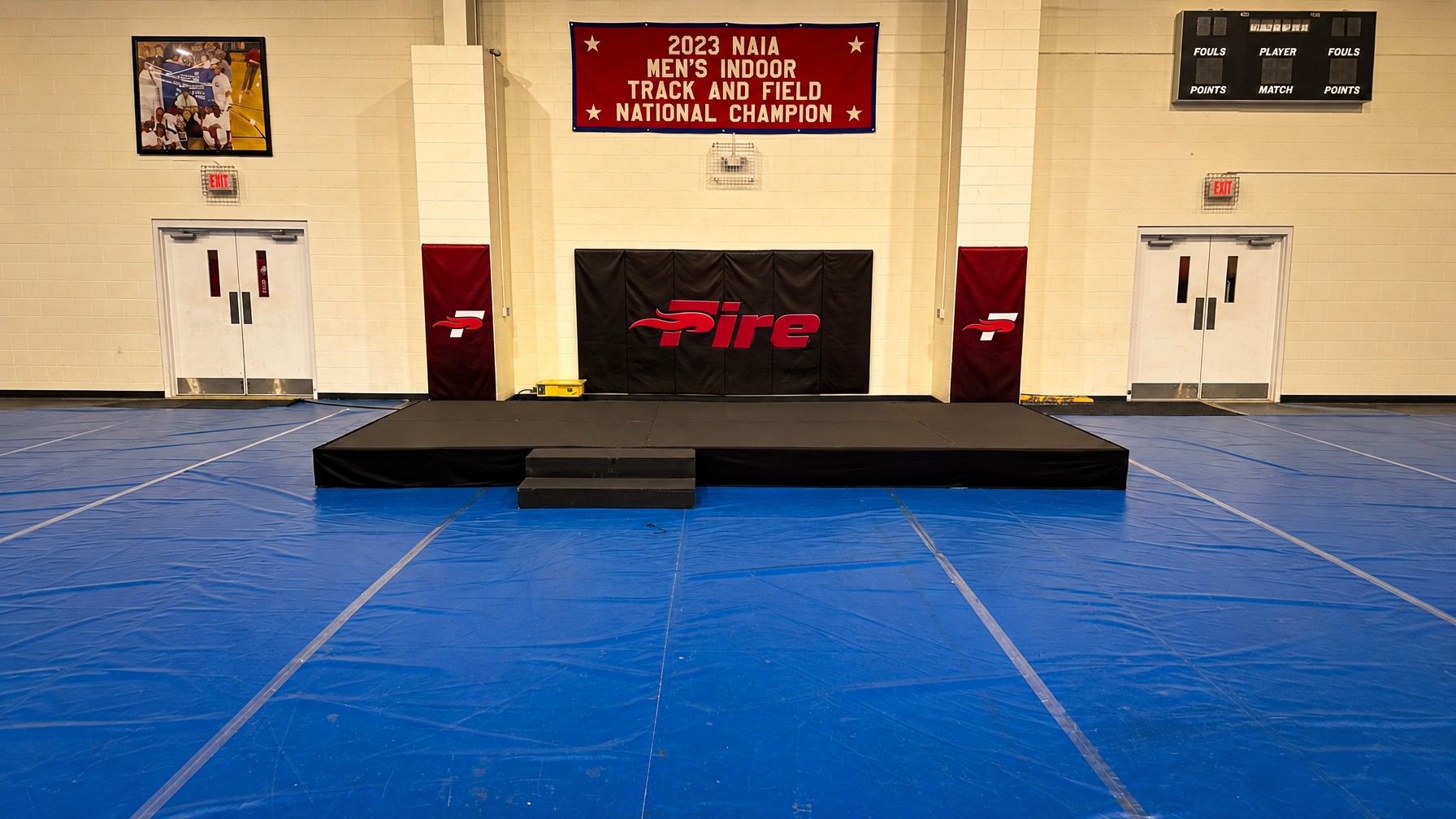
A stage's depth and deck height drive cost more than any single factor. Each tier adds material, labor, and structural requirements that smaller stages don't need. An 8ft-deep stage, the kind we build for a single speaker, acoustic duo, or small podium setup, uses the least decking, the fewest legs, and the lightest skirting run. It's our most budget-friendly footprint.
Move up to 12ft or 16ft depth and you're typically looking at a wedding band, a DJ booth with a small dance space, or a corporate presenter with a podium and a couple of panelists. These sizes need more deck sections, more legs, and usually stairs on at least one side. Our 16ft Stage Sizes page breaks down exactly what fits at that depth, and our post comparing 12ft vs 16ft stages is worth a look if you're choosing between the two for a smaller venue.
Push to 20ft or 24ft deep and you're generally in full-band or multi-act territory, where you need room for a drum riser, backline, and multiple performers moving at once. Our concert stage rental page covers these larger configurations and the depth options that come with them. Each step up adds decking, legs, skirting footage, and often more crew time to assemble safely. That's why pricing climbs with size instead of staying flat.
What changes the price besides square footage
Deck height is the variable that surprises most first-time renters, because once a platform crosses a certain height, safety requirements kick in and the stage costs more to build correctly. OSHA's general industry standard requires guardrails once platforms reach a certain height, and that's not a Stages Plus policy, it's a federal workplace safety standard. It's exactly why a 24-inch-tall stage and a 48-inch-tall stage aren't priced the same way even if the deck footprint is identical.
Guardrails become a code requirement once a platform reaches 4 feet (48 inches) high, per OSHA's walking-working surfaces standard, which sets top rail height at 42 inches plus or minus 3 inches above the deck (OSHA 1910.29).
Beyond height, stairs are nearly always required once a deck sits above a comfortable step-up height, and most clients add stairs on both sides for performer flow. Skirting isn't required by code but it finishes the look and hides the leg structure, so most of our wedding and corporate clients include it. Every one of these items is a separate line, which is why two stages with the same footprint can land at very different totals once height, stairs, and skirting enter the picture.
Add-on costs that stack onto your base stage rental
The bare stage platform is often just the starting line, and the add-ons you layer on top can easily match or exceed the base rental cost. Lighting is the most common add, whether that's simple uplighting for a wedding reception or a full wash-and-spot package for a concert. Our Stage Lighting page walks through the tiers available.
Audio is the second most common addition, and it scales with guest count and stage use, from a basic speaker-and-mic setup for speeches to a full PA for a live band. Our Audio Packages page covers what's typically bundled at each level.
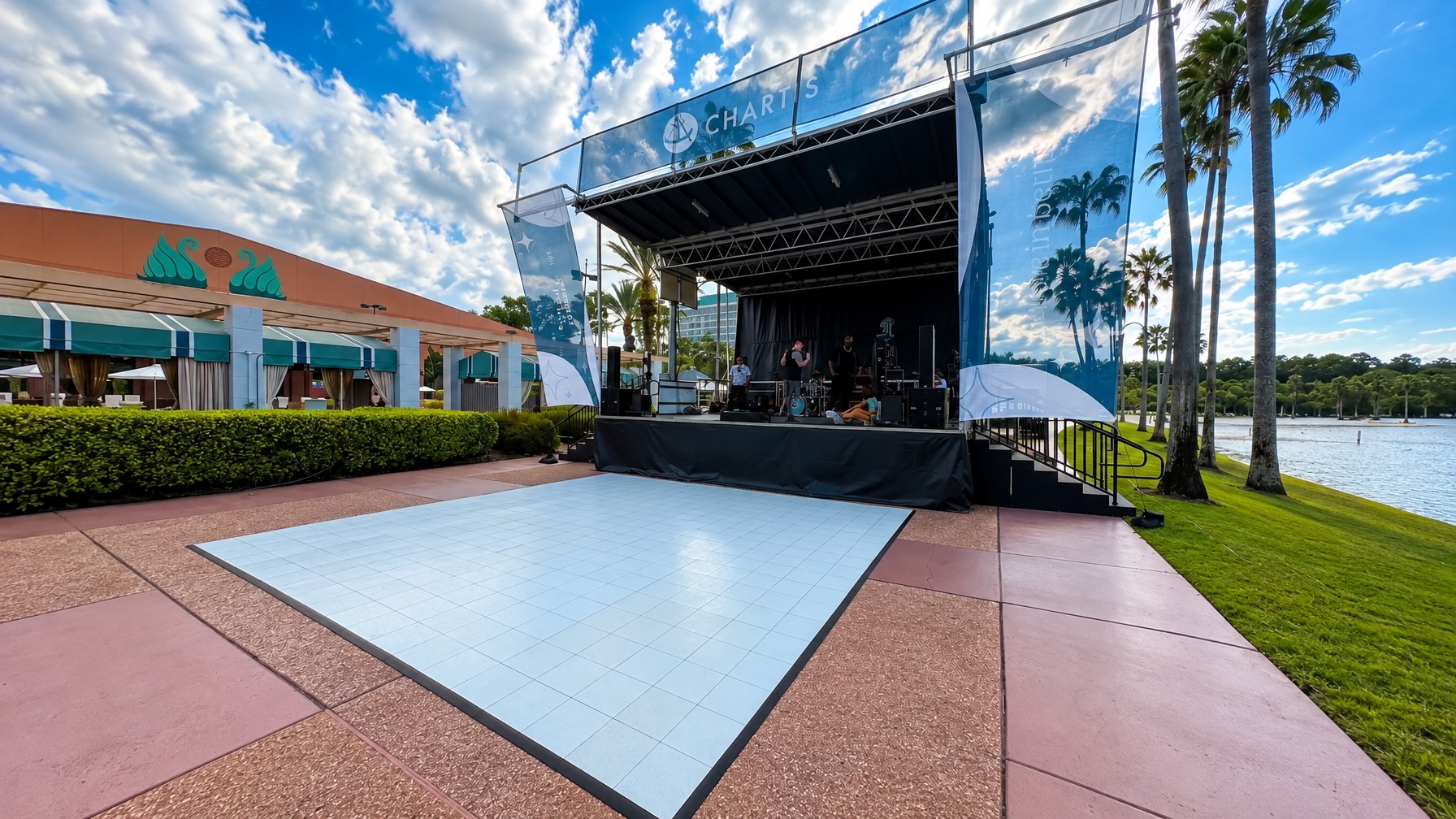
Pipe and drape backdrops are popular for weddings, corporate branding, and fashion presentations, and they're priced separately from the stage itself because they're a different structure entirely (our Pipe and Drape Rental page has specs). Dancefloors are their own line item too, since they're installed as a separate surface, often set directly in front of or integrated into the stage deck (see Dancefloor Rentals). None of these are required to rent a stage, but most events we build end up including at least one.
Indoor vs. outdoor setup costs
Outdoor stages generally cost more than indoor stages of the same size, mainly because outdoor builds need weighting, anchoring, and weather contingency gear that indoor venues don't require. A stage inside a ballroom or convention hall sits on a flat, stable floor with no wind load to account for. A stage on a lawn, in a park, or on a beach needs ballast or stakes to stay put, plus a plan for rain.
That's part of why we talk so often about hidden costs in event staging budget planning: clients budgeting purely off a base stage price are often surprised when outdoor anchoring, cover options, or power runs add to the final number. If you're planning an outdoor event during Florida's wetter months, building a weather contingency line into your budget from the start saves you from a scramble later.
Delivery, setup, and strike fees across Central Florida
Delivery pricing in our service area scales with distance from our Winter Park home base, so the farther your venue sits from Winter Park, the more delivery adds to your total. We cover Orlando, Winter Park, Kissimmee, DeLand, Deltona, Sanford, Altamonte Springs, Apopka, Ocoee, Oviedo, St. Cloud, Winter Garden, Winter Springs, Titusville, Melbourne, Palm Bay, Winter Haven, and Lakeland, but a stage delivered to an event ten minutes from our shop costs less to move than one headed out to Lakeland or Melbourne.
That's simple logistics math: drive time, fuel, and crew hours all factor into the delivery and strike fee, and a round trip to the far edges of our service area takes a bigger bite out of a crew's day than a local Orlando metro run. If your venue sits toward the outer edge of our coverage area, it's worth asking about delivery pricing early in your planning, before you lock in a full budget.
A worked example: itemizing a wedding stage budget
A typical 16ft by 12ft wedding stage budget stacks several separate line items on top of the base platform, and seeing them listed out is the fastest way to understand where your total actually comes from. Here's how a build like this usually breaks down for a reception band or ceremony stage:
- Base stage platform (16×12): the deck sections, legs, and structural frame for the footprint itself.
- Skirting: fabric panels that wrap the stage edges and hide the leg structure for a finished look.
- Stairs: one or two sets, depending on performer flow and whether the deck height requires them.
- Uplighting or accent lighting: a lighting package to highlight the stage and backdrop during the reception.
- Delivery, setup, and strike: crew time to deliver, assemble, and later disassemble and haul away the stage, priced by distance from Winter Park.
Each of those lines is priced separately, which is exactly why a single "stages starting at $X" number you'll see on some directory sites doesn't tell you much. The way to see your actual total is to run your specs through our Stage Size Calculator and then confirm it with our team through how to get a quote, which gives you an itemized breakdown instead of a vague starting figure.
Minimum rental costs for small events
Even a small stage carries a cost floor, because delivery, crew time, and setup don't shrink proportionally just because the stage does. A single-performer platform for a birthday party or a community gathering still needs a truck, a crew, assembly time, and a strike trip, so there's a practical minimum below which we can't price a rental, no matter how small the footprint. If you're planning a small event on a tight budget, it's worth checking our Orlando stage rental pricing page or running the calculator early so there are no surprises when you compare it to your overall event budget.
Frequently asked questions
Is there a minimum rental cost for small events like birthdays or community gatherings?
Yes. Even our smallest stages carry a baseline cost because delivery, crew labor, and assembly time apply regardless of footprint. A tiny single-performer platform won't cost nothing just because it's small. Check our Orlando stage rental pricing page or the calculator for a realistic minimum before setting your budget.
How far in advance should I lock in my budget during peak wedding or graduation season?
Peak wedding season runs February through May, and graduation season peaks May through June, when our Winter Park crew's calendar fills fastest. Locking in your stage budget and booking date several months ahead, rather than weeks, gives you the best shot at your preferred date and avoids last-minute pricing pressure.
What's a realistic budget range for a 100-150 guest wedding stage vs. a multi-act concert stage?
A wedding stage for 100-150 guests typically needs a smaller footprint (often 12-16ft deep) with skirting, maybe stairs, and light uplighting, so it sits well below a multi-act concert stage, which needs 20-24ft of depth, full guardrails, heavier audio, and often multiple load-ins. Request an itemized quote through how to get a quote for your specific guest count and format.
What do people typically forget to budget for?
Permits, dedicated power drops, and weather contingency gear are the three most commonly missed line items. Outdoor events especially need a rain or heat plan, and some venues require separate permitting for temporary structures. Our post on hidden costs in event staging budget planning walks through what's easy to overlook.
How is this cost guide different from your interactive Stage Size Calculator tool?
This guide explains the logic behind pricing, why depth, height, add-ons, and delivery distance each move your total. The Stage Size Calculator applies that logic to your actual event specs and gives you a ballpark number in under a minute, which you can then confirm with a formal itemized quote.
Bottom line
Stage rental cost in Central Florida comes down to footprint, deck height, the add-ons you layer on, and how far your venue sits from our Winter Park base, not a single flat rate. The clearest next step is to run your event specs through our Stage Size Calculator for a fast ballpark, then reach out through how to get a quote so our team can give you a real, itemized number before you finalize your event budget.