Keeping performers and guests cool at Central Florida summer outdoor events takes a layered approach: shade first, then active cooling like misting fans or ventilated pipe and drape, plus strict hydration and break schedules for anyone on stage. At Stages Plus, we combine shade structures, drape height tricks, and cooling add-ons because no single fix handles Orlando's heat and humidity alone.
Key takeaways
- Black stage decking in direct Florida sun can reach dangerously hot surface temperatures similar to asphalt, which studies show can exceed 130-140°F on hot days.
- Shade blocks the sun but doesn't lower air temperature. Active cooling (misting, fans, airflow design) is what actually drops the heat index performers feel.
- High-pressure misting systems still cut temperatures by roughly 10°F even in humid Florida air, but they also raise humidity and can make painted decks and metal stairs slippery.
- Setting pipe and drape at 18 feet instead of a lower height creates a ventilation gap under tented stages, a rigging detail our crew uses specifically for summer builds.
- OSHA recommends 4 to 6 ounces of water every 15 to 20 minutes for anyone working or performing in the heat, with scheduled breaks in shade or air conditioning.
How hot does a stage deck actually get in direct Central Florida summer sun?
Unshaded black stage decking in Central Florida can climb into the same range as hot asphalt, which regularly measures well over 130-140°F on summer afternoons. Our crew has measured black decking exceeding 140°F during July builds, and that heat doesn't stay on the surface. It radiates upward through shoes, bare feet, and equipment cases sitting on stage.
Asphalt is the closest documented analog, and it's a useful one. On a 95°F day, asphalt surfaces under direct sun can climb to roughly 140°F at the surface, according to Pave FL, a South Florida paving resource. Dark, non-reflective surfaces absorb far more solar heat than lighter ones, and stage decking behaves the same way.
That heat matters for more than comfort. Surfaces in the 120-140°F range can cause skin burns within one to five minutes of contact, based on research on hot pavement exposure reported by WFLA News. Dancers going barefoot, technicians kneeling to run cable, or anyone setting equipment directly on an unshaded deck at 2 p.m. is dealing with a genuine hazard, not just discomfort. That's why we push clients toward shade before anything else, and why deck surface color and covering deserve real attention in the planning stage.
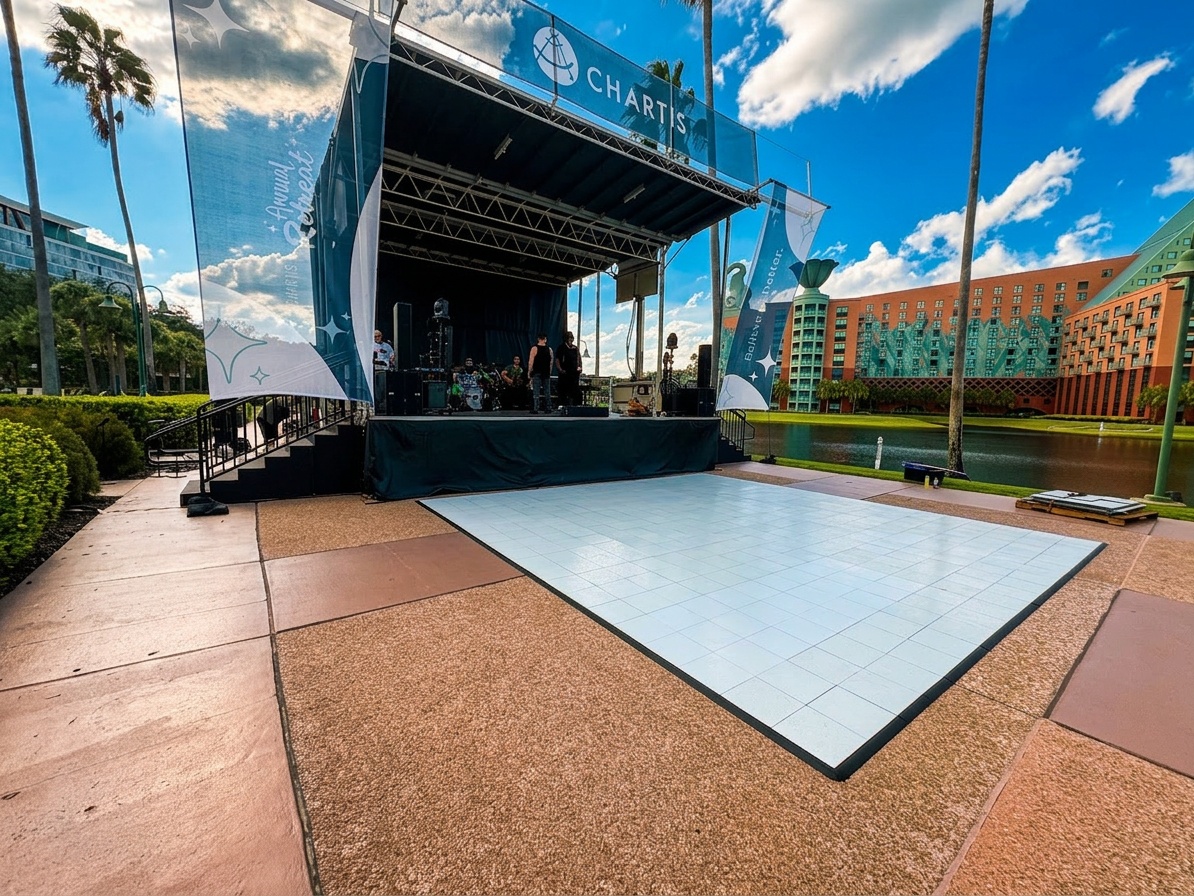
What's the difference between shade structures and active cooling, and do you need both?
Shade blocks solar radiation, but it does not lower the surrounding air temperature, so most summer events in Central Florida need both. A tent or canopy stops the sun from cooking the deck and the performers directly, but the air underneath can still sit at 95°F with heat index values pushing past 110°F.
Sun exposure alone adds meaningfully to how hot it feels. Heat index readings are calculated for shaded conditions, and direct sunlight can add as much as 15 degrees to the perceived heat, based on climate data compiled by Weather-US. That's the gap shade closes. Active cooling, meaning misting fans, ventilation design, or mechanical air movement, is what addresses the remaining heat that shade alone can't touch.
We treat these as two separate line items on a summer build, not interchangeable options. Our shade structure options for outdoor stages handle the sun exposure problem. Cooling add-ons handle the ambient heat and humidity problem. Events that skip one or the other usually end up with a performer standing in a shaded oven, which is not much of an improvement over standing in direct sun.
Do misting systems work in Florida's humidity, or do they just make things stickier?
Misting systems do work in Florida's humidity, but they deliver a smaller benefit here than in dry climates, and they come with a real trade-off. A high-pressure misting system can still produce a noticeable temperature drop of around 10 degrees Fahrenheit even in humid conditions like Orlando's, according to industry data from MISTEC Group. That's meaningful relief for performers standing under stage lights for hours.
The trade-off is the honest part competitors' shade-focused content tends to skip. Misting cools by adding moisture to the air, and Orlando's July air is already carrying an average relative humidity of about 76%, per Weather-US climate data. Peer-reviewed research on misting fan performance in hot, humid climates found that cooling gains come at the cost of higher relative humidity, which can increase surface moisture and biological growth risk, according to research published on ScienceDirect. That same research notes the cooling potential on a 95°F day can drop below 5°F once relative humidity climbs to around 90%, meaning misting adds moisture with very little payoff at that point.
Practically, this means misting works best positioned around audience and staging perimeters, not directly on painted stage decks or metal stairs, where added moisture creates a slip hazard. We size and place misting fans as a supplement to shade and airflow, never as the sole cooling plan.
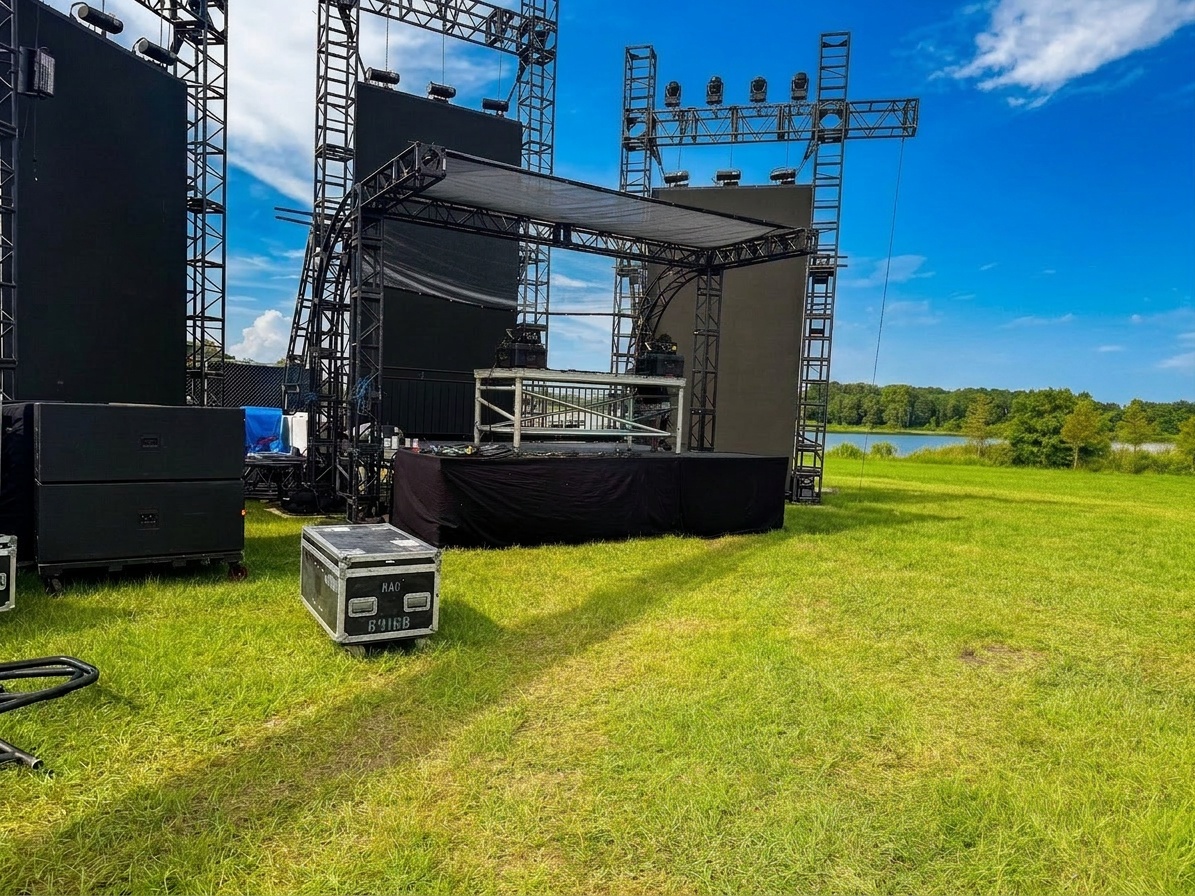
Can pipe and drape or tent walls be configured to improve airflow instead of trapping heat?
Yes. Setting pipe and drape to its full height creates a ventilation gap that lets hot air escape instead of pooling under a tented stage.
Our 15oz IFR pipe and drape adjusts from 8 to 18 feet, and on summer builds our crew deliberately sets drape height at the top of that range to create a ventilation gap between the tent ceiling and the drape line. Hot air rises and collects at the peak of a tent structure, and a gap between the drape top and the tent ceiling lets that heat vent out instead of settling down onto the stage and performers below.
This is a rigging decision, not a decorative one. Lower drape settings look tidy but seal off the stage area from any airflow, turning a shaded stage into a heat trap by mid-afternoon. We make this call on every summer build where drape lines a tented performance area, and it costs nothing extra beyond the standard rental. If you're planning drape for a summer event, ask specifically for the ventilated height configuration rather than a standard setup. You can see the full range of options on our adjustable pipe and drape for stage backdrops page.
What heat safety protocols should event planners set for performers and crew?
Every summer outdoor event should have a written hydration and break schedule, not a casual "drink water when you can" policy. Heat illness builds up over hours, and performers under stage lights or in costume are at higher risk than the general audience.
OSHA's heat illness prevention guidance recommends drinking 4 to 6 ounces of water every 15 to 20 minutes when working or performing in the heat, and notes that heavy exertion in the sun can require up to 32 ounces per hour to stay properly hydrated, according to OSHA's Water. Rest. Shade. campaign. We recommend building this directly into a show's run of show: scheduled water breaks between sets, a shaded or air-conditioned recovery area offstage, and someone specifically assigned to watch for signs of heat exhaustion in performers who may not notice their own symptoms while focused on a show.
Simple protocols make a real difference: rotate crew members off direct sun exposure tasks, keep electrolyte drinks alongside water, and set a hard rule that anyone showing dizziness or confusion steps off stage immediately. These cost nothing to implement and prevent the kind of incident that shuts down an event entirely.
How much do cooling add-ons cost on top of a stage rental?
Cooling add-ons like misting fans and ventilated drape configurations are priced as add-ons to your base stage rental, and costs scale with the size of the area you need to cool. A single misting fan unit covering a backstage or green room area costs less than a multi-fan system spanning an audience zone or full stage perimeter.
Ventilated drape height, as we mentioned above, typically adds no cost since it's a configuration choice within our standard pipe and drape rental inventory. Shade structures and misting fans are priced separately based on square footage and unit count. Because every event's layout, crowd size, and performance schedule are different, we walk through cooling needs during the quote process rather than quoting a flat number. If you're planning a summer show, mention your date and expected crowd size when you get a stage rental quote, and we'll price shade, misting, and drape ventilation together as one package.
Frequently asked questions
What time of day should summer outdoor events in Orlando avoid staging performances?
Avoid scheduling strenuous performances between 10 a.m. and 4 p.m. when possible. UV radiation and heat index both peak during this window, according to Weather-US climate data, so early morning or evening slots are noticeably safer for performers and crew.
Are there stage materials or surfaces that get dangerously hot to bare feet or equipment in summer?
Yes. Dark, unshaded decking behaves like asphalt in direct sun, which can exceed 130-140°F and cause skin burns within one to five minutes of contact. Shade covering and light-colored decking or Marley flooring reduce this risk significantly.
How does humidity change which cooling method actually works in Florida?
High humidity (Orlando averages around 76% in July) limits how much misting can cool the air, since misting relies on evaporation that slows in already-moist air. Airflow-based solutions, like raised drape height and mechanical fans, work more reliably here than misting alone.
Do I need both shade and misting, or is one enough?
Both, if the budget allows. Shade prevents direct sun exposure and protects deck surfaces, while misting or airflow design addresses the ambient heat and humidity that shade can't fix on its own. Pairing them gives the most noticeable comfort difference for performers.
Can misting systems make a stage unsafe?
They can, if placed directly on the performance surface. Added moisture on painted decking or metal stairs creates a slip hazard, so we position misting around audience areas and offstage zones rather than directly over the performance deck.
Beating Central Florida's summer heat takes real planning, not just a canopy and a hope for the best. Pairing shade with active cooling, setting drape height for airflow, and building hydration breaks into your run of show are the difference between a safe, comfortable event and a heat-related incident. For more on protecting your build from Florida's climate overall, check our guide to weatherproofing an outdoor event stage in Florida's climate, or explore our concert stage rental packages and add-on services to see what's included. Ready to heat-proof your summer event? Get a stage rental quote and ask our team about misting fan add-ons and ventilated drape configurations for your date.