Orlando Stage Rental

Bands, Runways, Speaking Engagements, Award Ceremonies, Schools

Call Now! 407-442-0254

  • About
    • Blog
  • Pricing
  • Packages
    • Audio Packages
    • Stage Lighting
  • Contact
  • Reserve
  • Stage Sizes
    • 8ft Stage Sizes
    • 12ft Stage Sizes
    • 16ft Stage Sizes
    • 20ft Stage Sizes
    • 24ft Stage Sizes
  • Stage Rentals
    • Speaking Stage Rental
    • Single Performer Stage Rental
    • Concert Stage Rental
    • Round Stage Rental
    • Performance Staging Rental
    • Graduation Stage Rental
    • Wedding Stages
  • Runway
  • Pipe / Drape
  • Audience Riser
  • Pool Cover
  • Tent Floor
  • Camera Riser
  • Stage Accessories
    • Stair Rental
    • Ramp Rental
    • Dancefloor Rentals
    • Barricade Crowd Control Rental
    • Podium Rental

Negotiating Stage Rental Contracts: Getting the Best Deal in Orlando

May 18, 2026 by admin

You have a quote in hand, the venue is booked, and the event is real. Then you open the contract and hit a wall of terms you've never had to think about before. This happens to planners at every experience level, and it happens most often right now, in May, when wedding season and graduation season converge and everyone is signing agreements under time pressure.

Stage rental negotiation is not about squeezing a vendor. It is about understanding which terms are fixed, which ones have flexibility, and what questions to ask before you sign anything.

This post walks through the actual components of a stage rental agreement in the Orlando market, where the real leverage points are, and what to watch out for so you're not caught off guard on event day.

What a Stage Rental Contract Actually Covers

A solid stage rental contract is more than a price and a date. It should spell out the scope of work in specific detail: the stage dimensions, configuration, height, and any add-ons like guard rails, stairs, skirting, or pipe and drape. If those details are vague, the contract leaves too much room for misunderstanding.

Delivery and pickup windows, setup times, and strike times are equally important. We learned this firsthand during a multi-day install at the Celeste Hotel in Winter Park for the Mastoris wedding. The install ran on the 23rd and the strike wasn't until the 25th, which required specific language in the agreement about when our crew had access, how the stage would be secured between those dates, and who held responsibility for the space during that period. Without clear scheduling terms, a two-day gap like that creates real liability questions for both sides.

If you want to understand what drives the numbers on your quote before you get to the contract stage, our Orlando stage rental pricing guide walks through every factor that affects what you pay.

Access requirements and liability language are the other pieces that round out a well-written contract. Who's responsible if venue access is delayed? Who handles permits? What does the liability split look like if something goes wrong on setup day? Those questions should all have written answers before you sign.

Black platform stage being set up in an elegant banquet room with decorative patterned wallpaper and a sponsor banner visible on the right side

Payment Schedules and Deposit Terms

The most common structure we see in Orlando event rental agreements is 50% at booking and the remaining 50% due before delivery. That split works well for most events, but it's worth asking about before you sign.

For larger builds, the deposit timeline can shift. Our install at Gaylord Palms for the Patel event is a good example. Hotel venues like Gaylord Palms have their own vendor access protocols, and confirming those access windows early isn't optional. That kind of coordination often means the rental company needs earlier confirmation from you, which can move the second payment earlier as well. Knowing that up front prevents surprises.

One genuine leverage point here is bundling. When you add audio, lighting, or pipe and drape to a single contract rather than sourcing them separately, you eliminate vendor coordination complexity on our end. That matters, and most vendors know it.

Our stage rental packages page shows what bundled options look like and which combinations planners use most often.

Ask whether bundling affects the payment schedule, because sometimes it does. And always ask whether the deposit is refundable, partially refundable, or non-refundable outright. Those three answers mean very different things.

Cancellation Policies: Know the Difference Between Cancel and Reschedule

Most clients skim the cancellation clause and assume it covers everything. It usually doesn't. There's a meaningful difference between a cancellation and a reschedule, and the contract should treat them differently.

A cancellation typically means you're forfeiting the event entirely. Depending on how close to the event date you cancel, that often means losing part or all of your deposit. A reschedule means you're moving the date and want your deposit to transfer. Many vendors allow this within certain windows, but only if the contract language specifically permits it.

Florida weather adds a layer that planners in other markets don't have to think about. If you're running an outdoor event and a storm system forces a date change, you want the contract to treat that as a reschedule rather than a cancellation. Ask your vendor directly: does a weather-related date change trigger the cancellation clause or the reschedule clause? Get the answer in writing. Seriously.

Our post on hurricane season stage planning goes deeper on how to build weather contingency into your event logistics.

The distinction matters most during Florida's June through November weather window, but spring events face afternoon storms too. Don't wait until a weather app shows 60% chance of rain to find out what your contract actually says.

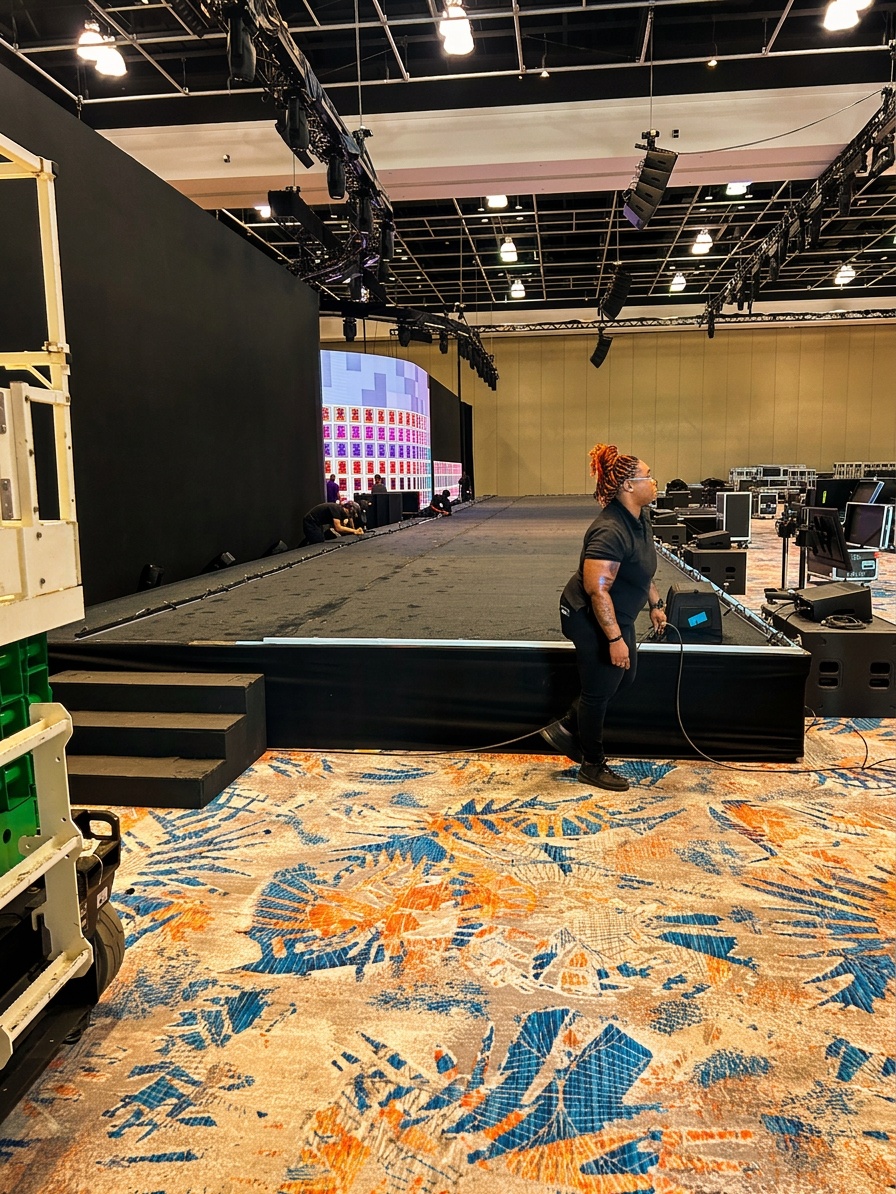
A large conference or ballroom space mid-setup featuring a black stage platform with stairs, professional audio and visual equipment, and green accent walls

The Real Leverage Points When Negotiating

Understanding where you have negotiating room changes the whole conversation. Here are four levers that actually work, along with an honest note about where vendors won't budge.

Booking lead time. Locking in your date 8 to 12 weeks out gives you more flexibility on add-ons. When our schedule has breathing room, we have more ability to work with clients on the details. A last-minute booking in a busy season leaves less room for either side to move. Most vendors won't discount the base rental rate during peak weeks in May and June, so this is the window where your best leverage is on scheduling flexibility and add-on terms, not the bottom-line rate.

Bundling services. Adding audio, lighting, or pipe and drape in a single contract reduces our coordination overhead. That simplification has real value. If you're planning to source those items from multiple vendors anyway, consider whether consolidating with one provider changes your total cost and your contract complexity. It often does.

Multi-event relationships. If you're a recurring planner who books multiple events per year, say so up front. Vendors who know they're working with someone who'll be back are more likely to build a relationship rather than treat each event as a one-time transaction.

Flexible delivery windows. This one is underused. Our Perry install in Apopka is a good example. Regional events outside the core Orlando market involve real mileage and routing logistics. When a client can offer early venue access the evening before setup, it lets us schedule the crew run more efficiently and reduces our labor cost. That kind of flexibility creates natural room to have a conversation about pricing. Ask your venue what early access looks like, then bring that window to your rental vendor.

And if a vendor won't move on anything? That's useful information too. A second quote from a comparable provider will tell you quickly whether you're dealing with a firm market rate or just a firm vendor.

Venue-Specific Contract Clauses to Watch For

Hotels and managed venues in Orlando operate on their own rules, and those rules have to show up in your rental contract. Certificate of insurance requirements, approved vendor lists, load-in procedures, elevator access restrictions, and union labor rules are all venue-driven terms that affect how a stage rental is scheduled and priced.

Our Gaylord Palms install required close coordination with the hotel's event operations team before our crew arrived on site. Properties at that scale have specific windows for vendor access, and if your rental contract doesn't explicitly name the approved access window and assign responsibility when the venue delays access, you've got a gap that could cost you on event day.

Our scheduling details page explains how we coordinate access and timing on venue-specific installs.

Ask your rental vendor if they've worked at your venue before. If they have, they likely know the access procedures already. If they haven't, confirm the contract names the venue access window and specifies what happens if the venue delays access. That single clause has saved more than one event we've been part of.

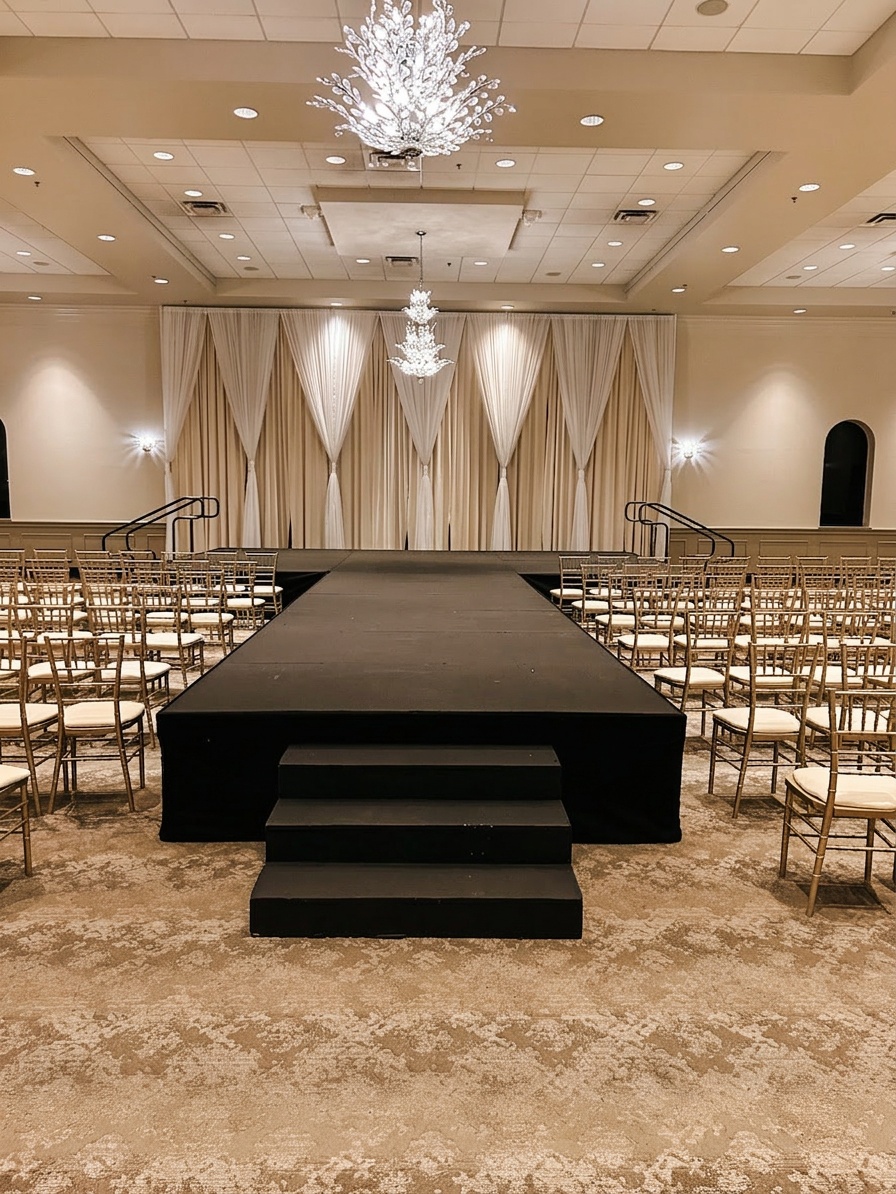
Professional conference stage setup with elevated black platform, stairs with handrails, black curtain backdrop, and branded signage with attendees visible in business attire

Red Flags in Event Rental Agreements

A few contract issues come up often enough that they're worth flagging directly.

Vague scope. If the contract doesn't specify stage dimensions, height, and configuration, you have no way to hold the vendor to what you discussed.

Missing delivery window. "Day of event" is not a delivery window. The contract should name a specific arrival time range.

No force majeure or weather clause. In Central Florida, this isn't optional language. Any outdoor event contract should address weather-driven date changes explicitly.

Deposit forfeiture on any date change. A contract that treats a reschedule the same as a cancellation is worth pushing back on. Vendors who care about the relationship usually distinguish between the two.

No itemized breakdown of add-ons. If audio, lighting, stairs, and skirting are bundled into a single line item, you can't verify what you're actually getting. Ask for itemization.

Know Your Terms Before You Sign

The planner who understands their contract walks into a negotiation knowing exactly where the flexibility is and where it isn't. That knowledge saves time, prevents disputes, and almost always leads to a better outcome for both sides.

We work with planners at all stages of the process, from first quote to final strike, and we're happy to walk through contract terms before you commit. Use our stage size calculator to get your specs dialed in, then reach out to get a quote and we'll review the terms together. If you're ready to lock in a date, you can reserve your stage rental directly.

No hidden terms. Just a straight conversation about what your event needs.

Filed Under: Blog

Quick Setup Mobile Stages: Time-Saving Solutions for Orlando Events

May 14, 2026 by admin

Mobile stage rental in Orlando comes down to one question more than any other: how fast can you get it done? Venue load-in windows are tight, vendor schedules stack up, and the stage has to be standing before anything else can fall into place.

At Stages Plus, we field this question constantly, especially in spring when graduation ceremonies, corporate luncheons, and outdoor festivals all compete for the same weekends. This post covers how quick-setup staging actually works, what affects your timeline at different venue types, and what we've learned from recent builds across Central Florida.

What Makes a Stage Quick to Set Up

The foundation of any fast installation is modular staging equipment. Our decks arrive in pre-engineered sections, typically 4×4 or 4×8 panels, that connect without specialized tools. The configuration can be adjusted to fit different floor plans without starting from scratch.

Modular systems aren't just faster to assemble. They're also faster to load, because each section has a logical place on the truck and comes off in the order it goes together. An experienced crew that has run the same system hundreds of times doesn't need to figure anything out on site. They execute.

For most standard configurations, a two-person crew can have a 16×24 speaking stage standing, skirted, and staired in 90 minutes or less on a level concrete or hardwood floor with clear load-in access. Larger builds take longer, but the modular design still removes hours compared to traditional staging.

Realistic Setup Times by Stage Type

Setup time depends on what you're building, not just how big it is. Here's an honest look at what the field actually looks like:

A speaking stage in the 16×20 to 20×24 range with stairs, skirting, and a podium typically runs 60 to 90 minutes for our crew on a clean site. A concert stage rental with guard rails, trussing, and audio rigging points runs 3 to 5 hours depending on complexity. A runway setup for a fashion show or awards presentation moves quickly since there is no elevated platform to level, usually under two hours for a standard 6×40 run.

Teardown is generally faster than setup, roughly half the time on modular systems. We factor that into every quote, because if your venue has a hard out at 11 PM, you need to know we can make it before we ever show up.

When comparing quotes from different companies, ask how many crew members are included. A lower price can sometimes mean fewer hands on site and a longer setup window. If your venue charges by the hour or has a strict load-out, that difference matters.

A speaking stage rental for a corporate event usually has fewer structural requirements and a faster strike time compared to a full performance rig. That gap becomes significant when a venue has a hard stop for load-out.

Stages Plus crew unloading modular stage deck sections from a truck at an Orlando venue, stage pieces organized and ready for assembly

Venue-Specific Logistics: Winter Park Events Center

The Winter Park Events Center is one of the more frequently requested venues in our rotation, and it comes with real logistical constraints. Load-in access is limited to specific windows, and multiple vendors often share the same door at the same time. If you've ever watched a setup fall behind because of a late truck and a crowded loading dock, you know exactly why prep work matters here.

For the Cuervo event on March 7, 2026, our crew preloaded the truck the evening before with the configuration already sorted and ready to come off in sequence. We arrived at the venue's first available access time and had the stage standing and skirted before the first other vendor came through the door.

Venue familiarity speeds everything up. When a staging company has worked inside a specific venue before, the discovery phase is already done. We know where the tight corners are, which elevators handle equipment, and how early to arrive to avoid the morning vendor traffic jam. That knowledge doesn't come from a first visit.

Completed stage setup inside Winter Park Events Center with skirting and stairs in place, ready for a corporate event, March 2026

High-Traffic Areas: Disney Springs Logistics

Working in high-traffic tourist corridors requires a different kind of preparation. For the Schmiege event at Disney Springs on March 12, 2026, vendor credentialing had to be confirmed 48 hours before arrival. Parking and load-in access followed strict protocols, and the window to work was narrow.

We built extra buffer time into the schedule and coordinated arrival around the venue's requirements rather than treating it like a standard Central Florida delivery. During assembly, we kept the footprint compact so pedestrian flow in the surrounding area wasn't disrupted.

The stage was fully assembled and ready before guests arrived. Events in areas like this test every part of the logistics process, and there's no margin for a slow morning. Preparation has to be done before the truck leaves our facility.

The broader lesson for planners: in any high-traffic or permission-heavy environment, the timeline conversation needs to happen earlier than it does for a standard venue. The physical setup may be fast, but the coordination window leading up to it is not.

Campus Events and Multi-Location Builds

University campuses add a distinct layer of coordination. For the Folks event at UCF on March 11, 2026, our team worked through campus parking permits, pedestrian zone restrictions, and event services approval timelines before we ever loaded the truck.

Campus events often require the stage in place earlier than commercial venues because setup windows close sooner and there's less flexibility around them. If an event starts at 2 PM and venue access ends at 10 AM, we arrive at the site's first available moment.

For multi-location events where the same equipment moves between two sites in a single day, our modular systems make that practical. The panels break down cleanly, load fast, and go back together at the next site without any custom adjustments. That kind of flexibility simply isn't possible with heavier traditional staging.

Stage setup in progress on a university campus setting, crew assembling modular sections with open outdoor space visible in background

Factors That Affect Your Setup Timeline

Even with fast equipment and a prepared crew, specific conditions always influence how long a setup takes.

Site accessibility is the biggest variable. A ground-floor ballroom with a loading dock is a very different situation from a rooftop terrace with a freight elevator and a 45-minute parking process. Outdoor sites with soft ground, slopes, or limited drive access add time too.

Weather plays a role in outdoor builds. Central Florida afternoon storms can interrupt work from April through September, and we build contingency time into every outdoor schedule. We watch forecasts closely and communicate early if conditions are likely to affect the timeline.

Permit and venue approval timing affects everything before we arrive. The Miller event at the Alfond Inn on March 14, 2026 is a good example of a boutique venue where the physical setup went smoothly, but pre-event coordination required extra lead time. And honestly, that's true of most smaller venues with in-house event staff. The faster you want the setup on event day, the earlier the planning conversation needs to start.

Venue contact availability on your side matters too. If access requires someone to meet us and that person is running late, the setup window shrinks before we touch a single panel.

Same-Day and Short-Notice Requests

Tight-turnaround requests come in regularly. Availability depends on what equipment is already scheduled and what crew is on the calendar. For smaller configurations with an open slot, it happens more often than most people expect. The key is having all the information ready when you call: site address, indoor ceiling height or outdoor surface type, access time, and event start time.

Our performance staging team can move quickly when the logistics picture is clear. Uncertainty about site conditions or access is what slows things down, not the equipment.

During busy spring weekends, we route trucks across Central Florida to minimize dead time between jobs. Multi-event days are common from April through June, and the modular system is built for exactly that kind of rotation.

When Mobile Staging Is the Right Choice

Quick-setup modular staging is the practical choice for most Orlando events. It protects your load-in timeline, adapts if something changes the morning of the event, and gets our crew in and out without disrupting the rest of your vendor schedule.

Heavier traditional structures make sense for multi-day festivals where the stage stays up and absorbs a lot of daily use, or for permanent installations in a performing arts setting. For one-day and two-day events at venues across Central Florida, modular systems are the more efficient path. One thing worth flagging if you're planning a performance with a full backline, truss, or overhead lighting rig: our modular systems are engineered to specific load ratings, and we'll ask you to share those weight requirements upfront so we can confirm the configuration before we quote. That's not a formality. It's how we make sure what we build can handle what you're putting on it.

If you are not sure which configuration fits your timeline and venue, the fastest starting point is to get a quote with your event date, location, and a rough stage size. We will tell you what is realistic for your window.

Protecting Your Event's Critical Path

The stage is almost always on the critical path of an event setup. If it's late, lights can't be rigged, speakers can't be positioned, and the podium has nowhere to go. Everything else that depends on the stage being in place gets pushed, and the timeline pressure transfers to every other vendor on site.

Our approach to mobile stage rental in Orlando is built around protecting that critical path: arrive when we say we will, build efficiently without compromising structural safety, and clear our equipment footprint so the rest of your setup can proceed on schedule.

If you've seen the Winter Park Events Center loading dock on a busy spring morning, you already know what happens when one vendor runs late. We've worked hard not to be that vendor.

Call us at 407-442-0254 or visit our Reserve page to walk through your event date and access window. We'll let you know exactly what to expect.

Filed Under: Mobile Stage Rentals

ADA Compliance for Stage Rentals: Accessibility Requirements in Florida

May 11, 2026 by admin

We've seen it happen more times than we'd like: a planner calls us two days before an event because they just realized the ramp they planned won't actually fit in the room. Or worse, they didn't plan one at all. When a speaker, honoree, or performer uses a wheelchair, that oversight becomes a real problem on event day, and it's not just a logistics issue.

ADA compliant staging is not optional for most public and semi-public events in Florida, and understanding the specific requirements before you book saves you from expensive last-minute changes on setup day.

We work with event planners across Central Florida year-round, and accessibility questions come up constantly, especially during graduation season when honorees or speakers with mobility needs are part of the program. Here's what you need to know before finalizing your stage setup.

Why ADA Compliance Matters for Staged Events in Florida

The Americans with Disabilities Act Title III covers places of public accommodation, and that coverage extends to temporary structures at public and semi-public events. A stage you rent for a corporate presentation, a school graduation, or a community ceremony qualifies. The Department of Justice has consistently held that event organizers can't exempt themselves from ADA requirements simply because the structure is temporary.

Florida adds another layer through the Florida ADA Accessibility Implementation Act (Sections 553.501 through 553.513 of Florida Statutes). This state law mirrors federal ADA Standards for Accessible Design but is enforced at the county permit level. If your event in Orange, Seminole, or Osceola County requires a temporary structure permit, an accessibility review is often part of that process, though the specifics vary by county and event scale, so check directly with the relevant building department when your permit is filed. One thing most organizers miss: the event organizer, not just the venue owner, carries responsibility for any temporary structures brought in for the event.

The Core ADA Requirements That Apply to Temporary Stages

Four areas of the ADA Standards for Accessible Design (Section 4.8) apply directly to temporary stages. Get all four right, and you've got a compliant setup. Miss one, and you've got liability.

Ramp Slope and Minimum Width Requirements

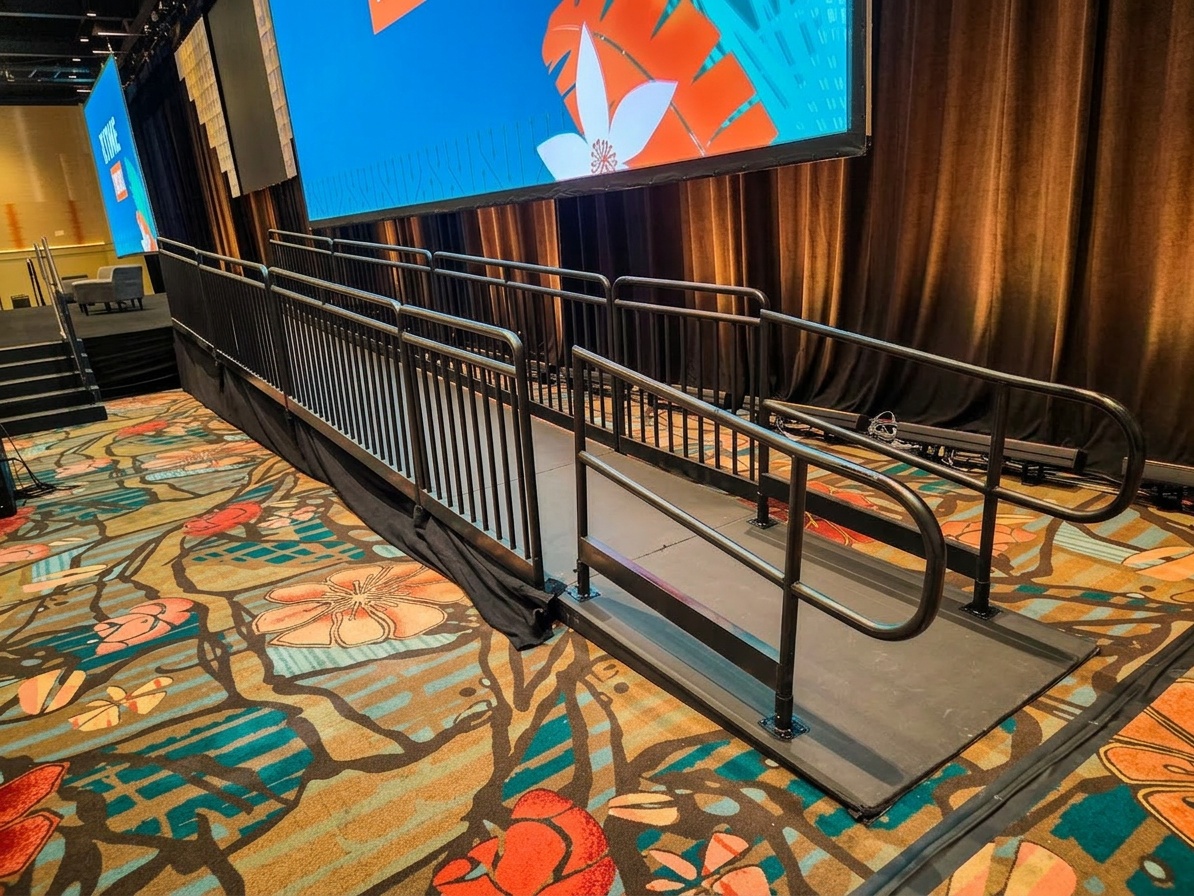
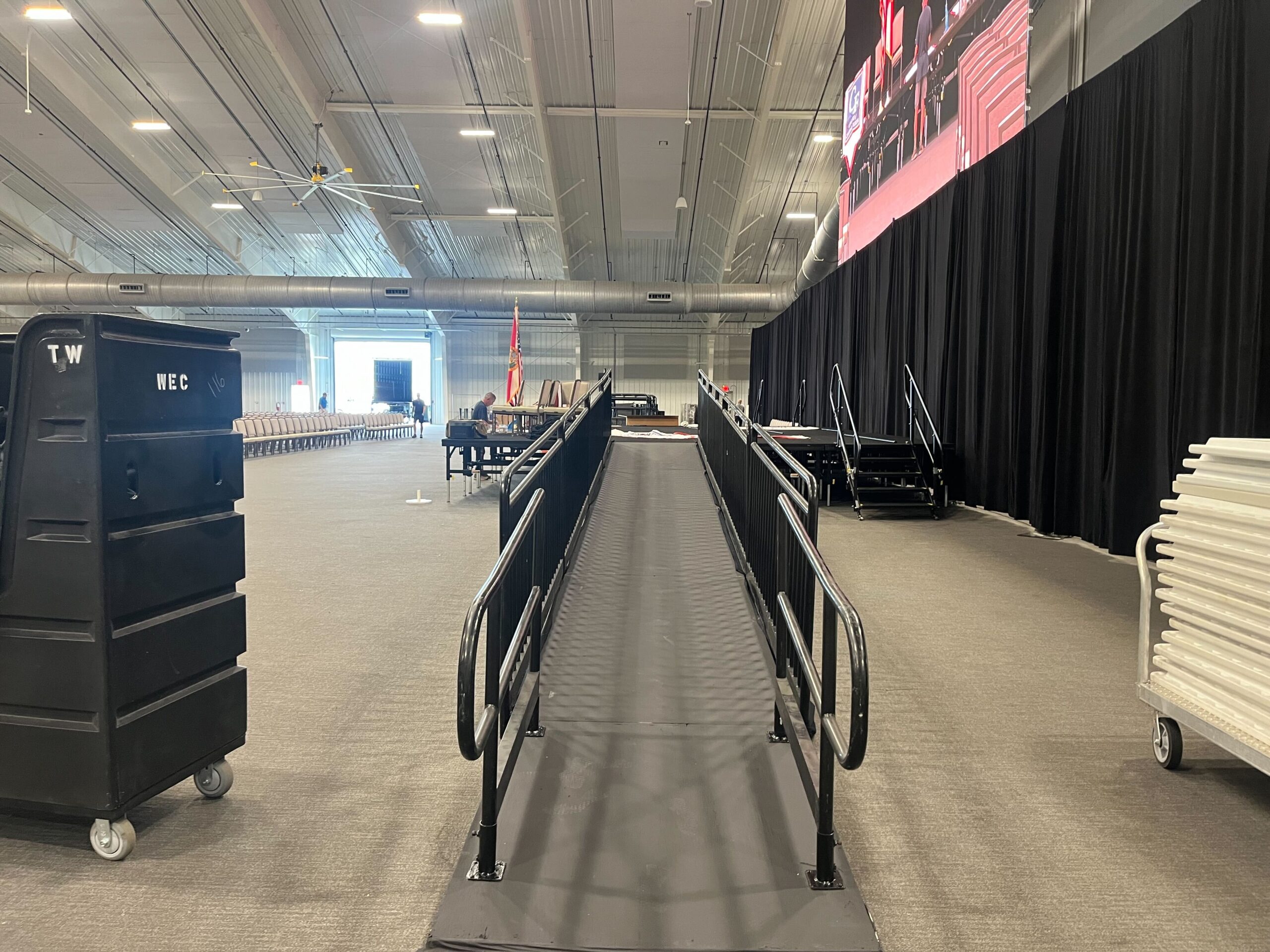
The maximum ramp slope is 1:12, meaning 1 inch of rise for every 12 inches of run. A stage set at 24 inches tall requires a minimum ramp run of 24 feet.

The minimum clear width is 36 inches, and edge protection is required for every 6 inches of rise. Our modular deck systems let us keep stage height as low as practical for the event type, which directly reduces the ramp footprint required. A stage at 16 inches instead of 24 inches cuts the minimum ramp run from 24 feet to 16 feet. In a tight venue, that 8-foot difference can determine whether the ramp plan actually works.

Platform Surface and Gap Specifications

The deck surface must be stable, firm, and slip-resistant. Gaps in the surface can't exceed 0.5 inch measured perpendicular to the direction of travel. Our stage decks lock together with tight tolerances, and the surface texture provides the slip resistance the standard requires. This is one area where modular rental equipment generally outperforms DIY staging built from plywood and sawhorses. No guesswork on the gap dimension.

Guard Rail Height on Accessible Routes

Guard rails are required when the stage surface is more than 30 inches above grade. When rails are present on an accessible route, the top rail must sit between 34 and 38 inches above the deck surface.

At Stages Plus, we require guard rails on all stages above 30 inches regardless of ADA compliance status, because it's the right call for safety. For accessible stages, we configure the rails to meet that 34 to 38 inch window on the routes where wheelchair users and others will be traveling.

Turning Space at the Top of the Ramp

A power wheelchair needs a minimum 60-inch diameter clear floor space to complete a pivot turn. That 60-inch turning radius requirement is one of the most frequently overlooked specs in temporary stage planning. If your ramp delivers a performer or honoree onto a platform without enough clear space to turn and face the audience, the accessible route fails even if the ramp itself is perfect. We account for this when we configure the landing zone at the top of every ramp we spec. It sounds like a small detail until it isn't.

Black elevated stage platform with gray surface and stepped access set up in an indoor venue, with white vertical curtain backdrop and overhead lighting, showing platform dimensions and approach area

Ramp Specifications: Getting the Numbers Right

This is where accessible stage rental Orlando planners tend to hit the most questions. Let's walk through the math with real examples.

A 24-inch stage height requires a minimum 24-foot ramp run at the 1:12 slope maximum. Ramp runs over 30 feet require an intermediate landing of at least 60 inches. At the top and bottom of every ramp, you need a 60×60 inch level landing area so the person using the ramp can stop, orient themselves, and move onto the stage or off the ramp safely.

Our approach is to configure the stage height first based on sightlines and the event type, then spec the ramp to match. For a speaking stage or graduation setup, we often find that 16 to 20 inches of platform height gives good visibility from the audience while keeping the ramp to a manageable length. Honestly, that's the tradeoff most planners don't think about until we bring it up.

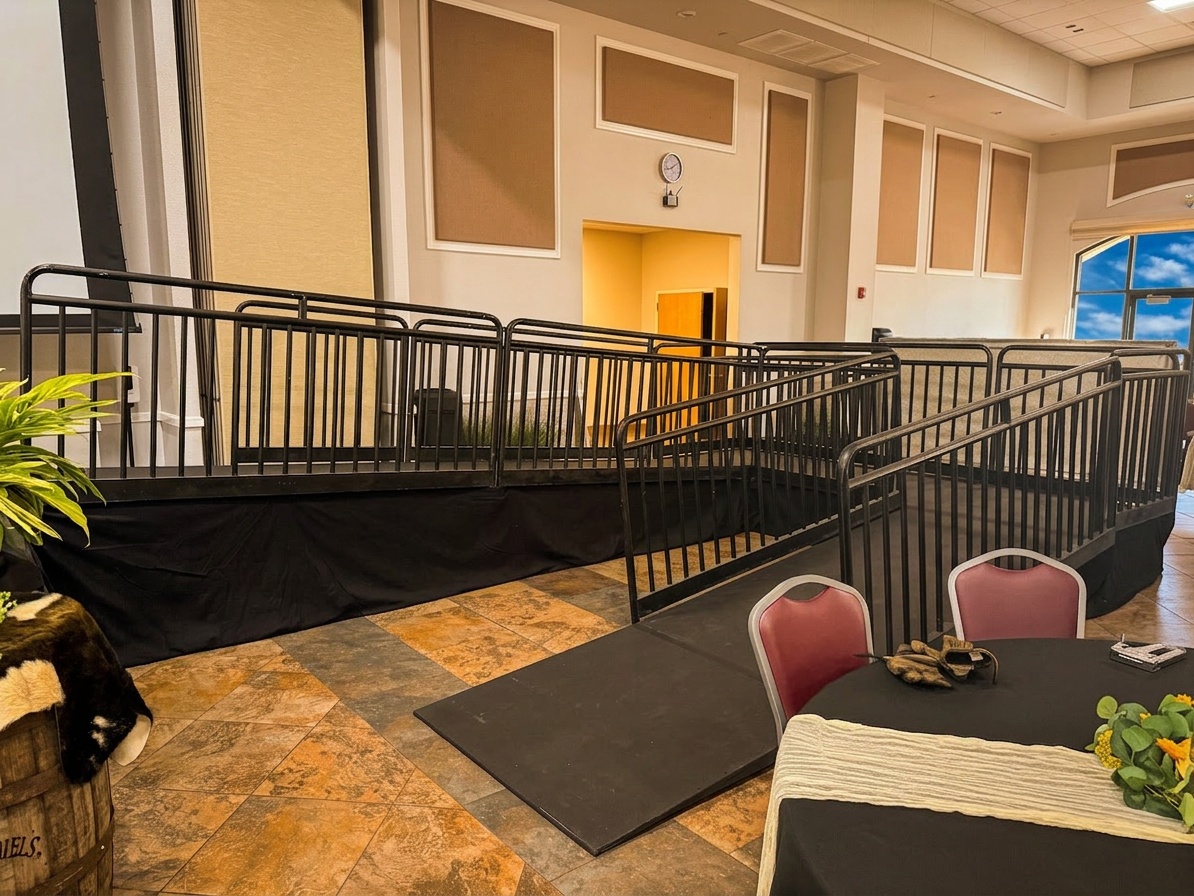
When a ramp must coexist alongside standard stairs, the two access points need to be clearly separated so neither path blocks the other. Check out our stair rental options for your stage setup to see how we configure multi-access stage entries when both stairs and a ramp are part of the plan.

Guard Rails and Edge Protection

Guard rails serve two separate functions on an accessible stage. The first is fall prevention for anyone on the elevated platform. The second, specific to ADA, is edge protection along any accessible route where the surface drops more than 0.5 inch at the edge, regardless of total platform height.

That second rule catches people off guard. A 12-inch stage doesn't require guard rails for fall prevention under most safety standards, but if wheelchair users are accessing it and the edge drops off sharply, edge protection is still required along the accessible portion of that stage. Low platform height doesn't mean you're off the hook.

We configure our guard rails to sit at the correct height for the accessible route, and we can position skirting to cover the structural frame cleanly without blocking the accessible path or the ramp landing. The goal is a setup that looks polished and meets the standard at the same time.

Professional conference or corporate event stage setup featuring elevated black platform with stairs and handrails, black curtain backdrop, and attendees visible on and around the stage in a ballroom venue

Florida-Specific Enforcement Context

The Florida ADA Accessibility Implementation Act doesn't create new technical requirements beyond the federal standard, but it formalizes how enforcement works at the local level. County building departments in Orange, Seminole, and Osceola counties each issue temporary structure permits, and those permits can involve an accessibility review before the event. That said, the process varies meaningfully by county and event scale, so check directly with the relevant building department when your permit is filed rather than assuming the review will happen automatically.

For events at high-profile venues like convention centers, hotels, and campus facilities, the venue itself often has an accessibility coordinator who will review your stage setup plan. Coming to that conversation with specific ramp dimensions, landing specs, and guard rail configurations already figured out makes the permitting and venue approval process much smoother. It also signals to the venue that you've done your homework.

And the broader point on Florida accessibility requirements for staging: the liability for a non-compliant temporary structure sits with the event organizer. Venue owners generally carry responsibility for the permanent structure and fixed elements. The rental equipment you bring in is your responsibility.

Real-World Setup: What It Looks Like in Practice

In February 2026, our team installed a stage at the Celeste Hotel for the Mastoris event. The hotel ballroom setup required us to plan a dedicated accessible approach path alongside the main stair entry, keeping both routes clear of each other. We ran an 18-foot ramp to meet the platform height, with 60×60 landings at the top and bottom, which left the ballroom floor plan cleaner than the client expected going in. Both access points stayed open throughout the event.

Large ballroom or conference space being set up with black stage platform and stairs, multiple chairs arranged in front, professional audio/visual equipment visible, and green accent walls in the background

That same month, we completed a setup at a community venue in Apopka for the Perry event. Community venues often have more flexible floor plans, but they also mean we're working without the built-in infrastructure a large hotel provides. The room had a narrower doorway than the drawings showed, so we adjusted the ramp approach angle on-site to keep the 36-inch clear width intact. Good advance planning on the landing dimensions made the rest of the day straightforward.

In April 2026, we worked at Gaylord Palms for the Patel event. Convention-center-scale setups like Gaylord require especially careful attention to approach paths because the room layouts are large and the distances from the accessible parking and entry points to the stage can be significant. We mapped the full accessible route before the crew arrived and built multiple access points into the configuration so nothing funneled into a single path.

For more context on how we approach setup planning at different venues and event types, our post on how to choose the right stage size for your event covers the decision framework we use, which applies directly to accessible staging configurations.

Planning Checklist: Accessible Stage Rental

Before your event day, work through these seven items:

  • Confirm stage height before finalizing ramp length (1 inch of height = 1 foot of minimum ramp run at 1:12 slope)
  • Verify ramp width is at least 36 inches clear (wider if the venue expects high foot traffic on the accessible route)
  • Check that landing space at the top and bottom of the ramp is at least 60×60 inches
  • Confirm the deck surface is firm, stable, and slip-resistant with no gaps wider than 0.5 inch (our stage decks meet this standard)
  • Position the ramp away from the main pedestrian path so foot traffic and the accessible route don't conflict
  • Communicate the accessible entrance location to guests in advance, including in any pre-event communications
  • Have a crew member present at load-in to confirm all deck connections are flush and the ramp is seated correctly before guests arrive

Our stage safety inspection checklist for Orlando events covers the broader safety review process, and accessibility verification fits naturally into that same pre-event walkthrough.

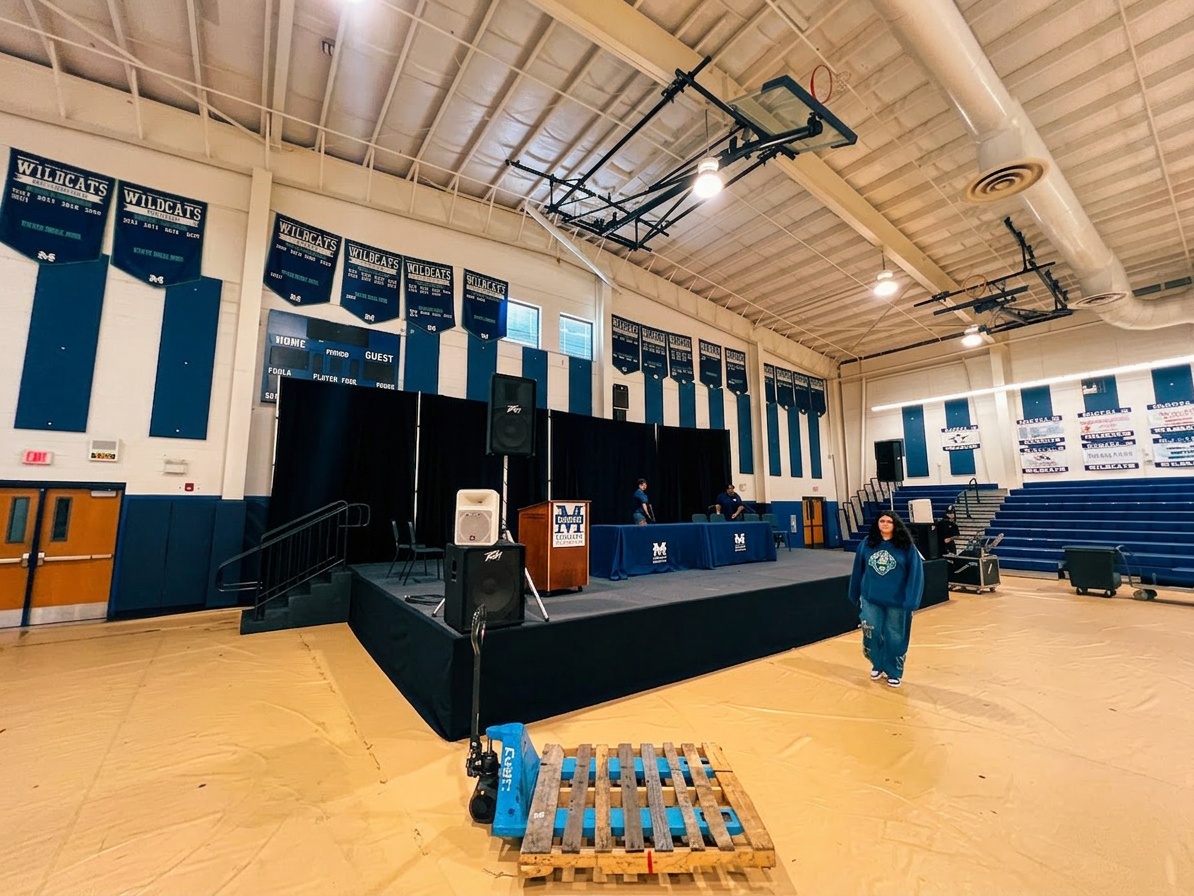
Empty school gymnasium with polished wooden floor featuring a portable black stage with stairs positioned in the center, bleachers along the back wall, set up for an upcoming event or ceremony

How to Request an ADA-Configured Stage Rental

When you reach out to us for a quote, give us two things: your desired stage height and whether you need a ramp included. From there, we calculate the ramp run, confirm the landing dimensions at both ends, and spec the guard rail configuration before anything ships to your venue. No surprises on delivery day because we resolve the measurements in advance.

If you're looking at speaking stage rental configurations for a graduation, award ceremony, or corporate event, accessible setup planning is part of how we approach every quote request. You can also use our Stage Size Calculator to get a starting point on platform dimensions, then bring that to us when you request your accessible configuration.

Planning an accessible event in Central Florida this graduation season or beyond? Tell us your stage height and we'll spec the ramp, landings, and guard rails to meet ADA requirements before your event day. Get a quote for your accessible stage setup and our team will take it from there.

Filed Under: Blog

Camera Riser Setup: Staging for Live Streaming and Video Production

May 7, 2026 by admin

You spent months planning your event, hired a talented video crew, and built out a full live streaming setup. Then the day arrives and your camera operator is shooting over the tops of heads from the floor, with no clear sightline to the stage. It happens more often than it should. The fix is simple: the right camera riser rental, configured before the crew shows up.

At Stages Plus, camera riser rental is one of the most technically specific requests we handle, because the platform has to work for the staging company, the venue, and the production crew all at the same time.

Getting that coordination right is what separates a clean broadcast from a frustrating workaround. Graduation ceremonies, corporate galas, hybrid conferences with thousands of remote viewers – we’ve seen all of them at Central Florida venues, and the setup principles are the same across the board. If you’re still figuring out your full production footprint, our how to get a quote page walks through exactly what information we need to get started. Here’s what our team has learned from building elevated camera platforms across Orlando all year long.

Why Camera Riser Height and Platform Size Matter for Video Quality

A camera riser is not just a tall box for your operator to stand on. The height determines whether your video feed captures the speaker, the performer, or the back of someone’s head. The platform size determines whether your operator can move safely, swap lenses mid-show, or run a jib arm without clipping a guard rail.

For a standard conference keynote with 300 to 500 guests seated in rows, most camera operators need to clear an audience height of roughly 48 to 54 inches when seated. That means the camera lens needs to sit somewhere between 72 and 84 inches above the floor to get a clean frame over the crowd. A riser at 24 to 30 inches of deck height, combined with a standard fluid head tripod and camera, usually gets you there.

For concerts and large galas, the math shifts. A packed standing crowd or a wide ballroom arrangement means your operator may need to go higher, especially if the venue has round tables that spread guests further back from the stage. We set up elevated staging for an event at Gaylord Palms in February 2026, where multi-zone staging across a large ballroom floor made sightline planning a real priority. Getting the riser positioned at the right depth from the stage, and at the right height, made the difference between a usable broadcast and a lot of post-production cropping.

Production planners often come to us with a height preference but no platform dimensions in mind. Our advice: start with the equipment, then size the platform around it. Our stage size calculator can also help you think through footprint needs before you call.

Platform Configuration: Single Operator, Multi-Camera, and Jib Arm Setups

The most common camera riser request we get is for a single operator with a tripod-mounted broadcast camera. For that setup, a 4×4 or 4×6 platform gives the operator enough room to move slightly, set down a gear bag, and rotate the tripod head without bumping the guard rails.

Multi-camera setups are a different conversation. If you have two operators side by side, each running a broadcast camera on a 75mm bowl tripod, you need at minimum an 8-foot wide platform. Factoring in the leg spread of both tripods and the working space behind each camera, an 8×6 or 8×8 deck is more comfortable and safer.

Jib arms change everything. A 6-foot or 8-foot jib requires significant rear clearance for the counterweight swing behind the pivot point, roughly one-third to one-half the arm’s total length on most configurations. The exact ratio depends on the arm and counterweight setup, so confirm the specifics with your operator before booking. A jib on a riser that is too small puts the counterweight over the edge of the platform, which is a load distribution problem and a safety hazard. We’ve seen it nearly happen on load-in day. It is not a fun conversation.

Guard Rail Requirements Above 30 Inches Protect Your Crew and Your Client

Any platform we build above 30 inches of deck height gets guard rails. That’s not optional. It’s a safety standard we follow on every build, and it protects both your crew and your client from liability. For camera risers specifically, we configure the rail openings so cable runs can exit cleanly without the crew having to step over a rail mid-show.

If your operator needs to swap cameras frequently or is running a gimbal that requires moving around the platform, let us know before we build. We can adjust the rail configuration to give open access on one side while keeping the remaining perimeter fully protected.

For live event video crew platform setups where the riser sits close to the main stage, we also factor in whether the production crew needs stair access from the front, back, or both sides of the platform. That affects how we orient the entire build.

Larger productions that pair an elevated camera position with tiered audience seating will want to look at our audience riser rental options as well, since the two footprints need to be coordinated so they don’t compete for the same floor space.

Large black modular stage platform with safety railings set up in an outdoor venue, showing the platform configuration and structural elements

Cable Management and Crew Access: The Details That Make or Break a Broadcast

This is the part most rental conversations skip over entirely. Your camera operator is running signal cables (SDI, HDMI, or fiber on longer venue runs) from the camera down to a switcher or encoder at FOH. That cable has to travel from the top of the riser, down through or along the structure, across the floor, and to the production table. Every step of that path matters.

We route signal cables through the frame of the riser wherever possible, keeping them off the walking surface and away from foot traffic. When that’s not possible, we use cable ramps or route along the aisle edge to protect both the cable and anyone walking nearby. For Orlando video production staging at hotel venues like the Celeste Hotel, where we installed and struck a full production setup across two days in February 2026, the ballroom floor plan determines exactly how much cable runway you have and where you can safely cross aisles. Some of those runs are longer than you’d expect, and knowing that before install day matters.

Power is a separate run. Camera operators typically need one or two AC circuits on the platform for battery chargers, monitors, and intercom stations. We coordinate with the venue on circuit access before the build so there are no surprises when the crew arrives.

A few specifics to share with your staging company before booking:

  • Total cable count leaving the platform (SDI, HDMI, fiber, intercom, AC)
  • Whether cables run to a combined FOH position or a separate production table
  • Whether the platform needs a floor box or can use a side cable drop
  • Whether the production team needs comms hardwired to the platform

We’ve gotten calls at 7am on load-in day about all four of these. One email at booking handles every single one of them. It takes five minutes.

Getting this information before install day means we can pre-run conduit or cable trays into the riser frame, which keeps the broadcast side clean and professional. For events that also need stage lighting routed from the same general area, coordinating both runs at once saves significant time on load-in.

Coordinating with Your Video Production Team Before You Book

The most common mistake we see with production platform rental Orlando requests is when the event planner books the riser without looping in the video crew. The planner knows the venue and the event schedule. The video crew knows the equipment. Neither one always knows what the other needs from the platform, and we end up getting a call two days before the event to reconfigure something that would have taken five minutes to address at the planning stage.

Honestly, it’s one of the easiest problems to prevent. So here’s what helps us build the right platform the first time.

Camera count and operator count. One camera, one operator is straightforward. Two cameras with one operator means the second camera is probably fixed and unmanned, so we size the platform for one working person plus two tripod footprints. Three cameras with two operators needs a significantly larger deck.

Equipment type and weight. A cinema camera on a tripod weighs differently than a broadcast box camera on a pedestal, and a jib arm with a counterweight adds structural load that we need to account for. Our platforms are built to handle professional production loads, but we want to confirm the numbers before install.

Desired height above the floor. Give us the venue seating configuration and tell us where the main stage sits. Our team can recommend a height based on sightline math, or we can match a specific height your TD has already calculated.

FOH position. Is your front-of-house table combined with the camera riser, or is it a separate position on the floor? This affects how we route cables and whether the platform needs to be wider to accommodate a monitor station alongside the camera operator.

For a separate corporate event at Gaylord Palms in April 2026 (the Patel event), the venue’s scale meant that sightline planning was part of the initial conversation, not an afterthought. Large ballrooms at properties like Gaylord can stretch 100 feet or more from stage to back wall. Getting the riser positioned correctly, with the right height and cable plan in place, is what allows the video crew to focus on the broadcast instead of solving logistics on load-in day.

Our concert stage rental and audience riser packages often work alongside camera platforms on larger productions, so if your event needs a main performance stage, tiered seating, and an elevated camera position, we can quote everything together and make sure the footprints don’t conflict.

Bringing It All Together for Your Central Florida Event

A well-configured camera riser rental is invisible to the audience and essential to the production crew. When the height is right, the platform is sized correctly, and the cables are routed cleanly, your video team can focus entirely on capturing the event instead of managing workarounds.

At Stages Plus, we handle the staging side so your production crew can handle the broadcast side. We’ve built camera platforms at hotel ballrooms, outdoor festival grounds, gymnasiums, and conference centers across Central Florida, and we’ve seen what works and what causes problems on load-in day. The earlier you bring us into the conversation, the better the result.

Planning a live streamed event or video production in Central Florida? Tell us your camera setup, crew size, equipment type, and venue, and we’ll configure the right platform for you. Get a quote at orlandostagerental.com/how-to-get-a-quote/ or call us at 407-442-0254.


Need help thinking through your full production infrastructure? Check out our audio packages to round out your event setup.

Filed Under: Stage Rentals, Stages

Tent Flooring and Stage Combinations for Florida Outdoor Venues

May 4, 2026 by admin

When clients search for a stage rental Orlando setup company, they usually want the same thing: proof that the team knows what they're doing before the day of the event. The best way we can offer that is by being straightforward about how we work and what we pay attention to across different venue types.

This post covers five real venue scenarios our team handles regularly across Central Florida, from boutique hotel interiors to outdoor waterfront spaces and high-oversight entertainment districts. No invented stories, just a practical look at what good staging and flooring coordination actually involves.

Winter Park Events Center: Flexible Spaces Require Deliberate Placement

Venues with indoor-outdoor transitions give clients a lot of options, and that flexibility is genuinely useful. It also creates decisions that deserve more thought than they usually get.

At a venue like the Winter Park Events Center, the goal is positioning the platform to preserve sightlines from multiple seating zones, not just optimizing for one corner of the room. When the floor transitions between surface materials depending on which part of the space is in use, the finished setup needs to look intentional throughout. A stage that floats disconnected from its surroundings reads as an afterthought, and guests pick up on that even if they can't explain why.

Stage height is another detail clients consistently underestimate in flexible venue layouts. For seated dinners under 200 guests, a 24-inch rise generally works well. Once you cross that threshold, a 32 to 36-inch platform height improves visibility across the room significantly. That conversation is worth having before platform specs get locked in.

professional stage installation in progress at an indoor-outdoor venue in Winter Park, showing crew positioning stage decks under event lighting

Orlando Presentation Setups: The Logistics Behind Parallel Installs

During spring season, our team regularly runs multiple installs on the same day in different parts of the metro area. Running them smoothly comes down to preparation done the day before, not improvisation on the morning of.

Crew assignments, equipment staging, and load-in sequencing all get mapped out in advance so both sites stay on schedule. A presentation or speaking setup configured with clean skirting and a low-profile platform accessible from both sides is straightforward to execute when the planning is tight. We've done this enough times to know that the installs that go sideways are almost never a surprise on the day. They're the result of something that wasn't confirmed the week before.

The most useful advice we give clients booking during high-demand periods: make sure your venue contact will be on-site during load-in. That one step reliably saves 20 to 30 minutes per install. For clients working through platform configuration options, our performance staging rental page covers sizes and setup approaches in more detail.

Clients working through configuration options can review platform sizes and setup approaches on our performance staging rental page.

The Alfond Inn, Winter Park: Refined Venues Demand Precise Execution

The Alfond Inn sits in the Park Avenue corridor of downtown Winter Park. The visual standard at that property reflects its reputation, and every element of a stage setup needs to look deliberate. Nothing can read as improvised or out of place.

At venues like this, stair placement carries more weight than it would at a standard presentation setup. The path a speaker or performer takes to reach the platform is clearly visible to every seated guest, so stair position and alignment matter as much as the stage framing itself. These are details that don't call attention to themselves when done right. But people notice when they're off.

Load-in access at the Alfond is also tighter than it looks on a venue map. If you're planning an event there, raise the load-in logistics with your venue coordinator early. It's one of those realities that catches clients off guard when they wait too long to ask.

elegant stage setup inside a refined hotel venue in Winter Park, showing skirted stage with clean lines and warm ambient lighting

Disney Springs: What High-Oversight Venues Actually Require

Disney Springs requires vendors to coordinate within strict load-in windows, maintain clean work areas around public access, and deliver finished setups that meet the visual standards of one of the most visited entertainment districts in the world.

For clients considering an outdoor event setup Orlando at a venue with credentialing or access window requirements, the thing that makes it manageable is knowing what to expect before you arrive. Equipment inventoried in advance, install sequence mapped, setup completed within the access window. There's no adjusting on the fly when access time is fixed and foot traffic is constant.

Disney Springs is a practical example of a broader category of high-oversight venues. Theme park adjacent properties, convention centers, and licensed entertainment spaces all have vendor protocols that are more structured than most event planners encounter regularly. If your venue has these requirements, share that early when you reach out for a quote. Credentialing timelines can add lead time that clients don't anticipate when the conversation starts too late.

Our post on Disney Stage Code Requirements covers the specific structural and compliance considerations for staging at Disney properties.

Balloon Marquee at Bonnet Creek Waterside: When Staging Serves the Whole Visual Concept

Bonnet Creek Waterside is a waterfront venue in the Orlando area that draws clients who want something more distinctive than a standard ballroom setup. When a full Balloon Marquee presentation is the centerpiece, the staging and flooring need to work within that visual concept, not compete with it.

The tent flooring installation Central Florida component of this type of project requires careful attention to the surface underfoot. Guests moving through a visually dramatic space notice when the floor feels polished and intentional, even if they can not articulate why.

Outdoor venues with uneven ground require tent flooring panels to create a level, finished surface before the stage platform goes in. That sequence matters. If the floor goes down without accounting for grade, the platform sits uneven, and uneven shows. Getting the base right first is what gives the whole setup a clean, intentional look once the decor is in place.

And honestly, when staging and decor are planned together from the start, the overall effect feels cohesive in a way that simply doesn't happen when a stage gets dropped into an already-decorated space. Our tent flooring rental service is specifically designed for situations like this, where the surface beneath the platform matters just as much as the platform itself.

event stage setup integrated with decorative balloon marquee display, showing stage platform with tent flooring and large balloon arch installation at an outdoor venue

What These Venue Types Have in Common

Each of the venue categories above asks something different from a staging and flooring team. Flexible indoor-outdoor spaces, boutique hotel interiors, high-oversight entertainment districts, outdoor waterfront properties. Different priorities, different constraints. What makes installs go smoothly across all of them is the same thing: clients sharing specific details early.

Skirting preferences, surface color considerations, access window timing, decor coordination needs. The earlier that information comes in, the more precisely we can prepare. It's not about paperwork. It's about arriving with the right equipment and the right plan for your specific setup.

The pairing of staging and flooring also comes up consistently across these venue types. Clients increasingly want a complete surface solution rather than a platform sitting on bare concrete or uneven grass. Handling both in-house means one point of contact, no coordination gap between vendors, and a finished setup where everything belongs together. You can see that combination in action on our concert stage rental page, which covers full staging configurations from platform to surface to accessories.

wide shot of a completed outdoor event stage with tent flooring on a manicured venue lawn, showing the full setup with stairs and skirting

Plan Your Central Florida Event Setup With Our Team

Our team installs stages and flooring at venues across Central Florida, from boutique hotel interiors to outdoor entertainment districts and waterfront properties. The variety of venue types we work in reflects the range of what we handle on a regular basis.

So what venue are you working with? That question usually shapes everything from platform height to surface prep to load-in timing, and it's the right place to start the conversation.

Call us at 407-442-0254 or request a quote online to discuss your event setup needs.

We're booking spring and summer 2026 installs now. The earlier we connect, the more flexibility we have to work with your date, venue access requirements, and setup timeline.

Filed Under: Stage Rentals

  • « Previous Page
  • 1
  • 2
  • 3
  • 4
  • 5
  • …
  • 7
  • Next Page »

Get Quote / Contact

Popular Stage Sizes

  • 8ft Stage Sizes
  • 12ft Stage Sizes
  • 16ft Stage Sizes
  • 20ft Stage Sizes
  • 24ft Stage Sizes

Blog

  • Orlando Event Calendar 2026: Peak Season Planning for Stage Rentals
  • 12ft vs 16ft Stages: Choosing the Right Size for Small Orlando Venues
  • Budget-Friendly Stage Rental Options for Non-Profit Events in Central Florida

Search


Privacy Policy

Warehouse / Office

6848 Stapoint Ct.
Winter Park, FL 32792
407-442-0254

Located in the Eastpoint Industrial Park
Map

Delivery, Setup, Tear Down

Orlando, DeLand, Deltona, Kissimmee, Sanford, Altamonte Springs, Apopka, Ocoee, Oviedo, St. Cloud, Winter Garden, Winter Park, Winter Springs, Titusville, Melbourne, Palm Bay, Winter Haven, Lakeland, Seminole, Orange, Osceola, Lake, Polk, Volusia, Brevard.

Copyright © 2026 · Modern Portfolio Pro Theme on Genesis Framework · WordPress · Log in